Problem-solving abilities Easy Math Worksheets for Ages 4-6
4 filtered results
-
From - To
Unlock your child's potential with our Problem-solving Abilities Easy Math Worksheets for Ages 4-6! Designed to engage young learners, these worksheets help develop critical thinking and reasoning skills through fun and interactive activities. Your little ones will enhance their ability to solve simple math problems, improve their number recognition, and boost their confidence in math. With colorful illustrations and age-appropriate challenges, these worksheets make learning enjoyable. Perfect for both classroom settings and home practice, our resources cater to various learning styles, ensuring that every child can thrive. Start your child’s math journey today and watch their problem-solving skills blossom!
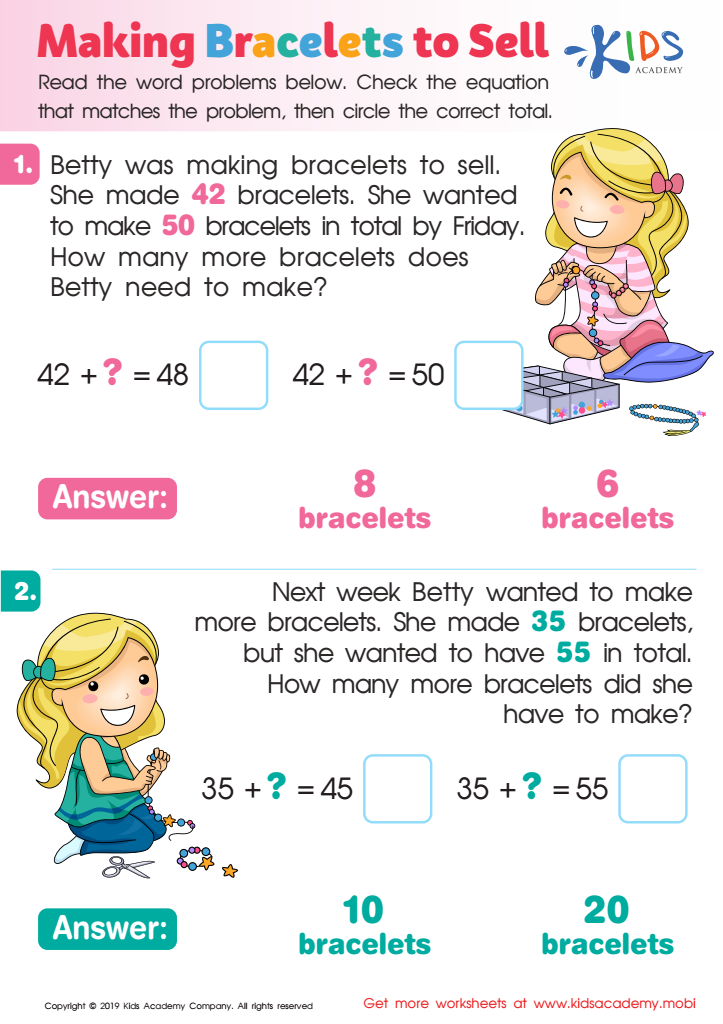
Making Bracelets to Sell Worksheet
 Assign to My Students
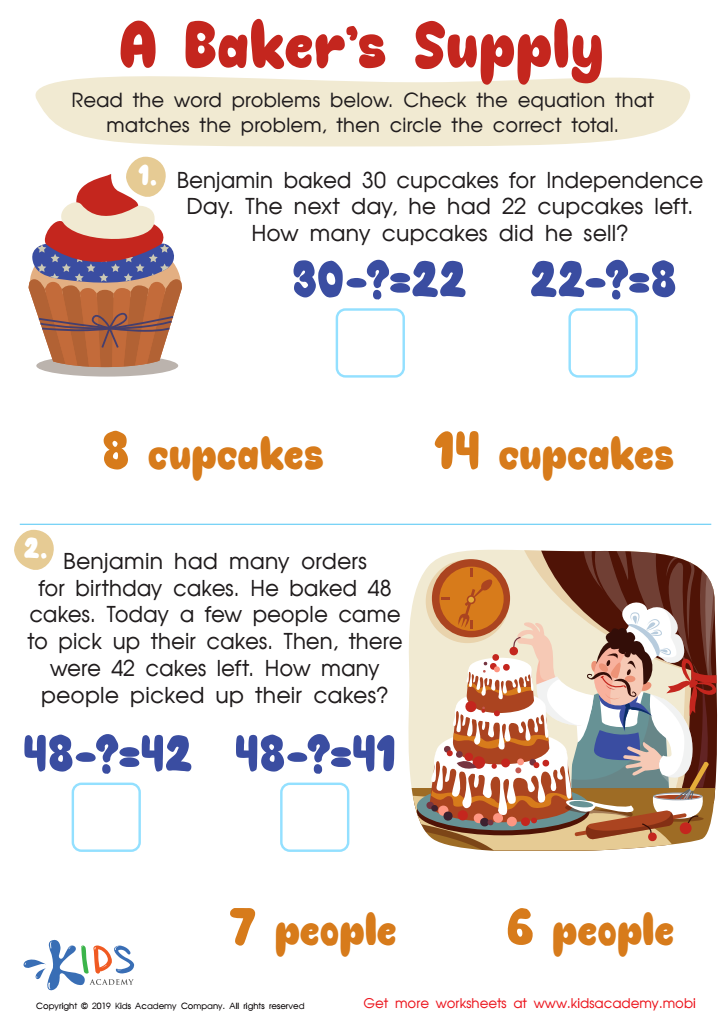
A Baker's Supply Worksheet
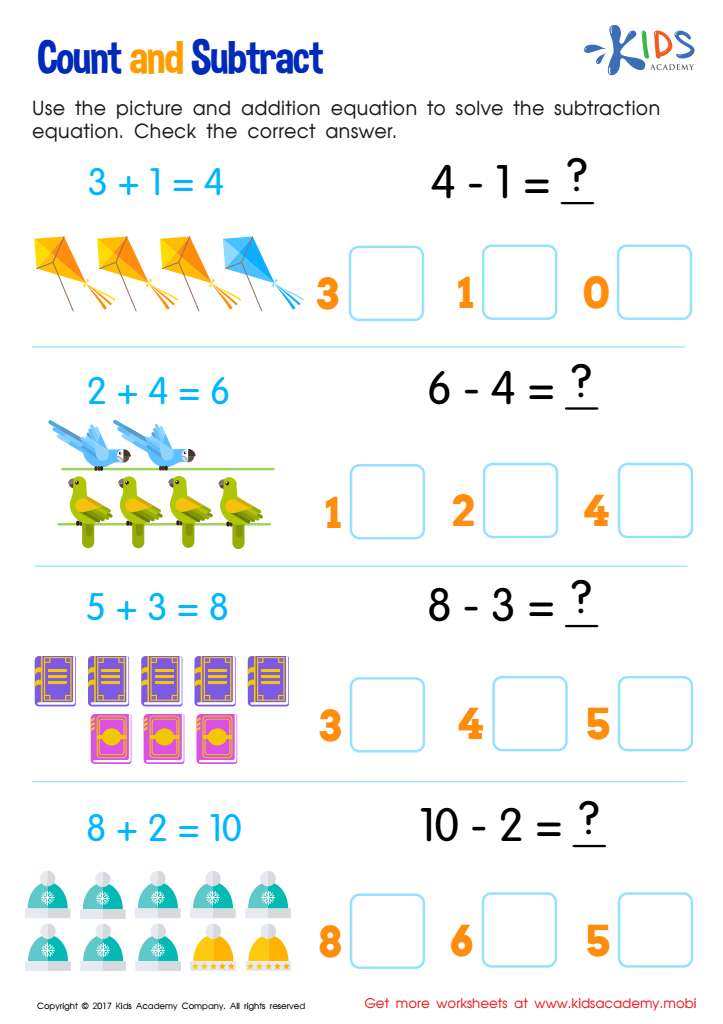
Count and Subtract Worksheet
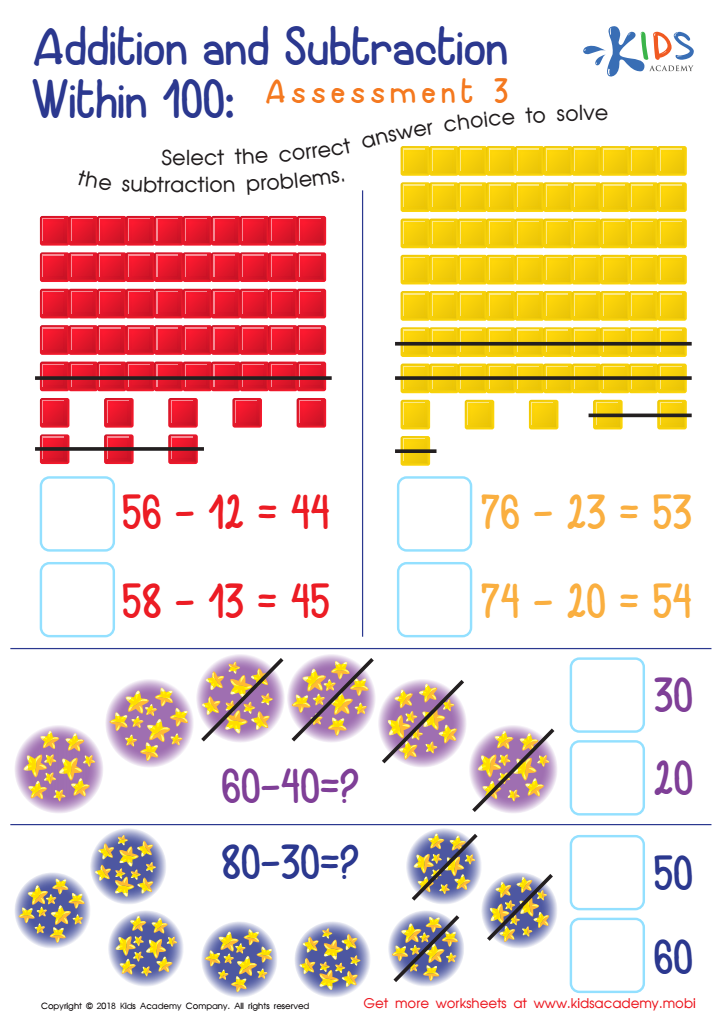
Addition and Subtraction Within 1: Assessment 3 Worksheet



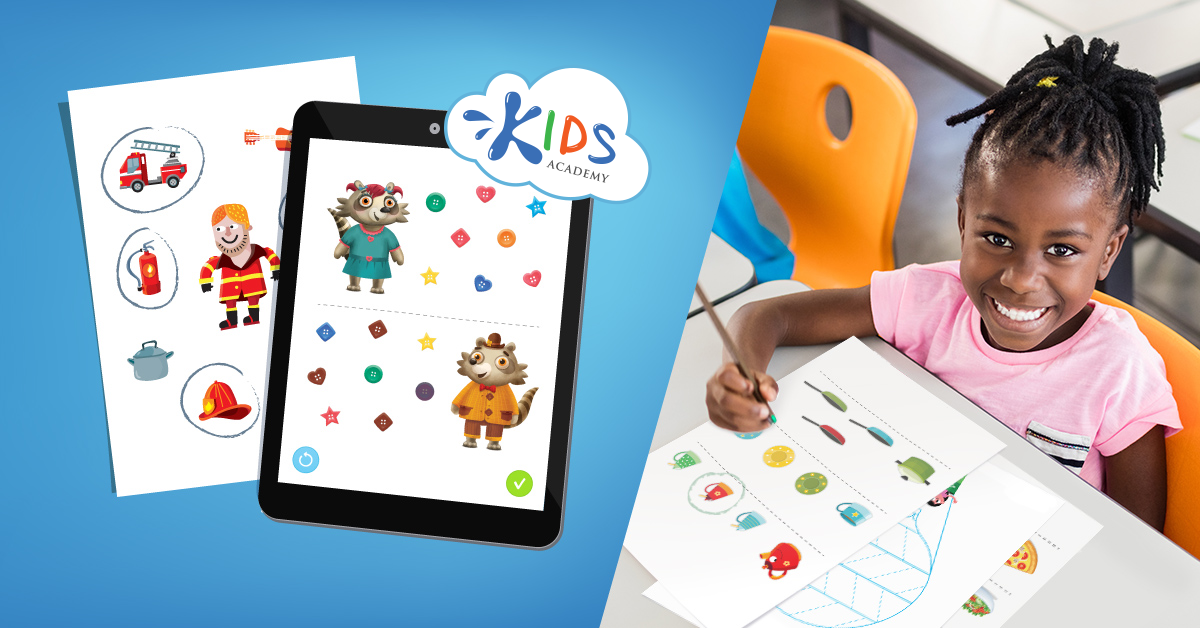




Parents and teachers should prioritize problem-solving abilities in young children, especially through easy math concepts for ages 4-6, for several compelling reasons. First, children learn crucial cognitive skills during these formative years that lay the foundation for later academic success. Engaging in problem-solving helps develop critical thinking, reasoning, and logical analysis, enabling them to tackle more complex challenges as they grow.
Furthermore, math proficiency at a young age correlates with overall academic achievement across subjects. When children grasp simple math concepts through hands-on activities and playful challenges, they not only enhance their mathematical skills but also build confidence in their abilities. Positive experiences with math can create a lifelong appreciation for the subject.
Additionally, strong problem-solving skills are valuable beyond the classroom. They foster resilience and a "growth mindset," encouraging children to approach challenges with a positive attitude. These skills help children learn to collaborate, negotiate, and communicate effectively with peers, essential aspects of their social development.
Incorporating easy math problem-solving into everyday activities creates enriching learning experiences that prepare children for future educational challenges while supporting their emotional and social growth. Thus, parents and teachers play a vital role in nurturing these abilities from an early age.








