Understanding quantity Easy Math Worksheets for Ages 4-6
3 filtered results
-
From - To
Welcome to our "Understanding Quantity" Easy Math Worksheets designed for children ages 4-6! These engaging worksheets are perfect for young learners to explore basic math concepts in a fun and interactive way. With colorful visuals and simple exercises, children will develop a strong understanding of quantity, enabling them to recognize and compare numbers effectively. Our carefully crafted activities are tailored to enhance counting skills and foster a love for math. Whether at home or in the classroom, these worksheets provide valuable practice that aligns with early educational standards. Start your child's math journey today with our user-friendly resources!
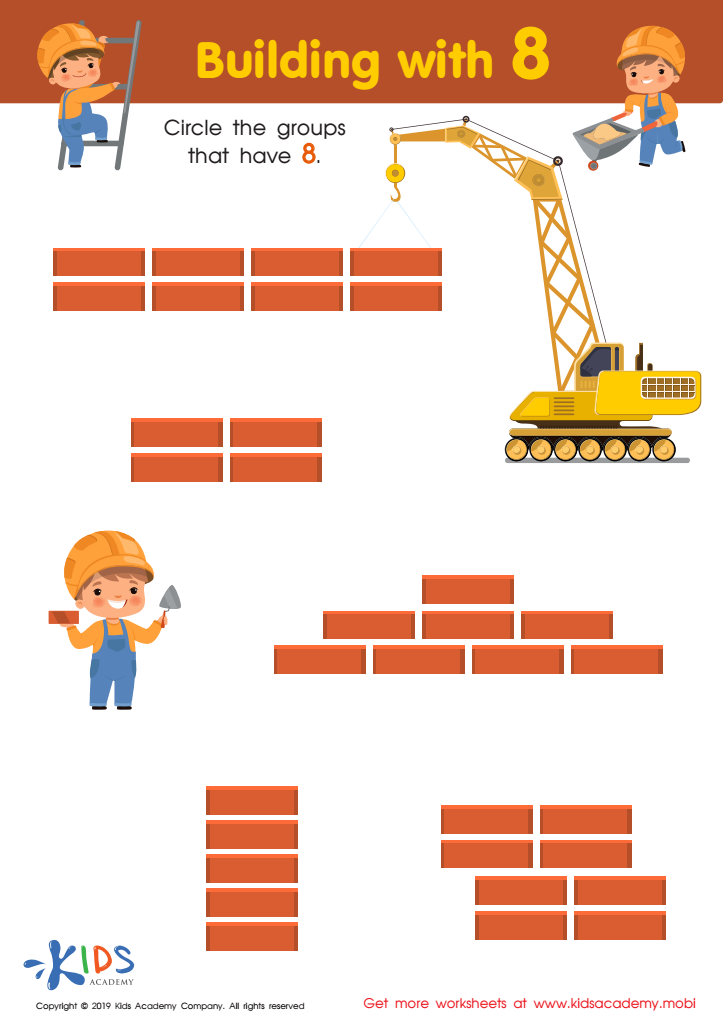
Building with 8 Worksheet
 Assign to My Students
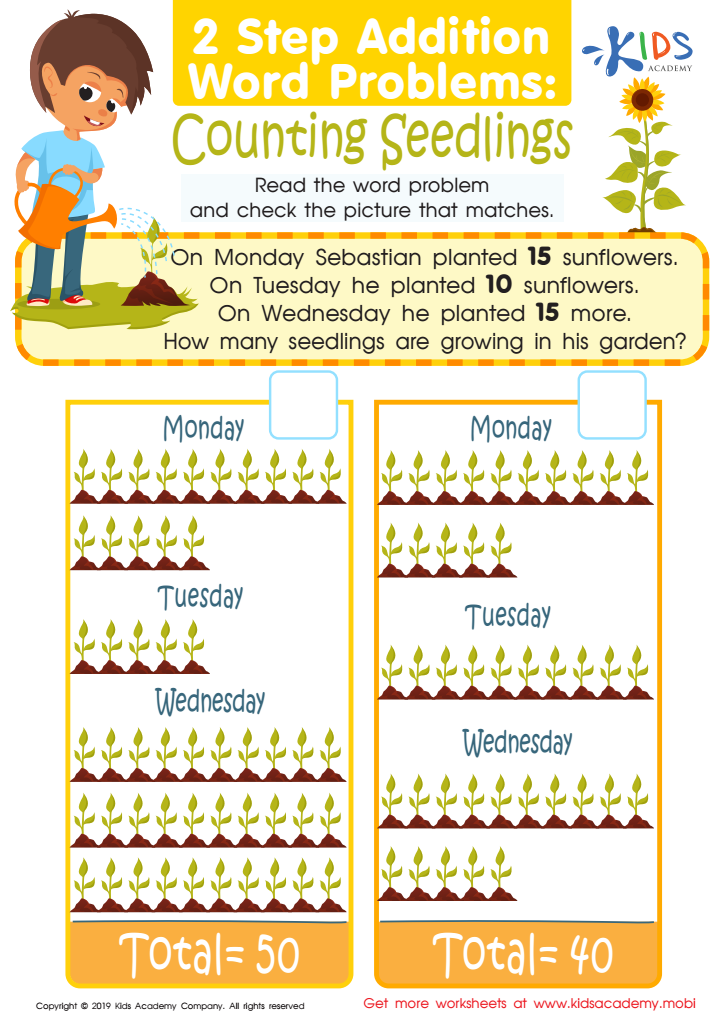
Counting Seedlings Worksheet
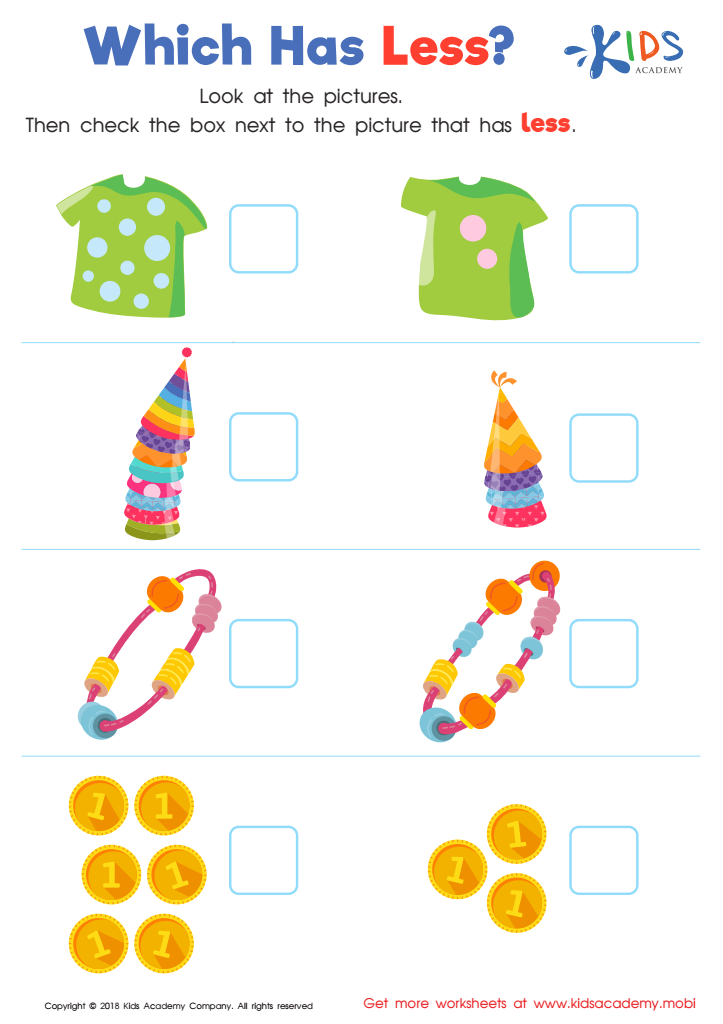
Which Has Less? Worksheet








Understanding quantity in early math for children aged 4-6 is crucial for their cognitive development and future academic success. During these formative years, children are naturally curious and eager to learn about the world around them, including basic mathematical concepts. Teaching them about quantity lays the groundwork for more advanced math skills they will encounter later on, such as addition, subtraction, and problem-solving.
When children grasp the concept of quantity, they develop strong numerical sense, essential for critical thinking and decision-making. By engaging in activities that encourage counting, comparing, and measuring, they build a solid foundation in math that enhances their analytical abilities. This early math understanding also boosts their confidence, making them more willing to tackle challenges in school.
Moreover, involving parents in this learning process can enrich the experience, transforming everyday situations—like cooking, shopping, or playing—to reinforce these skills. It creates valuable bonding moments and allows parents to model positive attitudes towards learning.
Ultimately, emphasizing an understanding of quantity in early education promotes a holistic approach to child development, ensuring students not only succeed academically but also thrive in life skills that require arithmetic and logical reasoning.








