Visual discrimination Easy Math Worksheets for Ages 4-6
3 filtered results
-
From - To
Explore our "Visual Discrimination Easy Math Worksheets" designed for children ages 4-6! These engaging, printable worksheets enhance visual recognition skills while incorporating fundamental math concepts. Perfect for early learners, each activity helps kids identify differences, match shapes, and develop keen observation skills essential for their overall academic success. Our worksheets provide a fun and interactive approach to learning, making math enjoyable for young minds. With colorful illustrations and age-appropriate challenges, these resources support parents and educators in fostering a strong math foundation. Download and print today to spark your child's interest in math and boost their visual discrimination abilities!
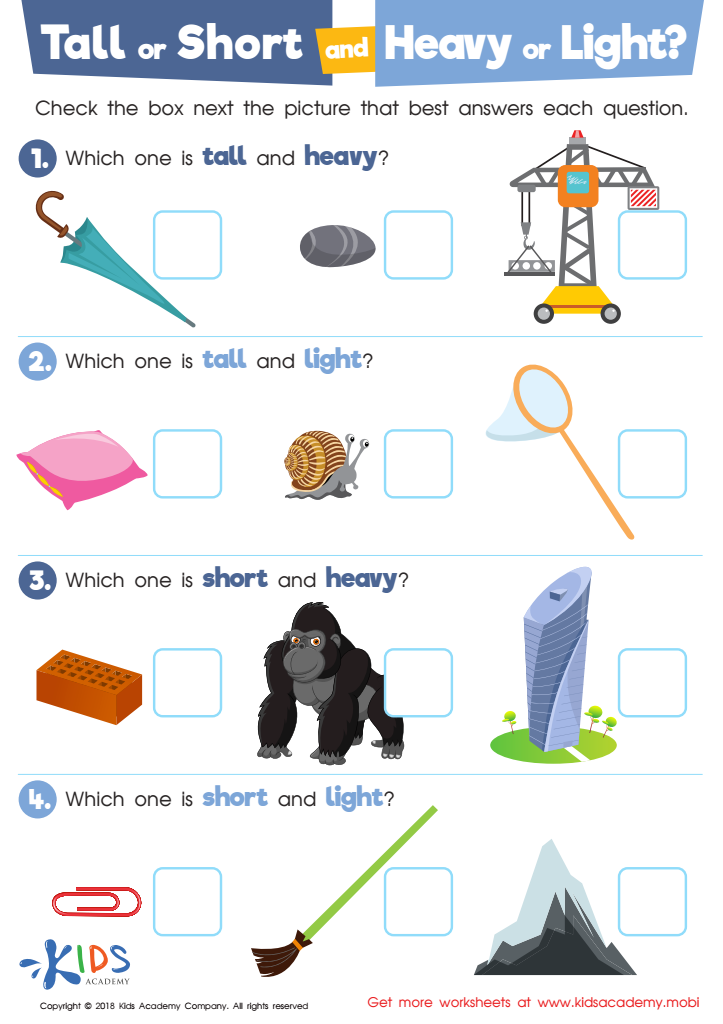
Tall or Short and Heavy or Light? Worksheet
 Assign to My Students
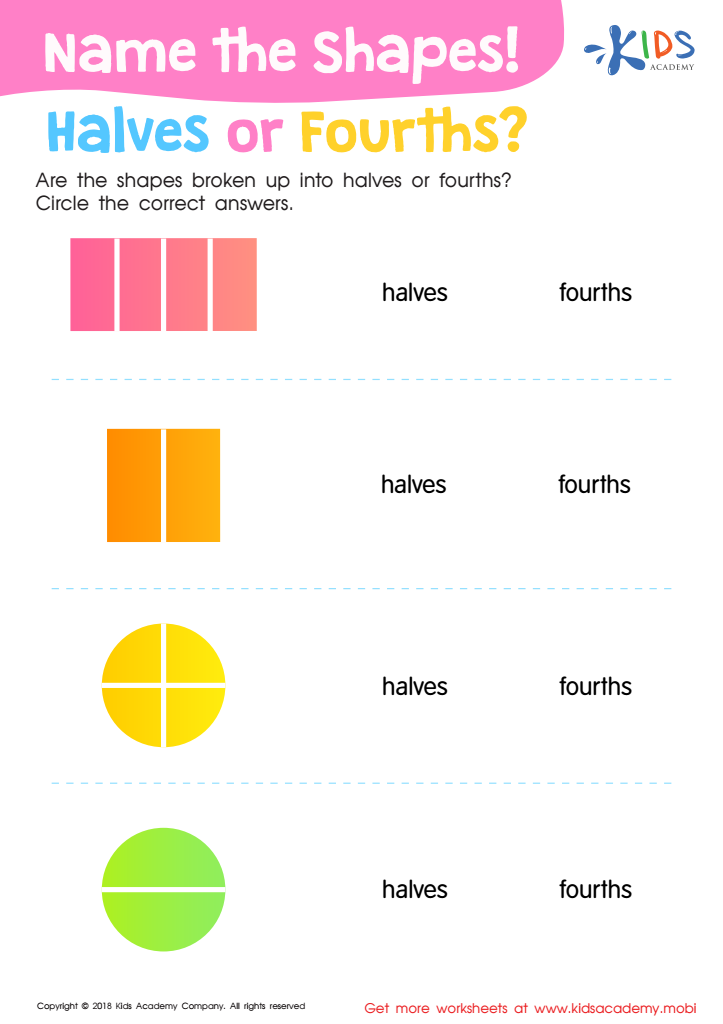
Name the Shapes Halves or Fourths? Worksheet
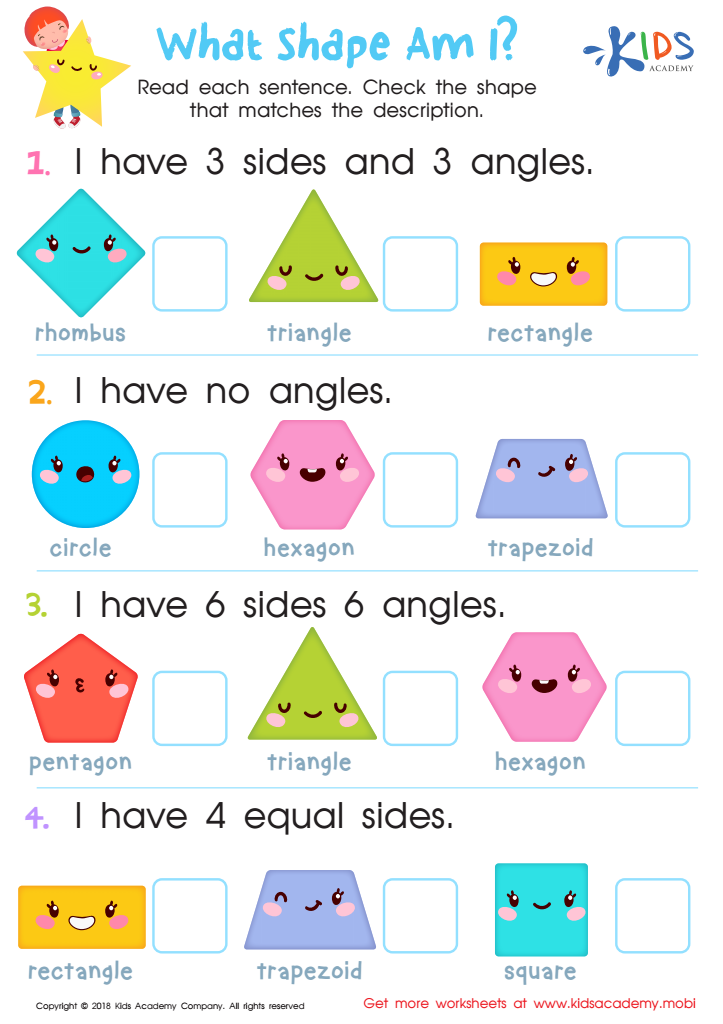
What Shape Am I? Worksheet





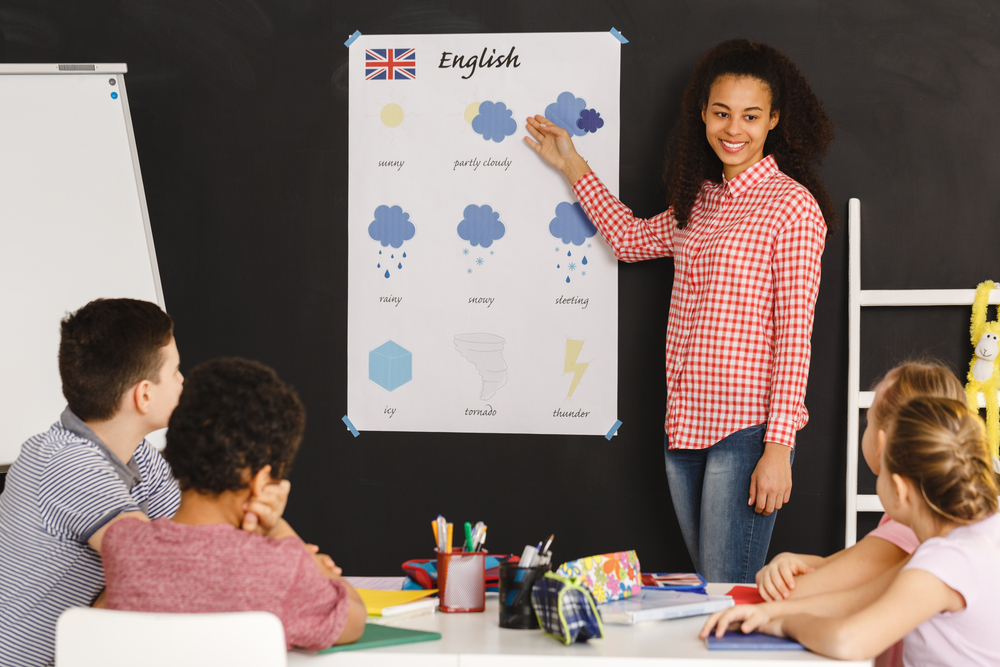


Visual discrimination is a crucial skill for children aged 4-6, particularly in the context of early math learning. At this age, children begin to develop the foundational skills necessary for more complex mathematical concepts. Visual discrimination involves the ability to notice differences and similarities in objects, shapes, and numbers. By fostering this skill, parents and teachers can significantly aid children in recognizing patterns, shapes, and numerical quantities, making learning more effective and engaging.
With enhanced visual discrimination skills, young learners are better equipped to distinguish between similar numbers (like 3 and 5) and patterns, which serves as a precursor to essential operations like addition and subtraction. These skills are not only pivotal in math but also support broader cognitive development, improving children's problem-solving abilities and enhancing their overall learning experiences.
Moreover, early math experiences that are grounded in visual discrimination can help build confidence, encouraging a positive attitude towards math that will benefit them throughout their education. By investing time and resources into activities and materials that strengthen visual discrimination, parents and teachers can provide children with the tools they need for future academic success and everyday problem-solving skills.








