Understanding sequencing Easy Numbers 0–10 Worksheets for Ages 4-6
3 filtered results
-
From - To
Introduce your child to the basic concept of sequencing with our 'Understanding Sequencing Easy Numbers 0–10 Worksheets for Ages 4-6'. These engaging printable worksheets are designed to help young learners recognize and order numbers from 0 to 10. By arranging numbers in the correct sequence, children develop essential math skills such as counting, number recognition, and logical thinking. Fun activities featuring colorful images and playful themes make learning enjoyable and effective. Perfect for preschool and kindergarten students, these worksheets are an excellent resource for parents and teachers aiming to build a strong foundation in early math proficiency.
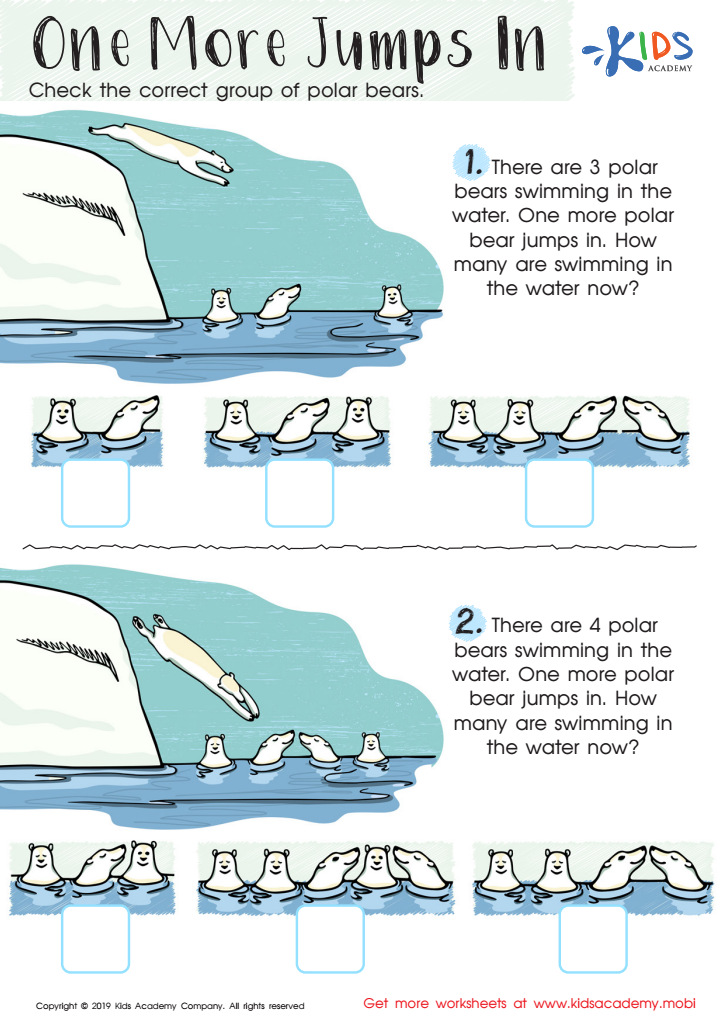
One More Jumps In Worksheet
 Assign to My Students
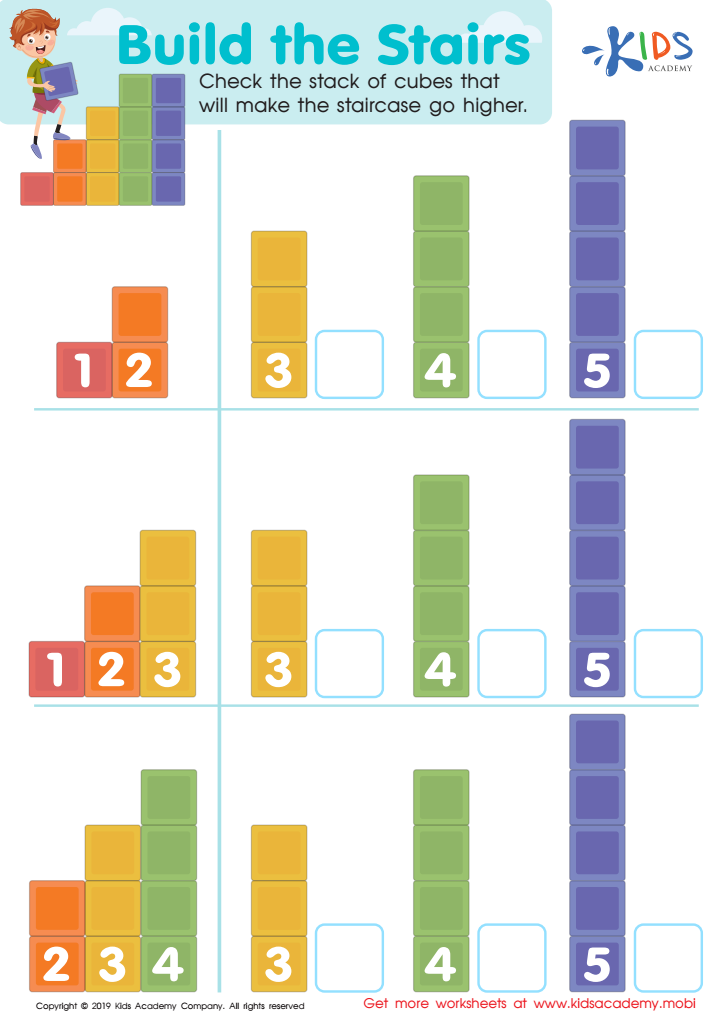
Build the Stairs Worksheet
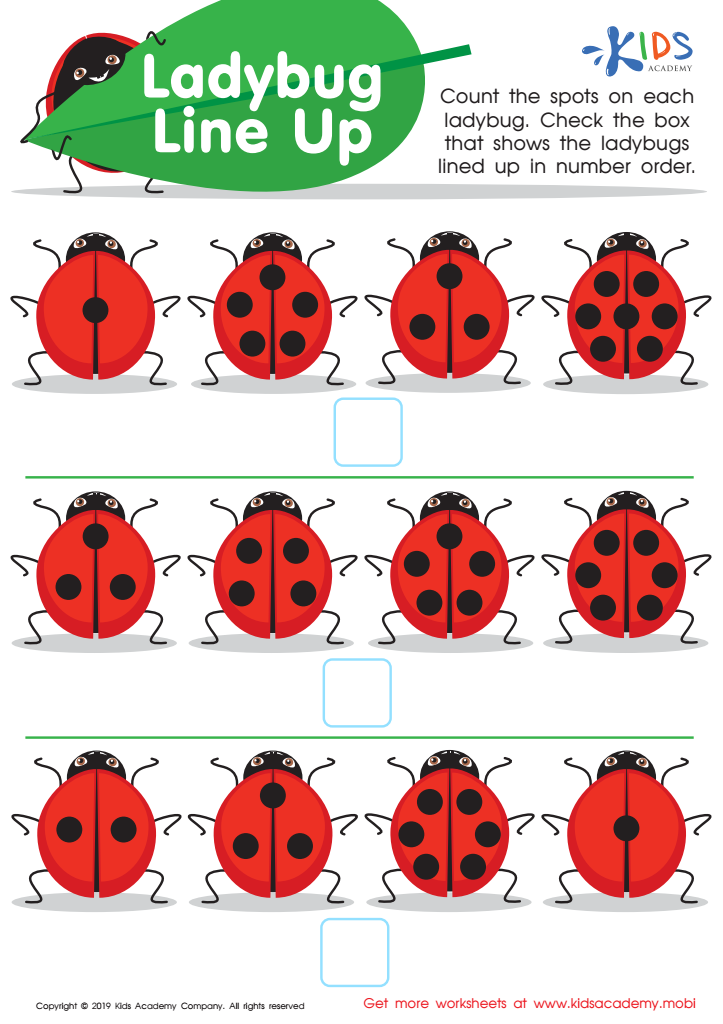
Ladybug Line Up Worksheet








Understanding sequencing is fundamental in early childhood education, especially regarding easy numbers from 0 to 10. For children aged 4-6, sequencing is more than just counting; it is a critical cognitive skill that supports their overall mathematical understanding and daily life activities.
First, sequencing numbers lays the groundwork for addition and subtraction as children learn the order and relationship between numbers. Knowledge of number sequences helps them understand concepts like 'next' or 'previous,' which is crucial for more advanced math problems they will encounter later.
Second, sequencing promotes logical thinking and problem-solving skills. For instance, recognizing that 4 comes after 3 and before 5 helps children make predictions and structure their thoughts. This logical ordering is essential not only in mathematics but also in literacy (understanding the order of a story) and life skills (following steps to complete tasks).
Lastly, sequential understanding fosters confidence and independence among young children. Being able to count correctly from 0-10 without assistance builds self-esteem and encourages active participation in classroom activities. It also supports the development of routines and understanding the passage of time, which are key in early social and emotional development.
In conclusion, teaching sequencing helps create a solid mathematical foundation, enhances cognitive development, and promotes essential life skills, making it vital for parents and teachers to emphasize this practice.