Phonics recognition Easy Phonics Worksheets for Ages 4-7
5 filtered results
-
From - To
Unlock your child's reading potential with our "Easy Phonics Worksheets" designed specifically for ages 4-7! These engaging and interactive worksheets help young learners develop essential phonics recognition skills. Each activity is crafted to enhance letter-sound correspondence, aiding in early literacy development. Bright colors, fun illustrations, and simple instructions make learning enjoyable and effective. Whether in the classroom or at home, our worksheets support differentiated learning, allowing kids to practice at their own pace. Lay a strong foundation for reading success with our thoughtfully designed phonics resources. Start your child’s literacy journey today with our fun and educational worksheets!
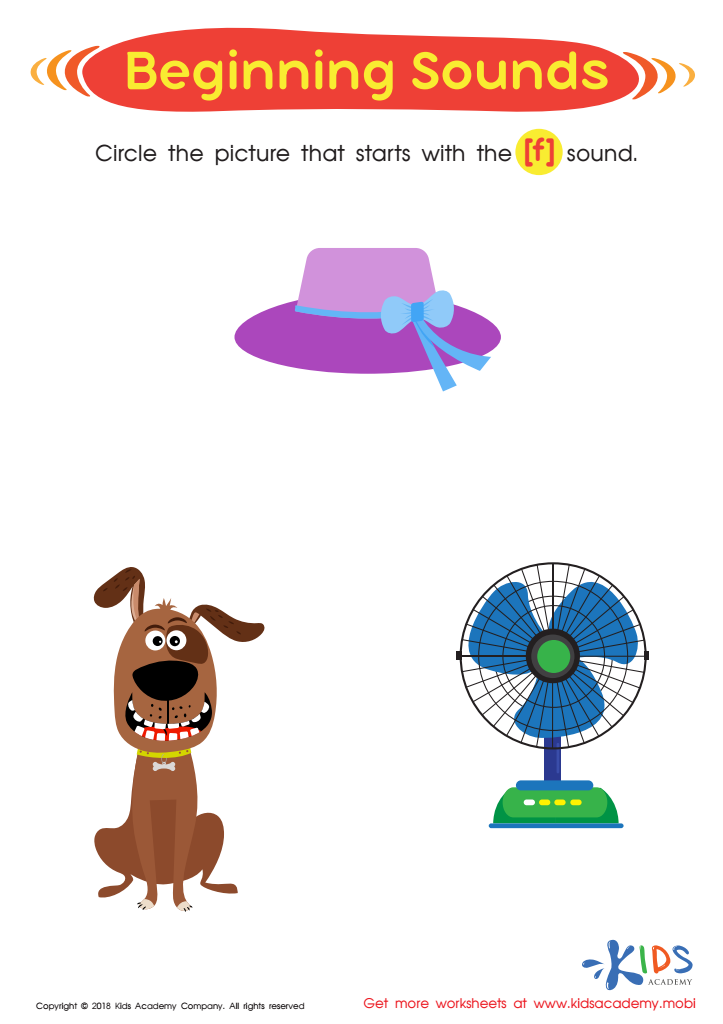
Beginning Sounds Assessment Printable
 Assign to My Students
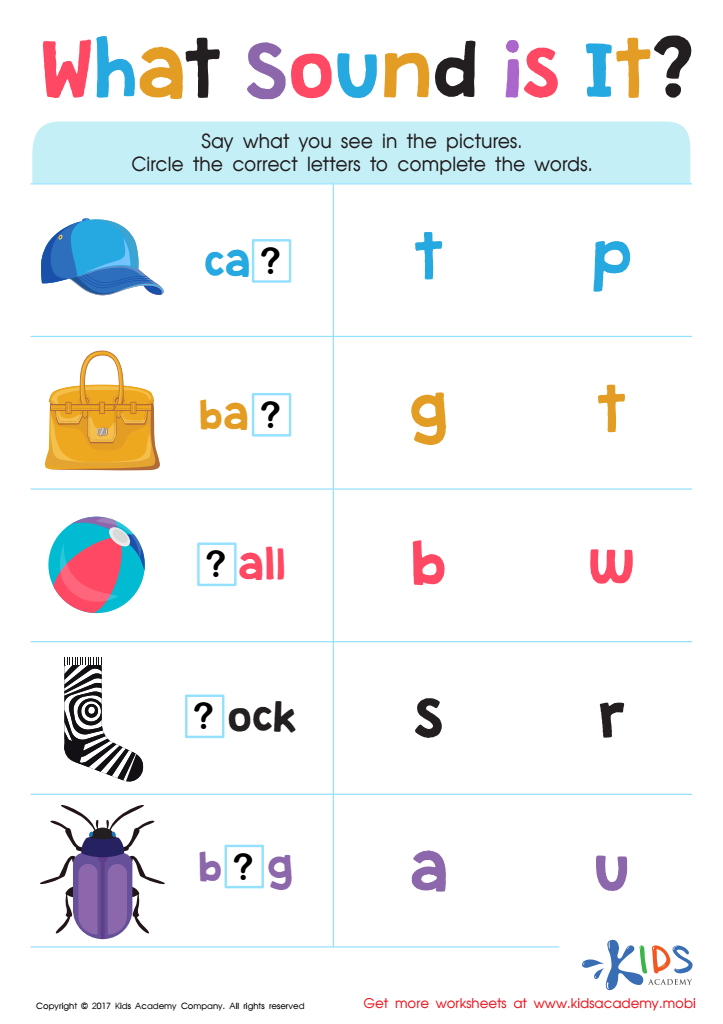
What Sound Is it? Worksheet
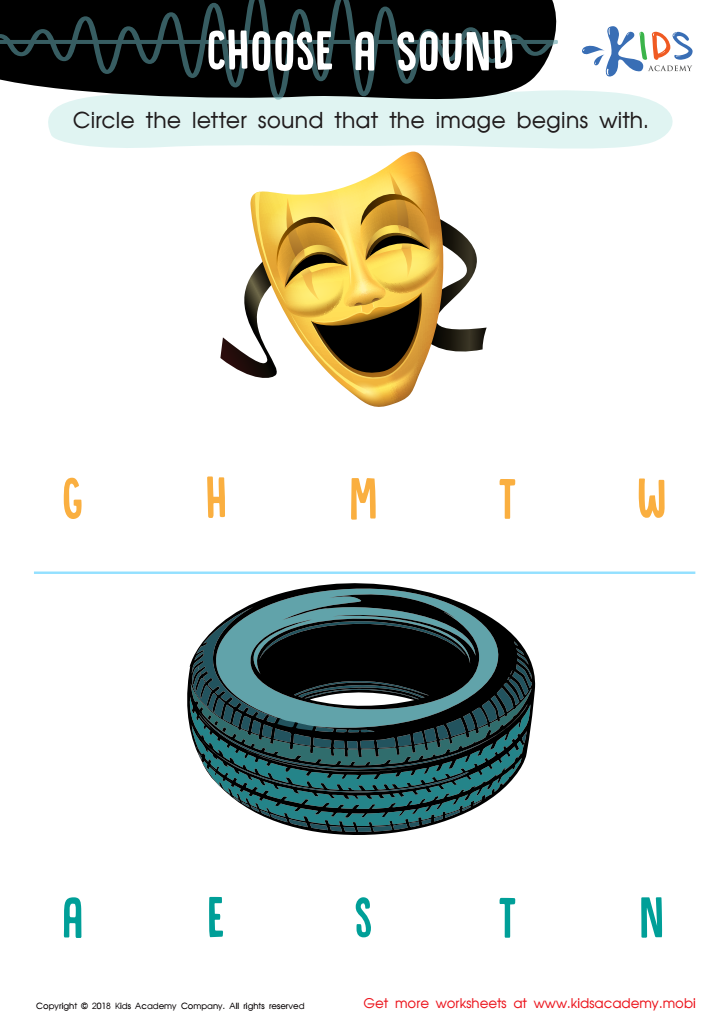
Choose a Sound Worksheet
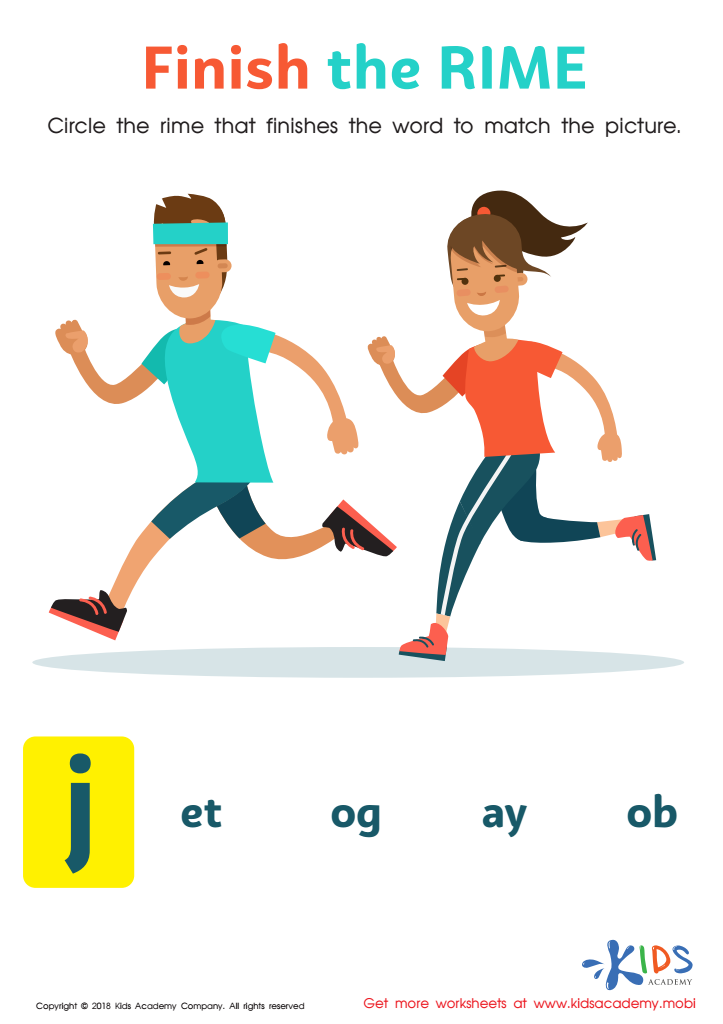
Finish the Rime Worksheet
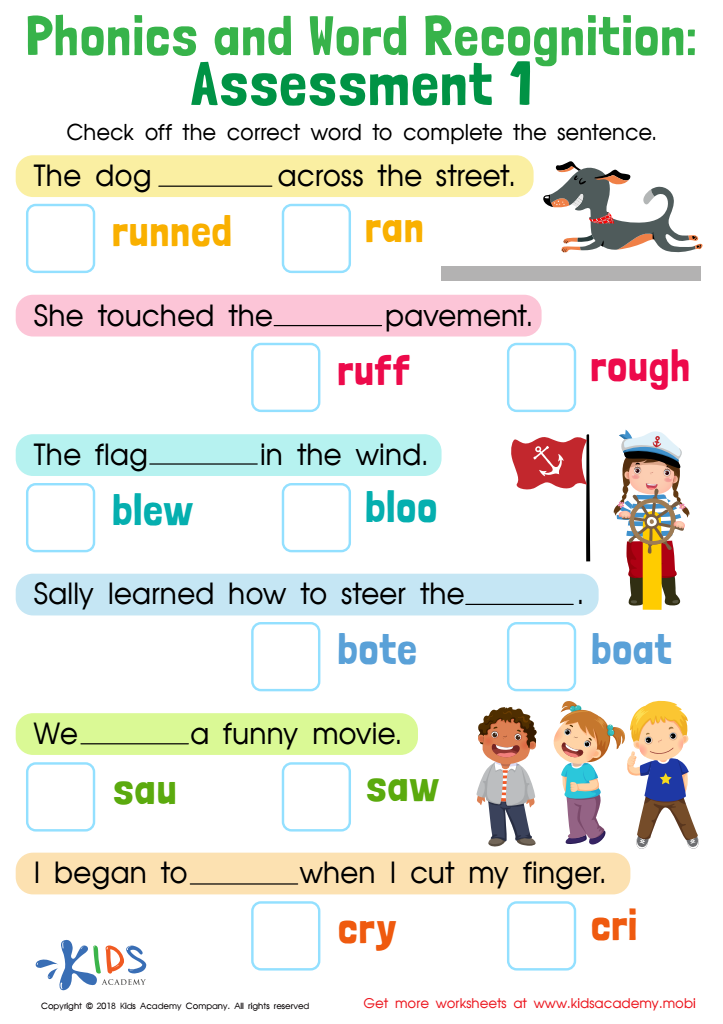
Phonics and Word Recognition: Assessment 1 Worksheet








Phonics recognition is crucial for children aged 4 to 7 as it forms the foundation for reading and writing skills. During this stage of development, children are particularly receptive to language learning, and effective phonics instruction helps them decode words. Easy Phonics methods make it accessible and engaging, turning what could be a daunting task into an enjoyable experience through songs, games, and stories.
Parents and teachers should care about phonics recognition because it directly influences literacy success. Proficient phonics skills enable children to sound out words independently, boosting their confidence in reading. This, in turn, fosters a love for reading, allowing children to explore stories and information that enhance their comprehension and vocabulary.
Moreover, early phonics skills can prevent future reading difficulties, setting children on a positive academic trajectory. As reading proficiency is linked to overall academic performance, early intervention in phonics can reduce the likelihood of later struggles in school.
Involving parents in phonics learning reinforces skills at home, creating a supportive environment that promotes continuous learning. By prioritizing phonics recognition, both parents and teachers pave the way for a generation of confident, capable readers who are prepared to excel in their educational journey.