Vocabulary expansion Easy Phonics Worksheets for Ages 4-7
4 filtered results
-
From - To
Enhance your child's vocabulary with our Easy Phonics Worksheets designed for ages 4-7. These engaging, colorful activities make learning fun and effective. Our worksheets help young learners grasp new words effortlessly through interactive phonics exercises that encourage reading, writing, and pronunciation. Created by education experts, this resource lays a strong foundation in language skills, aiding early literacy development. Spark your child's curiosity and watch their confidence soar as they explore the wonders of words. Ideal for both classroom settings and homeschooling, our worksheets are a perfect tool for fostering a lifelong love for reading and learning.
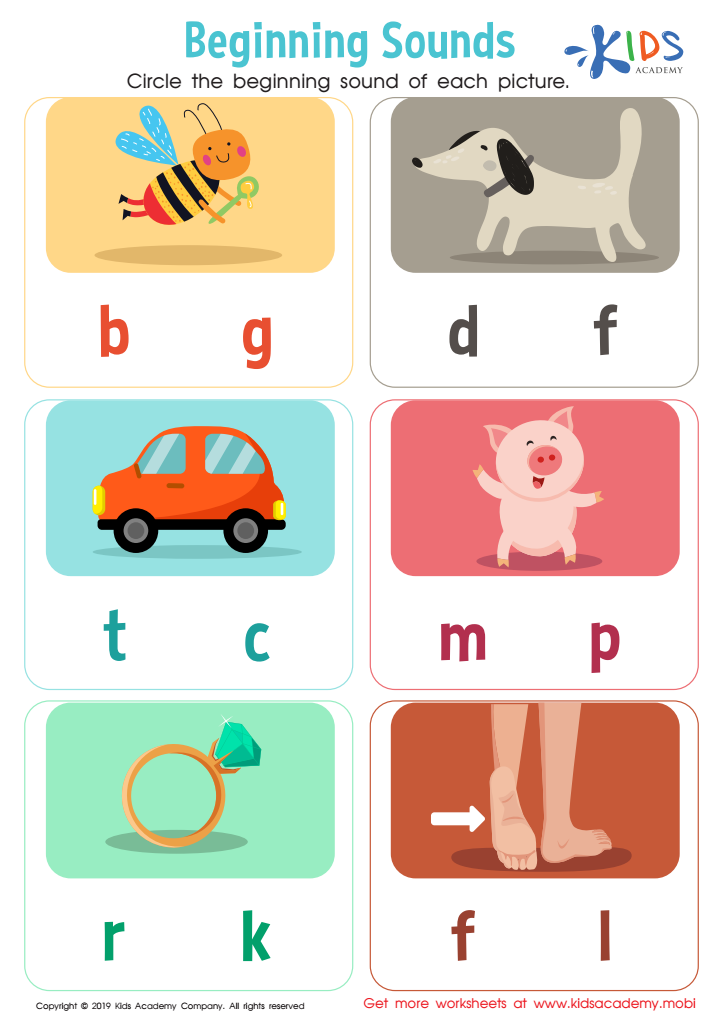
Beginning Sounds Worksheet
 Assign to My Students
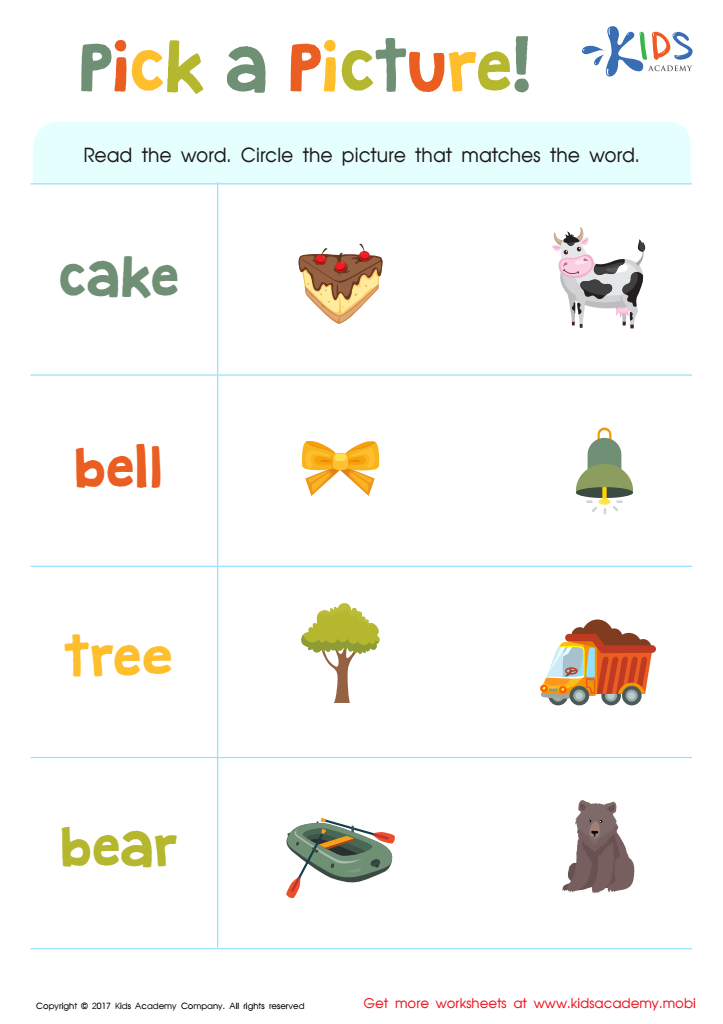
Pick a Picture Word Recognition Worksheet
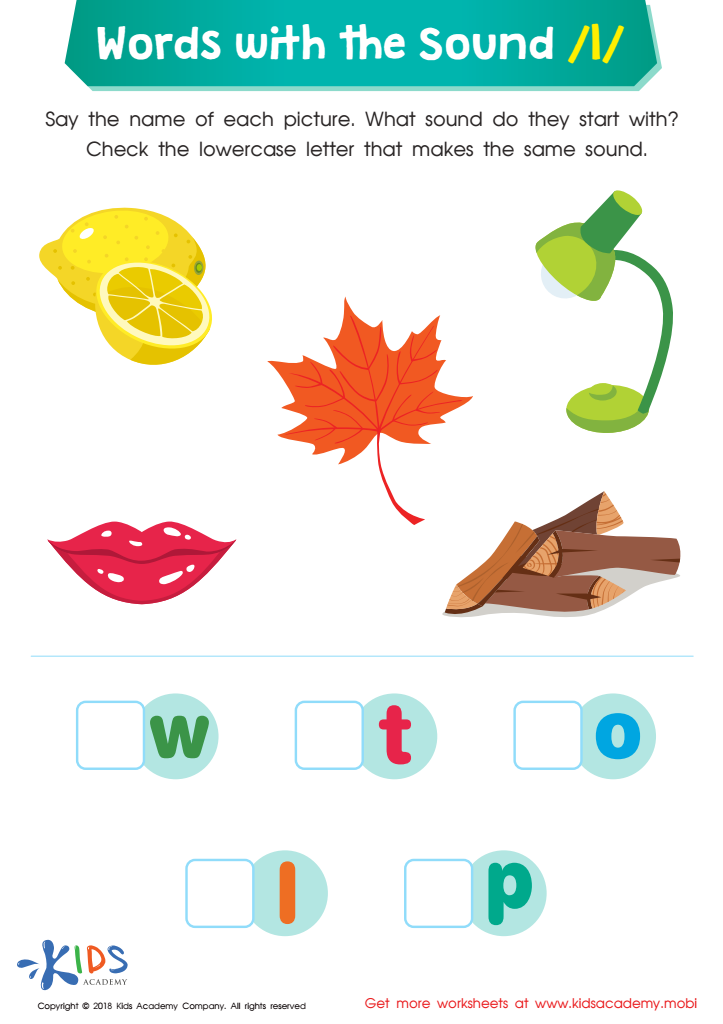
Words with Sound L Reading Worksheet
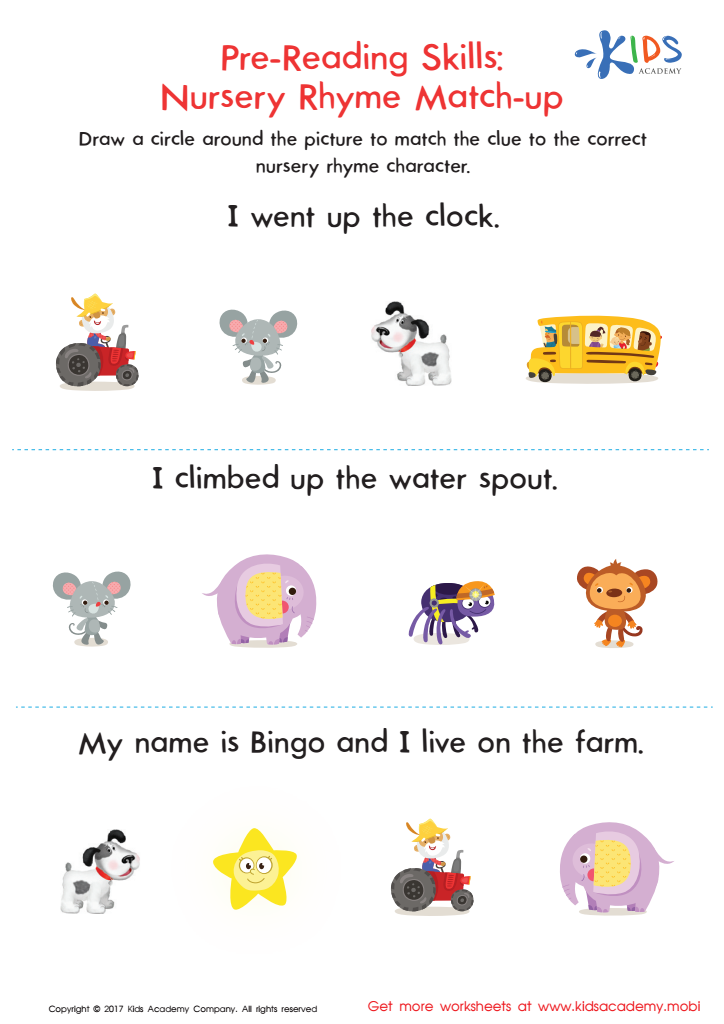
Nursery Rhyme Match–Up Worksheet








Vocabulary expansion is a crucial aspect of early childhood education, and "Easy Phonics for Ages 4-7" offers an effective pathway for young learners. At this age, children's brains are exceptionally receptive to new information, and a strong vocabulary acts as a foundational skill for numerous academic and life outcomes. Parents and teachers should care about vocabulary expansion because it directly impacts children’s ability to communicate, read, and comprehend effectively.
Firstly, a rich vocabulary enhances communication skills. When children know more words, they can express their thoughts, emotions, and needs more precisely. This improves their ability to interact with peers and adults, building stronger social and emotional connections.
Secondly, vocabulary is essential for reading development. Phonics instruction, which is a part of "Easy Phonics," helps children understand the relationship between letters and sounds. This foundational knowledge enables them to decode new words, building confidence and fluency in reading.
Moreover, a broad vocabulary enriches comprehension. As children encounter more complex texts in later grades, having a diverse lexicon allows them to understand and engage with the material more deeply.
Incorporating engaging and age-appropriate phonics lessons fosters a love for learning and ensures that children are well-equipped for future academic success. Both parents and teachers play a significant role in prioritizing vocabulary and phonics to give children the best possible head start.