Sorting skills Easy Numbers Worksheets for Ages 4-7
3 filtered results
-
From - To
Explore our engaging "Sorting Skills Easy Numbers Worksheets" designed specifically for children ages 4-7. These interactive worksheets help young learners develop essential sorting and classification skills through fun activities that involve organizing numbers and objects. By participating in these exercises, children will enhance critical thinking, fine motor skills, and early math proficiency. Our colorful and visually appealing worksheets encourage independent learning while making the process enjoyable. Whether at home or in the classroom, these resources are perfect for reinforcing sorting concepts and fostering a love for learning. Start your child’s educational journey with our comprehensive and enjoyable sorting skills worksheets today!
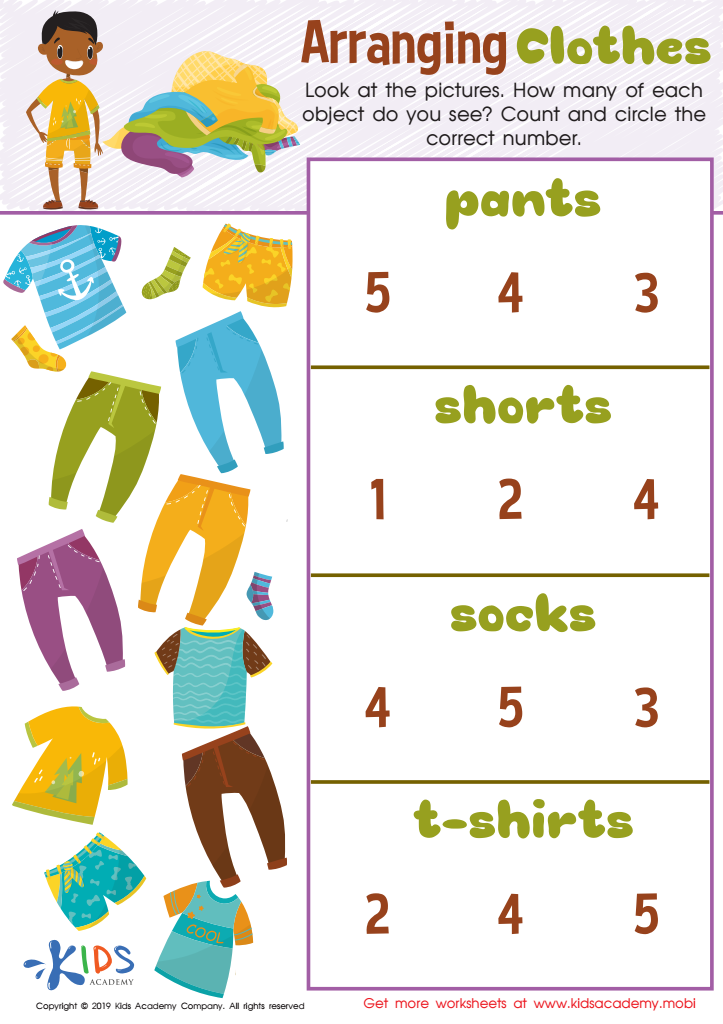
Arranging Clothes Worksheet
 Assign to My Students
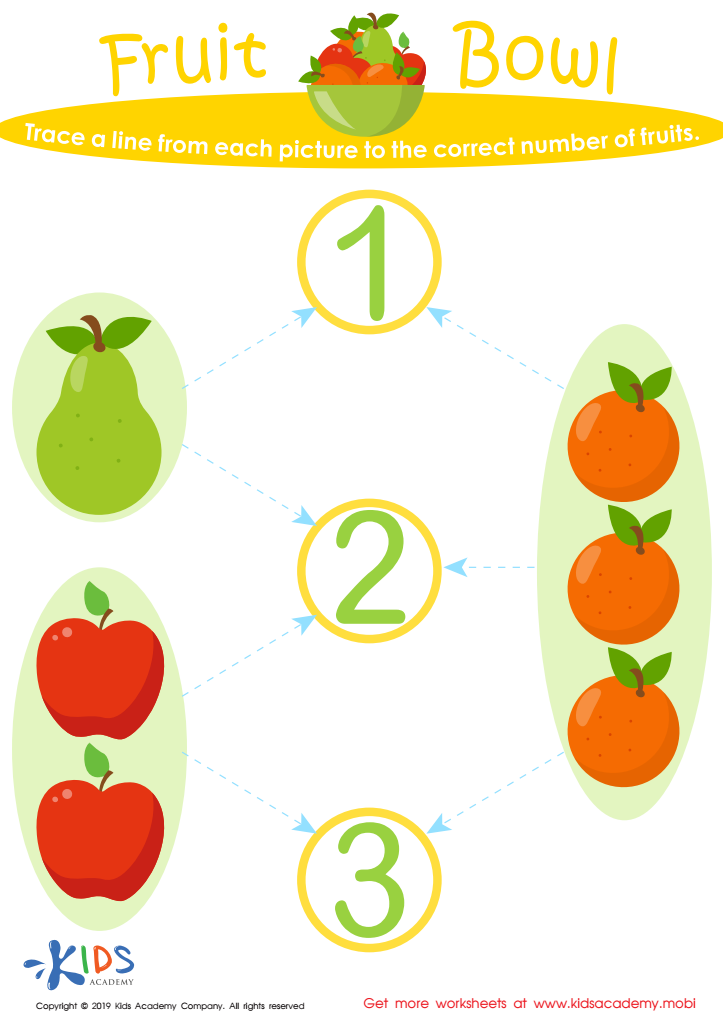
Fruit Bowl Worksheet
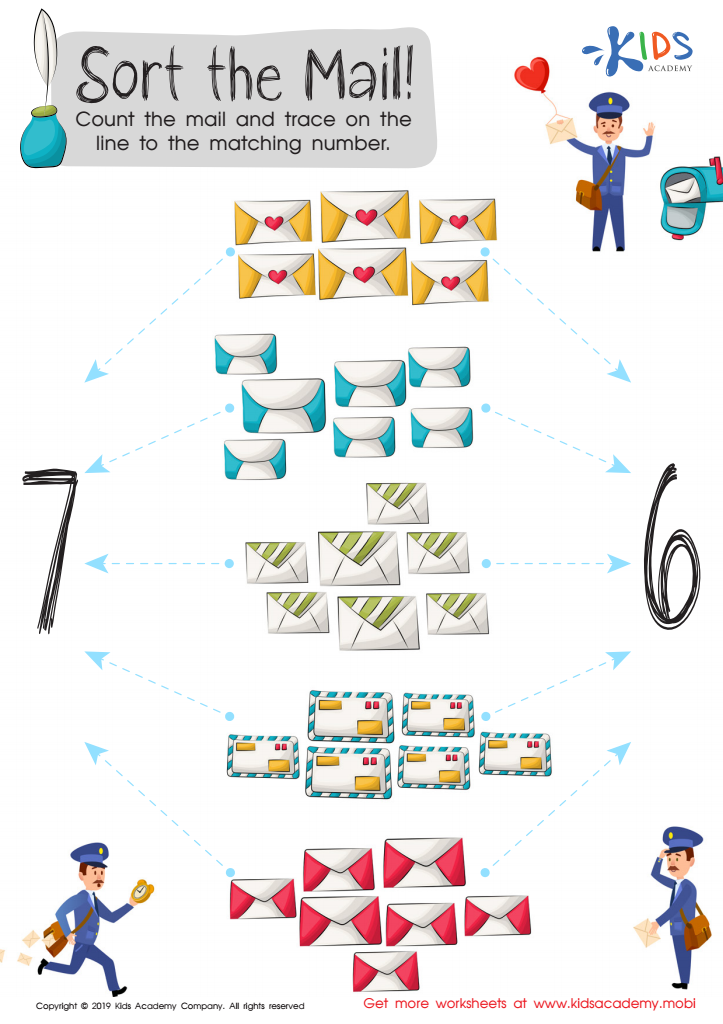
Sort the Mail Worksheet








Sorting skills, particularly for easy numbers, are vital for young learners aged 4-7. At this developmental stage, children are expanding their cognitive abilities and exploring the world around them. Sorting activities—whether dealing with numbers, objects, or even colors—encourage critical thinking and help in the development of important mathematical foundations.
When children sort numbers, they learn to recognize patterns, understand categories, and make comparisons. This hands-on experience not only makes math more engaging but also fosters logical reasoning skills that are crucial for problem-solving. Additionally, sorting serves as an introduction to basic concepts of grouping, sequencing, and even early data handling.
From a social perspective, sorting activities promote collaboration and communication among peers, as children often share their thinking and reasoning. This teamwork enhances their interpersonal skills and helps build a sense of community.
Moreover, focusing on these skills early on sets a strong foundation for future learning, enabling children to excel in more complex mathematical concepts as they grow. For parents and teachers, fostering sorting skills is not merely an academic exercise; it is an essential part of a child's holistic development, equipping them for future success in both school and life.








