Color recognition Easy Math Worksheets for Ages 4-7
6 filtered results
-
From - To
Welcome to our Color Recognition Easy Math Worksheets, specially designed for children aged 4-7! These engaging worksheets combine colorful visuals and fun activities to enhance your child’s understanding of colors while reinforcing essential math skills. Perfect for young learners, our resources help strengthen color recognition through interactive tasks, patterns, and counting exercises. By integrating math concepts with vibrant colors, children remain motivated and excited about learning. Explore a variety of printable worksheets tailored to boost your child's confidence and joy in learning. Get started today to help your little one develop a strong foundation in early math and color recognition!
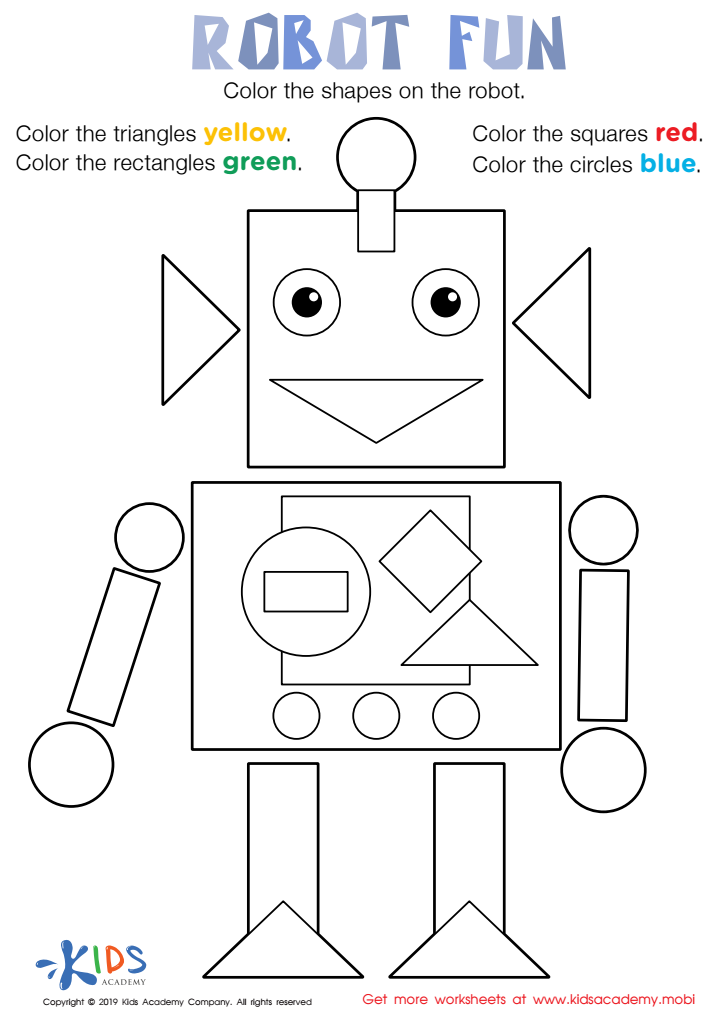
Robot Fun Worksheet
 Assign to My Students
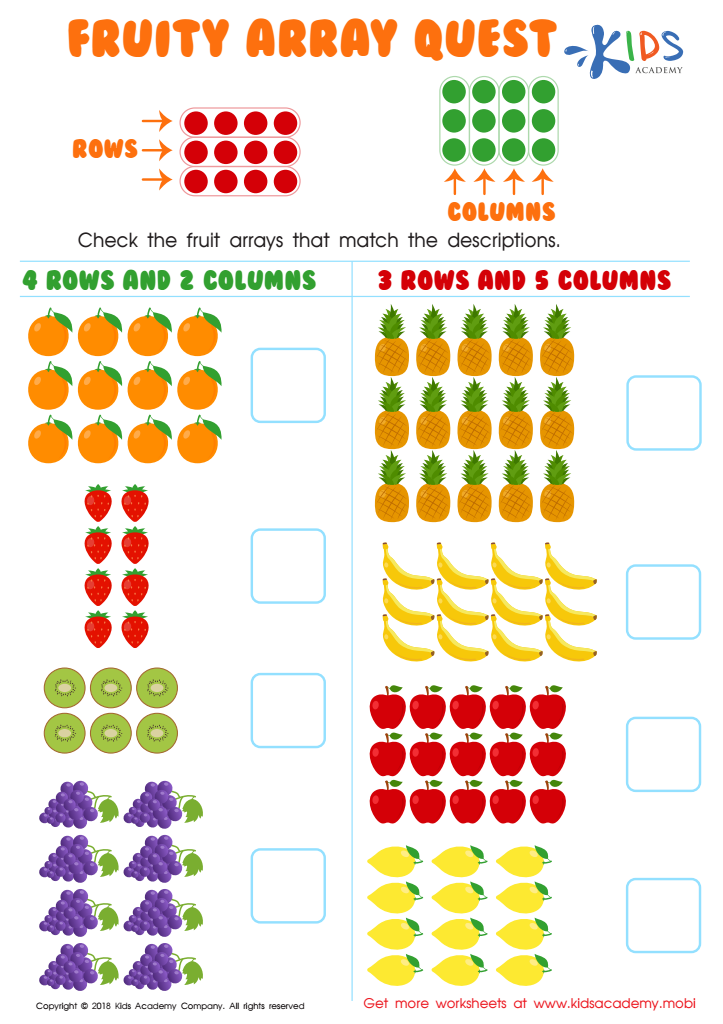
Fruity Array Quest Worksheet
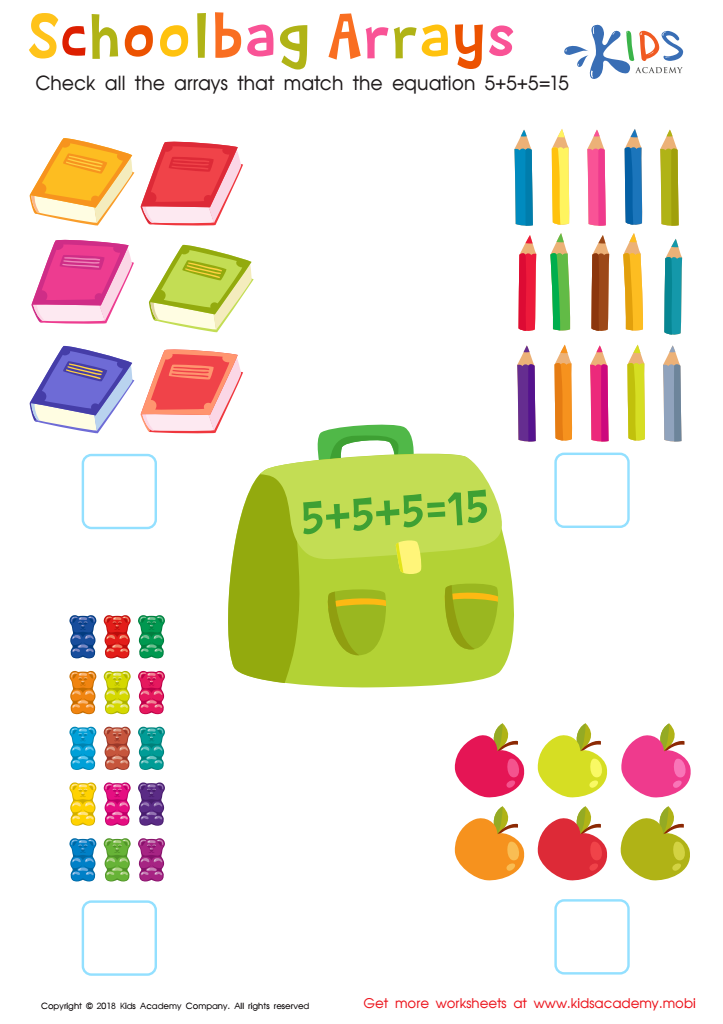
Schoolbag Arrays Worksheet
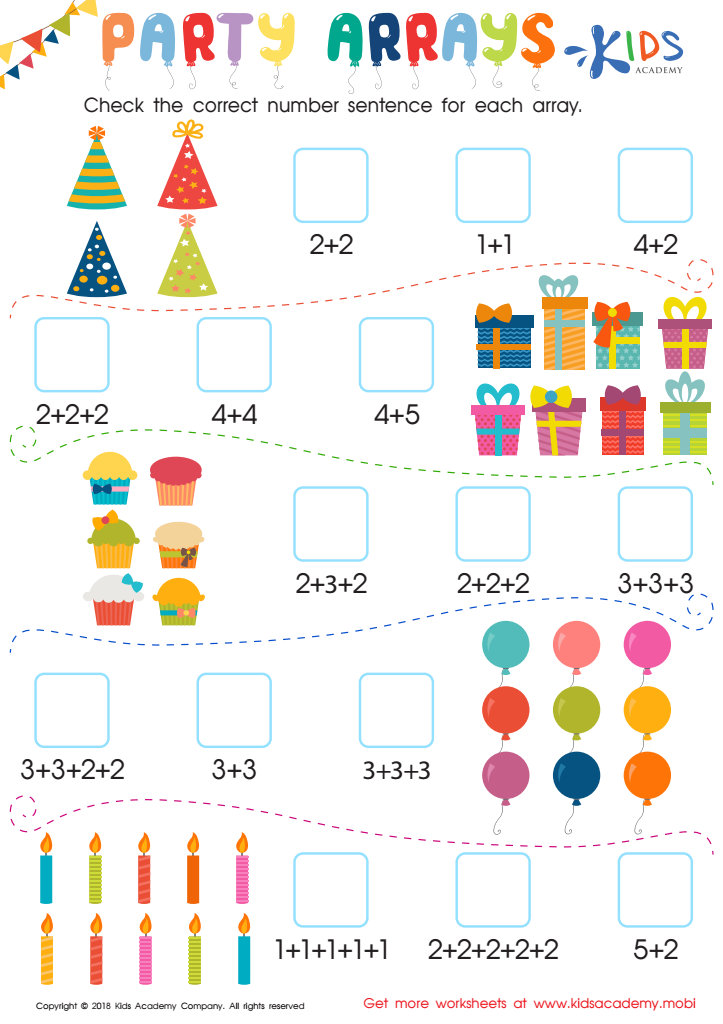
Party Arrays Worksheet
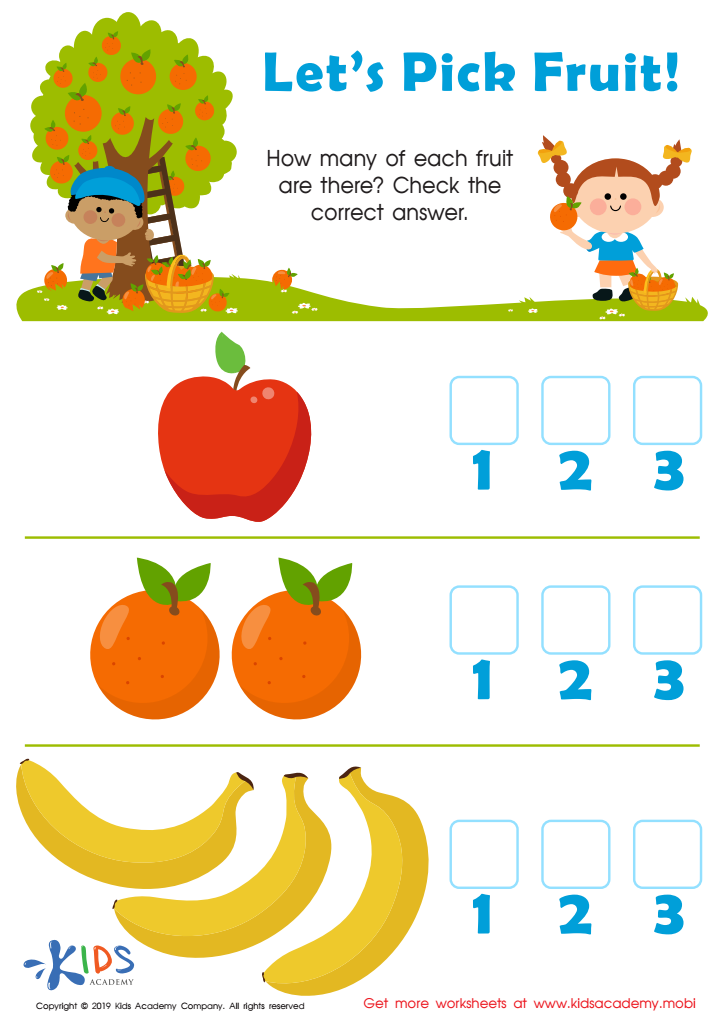
Let's Pick Fruit Worksheet
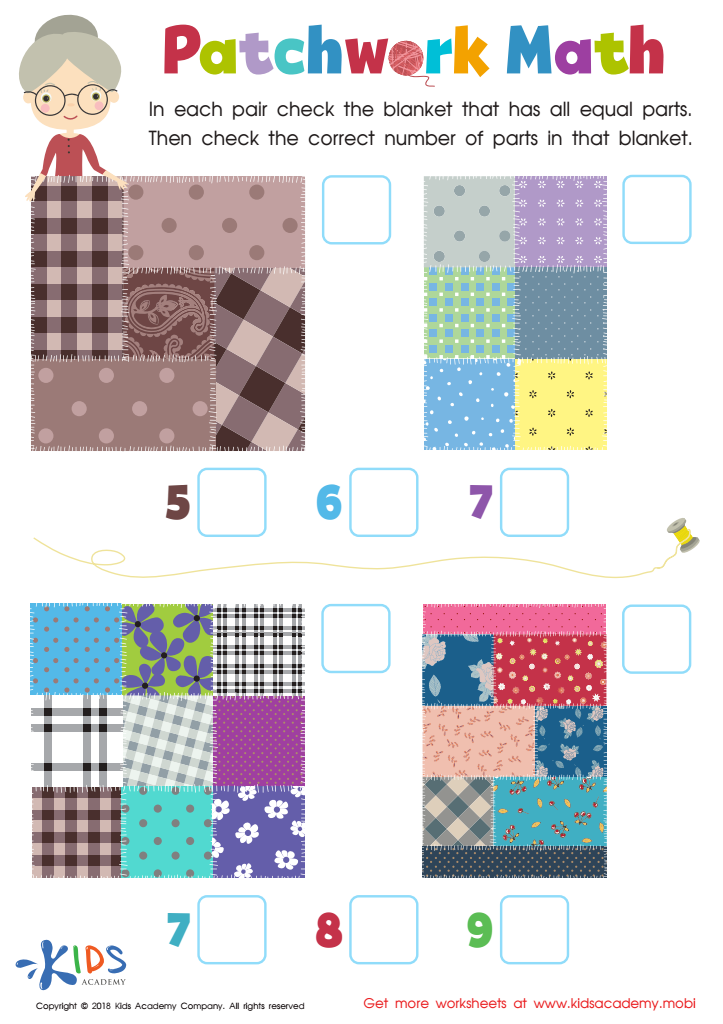
Patchwork Math Worksheet





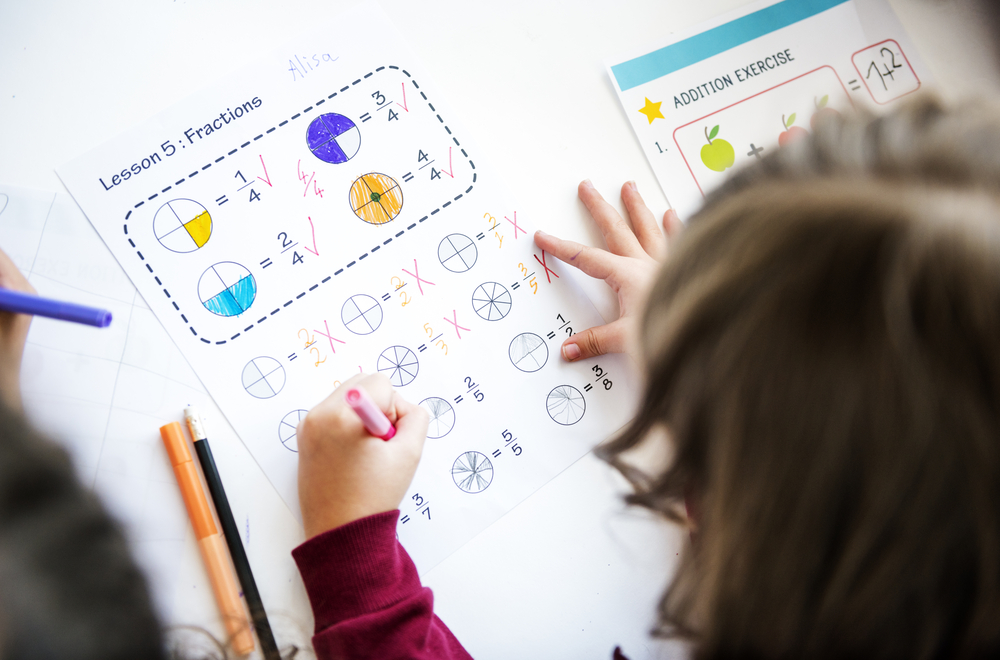


Color recognition and easy math skills are crucial developmental milestones for children aged 4-7, making them vital areas of focus for parents and teachers alike. Understanding colors not only enhances a child’s visual perception but also promotes language development. By learning color names and their characteristics, children expand their vocabulary, contributing to overall communication skills.
Incorporating easy math concepts alongside color recognition provides a holistic learning experience. For instance, counting colored objects helps reinforce numerical skills, fosters analytical thinking, and encourages problem-solving. Activities that blend these areas, such as sorting colorful shapes or arranging multi-colored blocks, naturally engage children and support both cognitive and fine motor development.
Moreover, these foundational skills pave the way for more advanced concepts in geometry, art, and science later on, making early exposure to color and basic mathematics essential. The interactive and playful nature of color and math activities not only makes learning enjoyable but also strengthens parent-child or teacher-student relationships through collaborative play. By prioritizing color recognition and easy math, adults improve children's academic readiness and confidence, setting them up for future success in school and beyond. Each little achievement forms a building block for a lifetime of learning.








