
Comparing heights Easy Math Worksheets for Ages 4-7
3 filtered results
Difficulty Level
Grade
Age
-
From - To
Subject
Activity
Standards
Explore our engaging "Comparing Heights Easy Math Worksheets" tailored for children ages 4-7. These worksheets are designed to help young learners understand the concept of height through fun activities that include visual comparisons, sorting, and simple questions. By working through these exercises, kids will develop essential math skills while enhancing their observational abilities. Perfect for homeschooling or classroom use, our worksheets encourage interactive learning and make math enjoyable. Get ready to boost your child's confidence and proficiency in comparing heights with our thoughtfully crafted resources. Dive into the world of heights and measurement—where learning is a thrilling adventure!
Favorites
With answer key
Interactive
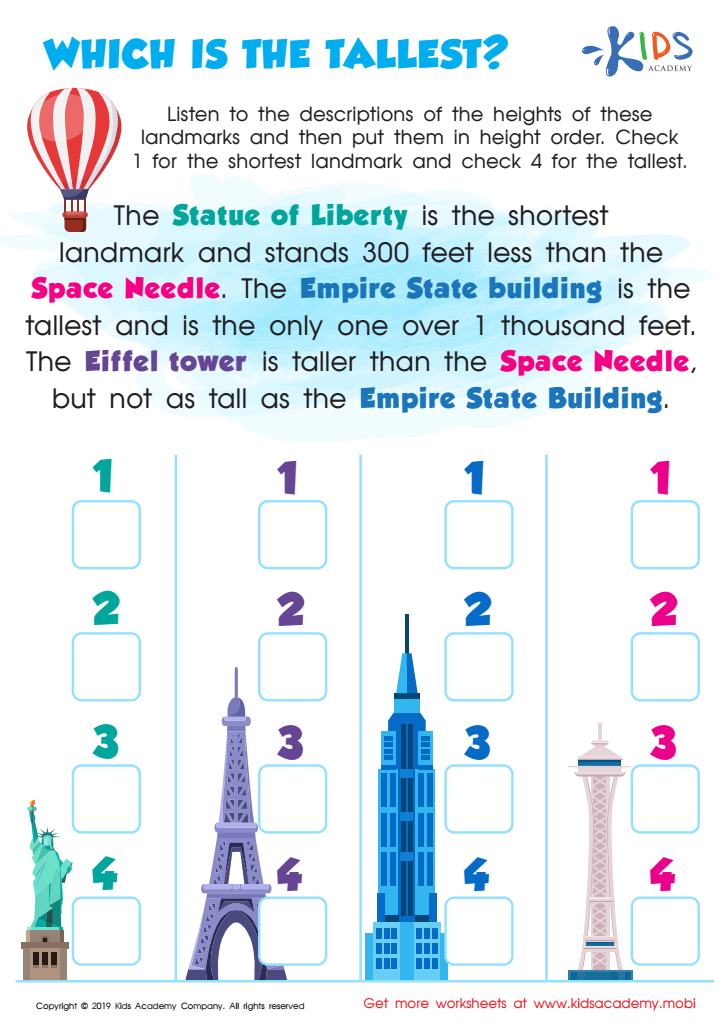
Which is the Tallest? Worksheet
Help your kids arrange the buildings in order of height: highest (4) to lowest (1). Ask them if they can think of other ways things can be measured. Read the texts describing the buildings and check 4 for the tallest and 1 for the shortest.
 Assign to My Students
Which is the Tallest? Worksheet
Worksheet
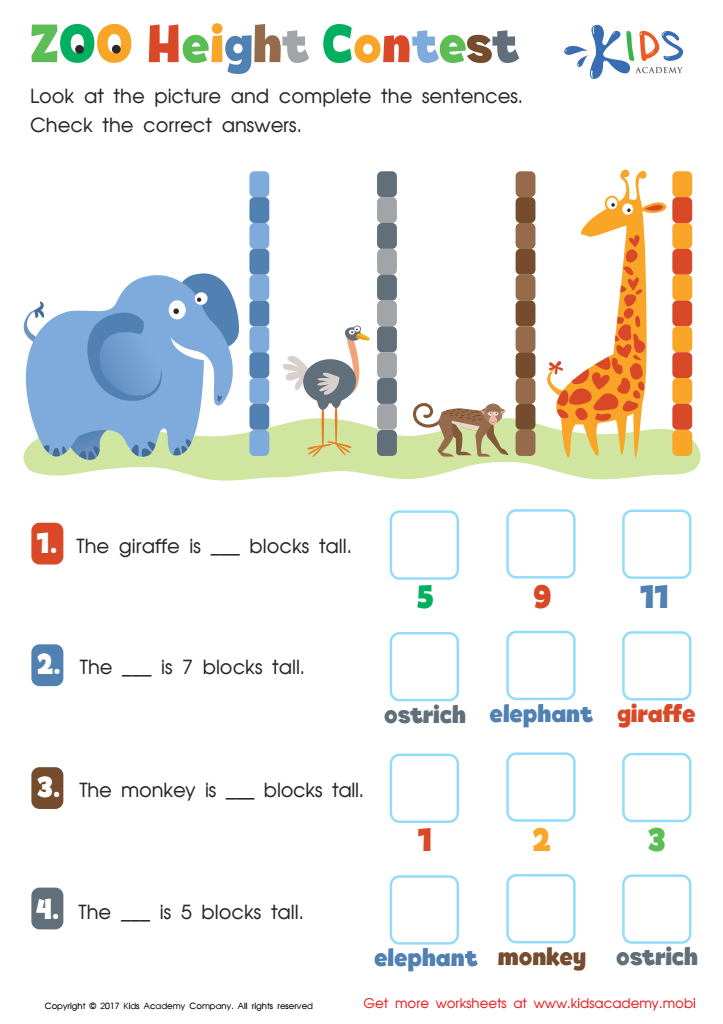
Zoo Height Contest Worksheet
Let's head to the zoo and use colorful blocks to measure your child's favorite animals! With this Kids Academy worksheet, help them practice and prepare for learning measurement. Guide them in looking at the zoo animals and counting blocks to find the height. Then, read the questions and check the box next to the correct answer.
Zoo Height Contest Worksheet
Worksheet
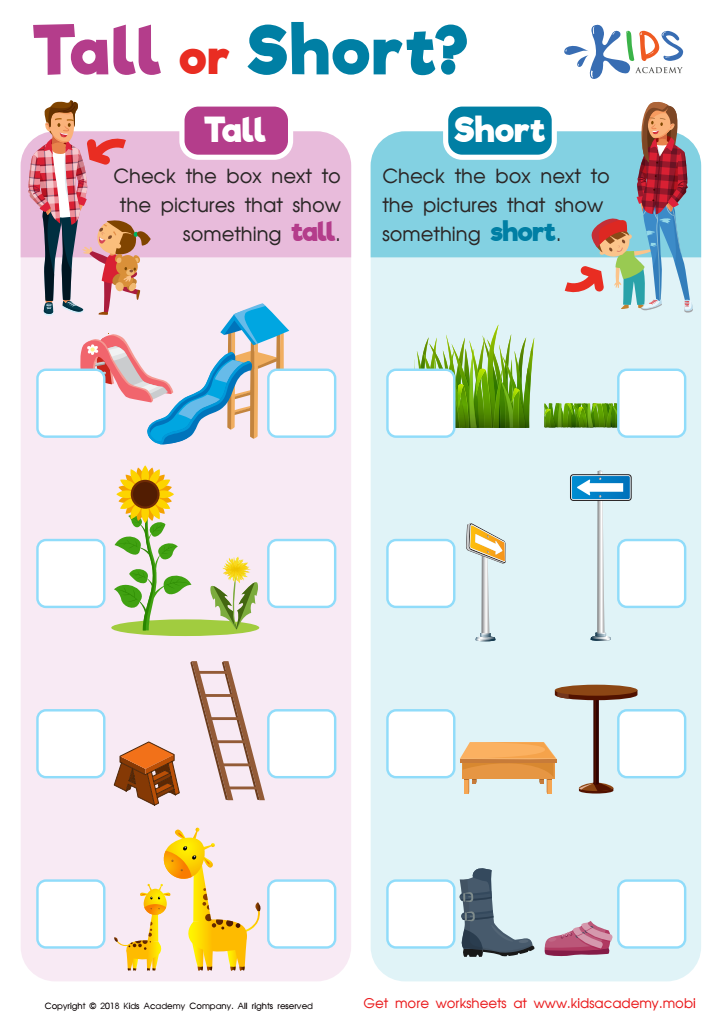
Tall or Short? Worksheet
Comparing tall and short objects is an early math skill. Our free worksheet uses fun colors and pictures to help kids practice. This will give them a head start for higher-level measurement skills, and they'll remember tangible objects for comparison.
Tall or Short? Worksheet
Worksheet
Join Kids Academy for Free
Who is primarily going to use this learning content?








Comparing heights can be a playful yet profound way to engage young learners, making it essential for parents and teachers to care about this topic. For children aged 4-7, learning about height comparison introduces fundamental mathematical concepts such as measurement, patterns, and relationships. It builds spatial awareness and encourages observational skills, strengthens critical thinking, and promotes early data literacy.
By incorporating practical activities, like measuring friends or family members, children can grasp the concept of taller and shorter while having fun. This hands-on approach ignites curiosity and fosters a love for learning. Parents and teachers can leverage these opportunities to enhance vocabulary, introducing terms such as "tall," "short," "taller than," and "shorter than," while promoting language development.
Furthermore, learning through height comparison supports social skills, as children collaborate and discuss their findings with peers or family members. It also builds confidence, as kids see their own growth compared to others. Incorporating comparisons into daily activities reinforces lessons learned in formal settings, solidifying knowledge through real-world applications. Thus, focusing on comparing heights engages children holistically, making math enjoyable and relevant to their everyday experiences.








