Interpreting data Easy Math Worksheets for Ages 4-7
3 filtered results
-
From - To
Unlock the world of data for your little ones with our "Interpreting Data Easy Math Worksheets for Ages 4-7." Designed to boost critical thinking and analytical skills, these age-appropriate worksheets make learning engaging and fun. With vivid charts, colorful graphs, and simple exercises, children will easily grasp basic data interpretation concepts. Perfect for classroom use or homeschooling, these resources cater to early learners' needs, guiding them through patterns, comparisons, and simple statistics. Encourage curiosity and foundational math skills with our expertly crafted materials, setting your child on a path to mathematical confidence and success.
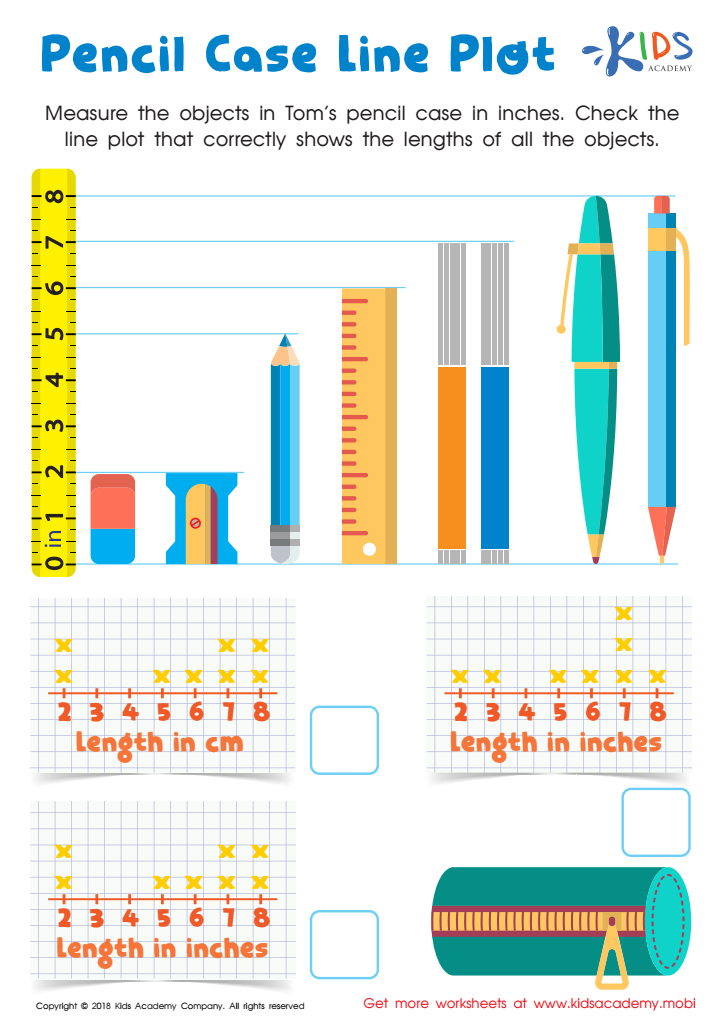
Pencil Case Line Plot Worksheet
 Assign to My Students
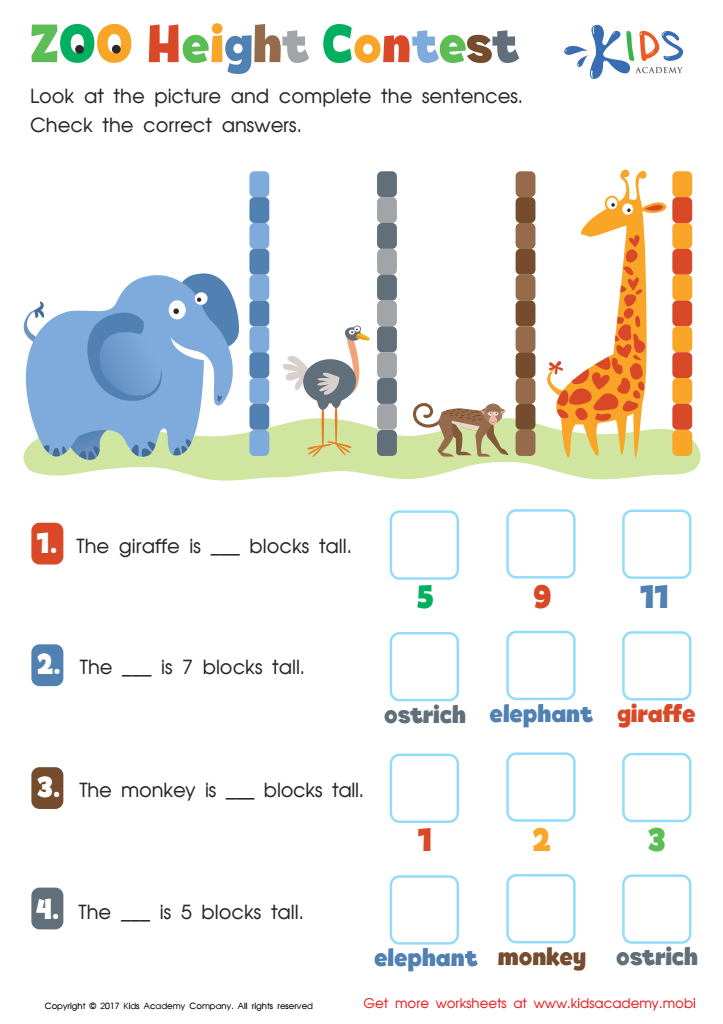
Zoo Height Contest Worksheet
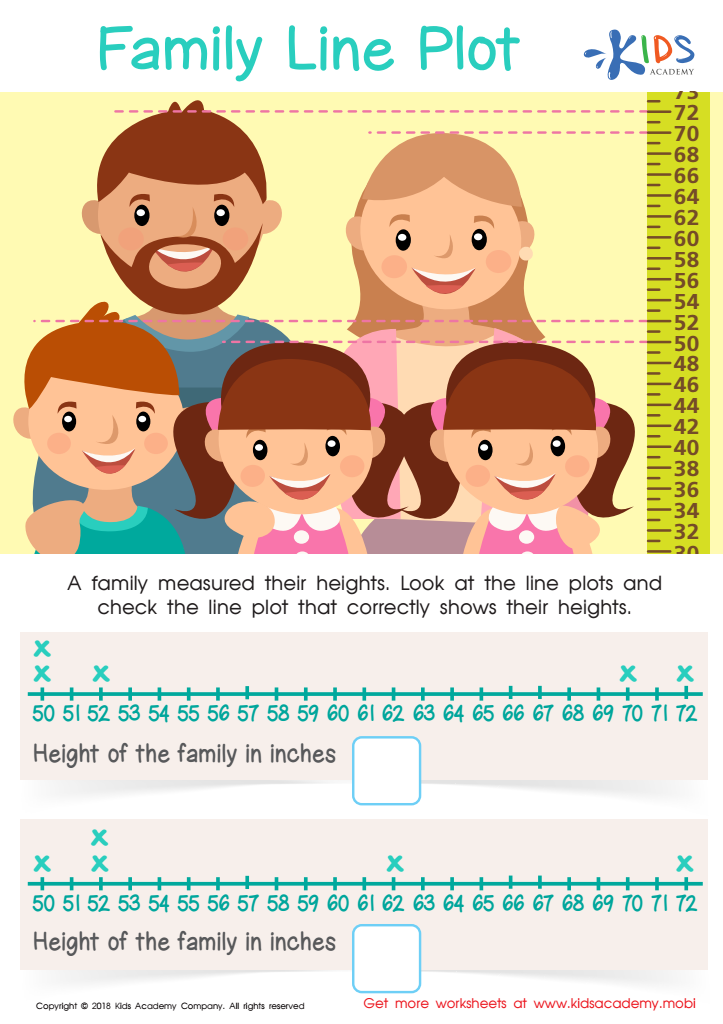
Family Line Plot Worksheet








Understanding how to interpret data is a foundational skill that can set the stage for successful learning in various subjects, especially math and science. For children ages 4-7, incorporating activities that involve interpreting data can offer numerous benefits for both cognitive and social development.
Firstly, at this young age, children are naturally curious and keen on discovering the world around them. Introducing them to basic data interpretation through simple tasks like sorting objects, counting, and understanding charts can channel this curiosity into a structured learning process. Early exposure helps to build critical thinking skills as they learn to make sense of information, recognize patterns, and draw conclusions from the data they observe.
Moreover, mastering these skills at a young age can significantly enhance their future academic achievements. Problem-solving and analytical skills developed early on can ease the transition to more complex mathematical reasoning later in their education.
For teachers and parents, engaging in such activities can also be a meaningful way to bond with children, further enabling tailored support for individual learning needs. Overall, the significance of interpreting data in early math curriculum is profound, fostering not only academic readiness but also instilling a lifelong appreciation for inquiry and learning.








