Visual discrimination Easy Math Worksheets for Ages 4-7
3 filtered results
-
From - To
Enhance your child’s learning experience with our "Visual Discrimination Easy Math Worksheets" designed for ages 4-7! These engaging worksheets help young learners develop essential visual discrimination skills through fun and interactive activities. By completing these exercises, children will improve their ability to recognize differences, similarities, and patterns, crucial for mastering basic math concepts. Our colorful and age-appropriate worksheets encourage critical thinking while keeping children entertained. Perfect for at-home practice or classroom use, these resources stimulate cognitive development and foster a love for learning. Explore a world of fun-filled math challenges and watch your child thrive in skills that pave the way for academic success!
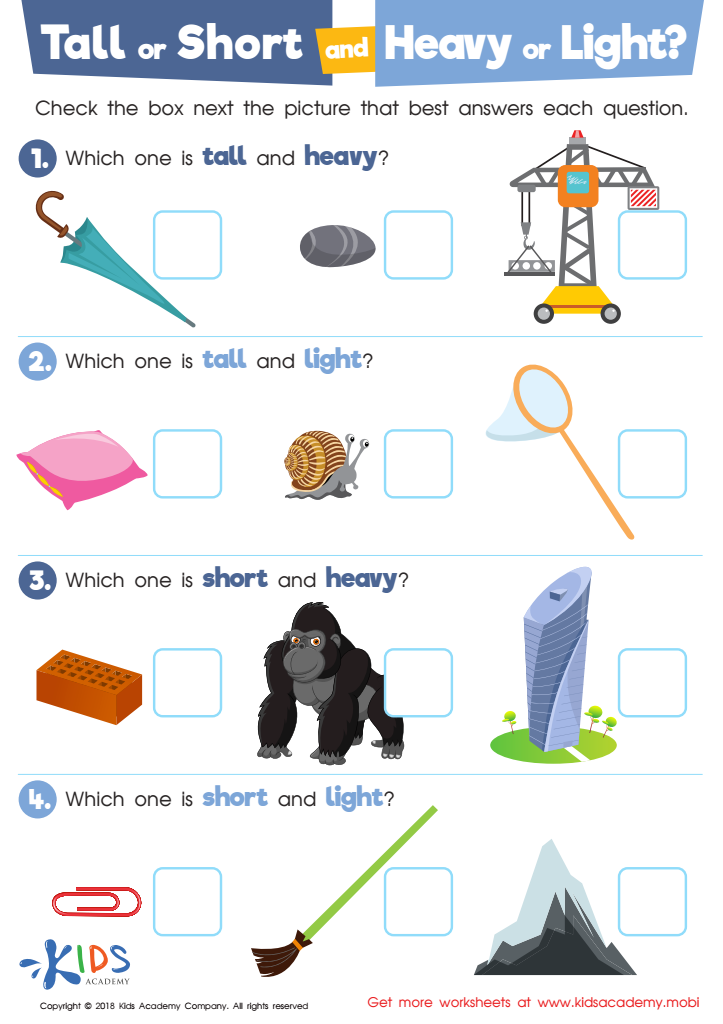
Tall or Short and Heavy or Light? Worksheet
 Assign to My Students
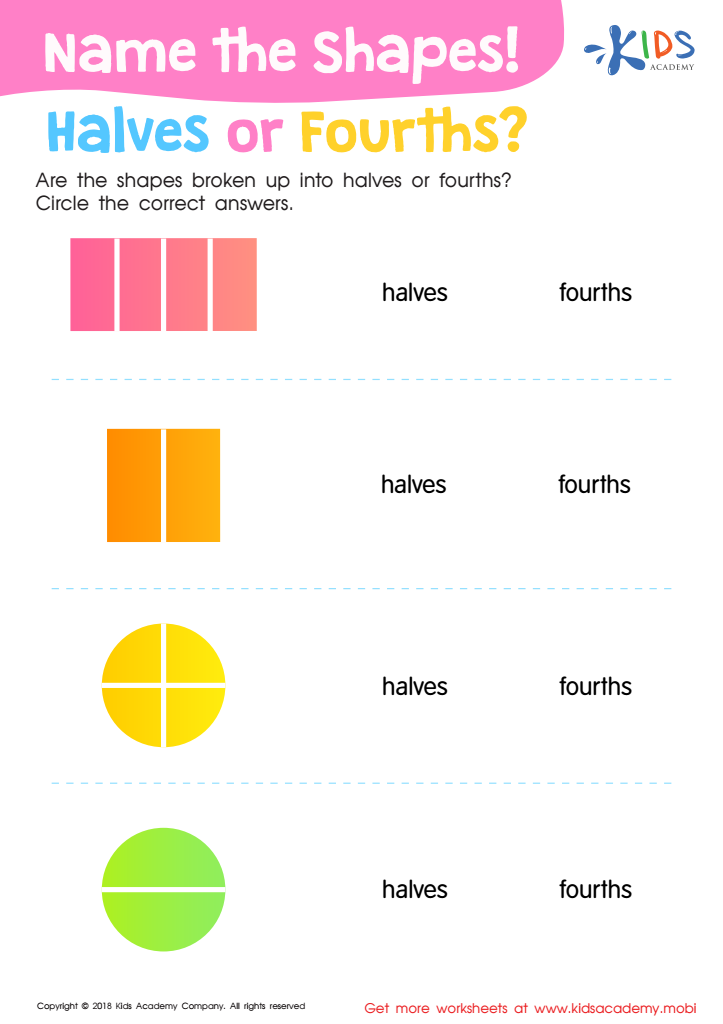
Name the Shapes Halves or Fourths? Worksheet
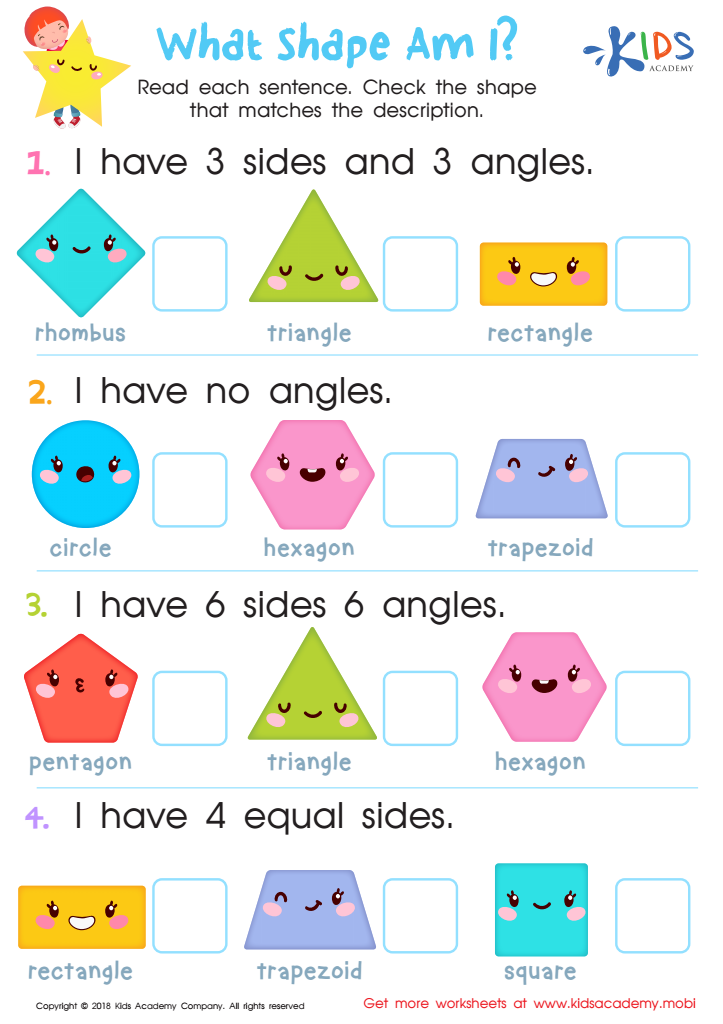
What Shape Am I? Worksheet








Visual discrimination is essential for early learners, especially in math for children aged 4-7. It refers to the ability to notice differences and similarities in visual elements, which is fundamental for understanding shapes, patterns, and quantities. Parents and teachers should care about enhancing visual discrimination skills because it forms the building blocks for mathematical concepts like addition, subtraction, and spatial awareness.
Young children use visual cues to learn about numbers and their relationships. For instance, recognizing different shapes helps them with geometry later on, while distinguishing between similar-looking quantities lays the groundwork for accurate counting. Activities focused on visual discrimination, such as identifying patterns or sorting objects based on size or color, not only build these crucial skills but also foster critical thinking and problem-solving abilities.
Moreover, strong visual discrimination skills can enhance a child's overall academic performance, as these skills are applicable across various subjects. Engaging these young learners in easy math with visual discrimination exercises can promote confidence and enjoyment in learning, encouraging a lifelong positive attitude toward education. Therefore, investment in these early skills ensures a solid foundation for future academic success and enriches children's cognitive development.








