
Comparing heights Easy Measurement Worksheets for Ages 4-7
3 filtered results
Difficulty Level
Grade
Age
-
From - To
Subject
Activity
Standards
Enhance your child's understanding of measurement with our "Comparing Heights Easy Measurement Worksheets" designed specifically for ages 4 to 7. These engaging worksheets introduce young learners to the concept of height through fun, hands-on activities. Children will compare objects, animals, and cartoon characters, developing their observation and analytical skills as they recognize differences and similarities in height. Each worksheet is tailored to support early math skills while keeping learning enjoyable and interactive. Encourage your child's creativity and critical thinking with colorful visuals and relatable examples. Explore our collection and empower your child to master measurement concepts with confidence and joy!
Favorites
With answer key
Interactive
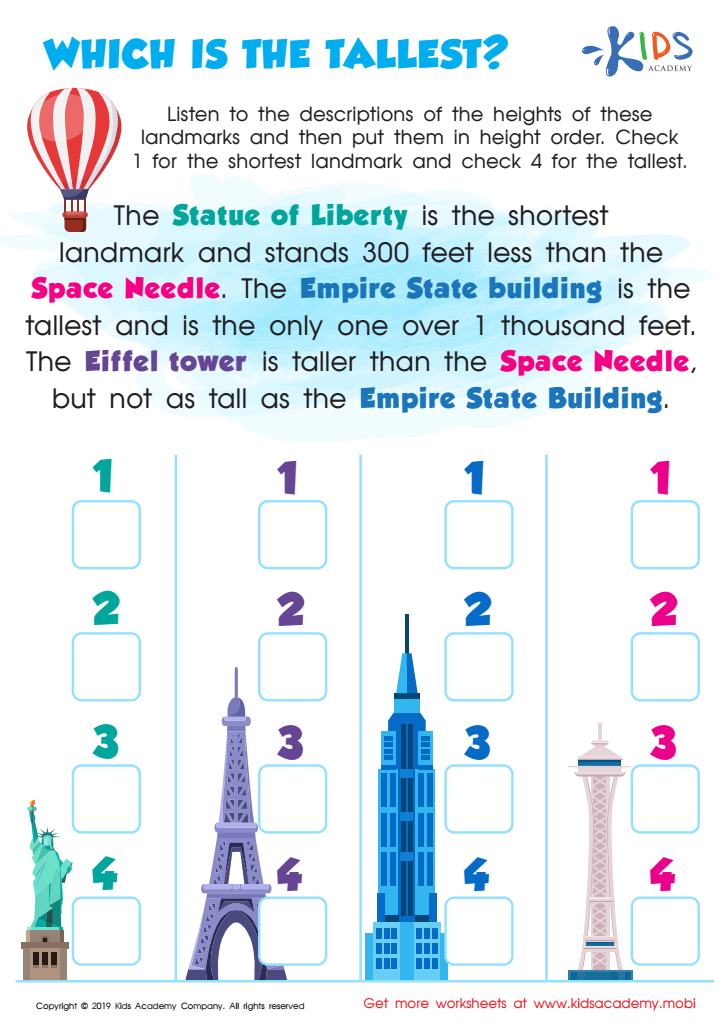
Which is the Tallest? Worksheet
Help your kids arrange the buildings in order of height: highest (4) to lowest (1). Ask them if they can think of other ways things can be measured. Read the texts describing the buildings and check 4 for the tallest and 1 for the shortest.
 Assign to My Students
Which is the Tallest? Worksheet
Worksheet
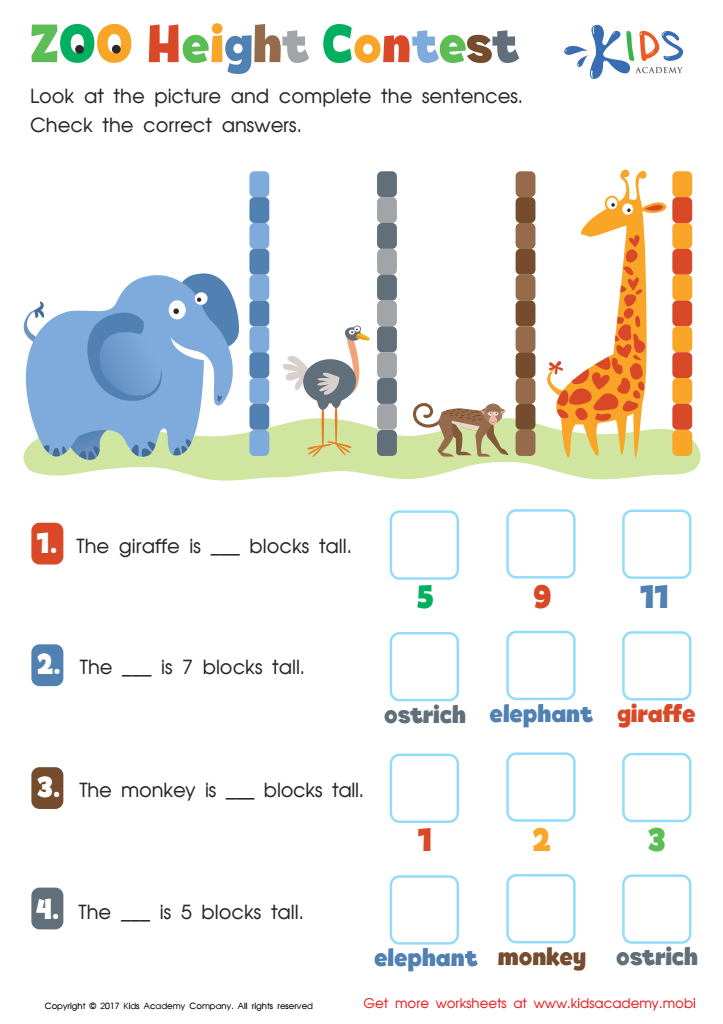
Zoo Height Contest Worksheet
Let's head to the zoo and use colorful blocks to measure your child's favorite animals! With this Kids Academy worksheet, help them practice and prepare for learning measurement. Guide them in looking at the zoo animals and counting blocks to find the height. Then, read the questions and check the box next to the correct answer.
Zoo Height Contest Worksheet
Worksheet
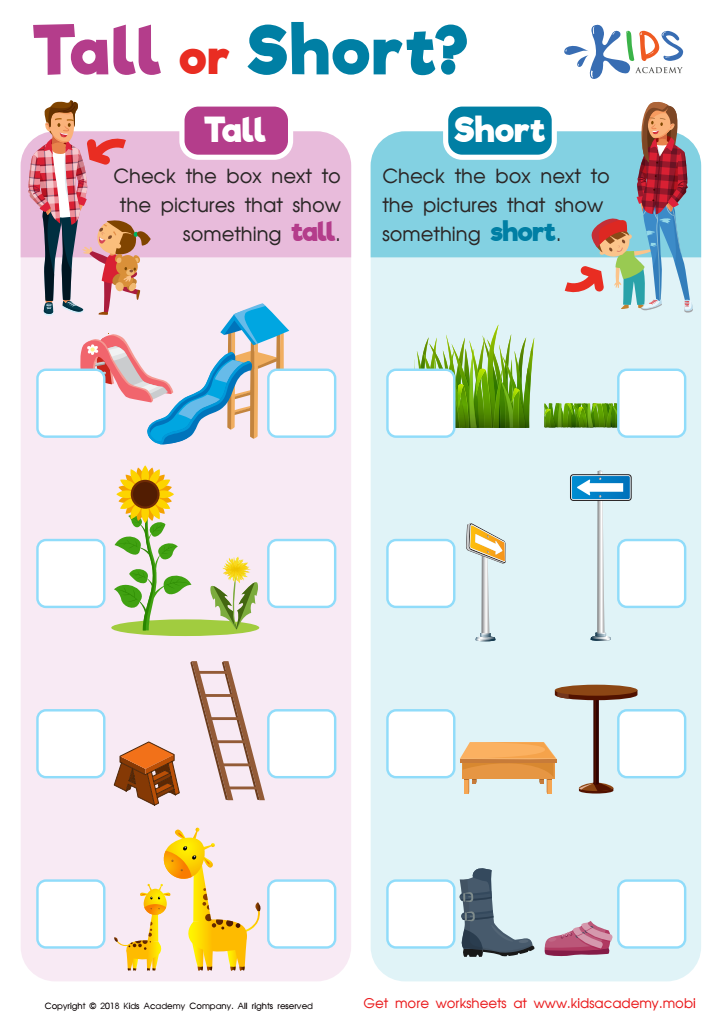
Tall or Short? Worksheet
Comparing tall and short objects is an early math skill. Our free worksheet uses fun colors and pictures to help kids practice. This will give them a head start for higher-level measurement skills, and they'll remember tangible objects for comparison.
Tall or Short? Worksheet
Worksheet
Join Kids Academy for Free
Who is primarily going to use this learning content?








Parents and teachers should care about comparing heights in early education for several reasons. First, it provides an accessible way to introduce basic measurement concepts, which are fundamental in developing mathematical skills. For children ages 4-7, comparing heights fosters an understanding of non-standard units of measurement, such as using blocks or hands, before transitioning to standardized units.
Moreover, height comparisons can serve as an engaging activity that stimulates curiosity and encourages observational skills. When children compare their heights with their peers, they learn about concepts such as bigger and smaller, which helps build vocabulary and critical thinking. This activity also promotes social skills, fostering teamwork and discussion as they work together to measure and compare.
Additionally, measuring heights can be a source of motivation for growth and personal awareness. It allows children to see their progress over time, which promotes self-esteem and a sense of achievement. Overall, incorporating height comparisons into early learning facilitates not only academic growth in math but also emotional and social development, making it a valuable educational tool that supports a well-rounded foundation for young learners.








