Interpreting data Easy Measurement Worksheets for Ages 4-7
3 filtered results
-
From - To
Discover our engaging "Interpreting Data Easy Measurement Worksheets" designed specifically for children aged 4-7! These worksheets provide young learners with the fundamental skills needed to interpret data in a fun and interactive way. Through colorful visuals and age-appropriate activities, children will learn how to read simple graphs and charts, develop critical thinking skills, and enhance their understanding of measurement concepts. Our curriculum supports early math education while fostering curiosity and creativity in young minds. Perfect for home or classroom use, these worksheets are an excellent resource to help little learners gain confidence in interpreting data. Start your child's math journey today!
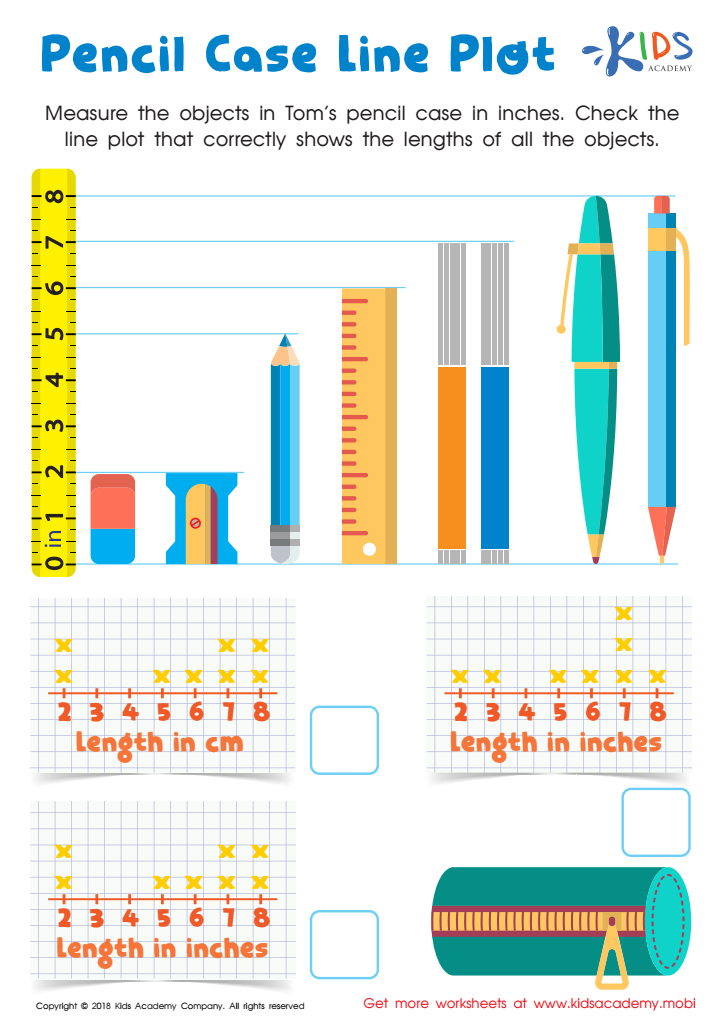
Pencil Case Line Plot Worksheet
 Assign to My Students
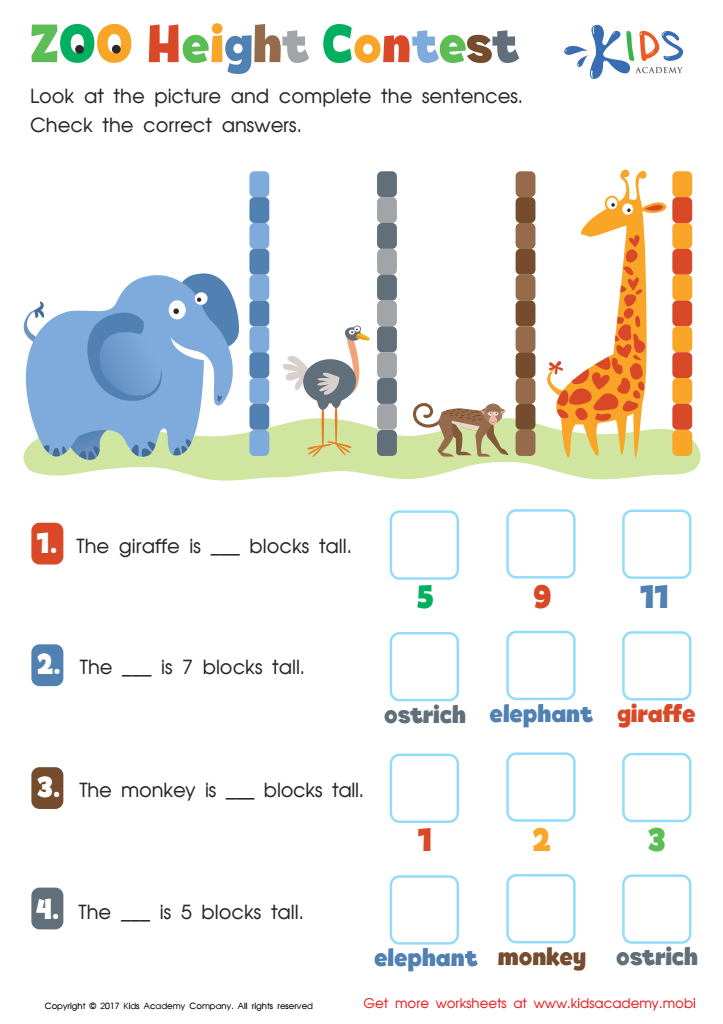
Zoo Height Contest Worksheet
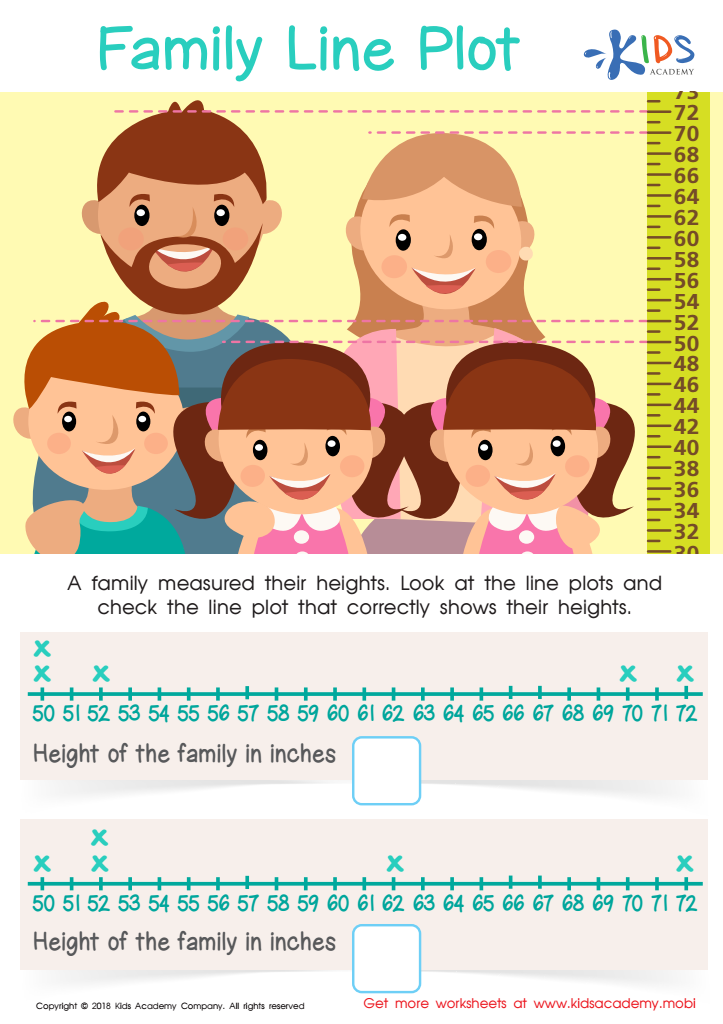
Family Line Plot Worksheet








Interpreting data is essential for parents and teachers of children ages 4-7 because it lays the groundwork for developing critical thinking and analytical skills. At this age, children are naturally curious and eager to explore their environment. Engaging them with data interpretation makes learning tangible and relevant. Simple measurements - like counting objects, measuring lengths using non-standard units, or tracking daily temperature changes - help children understand quantities, comparisons, and relationships.
Moreover, fostering these skills early on promotes numeracy and literacy. For instance, interpreting simple graphs or charts aids in recognizing patterns and making predictions, which enhance mathematical understanding. When parents and teachers showcase how to collect and interpret data, they provide children with tools to communicate their findings, fostering confidence and competence.
Additionally, data literacy is increasingly important in our data-driven world. Instilling these skills at a young age can lead to better preparedness for academic challenges ahead, paving the way for future learning across subjects. Ultimately, when adults prioritize interpreting data, they contribute to cultivating a generation of problem solvers and informed citizens, equipping children with the skills to understand and engage effectively in their world.








