Understanding life cycles Easy Reading Worksheets for Ages 4-7
3 filtered results
-
From - To
Explore the fascinating world of life cycles with our "Understanding Life Cycles Easy Reading Worksheets" designed for children ages 4-7. These engaging worksheets simplify the concept of life cycles, making it easy for young learners to grasp the stages of growth in plants, animals, and more. Each activity is carefully crafted to promote reading skills, comprehension, and critical thinking while encouraging curiosity about nature. With colorful illustrations and fun exercises, your child will enjoy learning how living things develop over time. Perfect for early grade teachers or parents, our worksheets provide an effective way to make learning about life cycles fun and accessible!
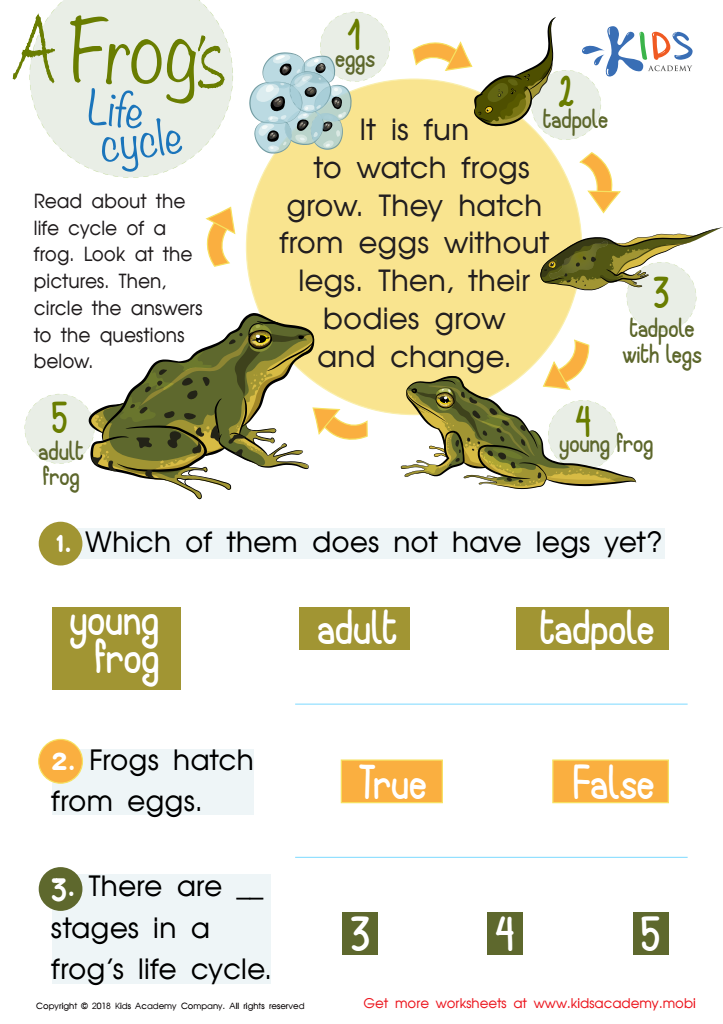
A Frog’s Life Cycle Worksheet
 Assign to My Students
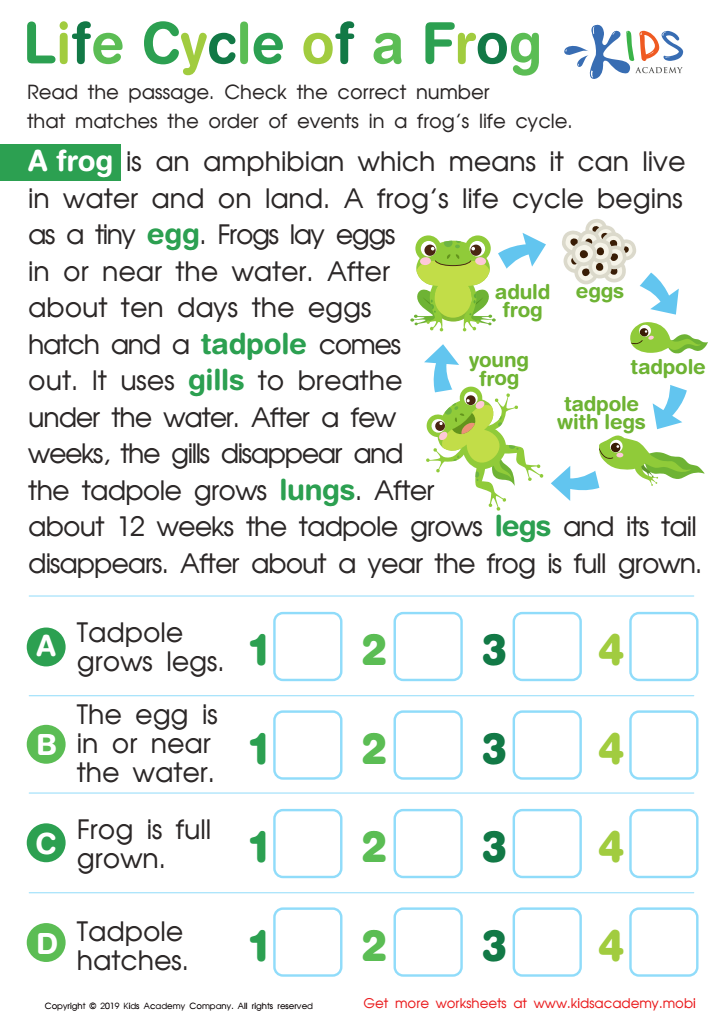
Life Cycle of a Frog Worksheet
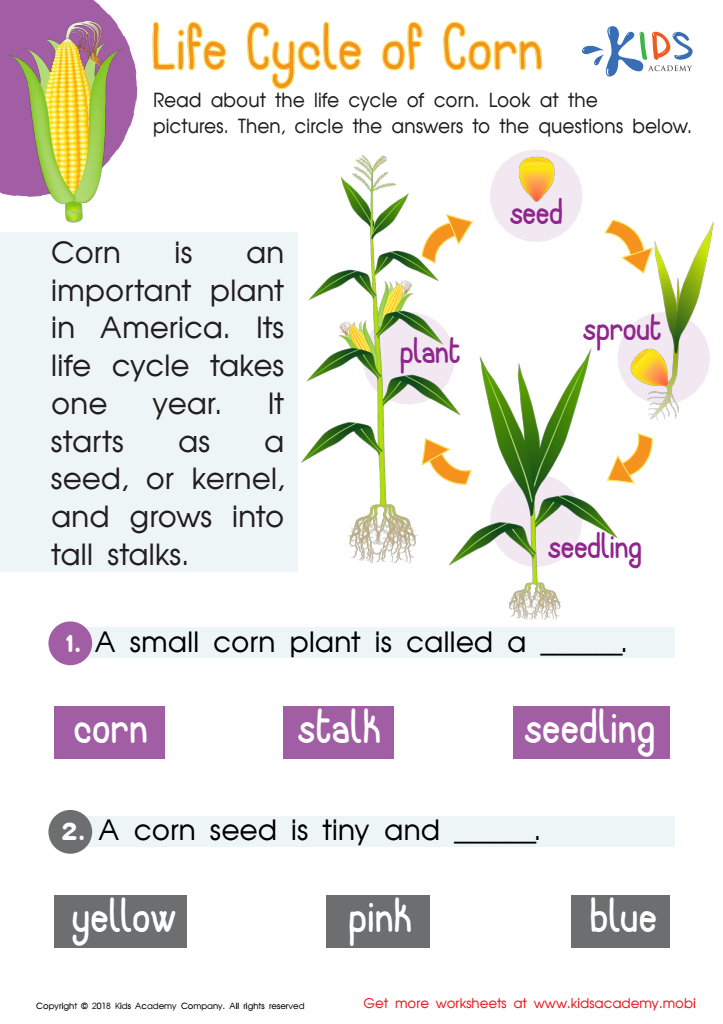
Life Cycle of Corn Worksheet



.jpg)




Understanding life cycles is crucial for children aged 4-7 because it introduces them to the wonders of nature in a simple and engaging way. By learning about how plants and animals grow, change, and reproduce, children develop a sense of curiosity and respect for living things. This foundational knowledge fosters a love for science and the environment, encouraging them to ask questions and explore the world around them.
For parents and teachers, teaching life cycles is a valuable learning opportunity. It connects easily with everyday experiences, like observing butterflies, planting seeds, or caring for pets. Through hands-on activities, children can witness these cycles in action, enhancing their understanding. It also promotes critical thinking, as kids begin to make connections—and think about how each stage of a life cycle impacts the next.
Moreover, discussing life cycles cultivates empathy, as children learn that all living beings have a unique journey. This awareness can lead to a greater appreciation for nature and responsibility in caring for the environment. In essence, teaching life cycles in a fun, age-appropriate manner not only enriches young minds but also nurtures responsible, caring individuals who are more aware of their impact on the world.