Fine Motor Skills Easy Letter Recognition Worksheets for Ages 4-8
6 filtered results
Difficulty Level
Grade
Age
-
From - To
Subject
Activity
Standards
Boost your child's letter recognition and fine motor skills with our engaging worksheets designed for ages 4-8. These printable activities make learning the alphabet fun and easy, helping young learners develop essential skills through tracing, coloring, and identifying letters. Perfect for preschoolers and early elementary students, our worksheets support cognitive development and hand-eye coordination. Kids will love the colorful, interactive tasks that keep them motivated while building a strong foundation for reading and writing. Visit us to download, print, and start your child's educational journey today!
Favorites
With answer key
Interactive
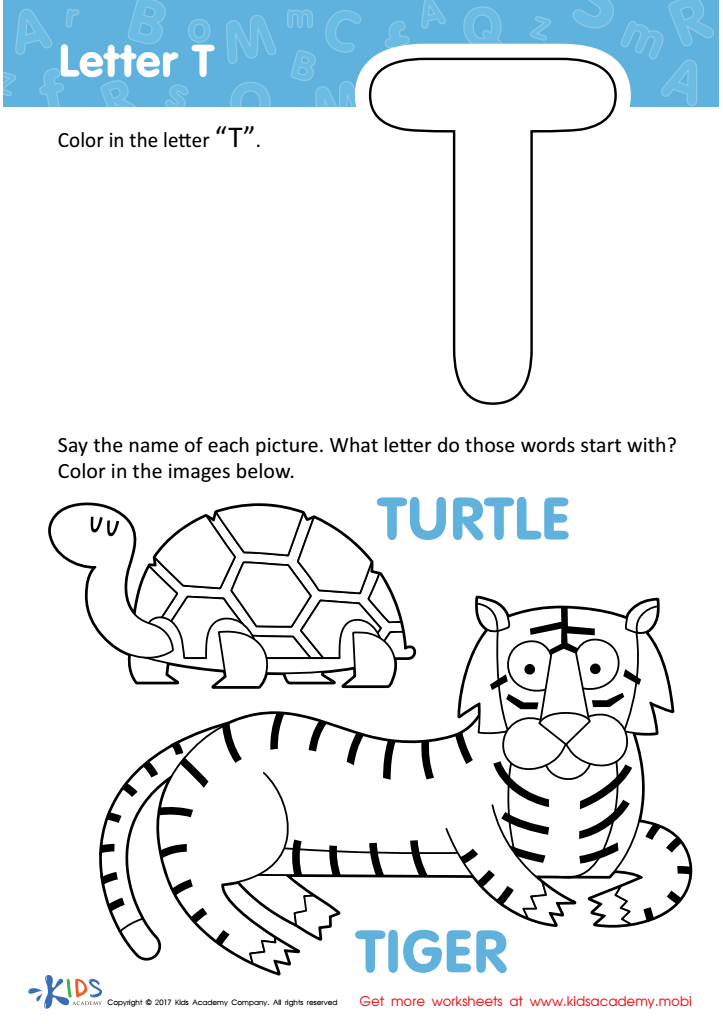
Letter T Coloring Sheet
Introduce your child to the letter "T" and its animals – turtles and tigers! With this coloring page, you can stimulate your child's imagination and creativity, while helping them recognize the letter "T". Have fun with your child and get coloring!
Download (PDF)
 Assign to My Students
Assign to My Students
Letter T Coloring Sheet
Worksheet
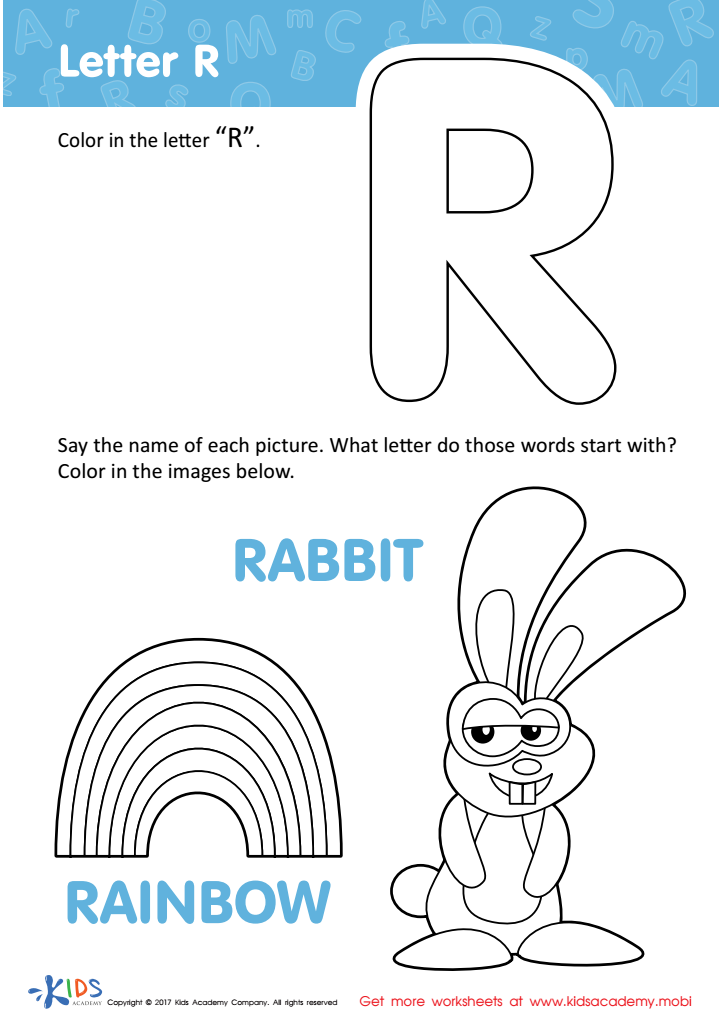
Letter R Coloring Sheet
Let your child explore the rainbow with this fun letter "R" coloring page! They can learn to recognize the letter and make connections to words, all while having fun! Make alphabet learning enjoyable with joyful coloring pages.
Download (PDF)
Assign to My Students
Assign to My Students
Letter R Coloring Sheet
Worksheet
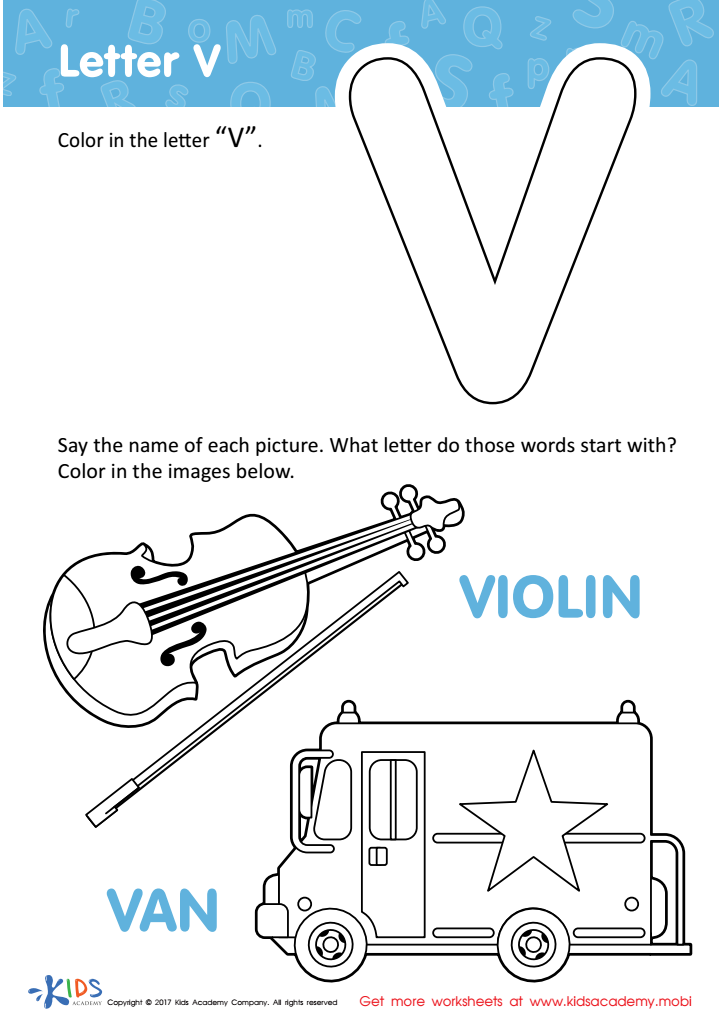
Letter V Coloring Sheet
This fun letter V coloring page can boost your child's knowledge of the letter "V" and its sound. Help them pronounce it correctly, too!
Download (PDF)
Assign to My Students
Assign to My Students
Letter V Coloring Sheet
Worksheet
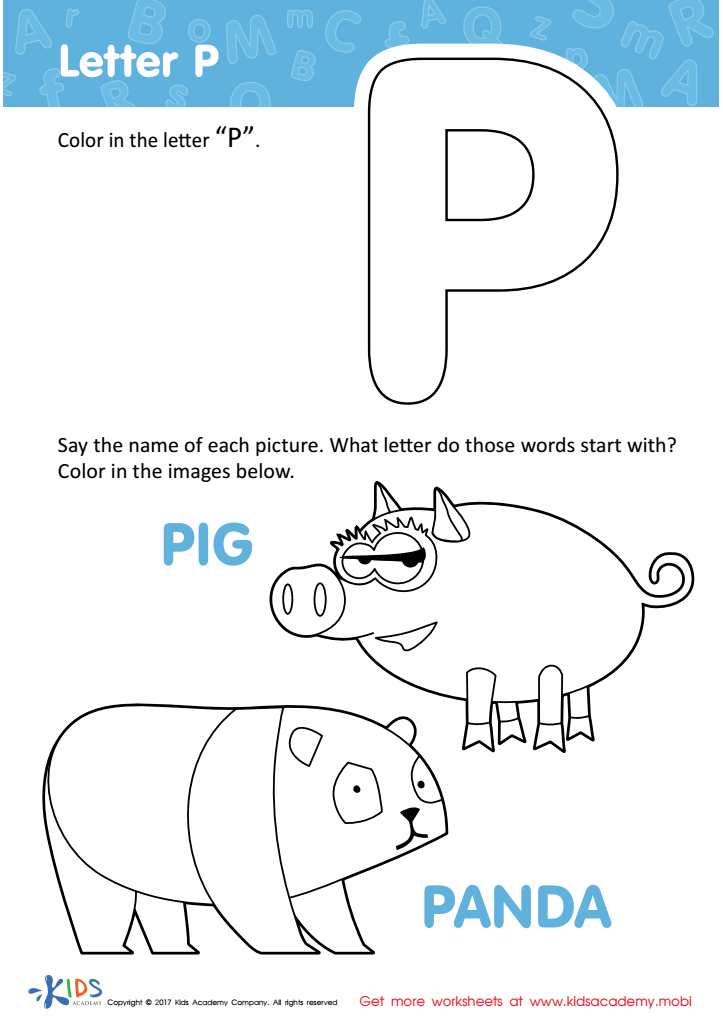
Letter P Coloring Sheet
Encourage your child's creativity and letter recognition with this "P" coloring page! Through coloring animals such as pigs and pandas, your little one will get to know the sound of the letter "P" and have fun too!
Download (PDF)
Assign to My Students
Assign to My Students
Letter P Coloring Sheet
Worksheet
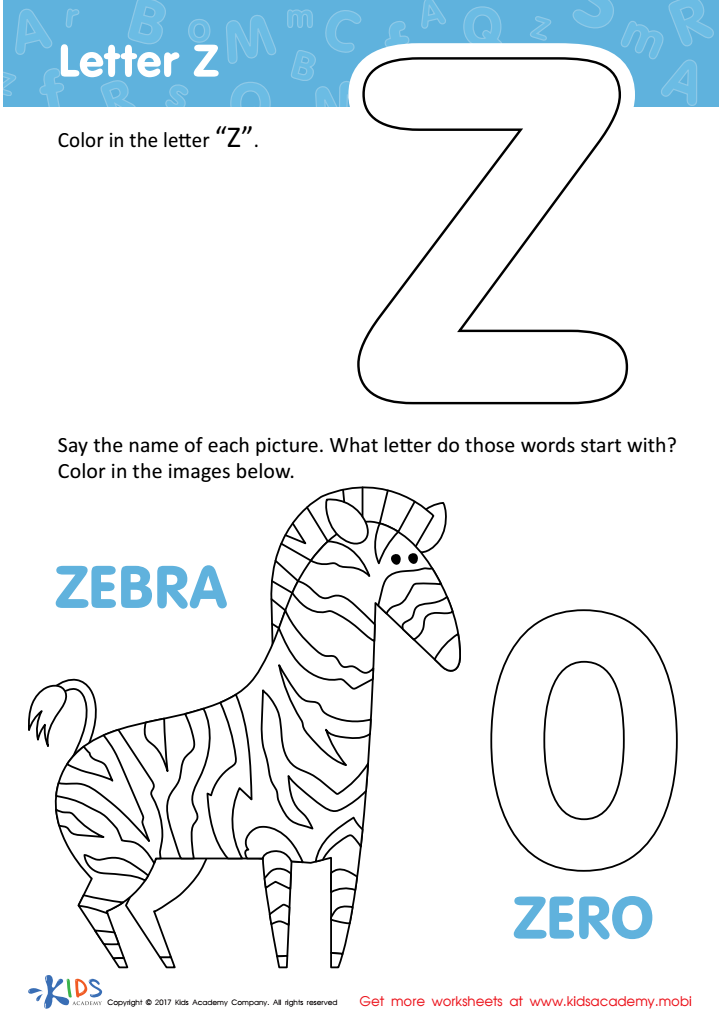
Letter Z Coloring Sheet
This coloring page featuring the letter "Z" is perfect for your child to practice letter recognition! Help them learn the unique sound it makes as they color. It'll be a fun and easy activity they won't have trouble with!
Download (PDF)
Assign to My Students
Assign to My Students
Letter Z Coloring Sheet
Worksheet
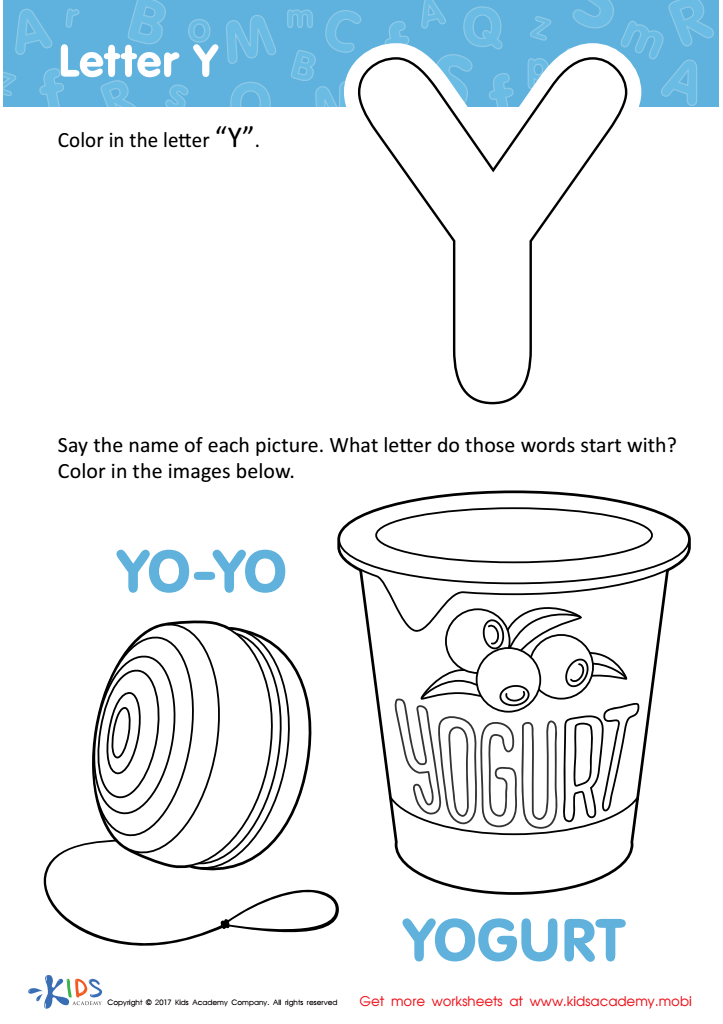
Letter Y Coloring Sheet
Let's celebrate letter "Y"! Here's a fun coloring page that'll help your child learn this end-of-the alphabet letter. It's packed with familiar objects that'll help build their art and literacy skills. So let's say "Yay"!
Download (PDF)
Assign to My Students
Assign to My Students
Letter Y Coloring Sheet
Worksheet
Join Kids Academy for Free
Who is primarily going to use this learning content?








Fine motor skills and easy letter recognition are critical pillars in early childhood education, serving as the foundational blocks for various future academic and life tasks. For children aged 4-8, fine motor skills—such as the ability to grasp a pencil, use scissors, and manipulate small objects—are essential for executing everyday activities and academic tasks effectively. These skills directly influence a child's ability to write, draw, and even perform self-care tasks like buttoning a shirt or tying shoelaces. Strong fine motor abilities lead to greater independence and confidence in young learners.
Easy letter recognition is equally important for this age group, as it serves as the gateway to successful reading and writing skills. Early letter recognition enables children to understand that letters represent specific sounds, which is crucial for phonemic awareness, a key component of literacy. Once children are fluent in recognizing letters, they can more easily decode words, leading to fluid reading abilities. This fluency lays the groundwork for comprehension, enabling them to follow along in class more effectively and engage with the material presented.
By nurturing fine motor skills and letter recognition, parents and teachers empower children with the tools they need for academic achievement and everyday functional skills. Early intervention in these areas can avert later difficulties, making learning a positive and encouraging experience.