Visual discrimination skills Easy Worksheets for Ages 4-8
3 filtered results
-
From - To
Enhance your child's visual discrimination skills with our easy worksheets designed for ages 4-8! These engaging, printable activities help young learners develop the ability to differentiate between shapes, colors, sizes, and patterns—essential skills for early reading and math success. Our carefully curated worksheets include fun exercises that capture children's attention while fostering critical thinking and observation skills. Perfect for both classroom and home use, these resources provide a playful way to build foundational visual skills. Start your child's journey towards academic excellence today with our visually stimulating worksheets that make learning enjoyable! Explore now and unlock hours of educational fun!
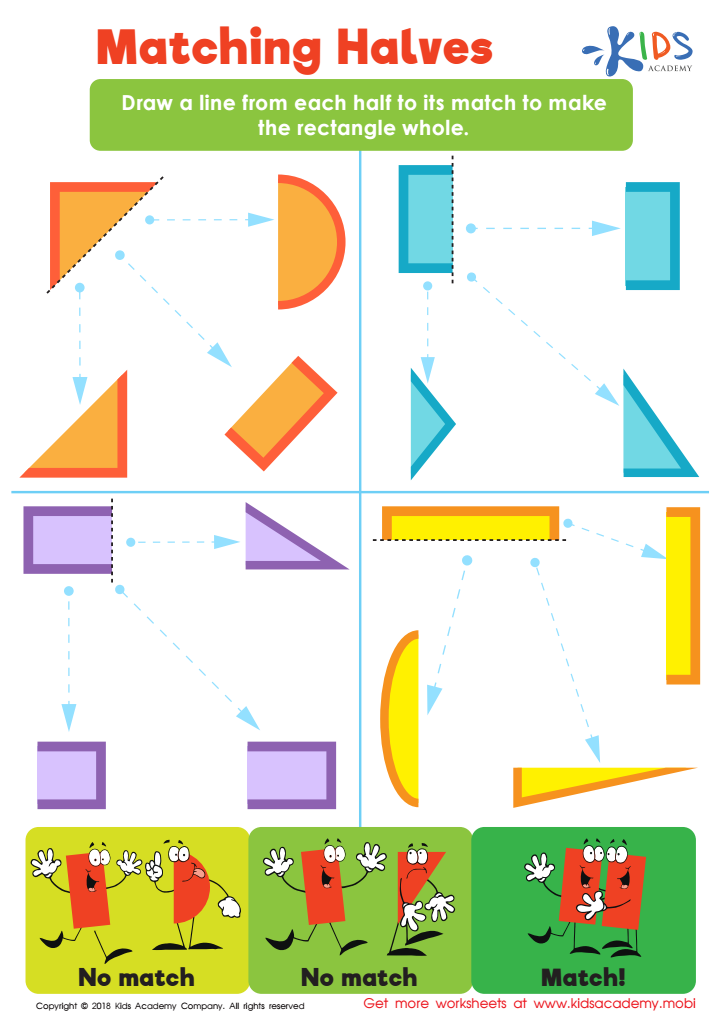
Matching Halves Worksheet
 Assign to My Students
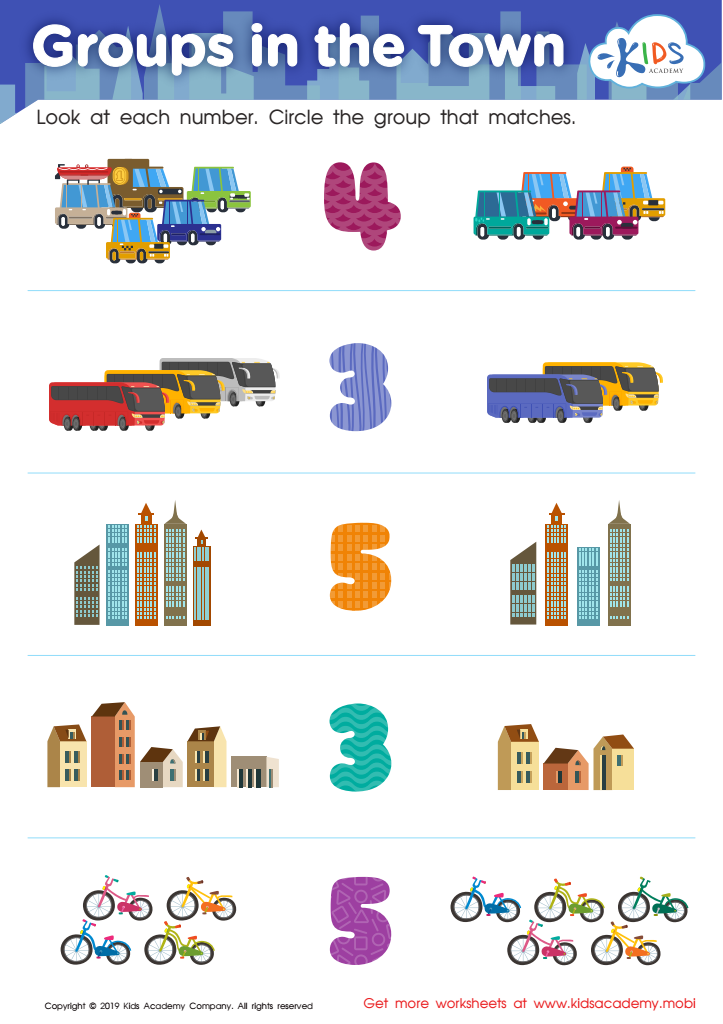
Groups in the Town Worksheet
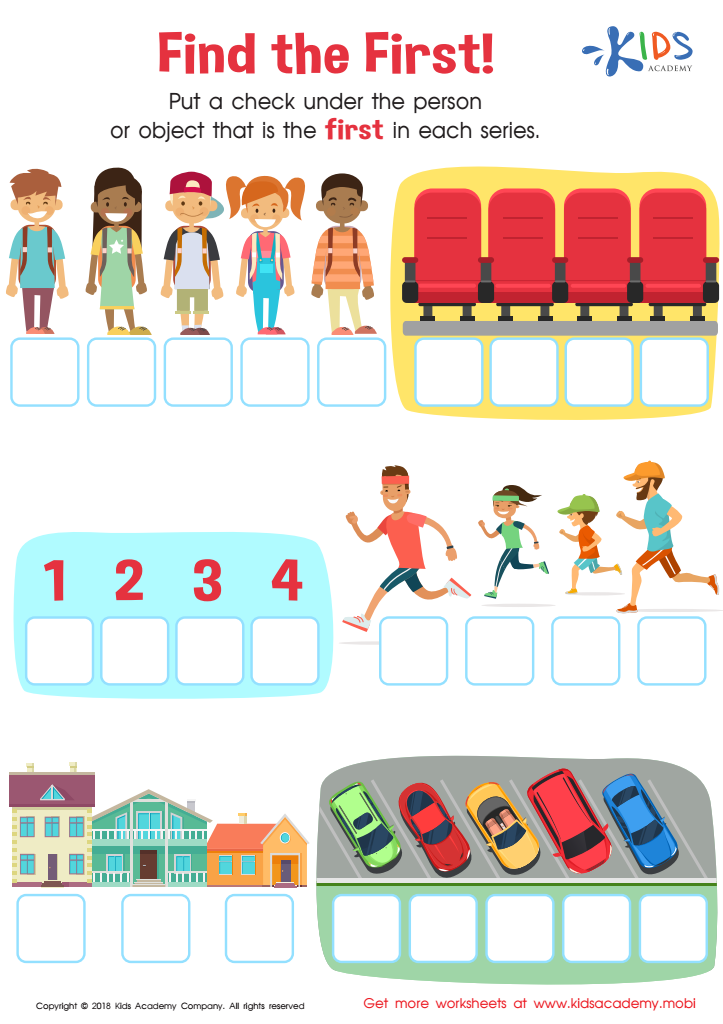
Find the First! Worksheet





Visual discrimination skills are vital for children ages 4-8, as they directly impact reading, writing, and critical thinking abilities. These skills involve the ability to notice differences and similarities in shapes, colors, and patterns. Strong visual discrimination aids kids in recognizing letters and words, significantly influencing their reading development. For example, distinguishing between “b” and “d” or “p” and “q” is essential in early literacy.
Moreover, visual discrimination systems enable children to follow directions and comprehend visual information in their environment. This can improve their abilities in math by discerning different shapes and sizes. Teachers and parents should focus on enhancing these skills because they lay the foundation for overall academic success and confidence.
Activities like sorting objects, matching games, or identifying patterns can help sharpen visual discrimination. Engaging in these activities not only supports cognitive development but also boosts fine motor skills and hand-eye coordination. As children improve their visual discrimination, they become better equipped to tackle complex tasks, enhancing their learning experience and fostering a lifelong love for education. Understanding and supporting visual discrimination skills in young learners create brighter academic futures and enrich their personal lives.








