Shape Recognition Easy Numbers Worksheets for Ages 4-8
3 filtered results
-
From - To
Discover our "Shape Recognition Easy Numbers Worksheets" designed specifically for kids ages 4-8! These engaging and interactive worksheets are perfect for young learners to develop essential shape recognition skills alongside basic number understanding. Each activity combines fun visuals and hands-on exercises, helping children to identify, compare, and categorize shapes while reinforcing their math skills. With vibrant illustrations and age-appropriate challenges, our worksheets not only make learning enjoyable but also boost confidence in young mathematicians. Bring creativity into your child’s learning experience and watch them thrive. Perfect for home or classroom use, these resources will set your little ones on the path to mathematical success!
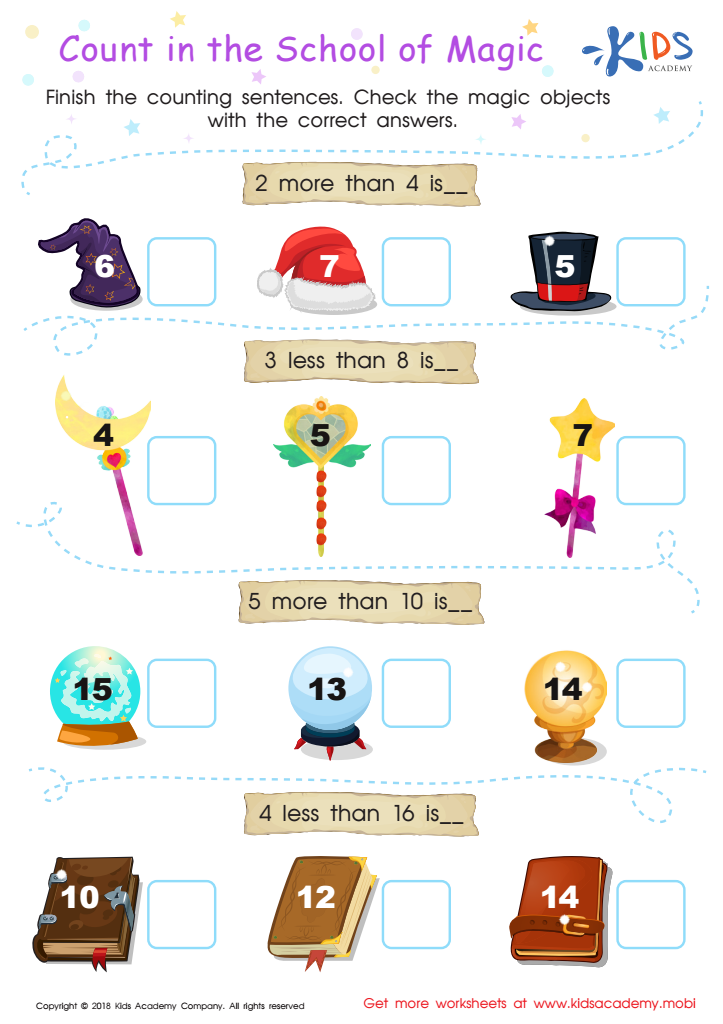
Count in the School of Magic Worksheet
 Assign to My Students
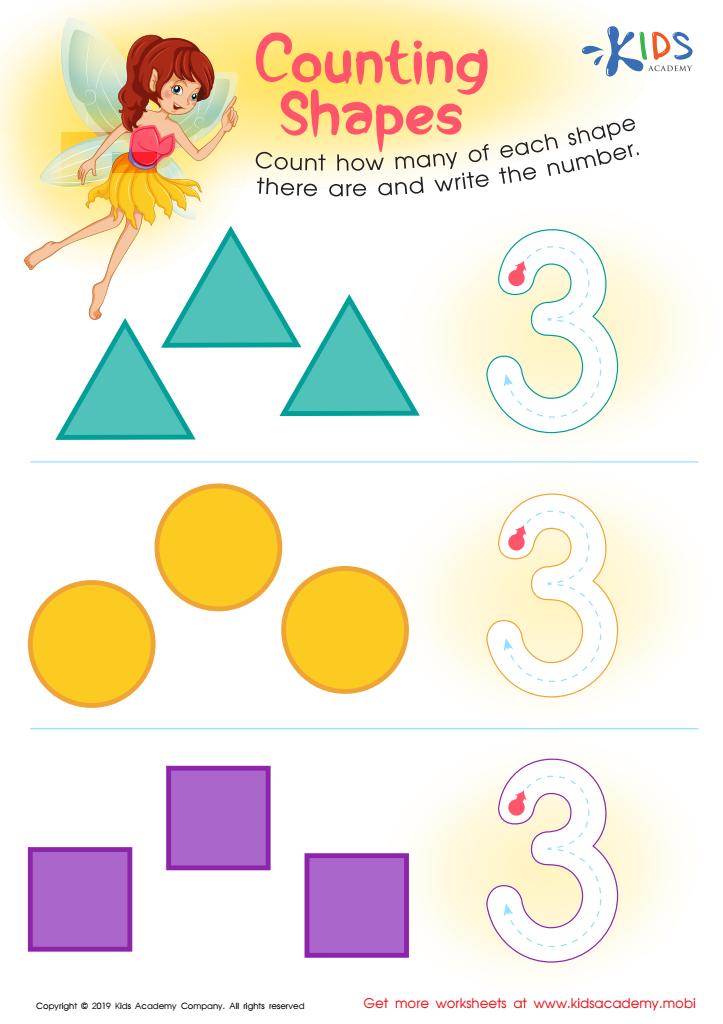
Counting Shapes Worksheet
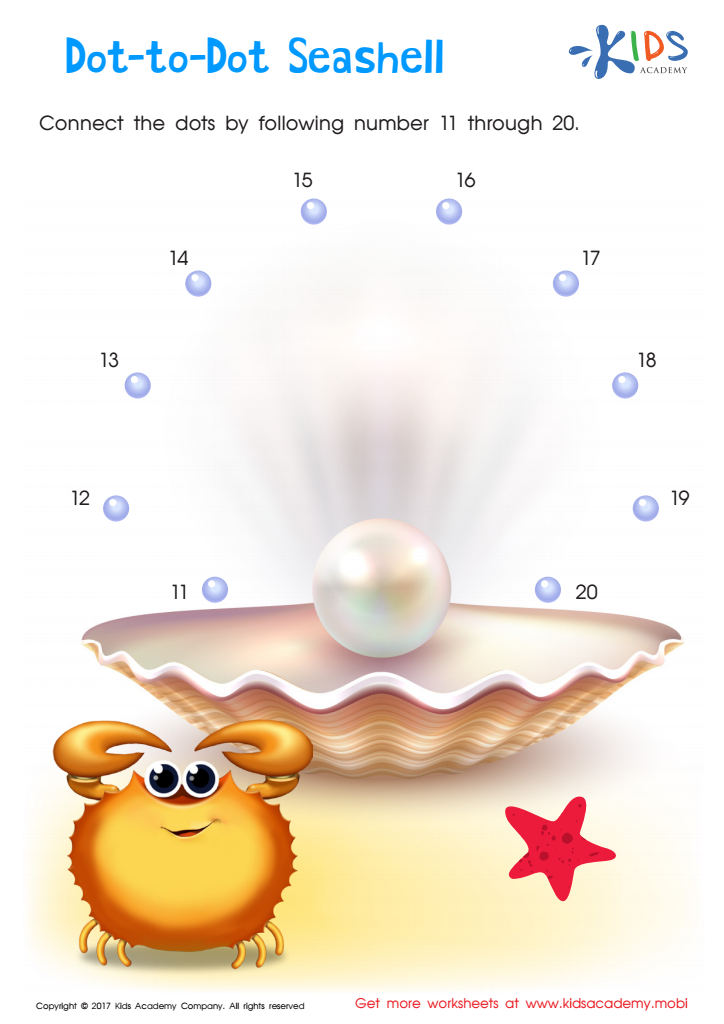
Ordering 11–20: Dot–to–dot Seashell Printable








Shape recognition for young learners aged 4-8 is crucial for several reasons. First, it lays the foundation for essential mathematical skills, enhancing a child's ability to identify and understand shapes as the building blocks of geometry. Recognizing shapes helps children not only in mathematics but also in real-world contexts, where they encounter various shapes in their environment.
Second, shape recognition fosters cognitive development. By engaging with shapes, children develop critical thinking skills, spatial awareness, and problem-solving abilities. They learn to categorize and differentiate between shapes, which also enriches their vocabulary and enhances their communication skills.
Additionally, teachers and parents play a vital role in stimulating children's interest in shapes through interactive activities such as puzzles, games, and crafts. This engagement makes learning enjoyable and interactive, promoting a positive attitude towards education.
Moreover, shape recognition is tied to other fundamental concepts, such as sizes, patterns, and symmetry, further enriching a child's conceptual understanding. Ultimately, focusing on shape recognition helps children build a strong academic foundation, equipping them with the skills necessary for future learning while nurturing their curiosity and creativity. This early engagement supports developmental milestones that benefit children both academically and socially.








