Basic Math Skills Easy Math Worksheets for Ages 4-8 - Page 2
30 filtered results
-
From - To
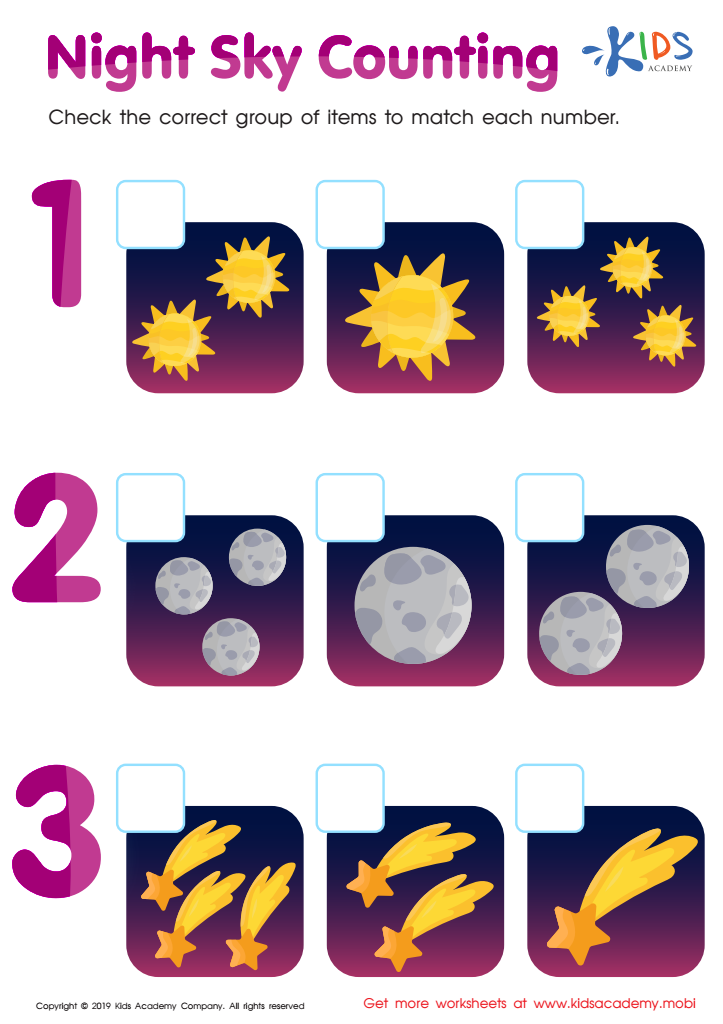
Night Sky Counting Worksheet
 Assign to My Students
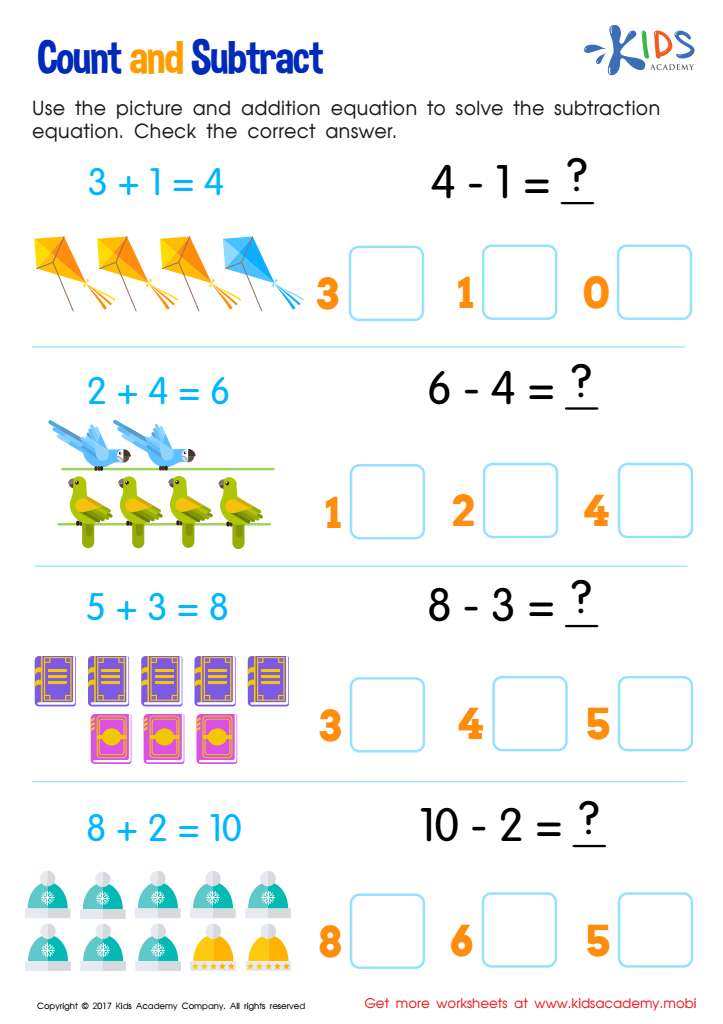
Count and Subtract Worksheet
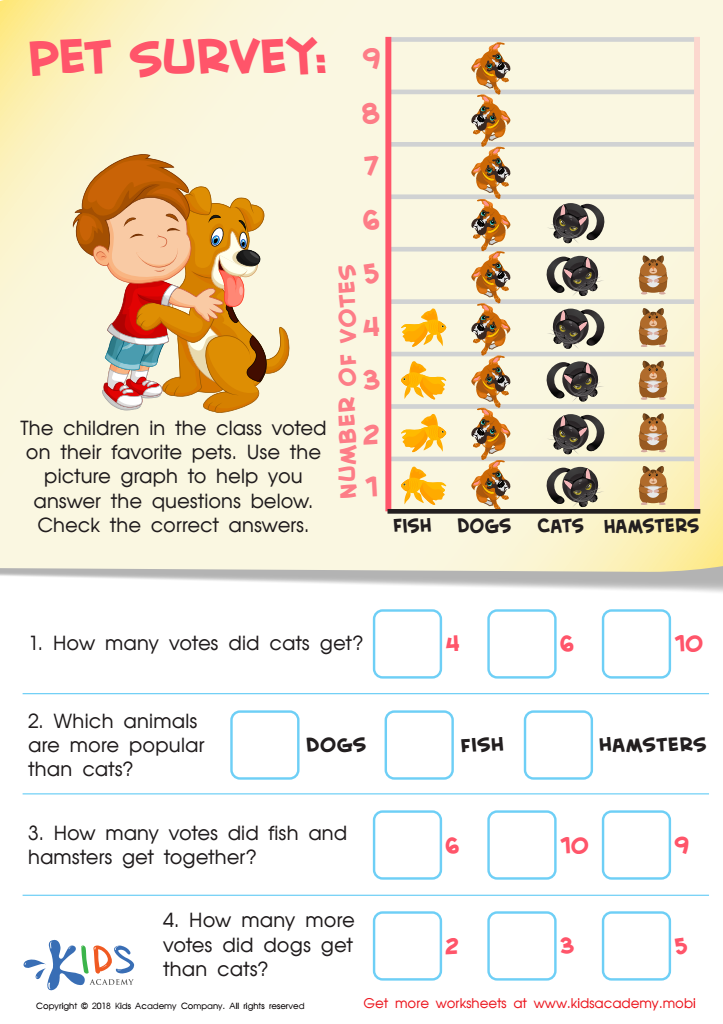
Pet Survey Worksheet
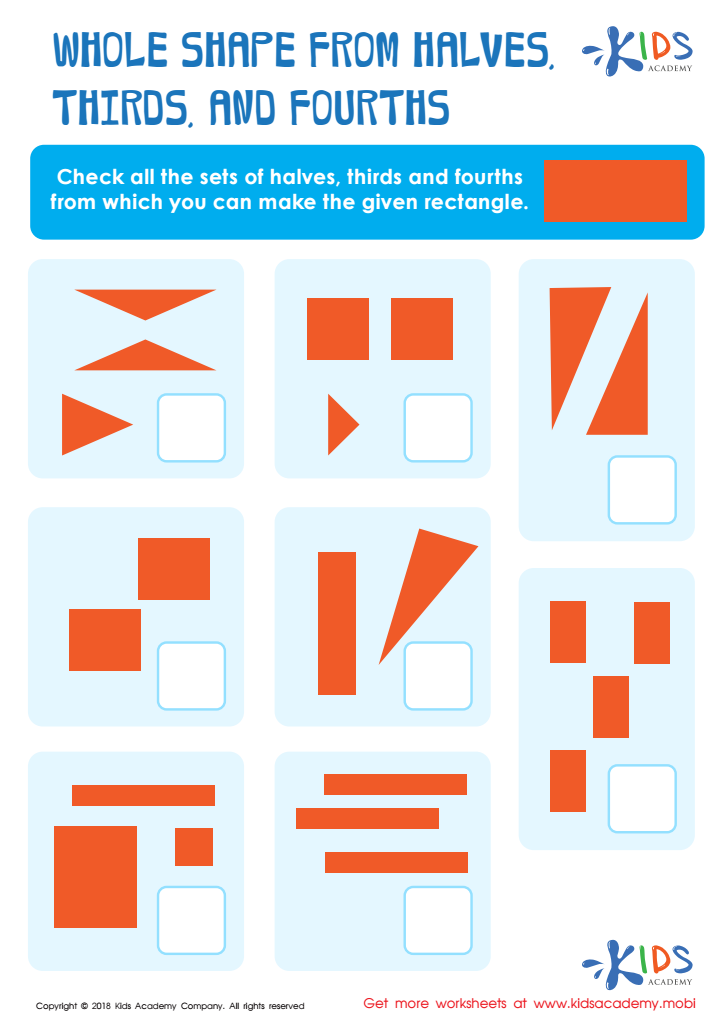
Whole Shape from Halves, Thirds and Fourths Worksheet
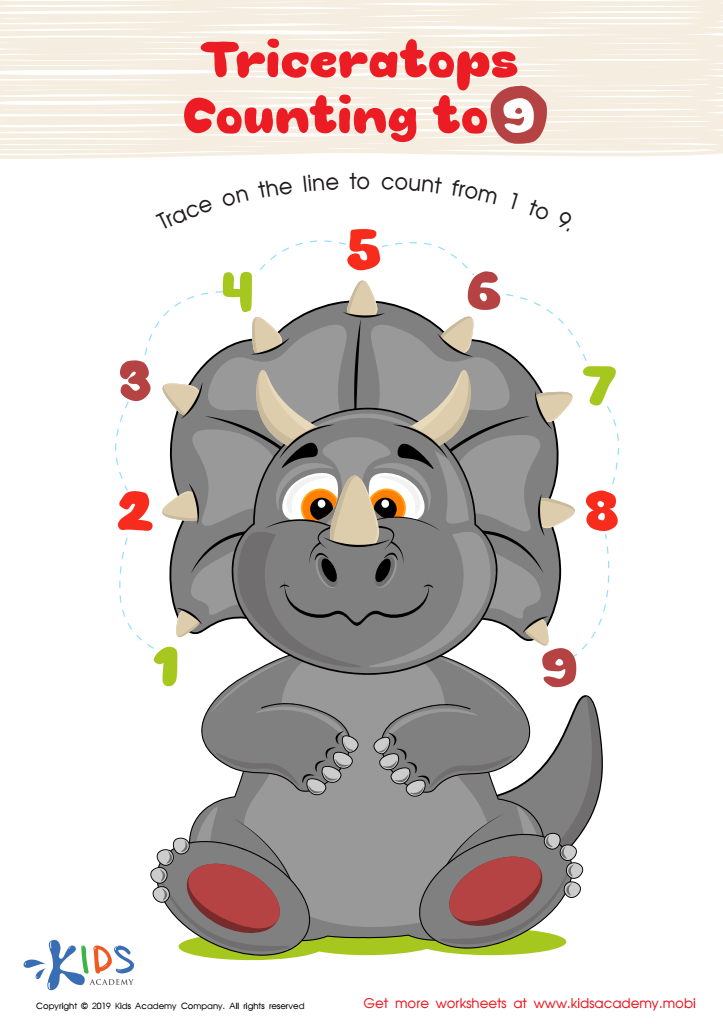
Triceratops Counting to 9 Worksheet
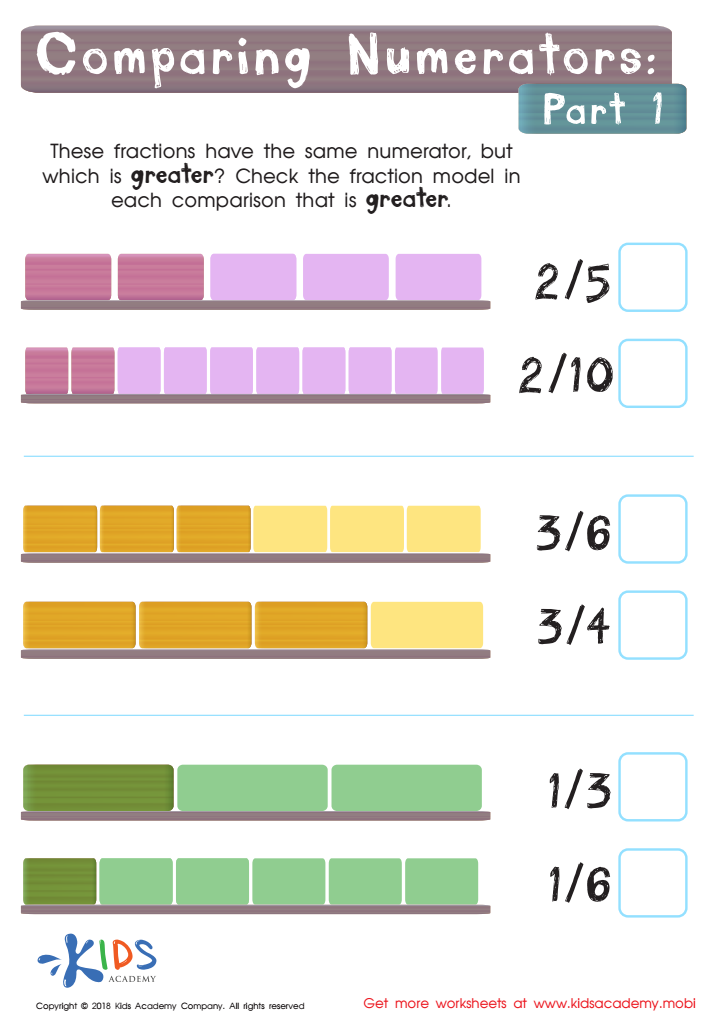
Comparing Numerators Part 1 Worksheet








Parents and teachers should prioritize Basic Math Skills for children aged 4-8 because early mathematical understanding lays the foundation for lifelong learning and cognitive development. During these formative years, children are naturally curious and absorb new information quickly. Fostering mathematical skills at this stage helps enhance their problem-solving abilities and critical thinking.
Basic math skills such as counting, addition, and subtraction promote number sense, which is essential for more complex mathematical concepts later on. By engaging children in simple math activities, parents and teachers can make learning enjoyable, using games, songs, and visual aids to reinforce concepts. This positive association with math helps reduce anxiety surrounding the subject and encourages a growth mindset.
Moreover, math skills are not just academic; they are vital for everyday life. Learning to handle numbers equips children with practical skills, such as managing money, measuring ingredients in cooking, and understanding time, fostering independence.
Lastly, strong mathematical skills correlate with enhanced performance in various subjects and better overall academic achievement. Investing time and resources into teaching math to young learners ultimately shapes their confidence and ability to tackle challenges, benefiting them in school and beyond. This is why adults should care about enhancing basic math skills among early learners.








