Critical thinking skills Easy Math Worksheets for Ages 4-8
3 filtered results
-
From - To
Unlock young minds with our "Critical Thinking Skills Easy Math Worksheets" designed for ages 4-8. These fun, engaging worksheets help children develop essential math skills while fostering critical thinking and problem-solving abilities. Your little learners will explore various math concepts through intriguing puzzles, patterns, and activities that encourage logical reasoning and analytical thinking. Perfect for parents and educators, our printable worksheets provide a solid foundation in math, making learning enjoyable and effective. Equip your child with the tools they need for academic success, and watch their confidence grow as they master critical thinking skills in a playful, supportive environment.
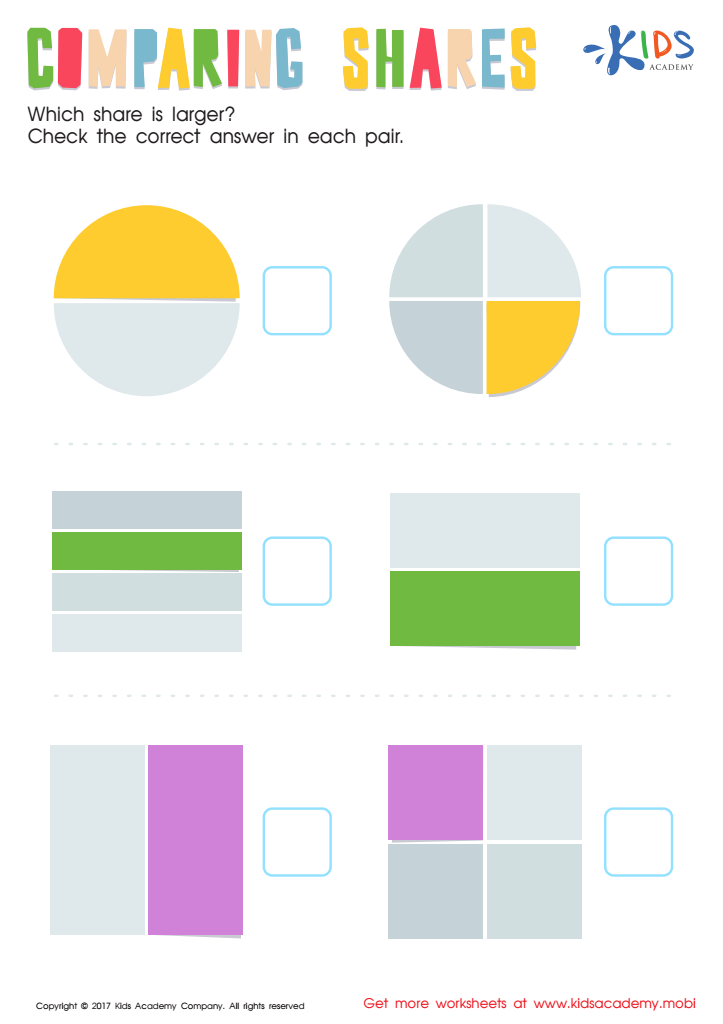
Comparing Shares Worksheet
 Assign to My Students
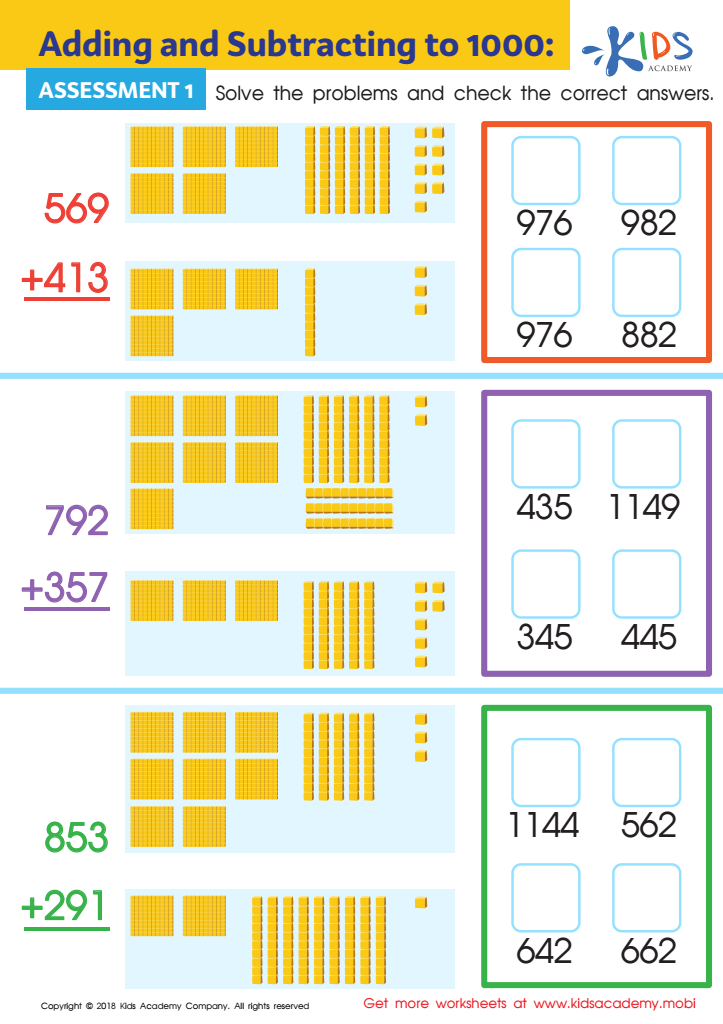
Adding and Subtracting to 1 Worksheet: Assessment 1
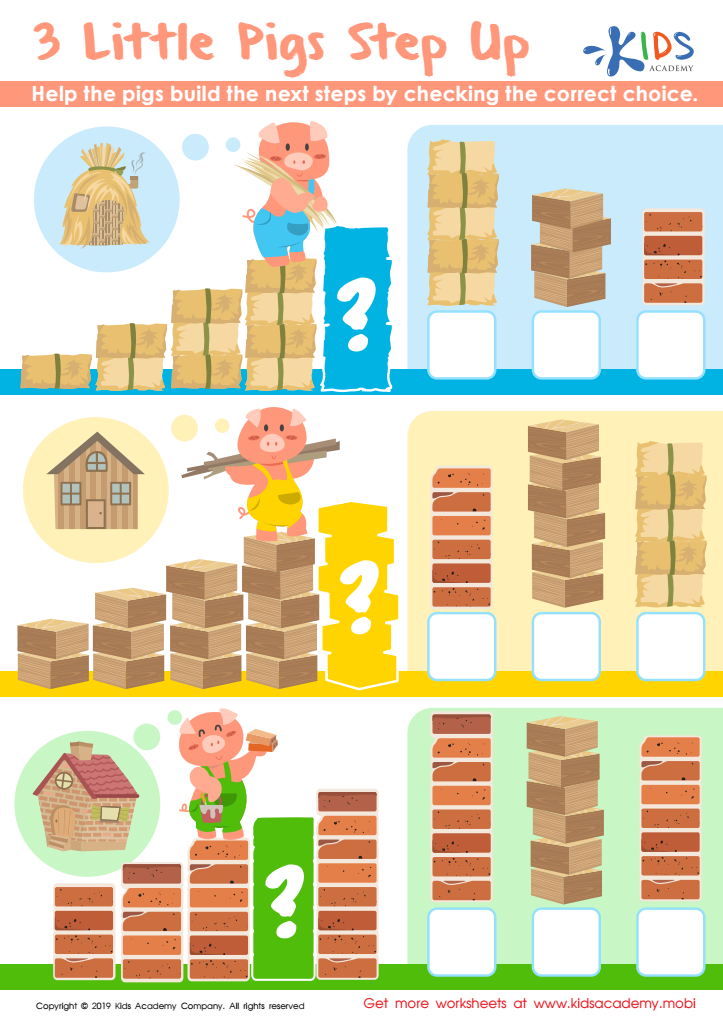
3 Little Pigs Step Up Worksheet








Developing critical thinking skills in math for children aged 4-8 sets a strong foundation for future academic success and life skills. Parents and teachers should prioritize this because these early years are crucial for cognitive development. At this age, children's brains are exceptionally adaptable and open to learning new ways of thinking.
Critical thinking in math goes beyond basic arithmetic; it helps children understand patterns, problem-solving techniques, and logical reasoning. These skills enable them to grasp more complex math concepts as they advance in grade levels. Moreover, it encourages a growth mindset, where children learn to see challenges as opportunities rather than obstacles.
When parents and teachers emphasize critical thinking, it enhances the child's ability to question, analyze, and approach problems methodically. This is not only pivotal in math but across all subjects and everyday situations. For instance, a child proficient in critical thinking can better assess their choices, make informed decisions, and approach life’s uncertainties with confidence.
Integrating easy math critical thinking exercises in early education builds a love for learning and curiosity. It empowers children to be independent thinkers and effective learners, setting them up for lifelong success. Therefore, both parents and teachers share the valuable responsibility of nurturing these essential skills from a young age.








