
Number comparison Easy Math Worksheets for Ages 4-8
4 filtered results
Difficulty Level
Grade
Age
-
From - To
Subject
Activity
Standards
Discover our "Number Comparison Easy Math Worksheets" designed specifically for children ages 4-8. These engaging worksheets help young learners develop essential number comparison skills through fun activities. Kids will explore concepts such as greater than, less than, and equal to by visually comparing numbers, enhancing their mathematical understanding. Each worksheet features colorful illustrations that captivate children's attention while reinforcing foundational math concepts. With a variety of exercises, our worksheets cater to different learning styles and skill levels, making math enjoyable and accessible for all. Equip your child with the skills they need to succeed in math with our easy-to-use printable resources!
Favorites
With answer key
Interactive
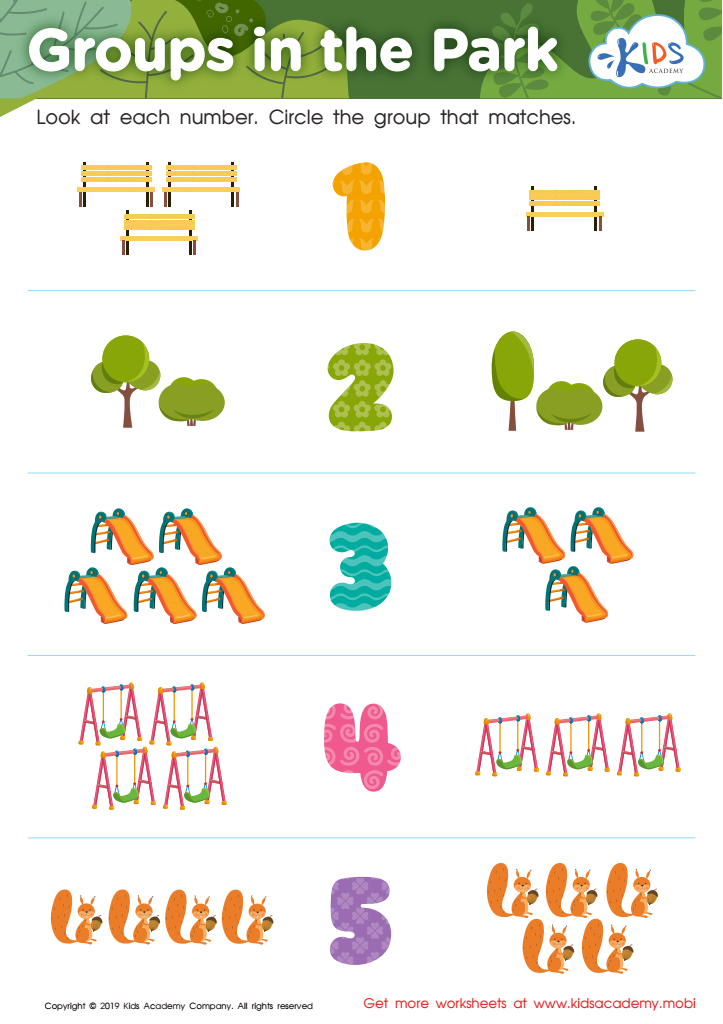
Groups in the Park Worksheet
Take your kids to the park and let them enjoy the freedom to play! Ask them what they love doing most and study a picture together - name items and count objects in the sets, then circle the correct one. It's a fun way for your kids to learn.
 Assign to My Students
Groups in the Park Worksheet
Worksheet
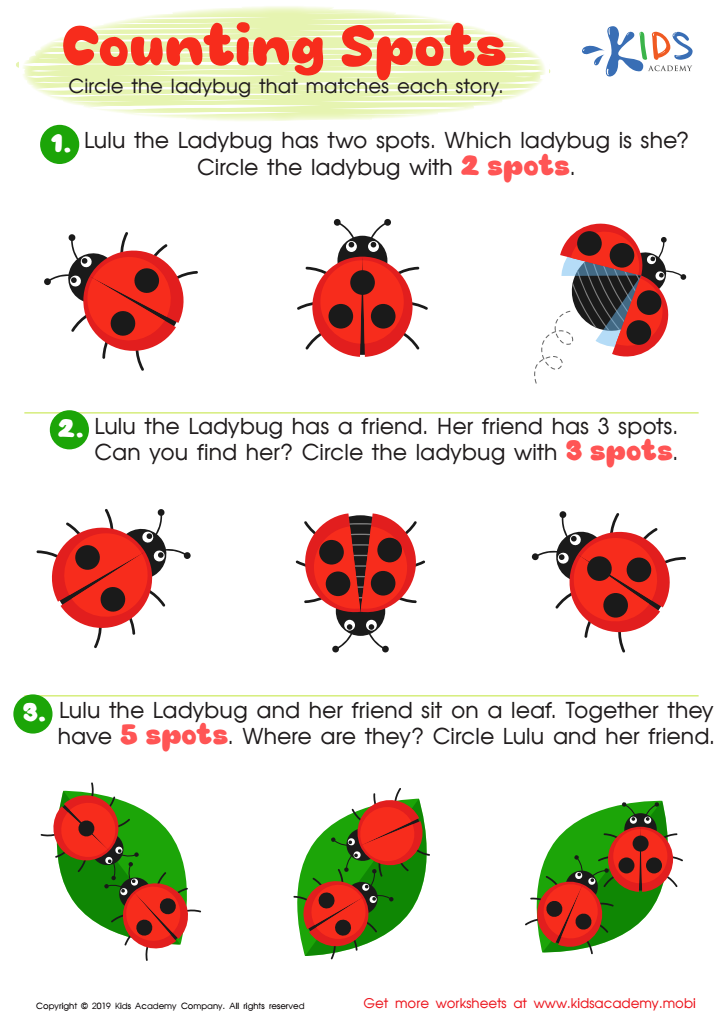
Counting Spots Worksheet
This worksheet is full of cute, colorful ladybugs. Help your kids identify Lulu, who has two spots on her body. Count the spots on each ladybug and circle the one with two spots. Then read the instructions on the other sections and help them find the ladybugs there, too!
Counting Spots Worksheet
Worksheet
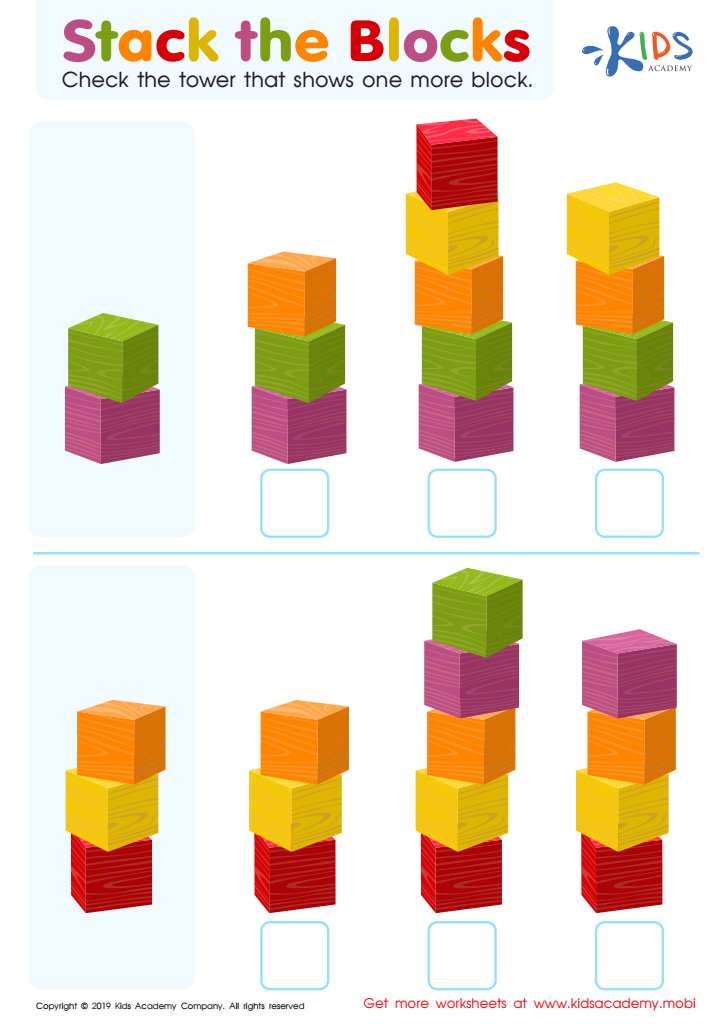
Stack the Blocks Worksheet
Playing with blocks is a great way for kids to learn! They can create patterns, shapes, and even count. In this worksheet, ask them to identify the colors and count each stack of blocks. If they can spot one extra block in the tower, even better! Encourage learning through play with these fun blocks.
Stack the Blocks Worksheet
Worksheet
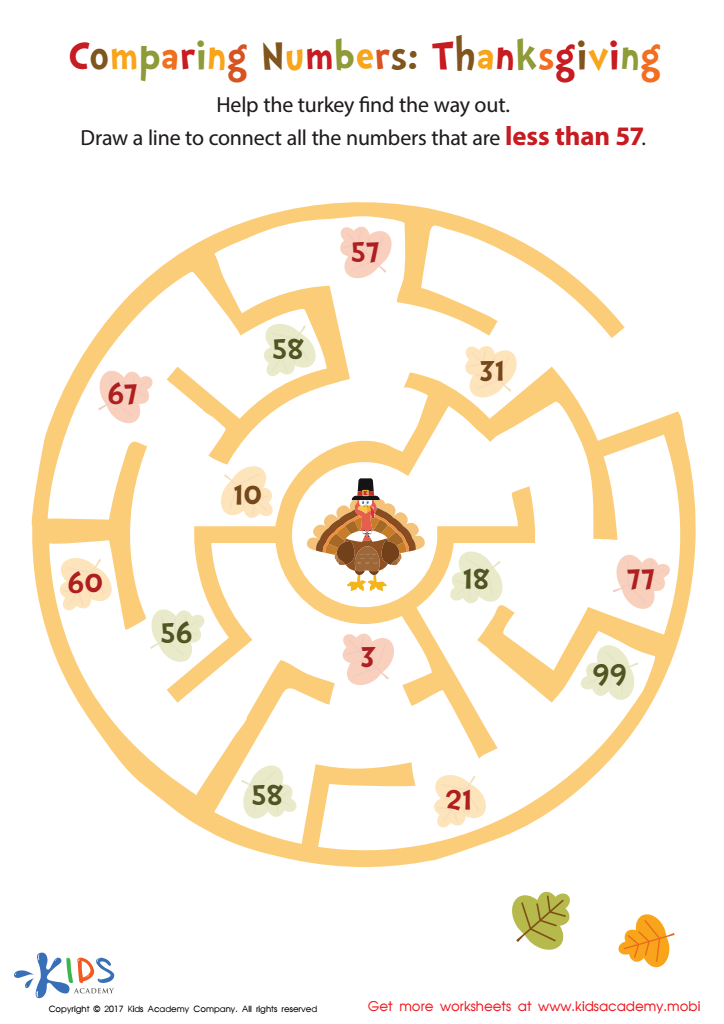
Comparing Numbers Printable
Test your child's number skills with this fun and tricky maze! This Thanksgiving worksheet lets them explore a maze, using numbers less than 57 to get to the tasty goal: A Thanksgiving turkey! Develop their number sense in a fun and engaging way!
Comparing Numbers Printable
Worksheet
Join Kids Academy for Free
Who is primarily going to use this learning content?






Parents and teachers should care about Number Comparison Easy Math for children aged 4-8 because it serves as a foundational skill in early mathematics learning. Mastering number comparison paves the way for a deeper understanding of more complex mathematical concepts like addition, subtraction, and place value. By learning to compare numbers, children develop critical thinking skills and the ability to analyze and evaluate situations, which are vital not just in math but in everyday decision-making.
Number comparison activities can also enhance cognitive development by encouraging problem-solving and logical reasoning. These skills contribute to children’s overall academic performance and preparedness for future learning challenges. Additionally, incorporating fun and engaging mathematical practices cultivates a positive attitude towards math from a young age, helping to mitigate math-related anxiety later on.
Furthermore, early engagement with number comparison fosters a sense of confidence and autonomy among children. They learn to articulate their thoughts about numbers and discover strategies they can employ, both socially and intellectually. Ultimately, prioritizing early math skills, such as number comparison, sets a strong educational foundation that empowers children to succeed in increasingly complex math topics as they grow.








