
Visual discrimination skills Easy Math Worksheets for Ages 4-8
3 filtered results
Difficulty Level
Grade
Age
-
From - To
Subject
Activity
Standards
Enhance your child's learning journey with our "Visual Discrimination Skills Easy Math Worksheets" designed for ages 4-8. These engaging worksheets help young learners develop essential visual discrimination skills by challenging them to identify similarities and differences in shapes, patterns, and numbers. Perfect for early math education, our resources encourage critical thinking and observation while making learning fun. Each worksheet is thoughtfully crafted to suit varying skill levels, ensuring every child can participate and succeed. Foster confidence and promote foundational math skills with these interactive activities, ideal for homeschool settings or classroom enrichment. Explore our collection and spark your child's curiosity today!
Favorites
With answer key
Interactive
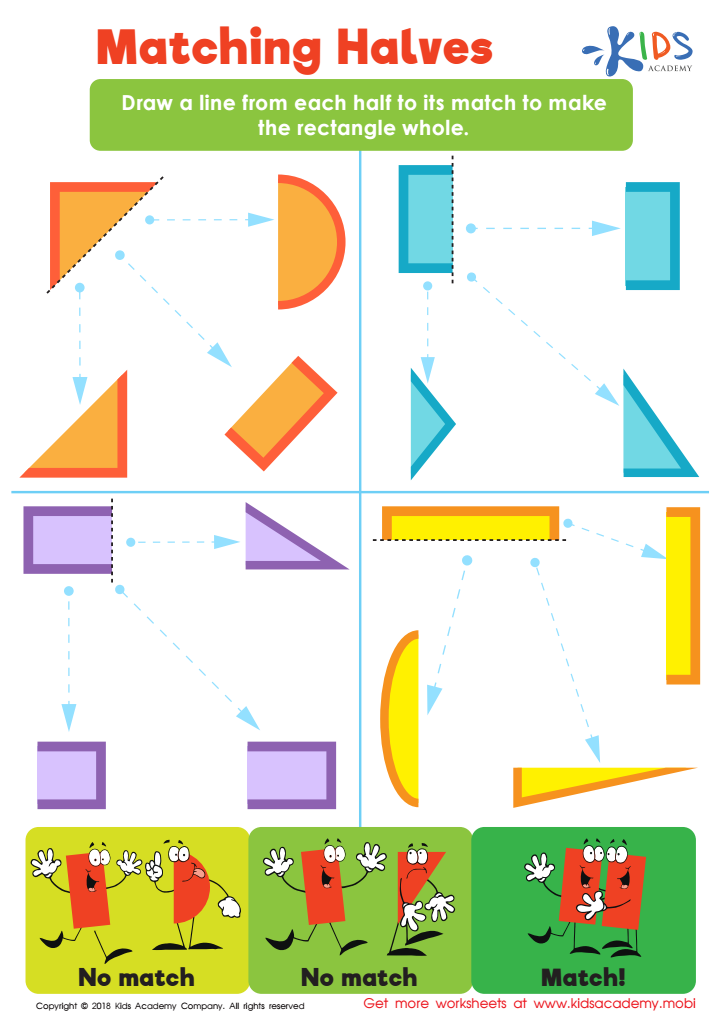
Matching Halves Worksheet
See how your child fares in matching two halves to form a complete rectangle. Provide them with four options, and ask them to draw a line connecting the two correct halves. Put their shape knowledge to the test with this simple worksheet!
 Assign to My Students
Matching Halves Worksheet
Worksheet
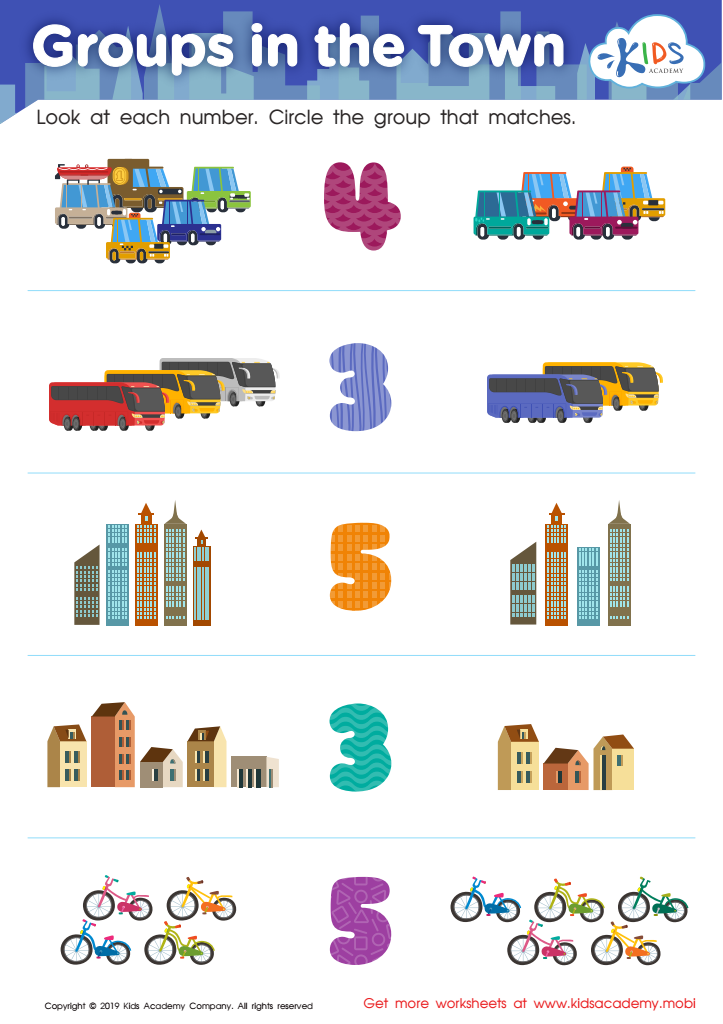
Groups in the Town Worksheet
Help your kids learn to count with this worksheet! Look at each number of objects and circle the group that matches. This simple activity can give them extra practice to support what they learn in school. Learning doesn't have to be a struggle; make it fun and interactive with this worksheet.
Groups in the Town Worksheet
Worksheet
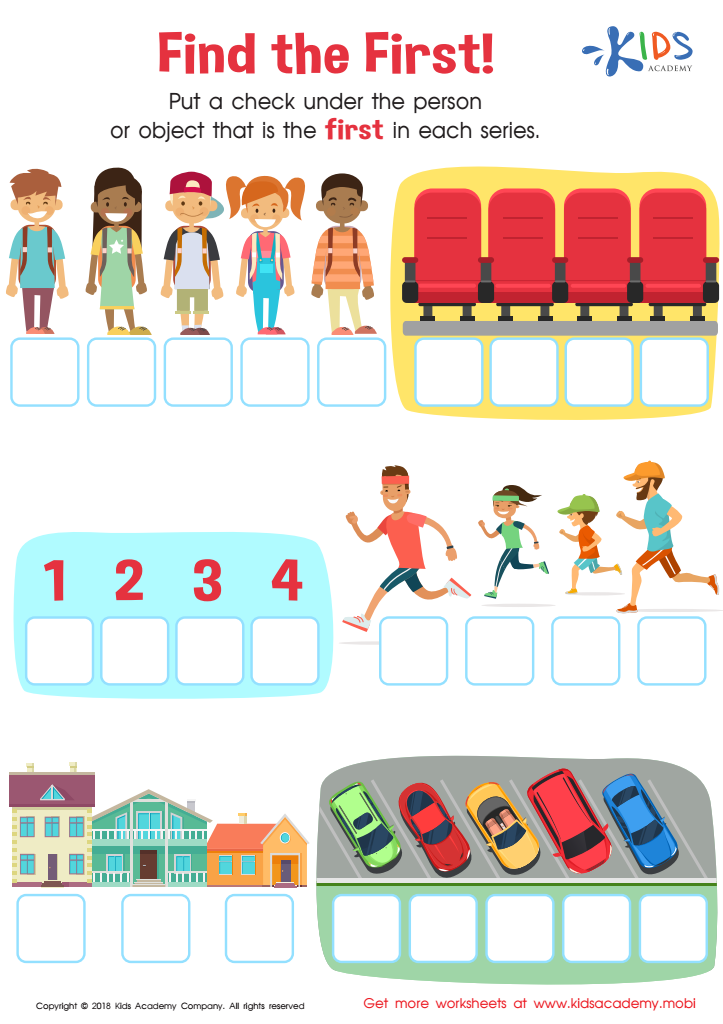
Find the First! Worksheet
Have your young students discuss what it means to be first in line, row, or a race. This free worksheet helps clarify their understanding of "first". View each group of people/objects and choose the first one. Follow up with hands-on activities like lining up students/toys or acting out a sequence of movements. Students can tell what happened first. Enjoy this printout for a fun math lesson!
Find the First! Worksheet
Worksheet
Join Kids Academy for Free
Who is primarily going to use this learning content?







Visual discrimination skills are essential foundational abilities for young learners, particularly when it comes to early math concepts. For children aged 4-8, these skills involve the ability to recognize differences and similarities in shapes, colors, and sizes, which are critical for understanding mathematical ideas such as counting, comparison, and sorting.
Parents and teachers should care about developing visual discrimination skills because they play a vital role in helping children succeed academically. When children can accurately differentiate between objects, they enhance their problem-solving capabilities and critical thinking for tasks such as addition and subtraction. These skills also support reading readiness, as they aid in distinguishing letters and numbers.
Moreover, enhance engagement and enjoyment in learning by using visual discrimination activities that promote exploration and play. Fun, hands-on math games can make learning interactive and enjoyable, fostering a positive attitude towards education.
Investing time in improving these skills leads to a more confident learner who feels equipped to tackle new challenges. By prioritizing visual discrimination, parents and teachers lay the groundwork for not only mathematical competence but also a lifelong love of learning, which is essential in an increasingly complex world.








