Comparing lengths Easy Measurement Worksheets for Ages 4-8
5 filtered results
-
From - To
Discover engaging "Comparing Lengths" worksheets designed specifically for children ages 4-8. Our easy measurement activities help young learners master the concept of length through fun, interactive lessons. Kids will enjoy comparing objects, understanding taller versus shorter, and developing critical thinking skills. Each worksheet includes vibrant illustrations and hands-on exercises to reinforce understanding of measurement in a playful way. Perfect for at-home learning or classroom use, these worksheets promote independence and confidence in math. Foster your child's measurement skills early with our carefully crafted resources that make learning fun and effective. Start exploring the world of lengths today!
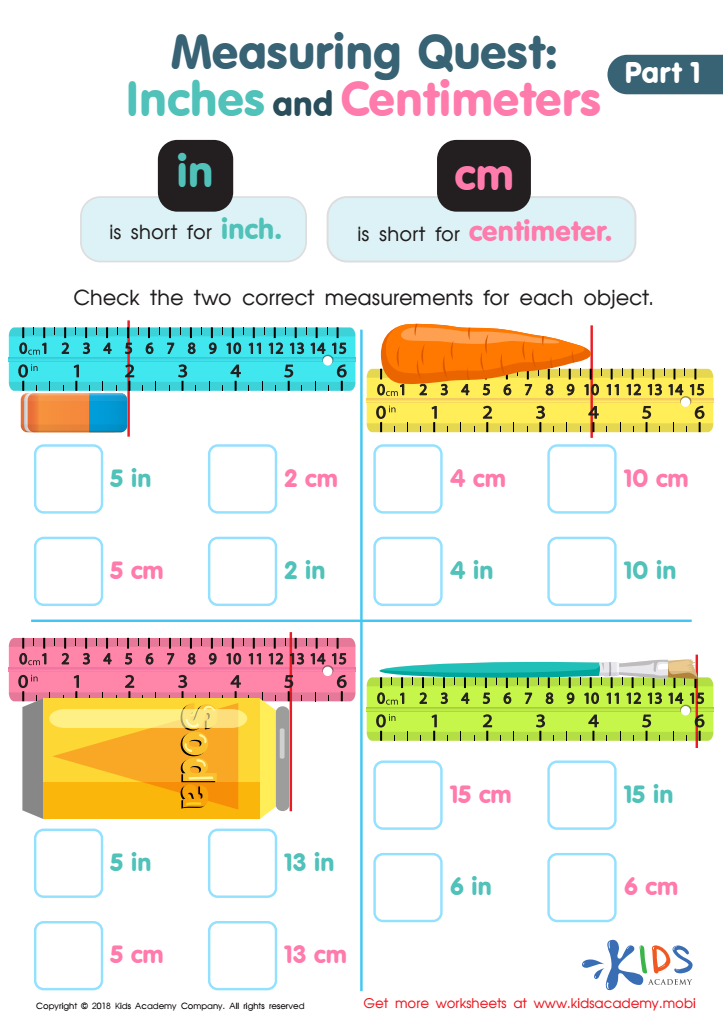
Measuring Quest: Inches and Centimeters Worksheet
 Assign to My Students
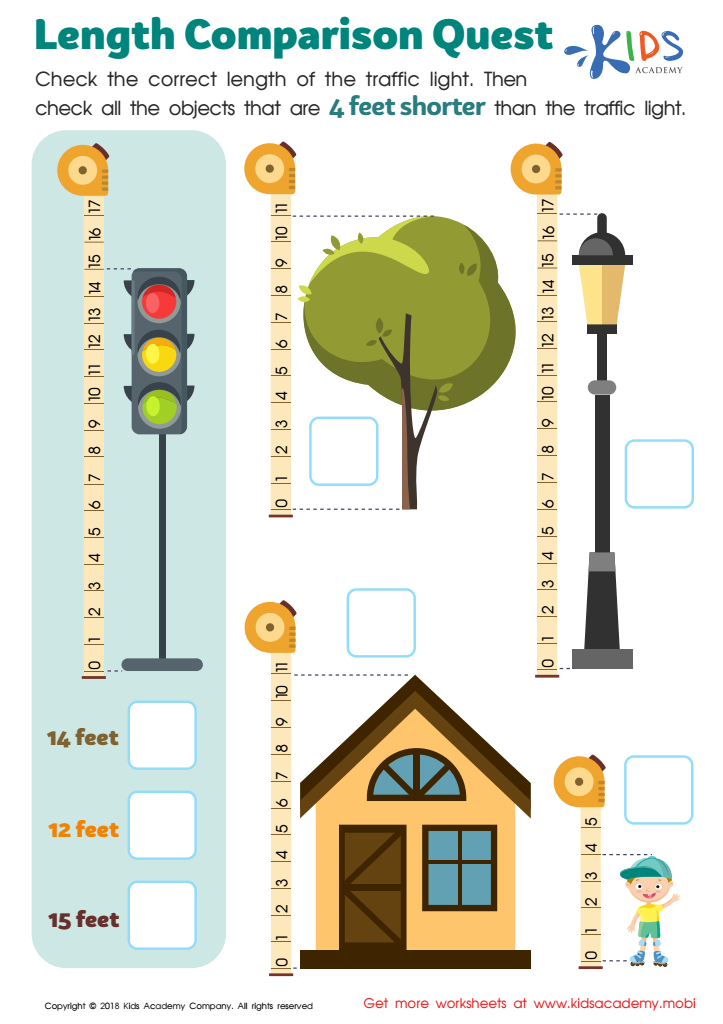
Length Comparison Quest Worksheet
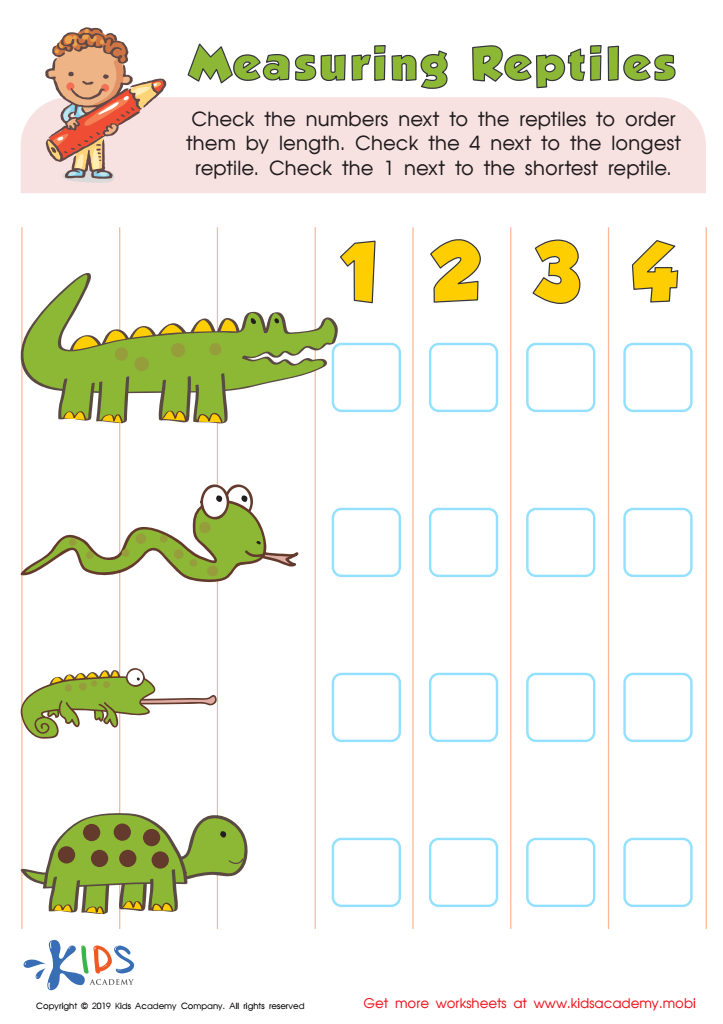
Measuring Reptiles Worksheet
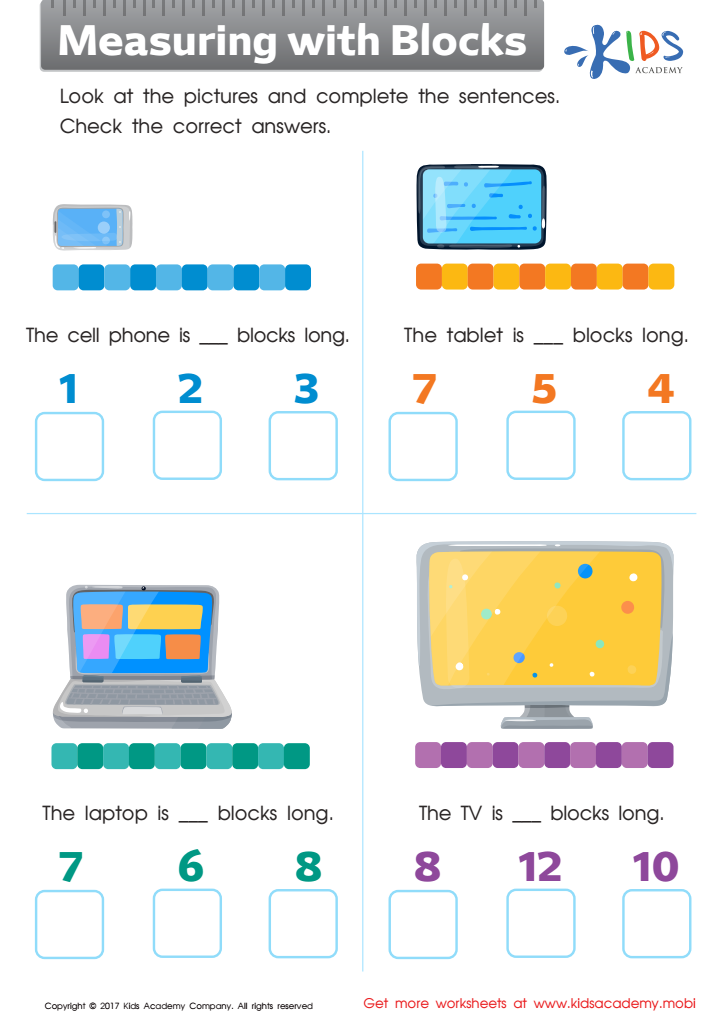
Measuring with Blocks Worksheet
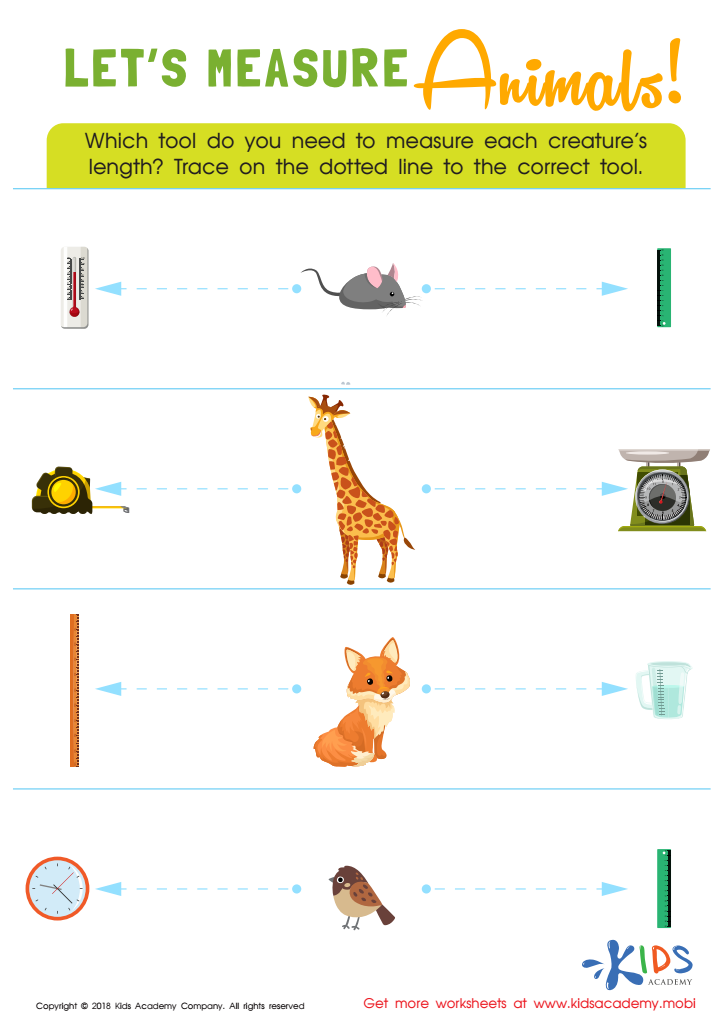
Let's Measure Animals! Worksheet







Parents and teachers should prioritize teaching comparing lengths and easy measurement skills to children ages 4-8 because these foundational concepts build critical early math skills essential for future learning. During this developmental stage, children are naturally curious and eager to explore their surroundings. Engaging them in activities that involve measuring and comparing lengths cultivates observational skills, promotes logical thinking, and enhances spatial awareness.
Understanding measurement lays the groundwork for more advanced math concepts, shaping children's problem-solving abilities. By incorporating playful, hands-on activities like using rulers, blocks, or measuring tapes, children learn to make connections between quantities and everyday applications. This not only makes learning enjoyable but fosters a positive relationship with math.
Moreover, comparing lengths is integral to comprehension in various subjects, including science and literacy, where size and scale play significant roles. Parents and teachers can use activities to encourage discussions about characteristics of objects, estimating, and reasoning.
Ultimately, providing opportunities for children to explore measurement benefits their cognitive development and prepares them for future academic endeavors, helping to ensure they become confident and competent learners in mathematics and beyond.








