Understanding patterns Easy Multiplication Worksheets for Ages 4-8
4 filtered results
-
From - To
Unlock the world of math with our "Understanding Patterns Easy Multiplication Worksheets" designed specifically for children aged 4-8! These engaging worksheets introduce young learners to multiplication through patterns, making math fun and enjoyable. With colorful visuals and step-by-step exercises, kids will discover the connections between numbers and operations. Ideal for home or classroom use, our worksheets promote critical thinking and enhance problem-solving skills. Foster a love for math in your child while they practice recognizing patterns, building confidence in their abilities. Explore a variety of worksheets that cater to different learning levels, ensuring a solid foundation in multiplication. Start learning today!
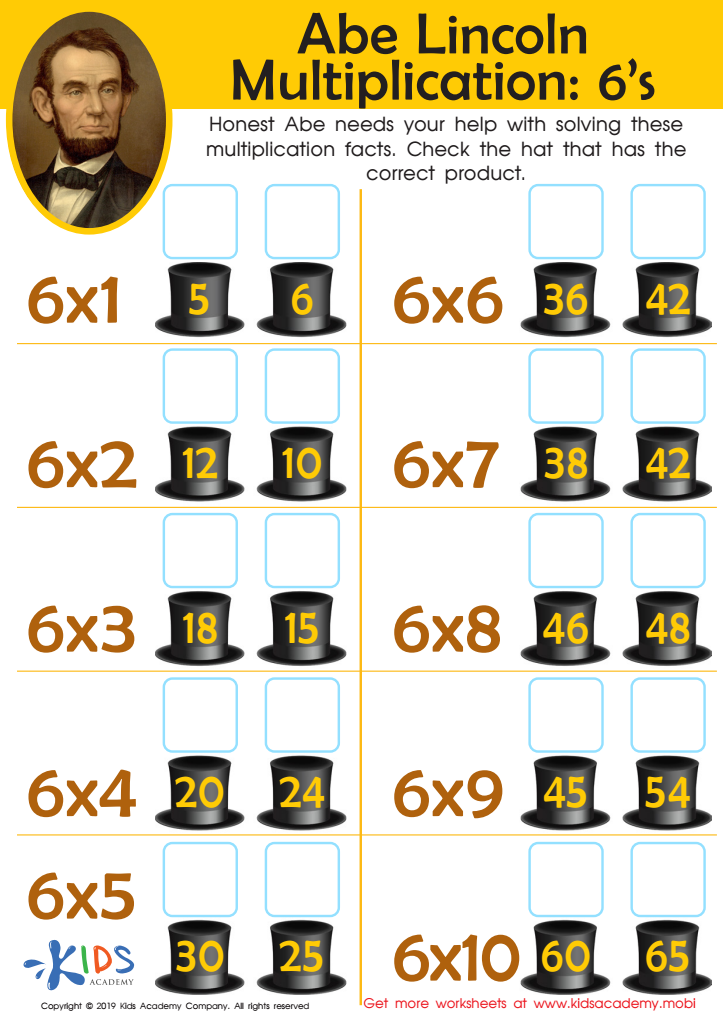
Abe Lincoln Multiplication: 6’s Worksheet
 Assign to My Students
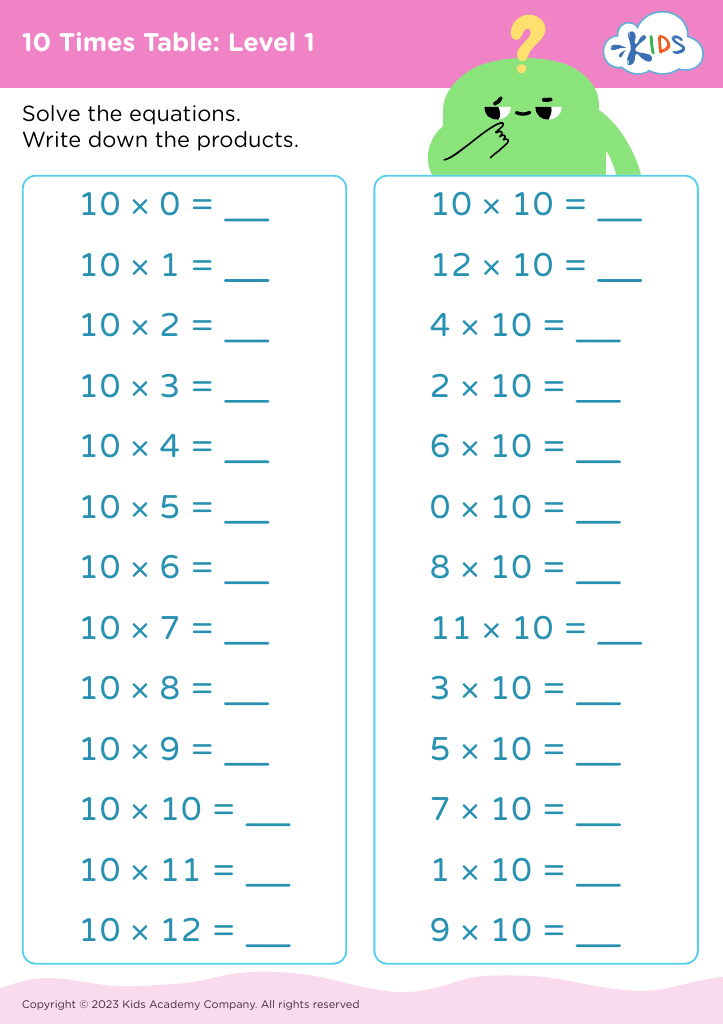
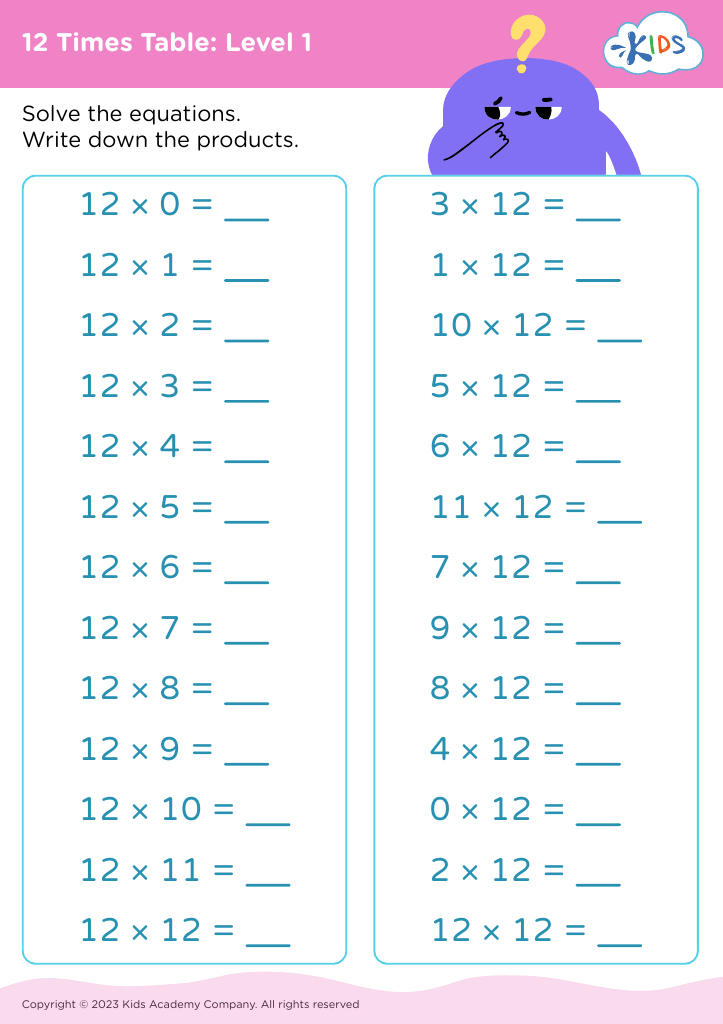
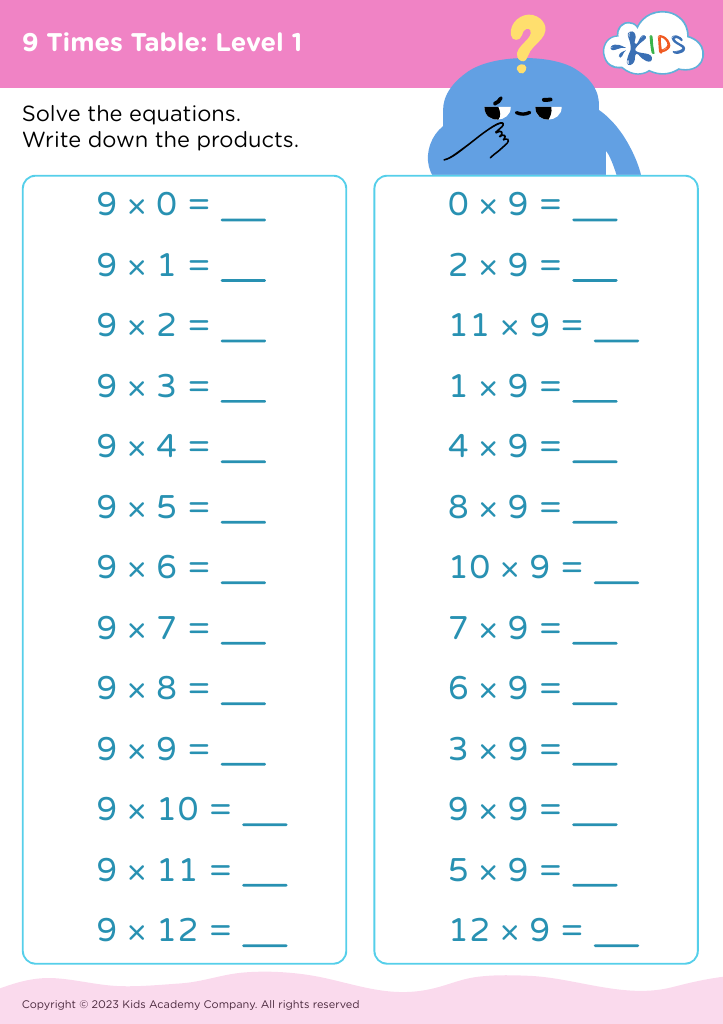








Understanding patterns and multiplication concepts at an early age is vital for young learners, specifically ages 4-8, as this foundational knowledge sets the stage for future math skills. Patterns are the building blocks of mathematics, allowing children to recognize sequences, predict outcomes, and develop critical thinking skills. By engaging with easy multiplication through patterns—such as repeated addition or visual arrays—children can grasp the idea that multiplication is simply a faster way to add groups of the same size.
Parents and teachers should care about teaching these concepts because early mathematical understanding leads to greater confidence and competence in math as children progress in their education. Furthermore, recognizing patterns improves problem-solving abilities, creativity, and the capacity to make connections across various subjects—including science and art.
Focus on easy multiplication through patterns also supports differentiated learning, catering to various learning styles. Utilizing games, visual aids, and hands-on activities makes the learning experience enjoyable, fostering a love for math. When parents and teachers prioritize this foundational knowledge, they empower students not only to succeed in academics but also to develop a lifelong appreciation for mathematics and its role in everyday life.








