Hand-eye Coordination Easy Numbers 11–20 Worksheets for Ages 4-8
3 filtered results
-
From - To
Enhance your child's learning experience with our "Hand-eye Coordination Easy Numbers 11–20 Worksheets for Ages 4-8." These engaging worksheets are designed to help young learners develop crucial hand-eye coordination skills while mastering numbers 11 to 20. Each activity combines fun illustrations and interactive exercises that encourage children to trace, color, and connect, reinforcing their fine motor abilities alongside early math concepts. Perfect for home or classroom use, these worksheets make practicing math enjoyable and effective. Help your child gain confidence and proficiency in numbers 11-20 while improving their coordination skills with this valuable resource tailored for ages 4 to 8.
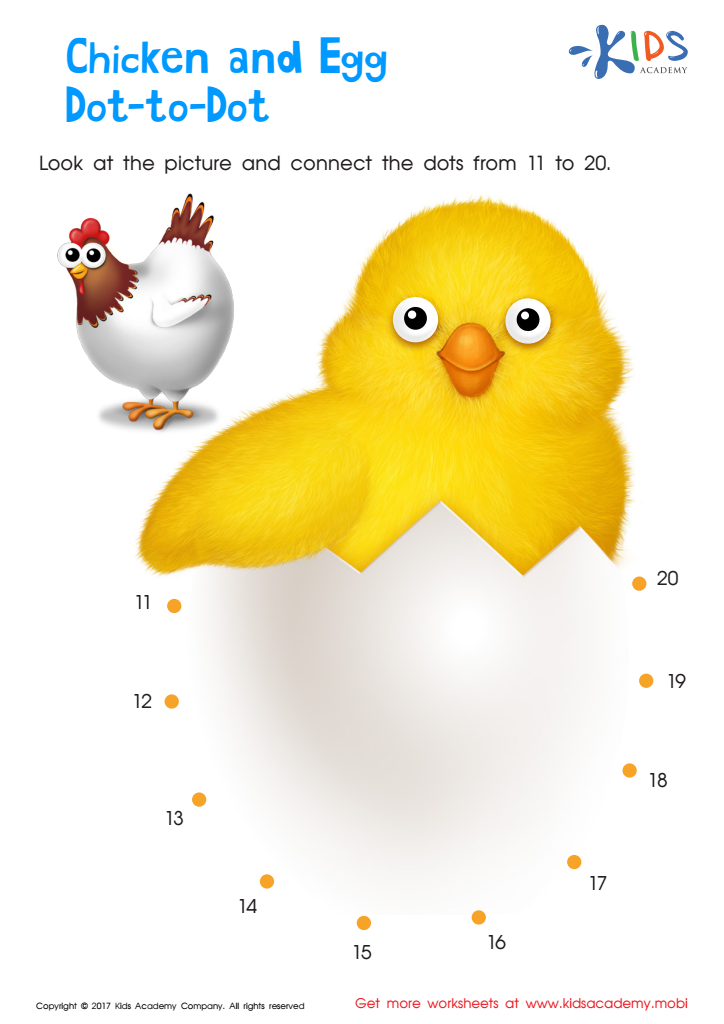
Ordering 11–20: Chicken & Egg Dot–to–dot Worksheet
 Assign to My Students
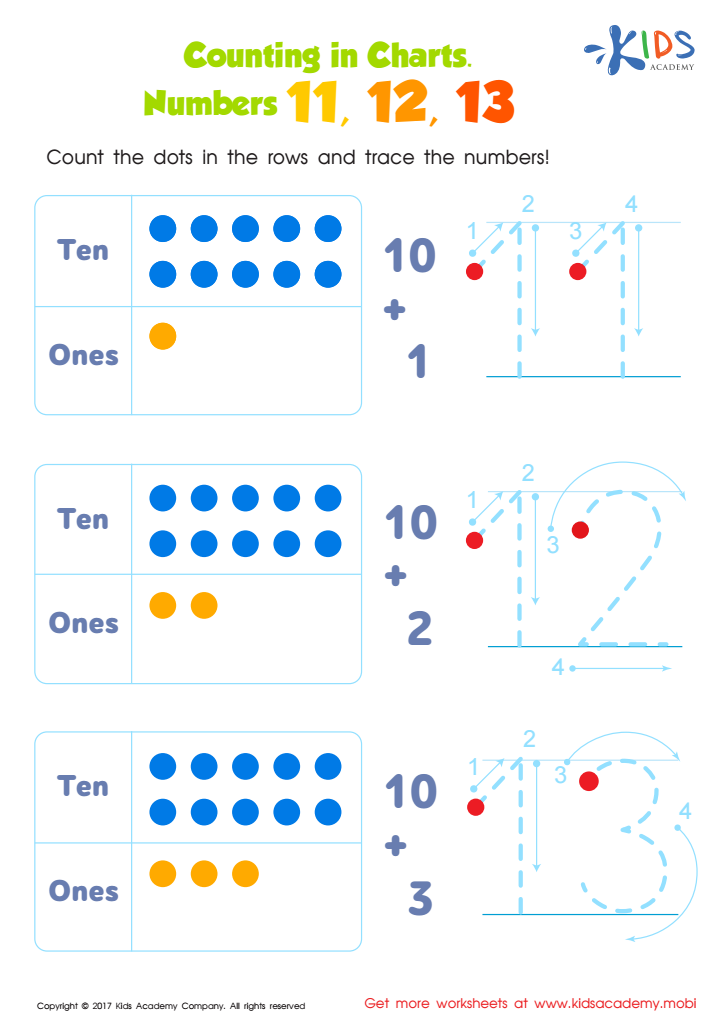
Number Tracing Worksheet For Kindergarten
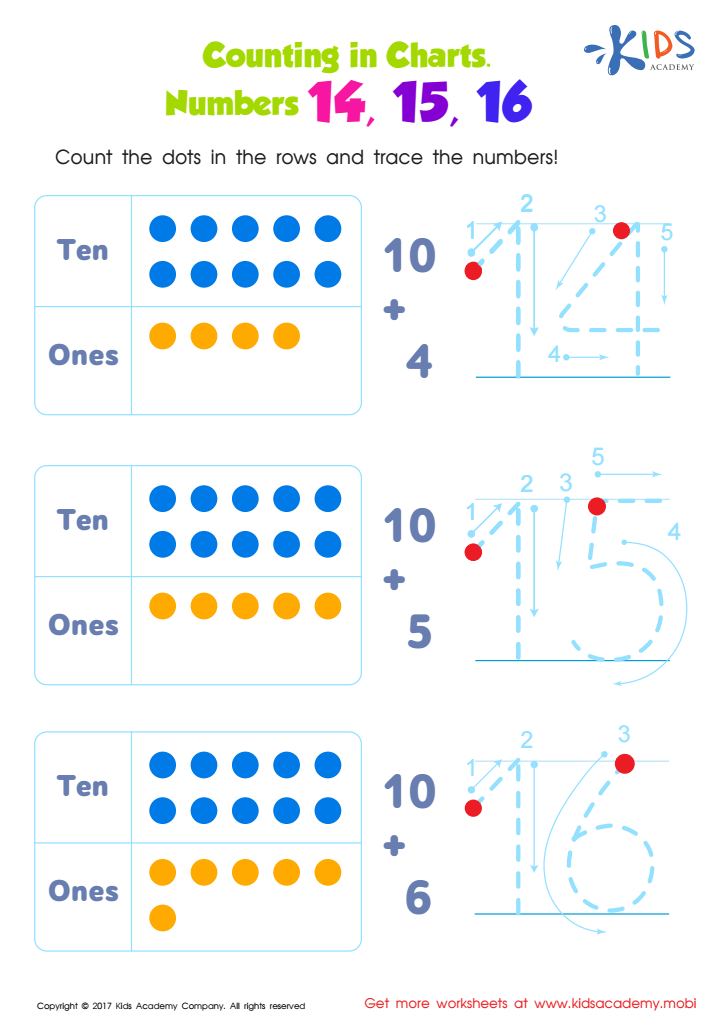
Number Tracing Worksheet



Hand-eye coordination is a fundamental skill that plays a crucial role in a child's overall development, particularly in the early years between ages 4-8. For parents and teachers, understanding its significance in activities like "Easy Numbers 11-20" is essential. This skill enables children to accurately and efficiently engage with various tasks, from writing numbers to manipulating objects like blocks or toys.
As children work on distinguishing and counting numbers, they subtly enhance their hand-eye coordination—connecting visual perception with physical movement. This connection is foundational for future learning, impacting academic success across subjects, especially math and science, where spatial reasoning is vital.
When children practice hand-eye coordination through counting and number games, they also build confidence in their fine motor skills. Furthermore, these activities promote cognitive skills like concentration and problem-solving. By encouraging activities that foster hand-eye coordination, parents and teachers actively support children’s readiness for school, enhancing their ability to follow multi-step instructions and engage with educational content effectively.
In summary, investing in exercises that bolster hand-eye coordination lays the groundwork for success in school and beyond, ensuring that children are prepared both academically and physically for future challenges.