Listening skills Easy Phonics Worksheets for Ages 4-9
3 filtered results
-
From - To
Enhance your child's literacy journey with our "Listening Skills Easy Phonics Worksheets" designed specifically for ages 4-9. These engaging worksheets focus on improving auditory skills, essential for phonics mastery. Children will enjoy activities that promote careful listening and help them identify sounds in words, reinforcing their understanding of letter-sound relationships. Interactive exercises will keep young learners captivated while supporting their phonemic awareness. Perfect for both classroom and home learning, these worksheets simplify the foundation of reading. Download our easy-to-use resources today and watch your child's confidence in reading and listening flourish! Get started on nurturing their language skills now!
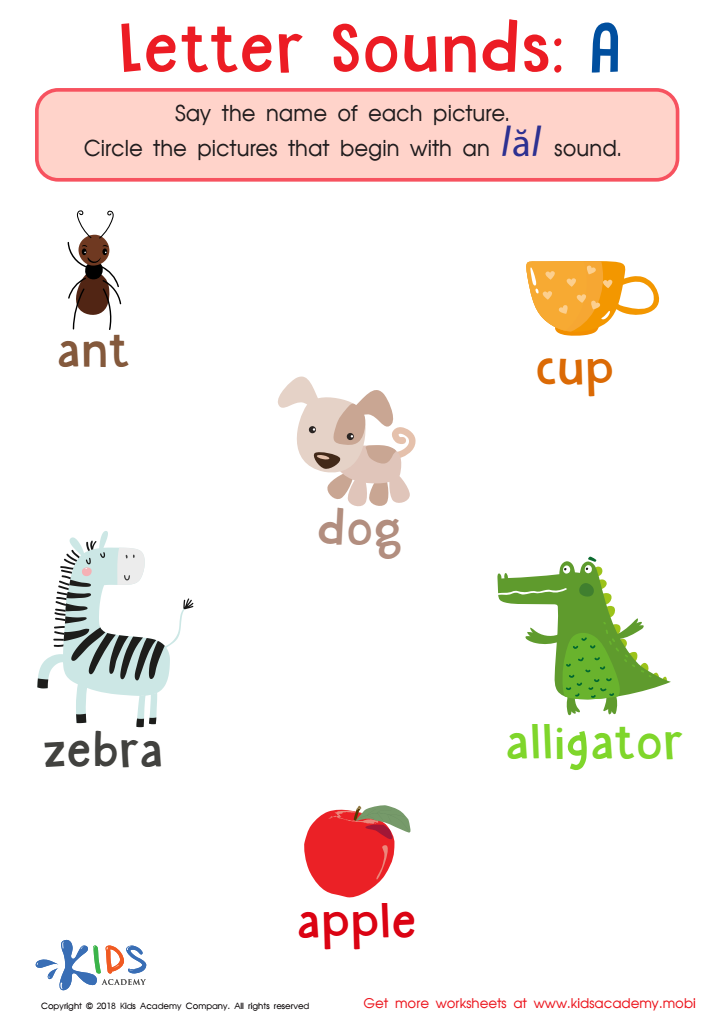
Letter A Sounds Worksheet
 Assign to My Students
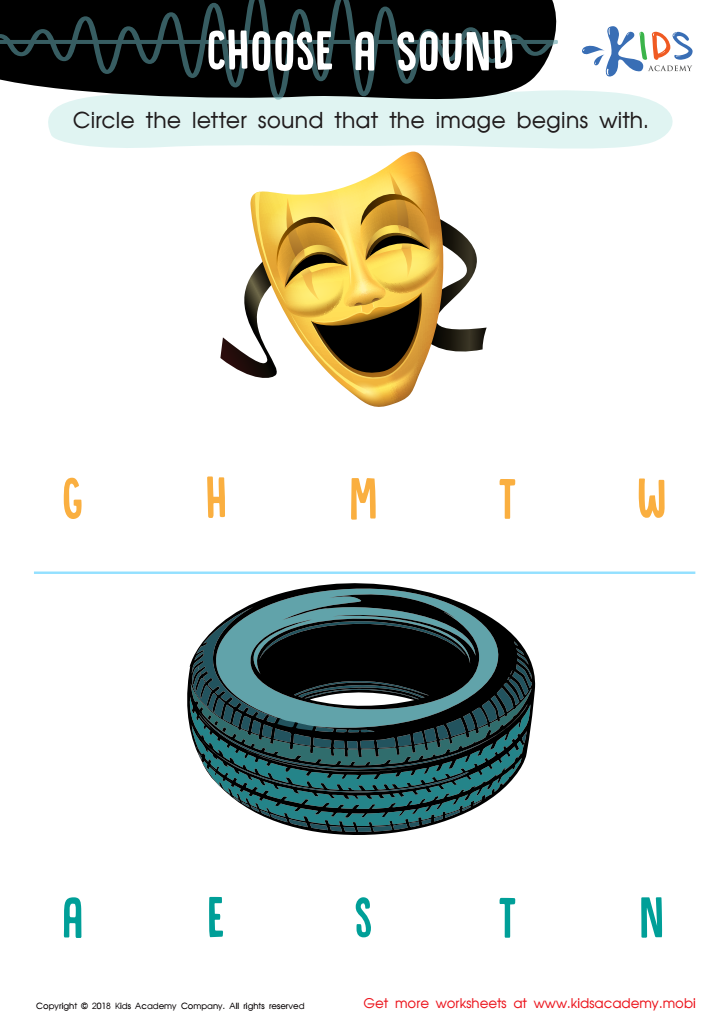
Choose a Sound Worksheet
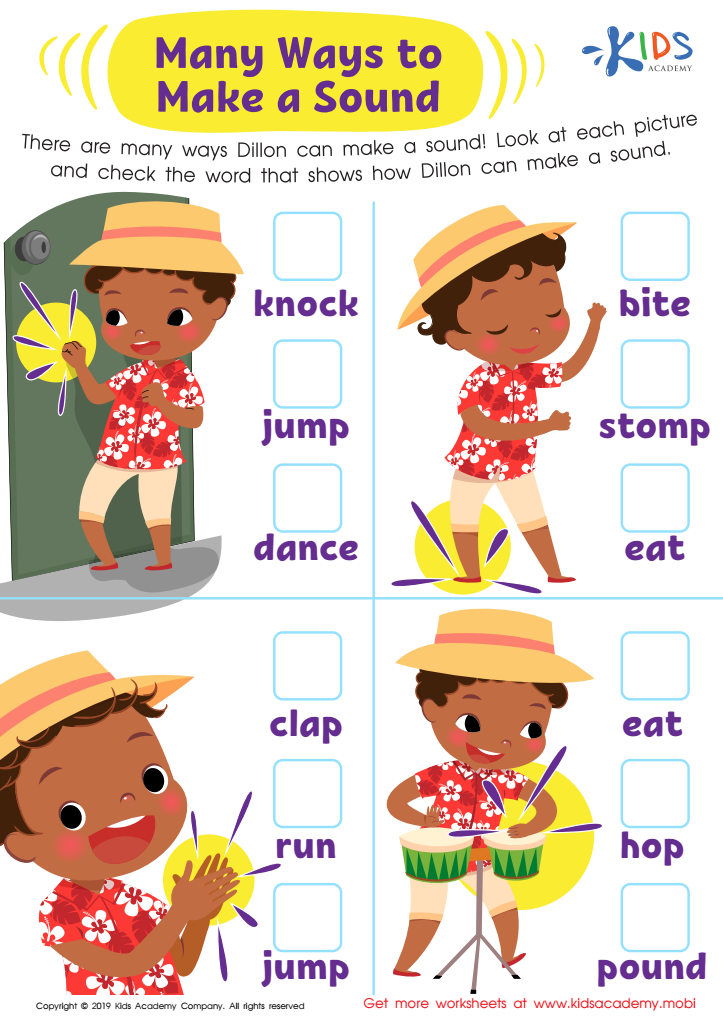
Many Ways to Make a Sound Worksheet








Listening skills are fundamental for young learners, especially within the context of Easy Phonics for Ages 4-9. As children are introduced to reading and language, effective listening skills play a critical role in their phonemic awareness—the ability to hear and manipulate sounds that form words. This foundational skill is essential for developing strong reading and writing abilities.
By focusing on Easy Phonics, parents and teachers can help children recognize sounds and patterns in language, which enhances their comprehension and communication skills. When children engage in listening activities, they learn to distinguish between similar sounds, enabling them to decode new words easily. Moreover, strong listening skills aid in following instructions, participating in discussions, and fostering overall classroom engagement.
Encouraging good listening practices nurtures a child's critical thinking and problem-solving abilities, which are important for academic success beyond phonics. In addition, proficient listeners are typically more empathetic—a trait that cultivates collaboration and healthy peer relationships in learning environments.
By prioritizing listening skills within the Easy Phonics framework, parents and teachers invest in a child's holistic development, laying a solid foundation for lifelong learning and social interactions. Thus, fostering these skills is essential not just for reading, but for a child's broader educational journey.