Problem-Solving Skills Easy Addition & Subtraction Worksheets for Ages 4-9 - Page 2
29 filtered results
-
From - To
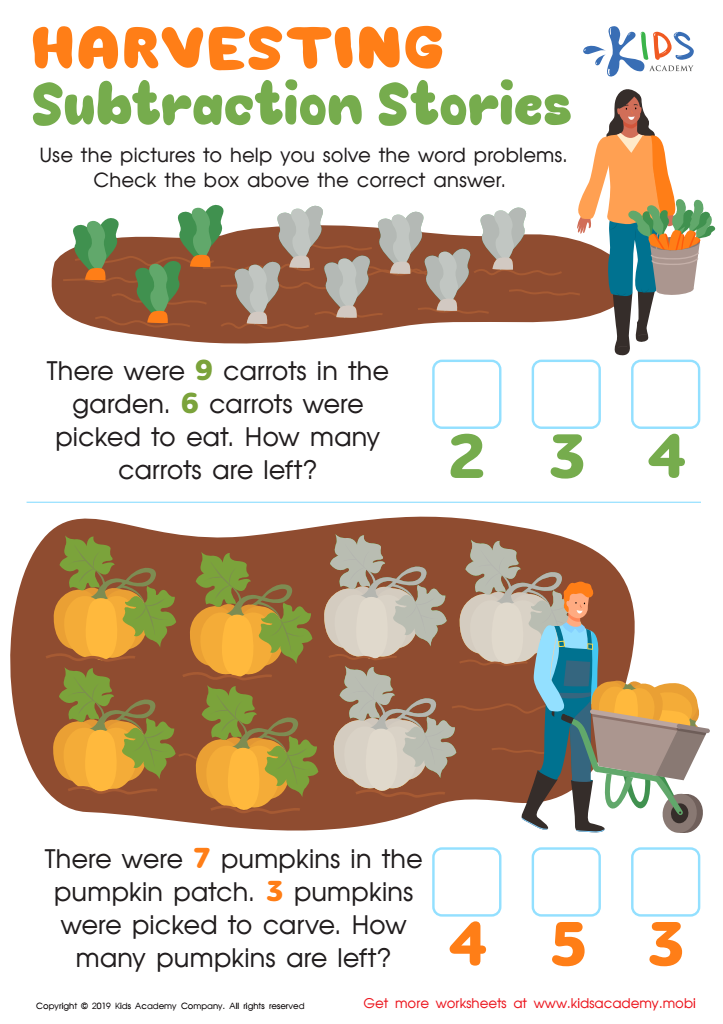
Harvesting Subtraction Stories Worksheet
 Assign to My Students
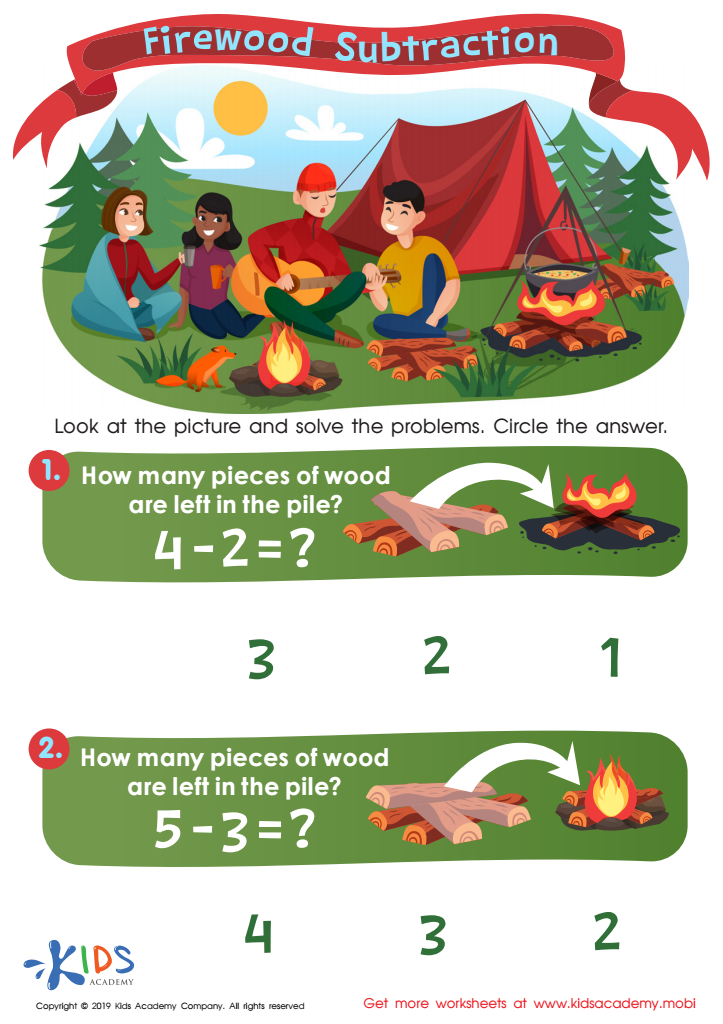
Firewood Subtraction Worksheet
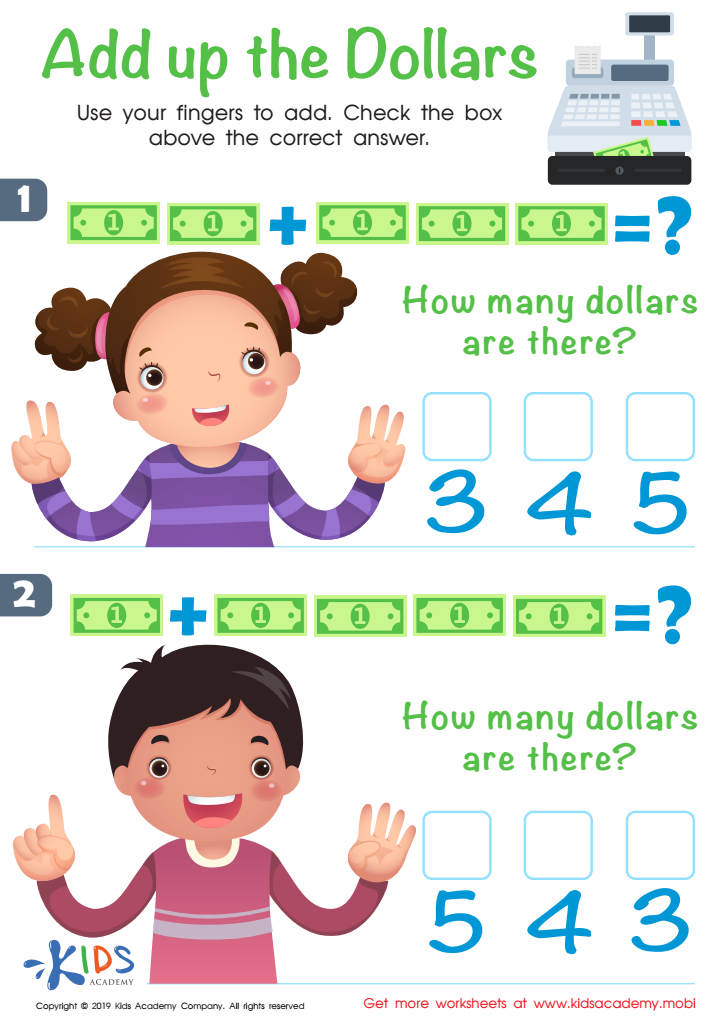
Add up the Dollars Worksheet
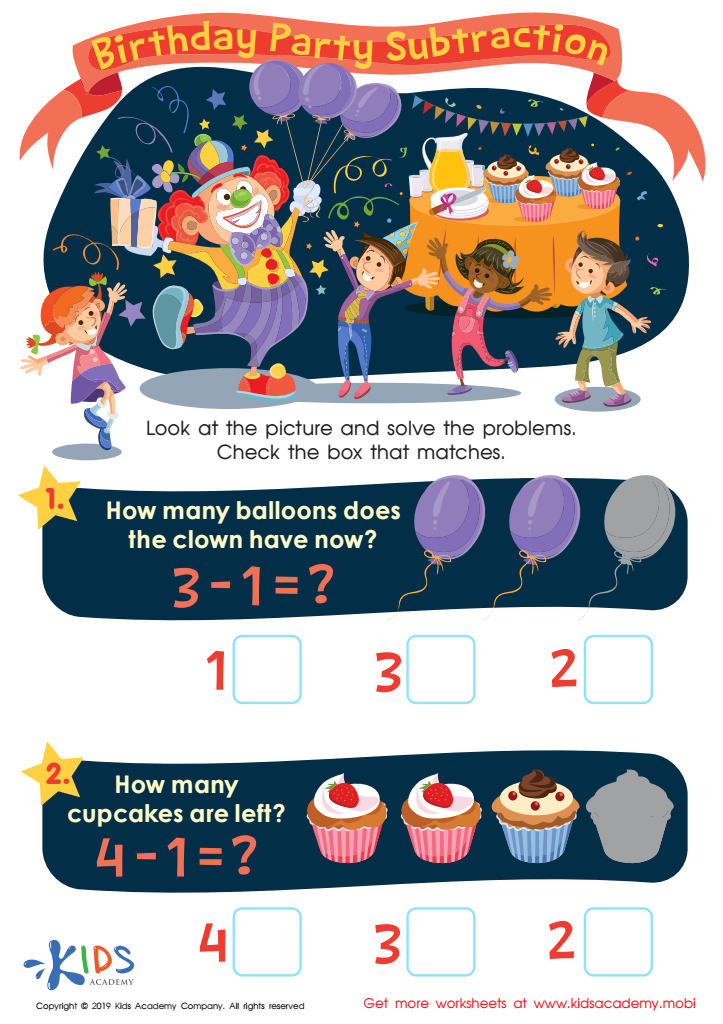
Birthday Party Subtraction Worksheet
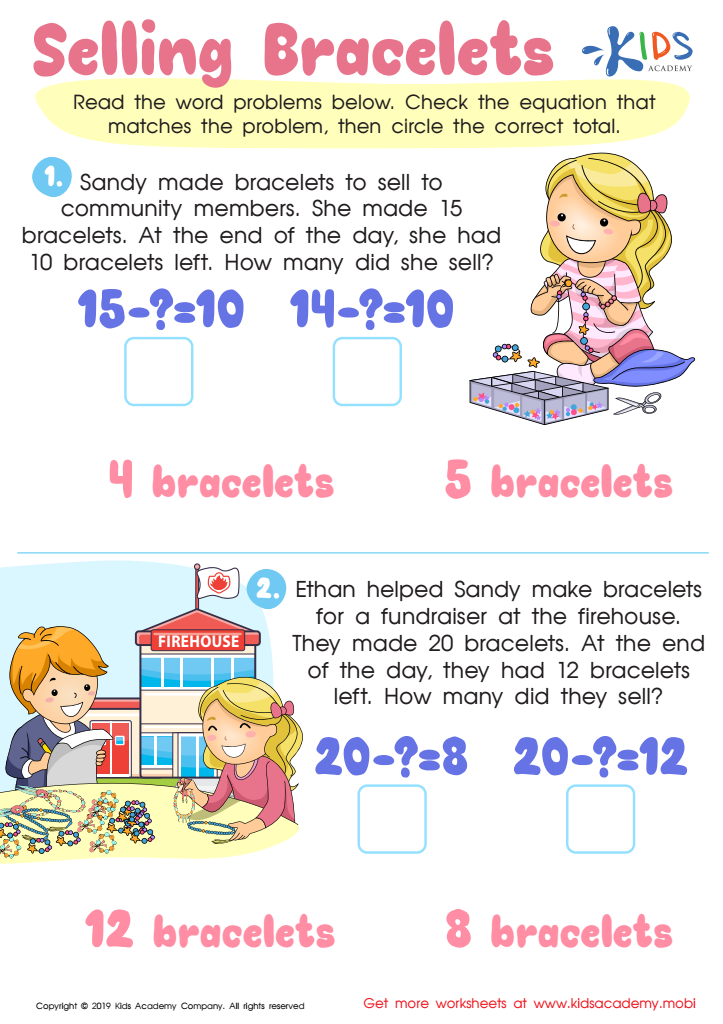
Selling the Bracelets Worksheet








Developing problem-solving skills in young children, particularly in the context of easy addition and subtraction, is crucial for several reasons. Firstly, these foundational mathematical skills are integral to everyday life, shaping how children interact with the world and make sense of their experiences. Understanding basic math fosters logical thinking, which enhances reasoning abilities that students will use across all subjects.
Moreover, problem-solving skills promote cognitive development by encouraging children to think critically and approach situations analytically. When faced with simple math problems, children learn persistence as they work through challenges. This resilience is vital not only in mathematics but in achieving success in various life situations.
Additionally, mastering addition and subtraction at an early age creates a strong foundation for more complex mathematical concepts, preparing students for higher-level learning in the future. For parents and teachers, nurturing these skills cultivates confidence in children, turning potentially daunting subjects into engaging challenges. Kids who feel confident in their abilities are more likely to embrace learning opportunities, leading to a lifelong love of discovery and intelligence. In essence, supporting the development of problem-solving skills in early mathematics is investment in a child's overall academic and personal growth.








