Sorting skills Easy Math Worksheets for Ages 4-9
6 filtered results
-
From - To
Unlock the power of early math development with our easy sorting skills worksheets for ages 4-9! These comprehensive, engaging activities are designed to help young learners distinguish, categorize, and organize objects, laying a strong foundation for math proficiency. Through fun exercises, children will sharpen their observation, analytical, and critical thinking skills. Perfect for both classroom and homeschool settings, our printable worksheets cover various sorting concepts, from size and shape to color and pattern. Encourage your child's cognitive growth and love for learning math with these creative and age-appropriate sorting challenges. Explore today!
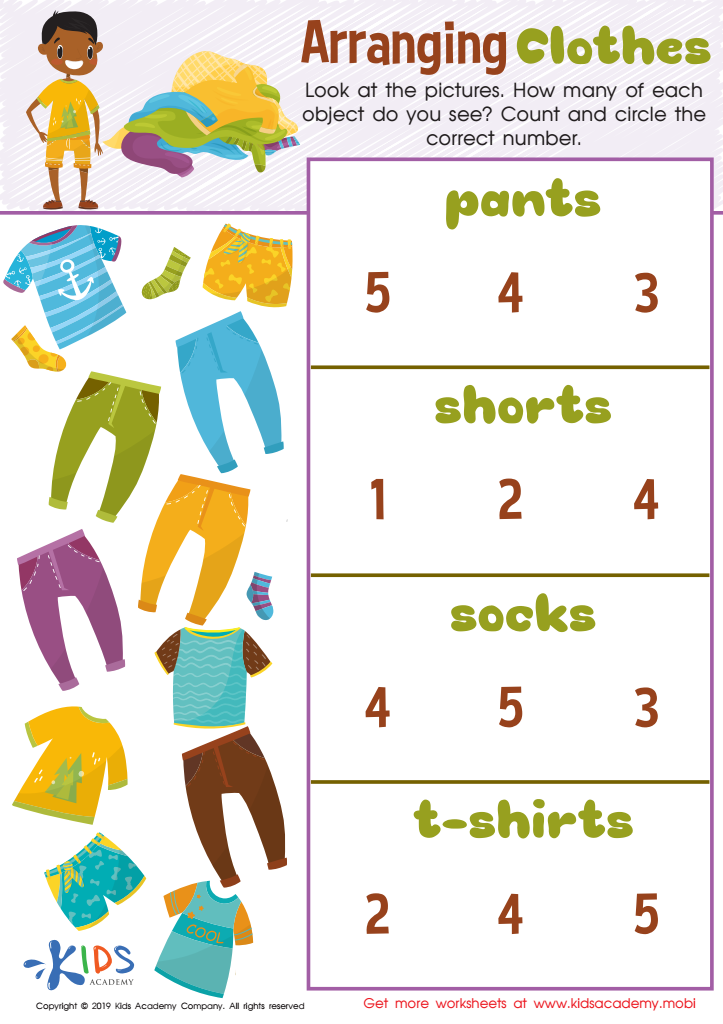
Arranging Clothes Worksheet
 Assign to My Students
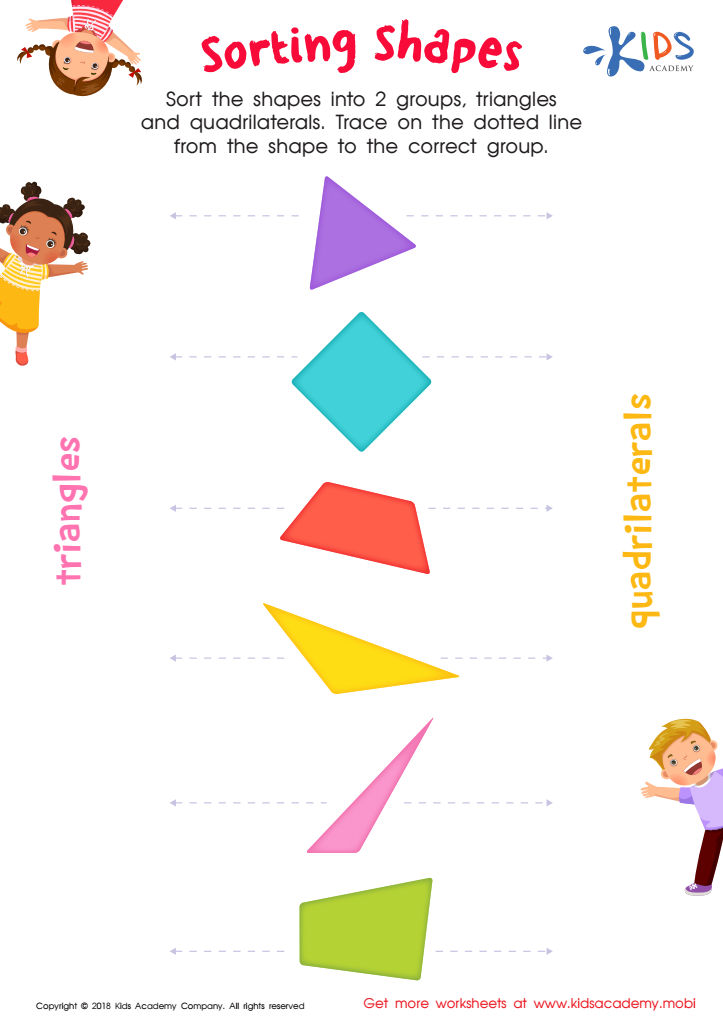
Sorting Shapes Worksheet
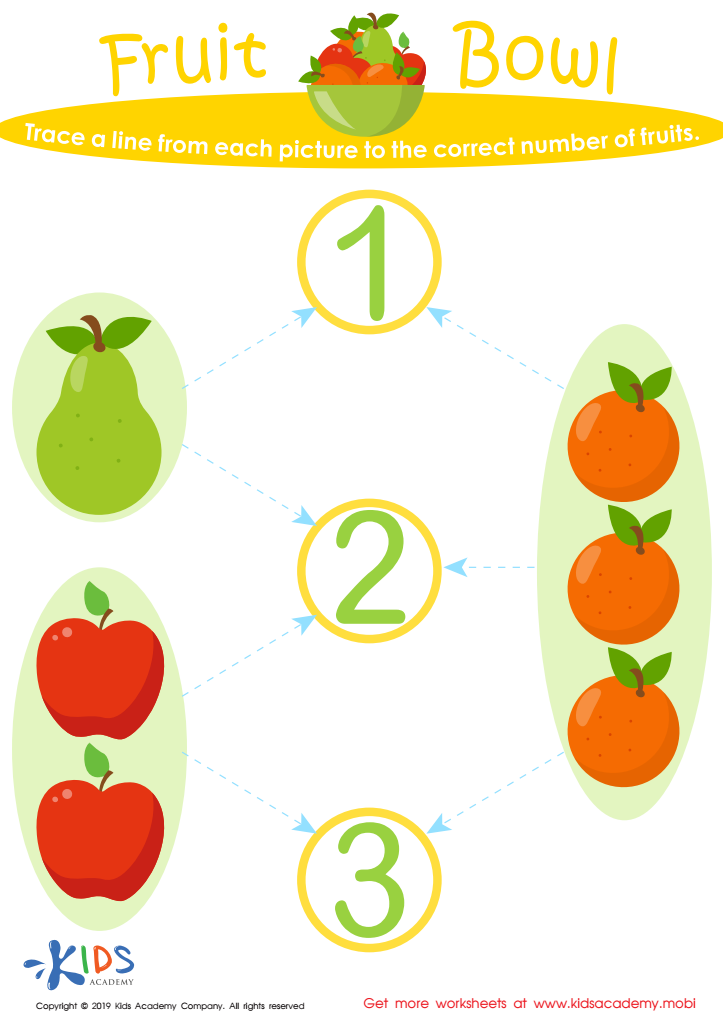
Fruit Bowl Worksheet
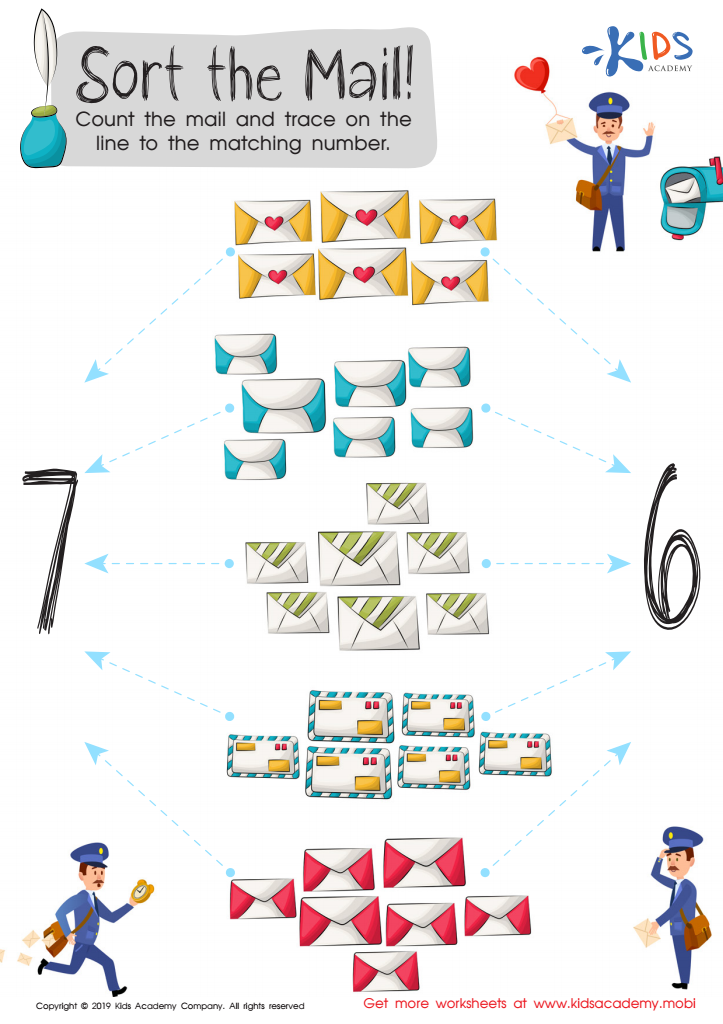
Sort the Mail Worksheet
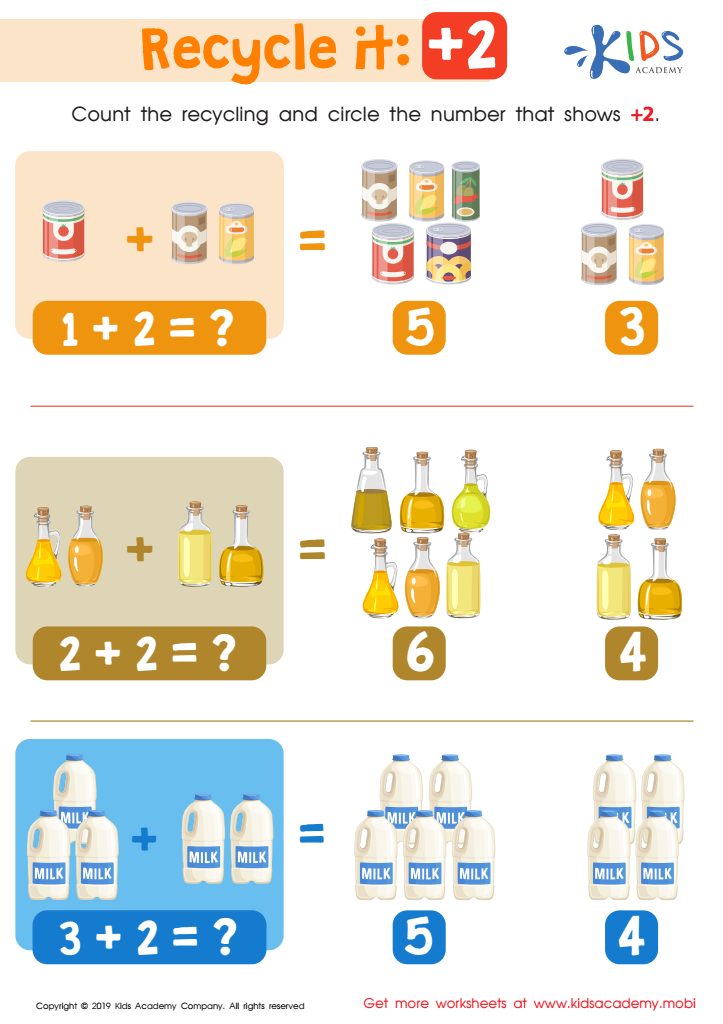
Recycle It: +2 Worksheet
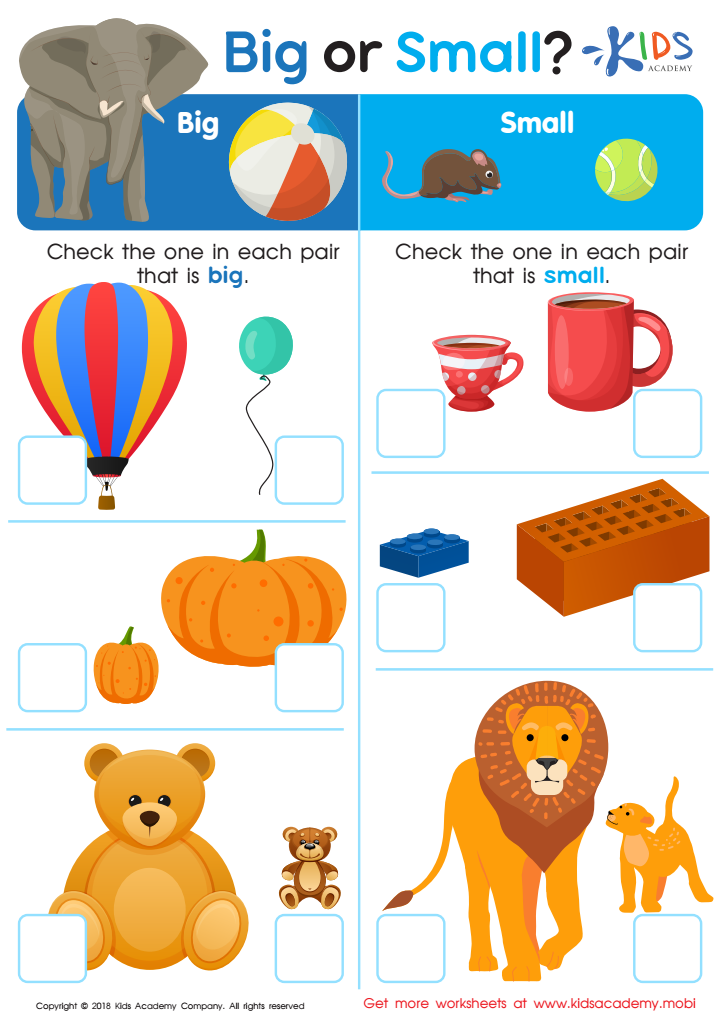
Big or Small? Worksheet



.jpg)




Sorting skills in early math are crucial for children aged 4-9 as they serve as foundational building blocks for more complex mathematical concepts and everyday problem-solving abilities. Parents and teachers should prioritize these skills for several key reasons.
First, sorting helps children understand relationships and categorize objects based on attributes like shape, size, color, or quantity. This fundamental ability enhances cognitive development, fostering logical thinking patterns and organizational skills that benefit every academic subject.
Second, sorting lays the groundwork for number sense—an essential component for arithmetic skills. When children group and count items, they gain a concrete understanding of numbers and their applications. This tactile, hands-on learning experience makes abstract concepts more accessible, thereby supporting future mathematical learning such as addition, subtraction, multiplication, and division.
Third, sorting activities improve attention to detail and fine motor skills. Picking up small objects and discerning subtle differences sharpens visual perception and dexterity, critical for writing and other precise tasks.
Finally, sorting nurtures problem-solving and critical thinking. Children practice making decisions based on criteria, enhancing decision-making processes and adaptability in various situations.
By engaging in sorting activities, children develop a solid math foundation combined with crucial cognitive skills. Encouraging and incorporating sorting into early education sets students on a path toward academic success and confidence.