Understanding patterns Easy Multiplication Worksheets for Ages 4-9
4 filtered results
-
From - To
Unlock the world of multiplication for your child with our "Understanding Patterns Easy Multiplication Worksheets," designed for ages 4-9. These engaging worksheets help young learners identify and grasp mathematical patterns, laying a strong foundation for multiplication skills. By blending fun activities with essential learning concepts, children can explore number relationships and develop problem-solving abilities in an enjoyable way. Our resources encourage critical thinking and make math approachable, assisting parents and educators in guiding students towards academic success. Perfect for home or classroom use, these worksheets will inspire confidence in young mathematicians while transforming the learning experience into a journey of discovery!
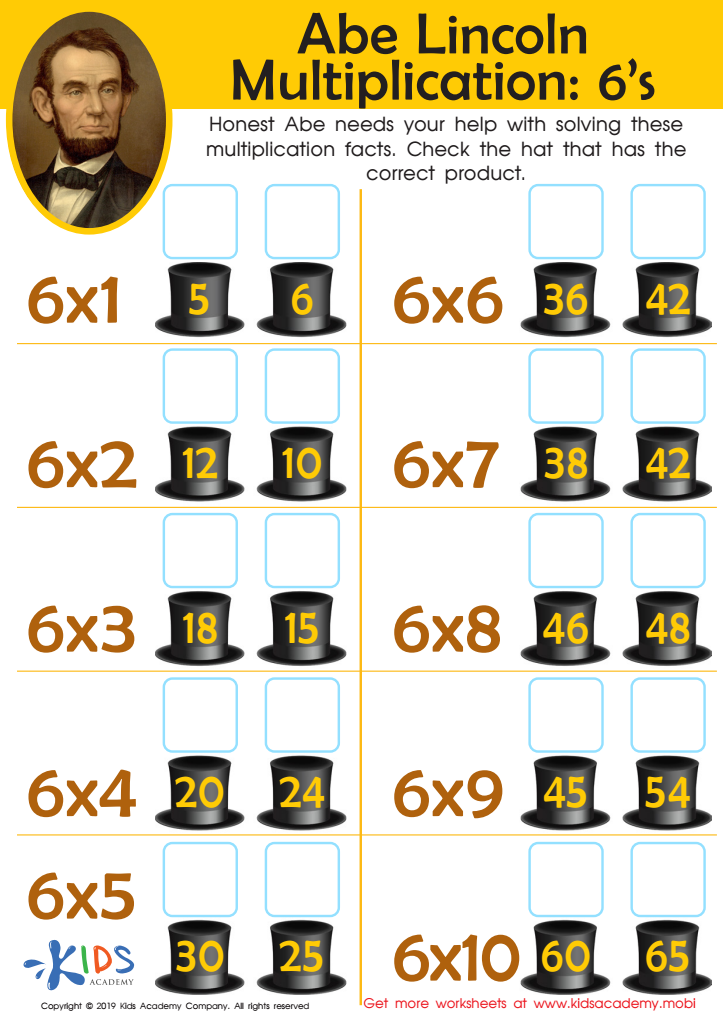
Abe Lincoln Multiplication: 6’s Worksheet
 Assign to My Students
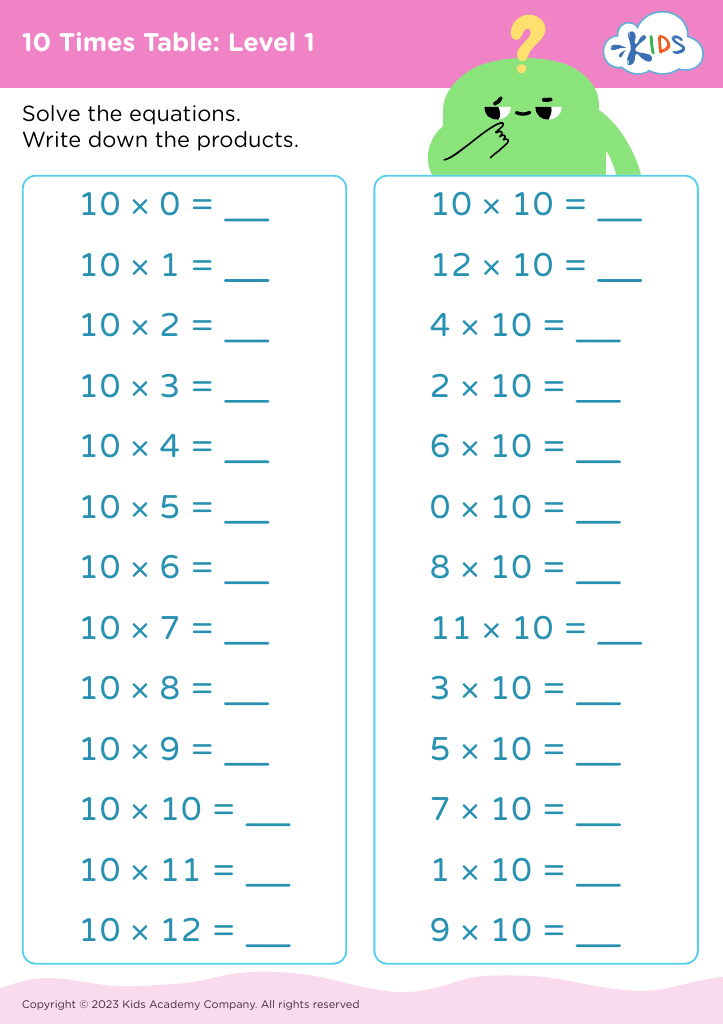
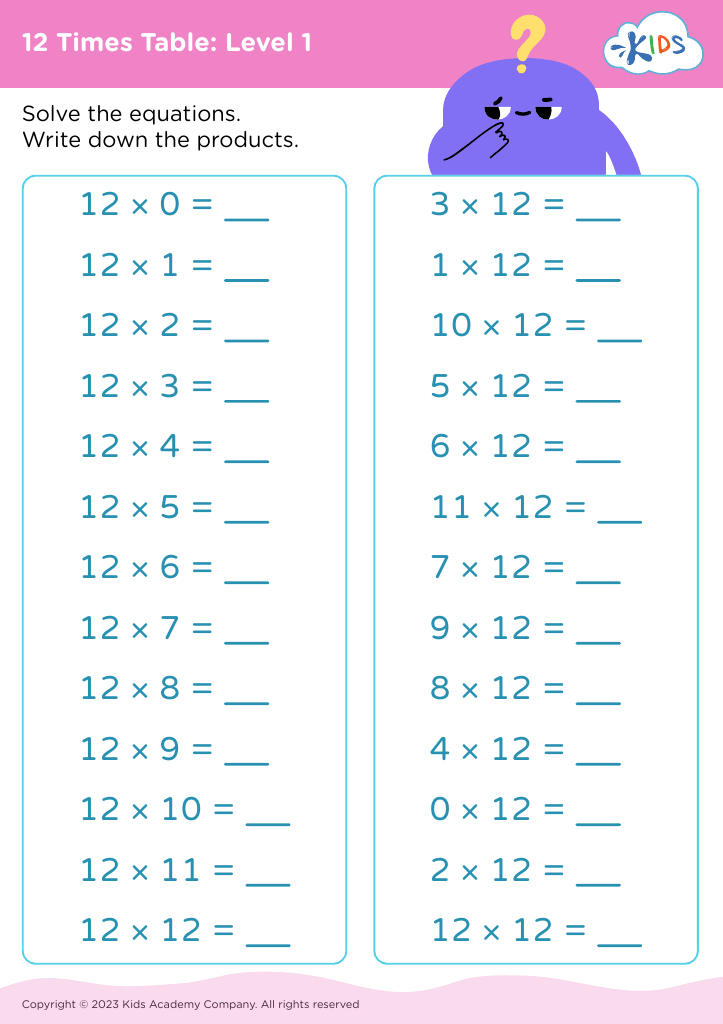
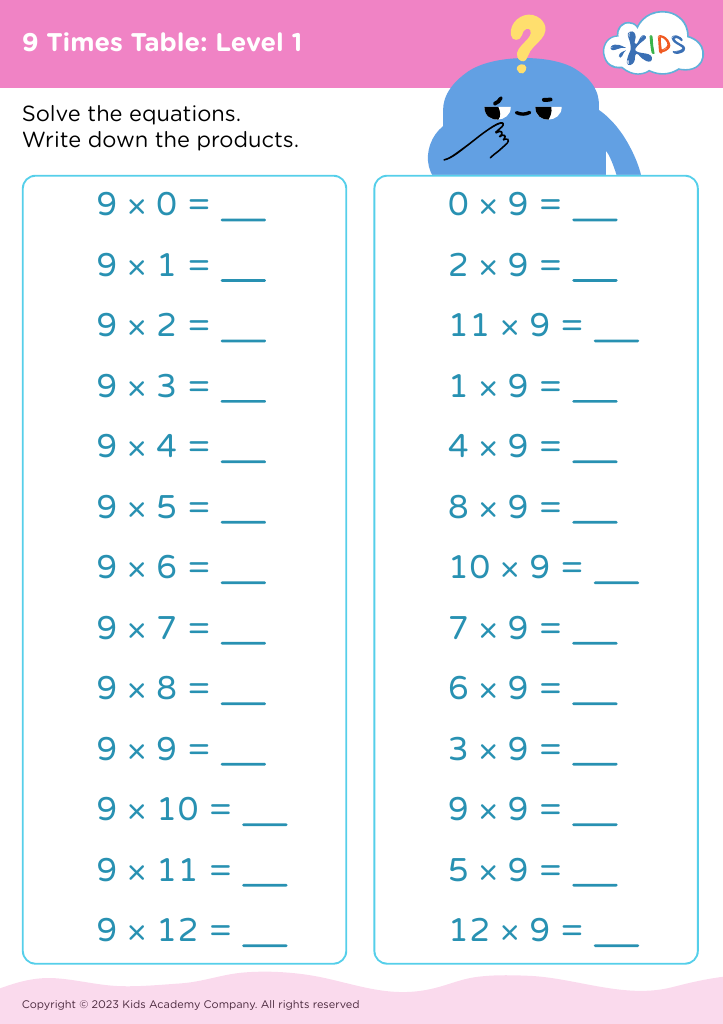








Understanding patterns and mastering easy multiplication concepts at an early age are crucial for children aged 4-9 for several reasons. Firstly, recognizing and creating patterns enhances critical thinking and problem-solving skills. These foundational skills are essential for future mathematical learning and everyday situations requiring logic and reasoning.
For young learners, multiplication can initially seem daunting. However, by presenting it in the context of patterns—such as skip counting—children can build a strong numerical foundation. Recognizing that multiplication is essentially repeated addition helps demystify the topic and reinforces number sense. This understanding not only simplifies future math concepts but also builds confidence.
Moreover, grasping these concepts lays the groundwork for more advanced mathematical skills learned later on. Early exposure to patterns and basic multiplication fosters an appreciation for math, making it less intimidating as they progress through school. In turn, children can better connect various mathematical concepts, creating a robust framework for problem-solving.
Ultimately, parents and teachers should prioritize understanding patterns and easy multiplication to equip children with the tools they need for academic success, instill resilience when facing challenges, and nurture a positive attitude towards mathematics throughout their educational journey.








