Understanding citizenship Easy Social Studies Worksheets for Ages 4-9
3 filtered results
Difficulty Level
Grade
Age
-
From - To
Subject
Activity
Standards
Explore the engaging world of citizenship with our "Understanding Citizenship Easy Social Studies Worksheets" designed for ages 4-9. These interactive worksheets introduce young learners to essential concepts of citizenship, including rights, responsibilities, and community involvement. With a variety of fun activities, children will develop a foundational understanding of what it means to be a good citizen. Ideal for home or classroom use, these resources encourage critical thinking and promote positive social values. Perfect for early grade teachers and parents alike, our worksheets provide a delightful way to spark meaningful conversations about citizenship in an age-appropriate manner. Discover practical skills for life!
Favorites
With answer key
Interactive
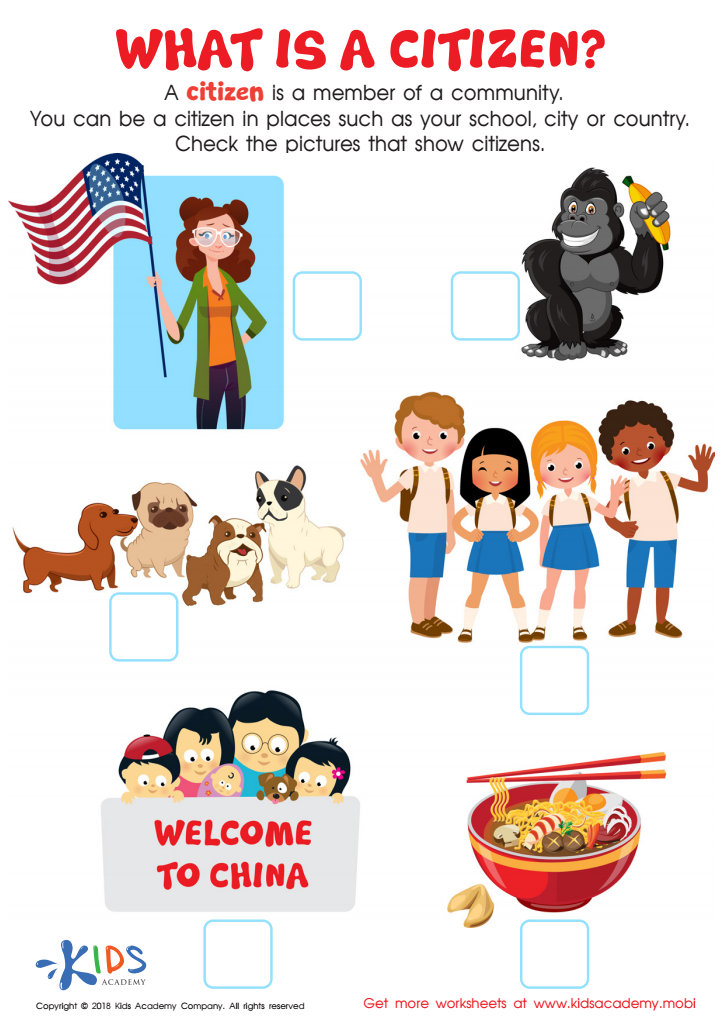
What is a Citizen? Worksheet
Do your students know who a citizen is? Use this worksheet to teach them: a citizen is a member of a community, such as your school, city or country. Look at the pictures in the pdf with your students. Ask them to identify who or what is in the pictures, and help them check which are citizens.
 Assign to My Students
What is a Citizen? Worksheet
Worksheet
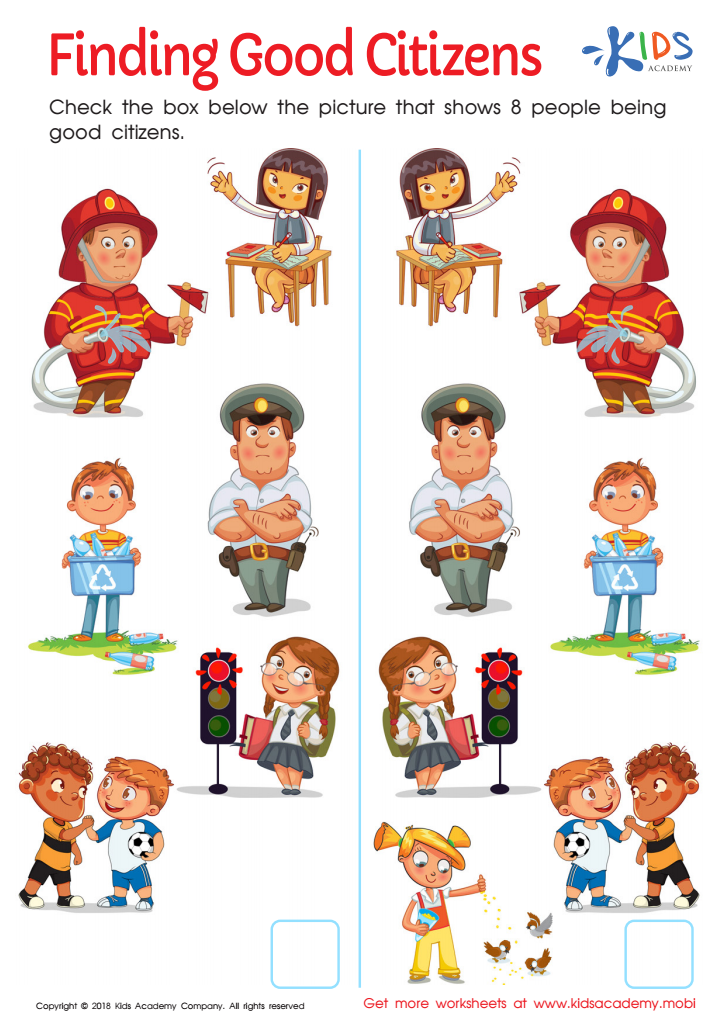
Finding Good Citizens Worksheet
Teach your students what it takes to be a responsible citizen in their community. Test their knowledge by having them identify good citizen acts in pictures. Ask them to check the box showing 8 people being good citizens. Challenge their comprehension and make sure they understand the importance of being a good citizen.
Finding Good Citizens Worksheet
Worksheet
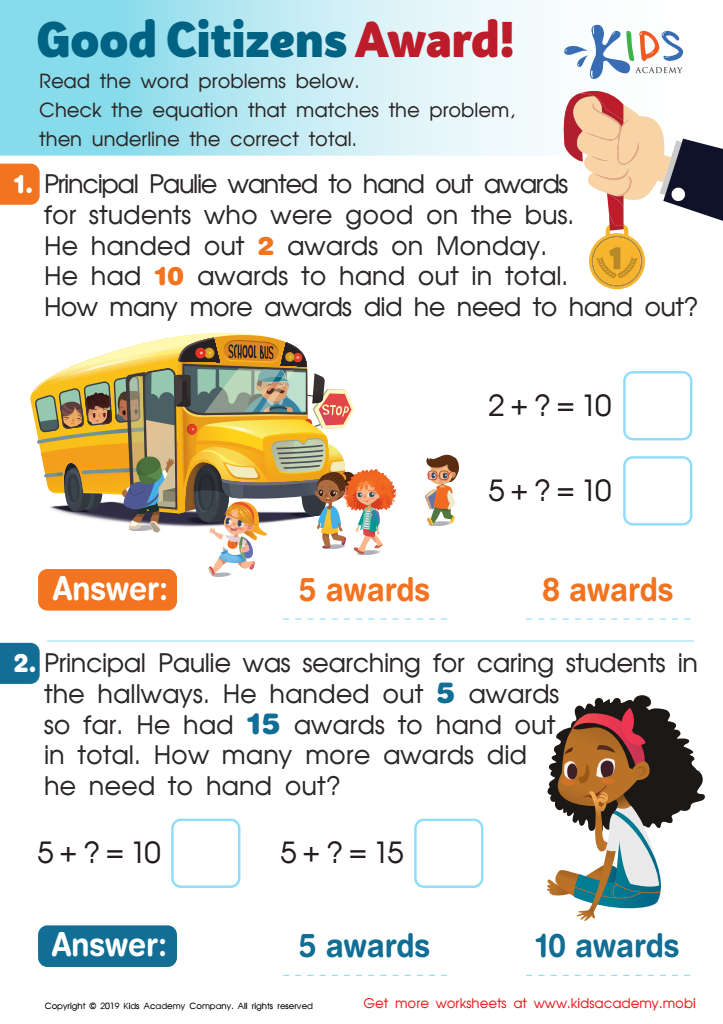
Good Citizens Award! Worksheet
A citizen is a person who resides in a certain area and is granted legal rights and privileges. Becoming a citizen can be achieved in various ways, most commonly through birth or marriage. Good citizens honor their nation's laws and act responsibly. Ask your students to share examples of good citizenship. Have them read the word problem and choose the equation that yields the right answer, then underline it.
Good Citizens Award! Worksheet
Worksheet
Learning Skills
Join Kids Academy for Free
Who is primarily going to use this learning content?







Understanding citizenship is foundational for young children's social and emotional development. For parents and teachers, introducing concepts of citizenship to children aged 4-9 helps cultivate a sense of belonging and responsibility within their communities. Early lessons in citizenship can empower children, teaching them about their rights and the impact of their actions, fostering a sense of justice and empathy.
By engaging with Easy Social Studies tailored for this age group, educators can create an enriching environment that promotes respect for diversity and understanding of different cultures. Games, stories, and activities designed to explain citizenship basics encourage active participation and critical thinking, key skills that will benefit children as they navigate more complex social structures in the future.
Moreover, learning about citizenship at an early age prepares children to be thoughtful, responsible citizens. It lays the groundwork for civic engagement by instilling a sense of agency, helping them understand how they can make positive contributions to society. Ultimately, prioritizing education about citizenship helps shape compassionate individuals equipped to foster inclusive communities, promoting harmony and understanding as they grow. Thus, parental and educational support in teaching citizenship is crucial for nurturing well-rounded, knowledgeable, and socially responsible individuals.