Addition skills Easy Addition & Subtraction Worksheets for Ages 5-6
6 filtered results
-
From - To
Discover our "Easy Addition & Subtraction Worksheets for Ages 5-6," designed to make learning fun and engaging for young learners! These worksheets help children develop essential addition skills through colorful, interactive exercises. Perfect for kindergarten and first-grade students, our carefully crafted activities promote comprehension and confidence. With a variety of problems, children will practice adding single-digit numbers, reinforcing their understanding of basic math concepts. Our resources support early math literacy and encourage independent learning, making them an ideal tool for both teachers and homeschooling parents. Reinforce numeracy skills with our easy-to-use worksheets that turn math practice into an enjoyable adventure!
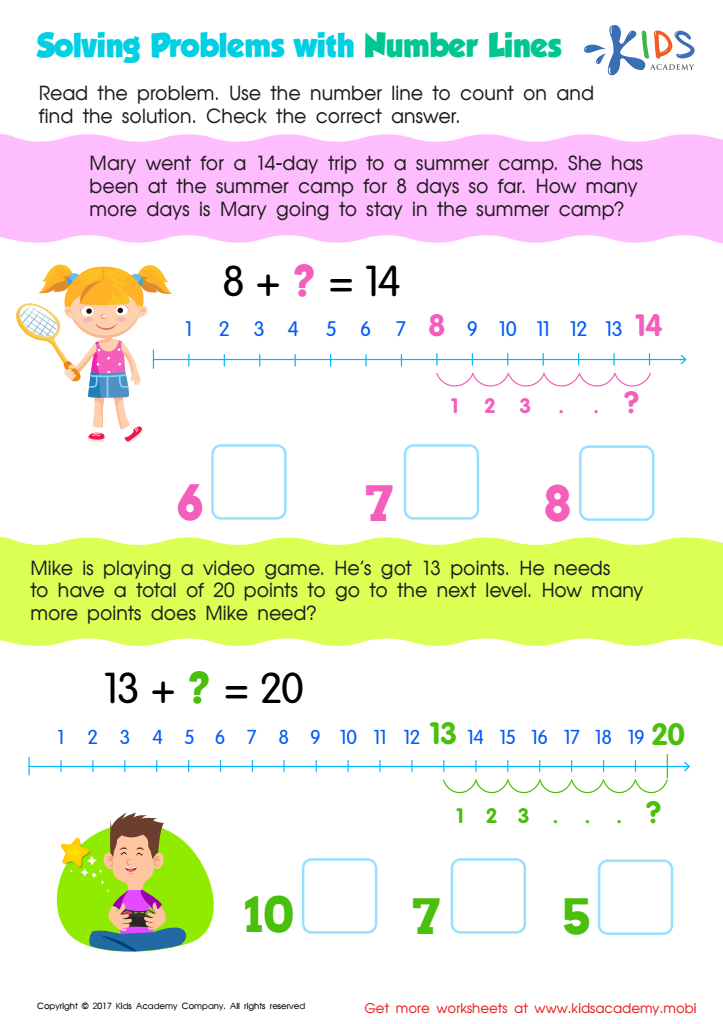
Solving Problems: Number Lines Worksheet
 Assign to My Students
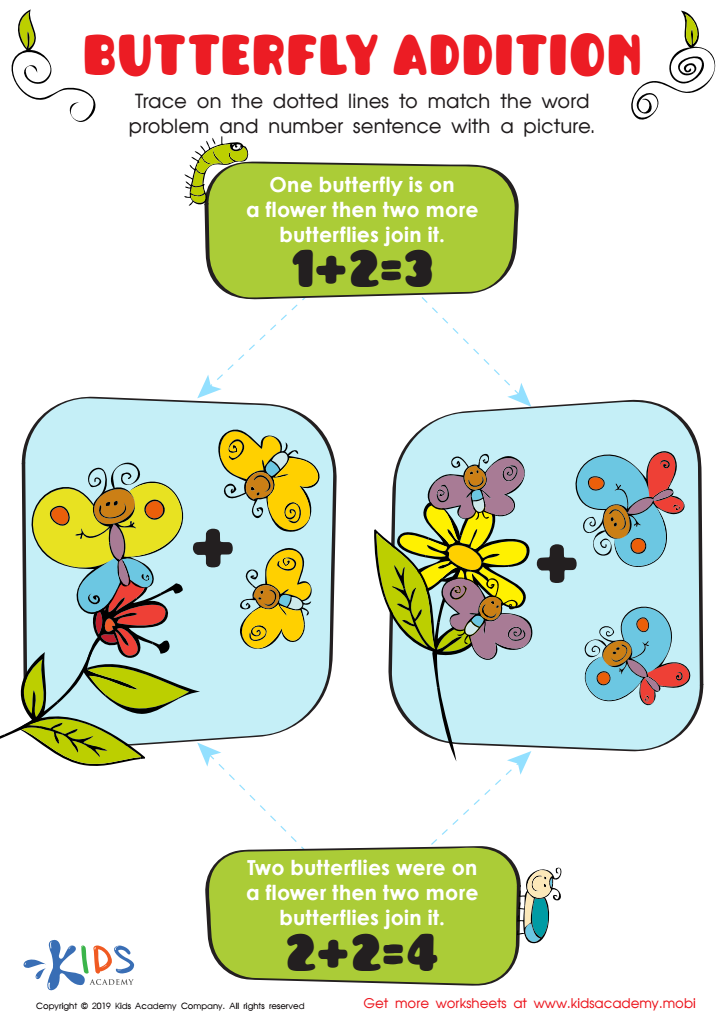
Butterfly Addition Worksheet
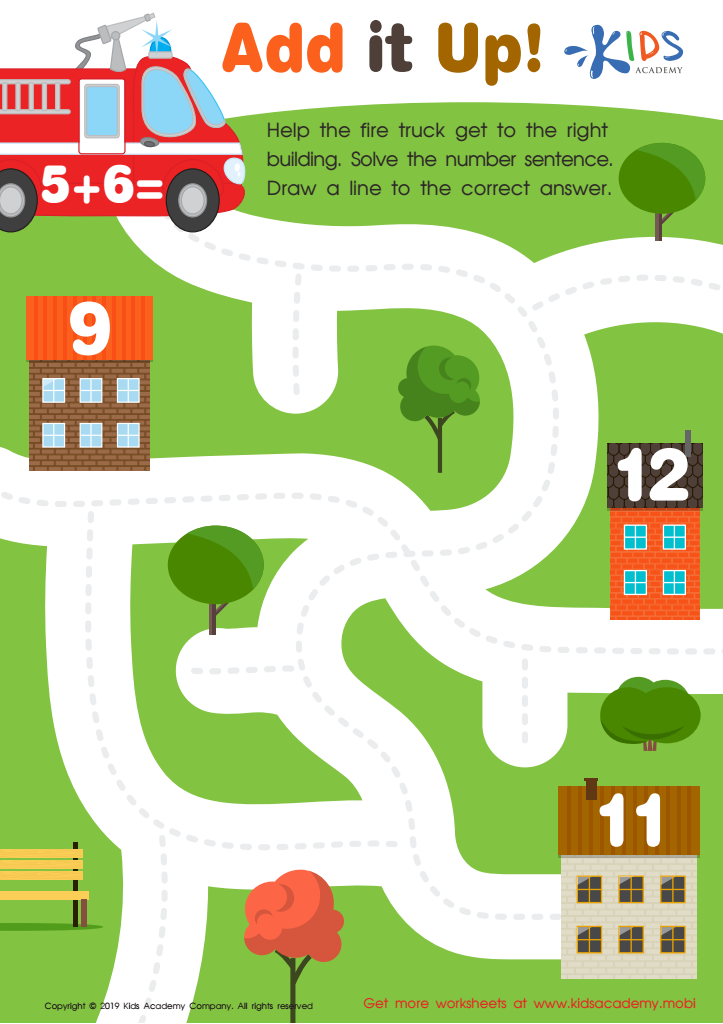
Add it Up Worksheet
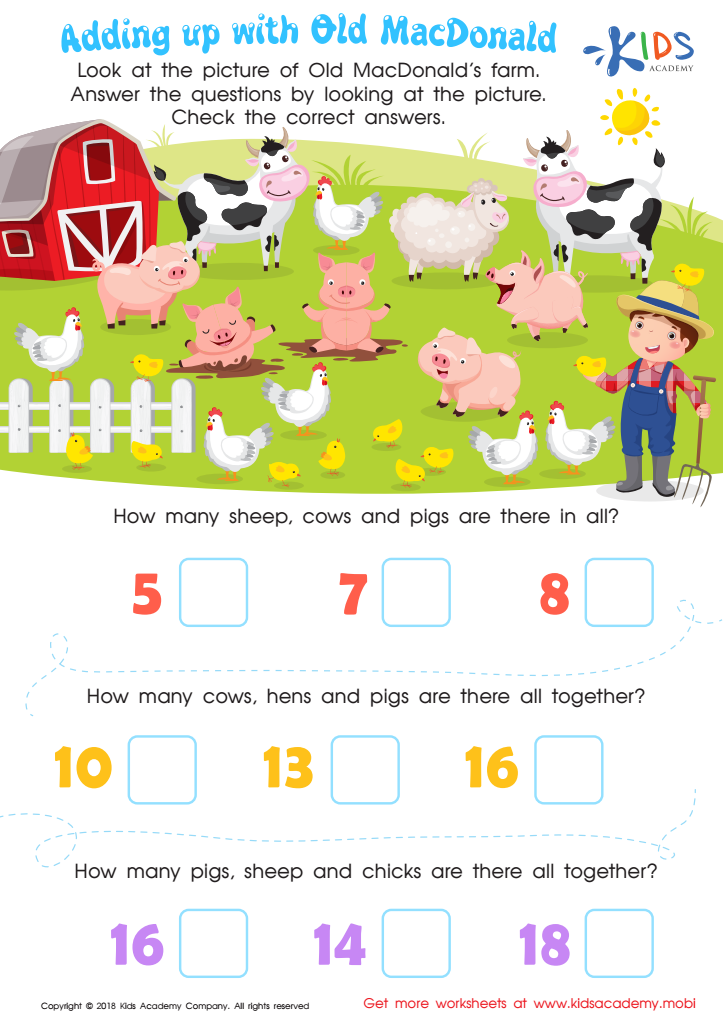
Adding Up with Old MacDonald Worksheet
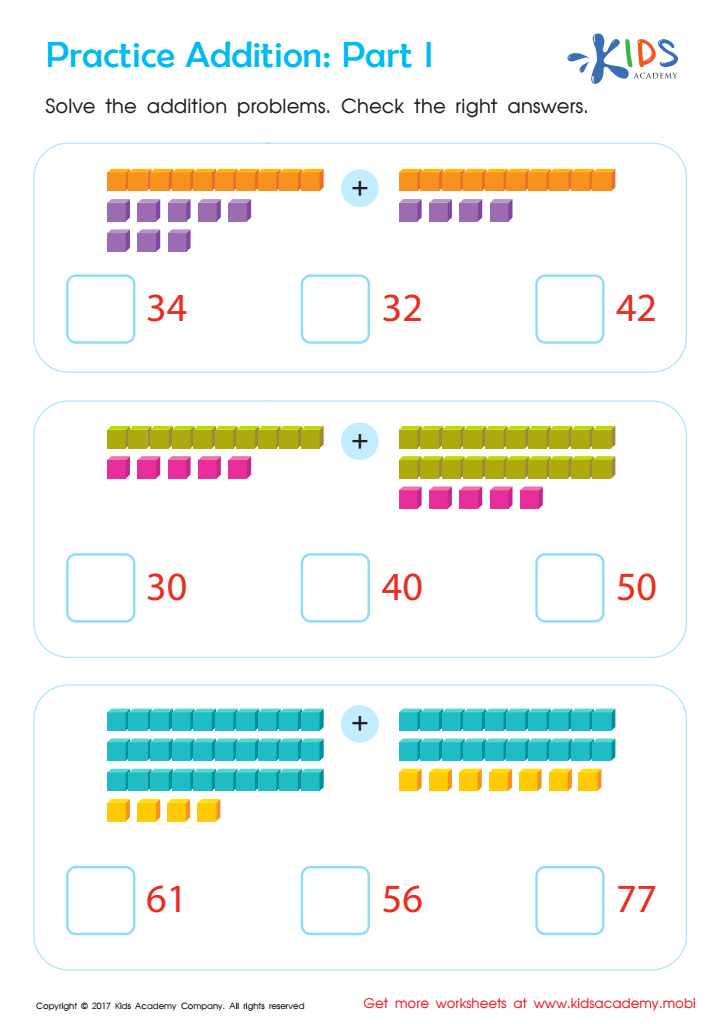
Practice Addition: Part 1 Worksheet
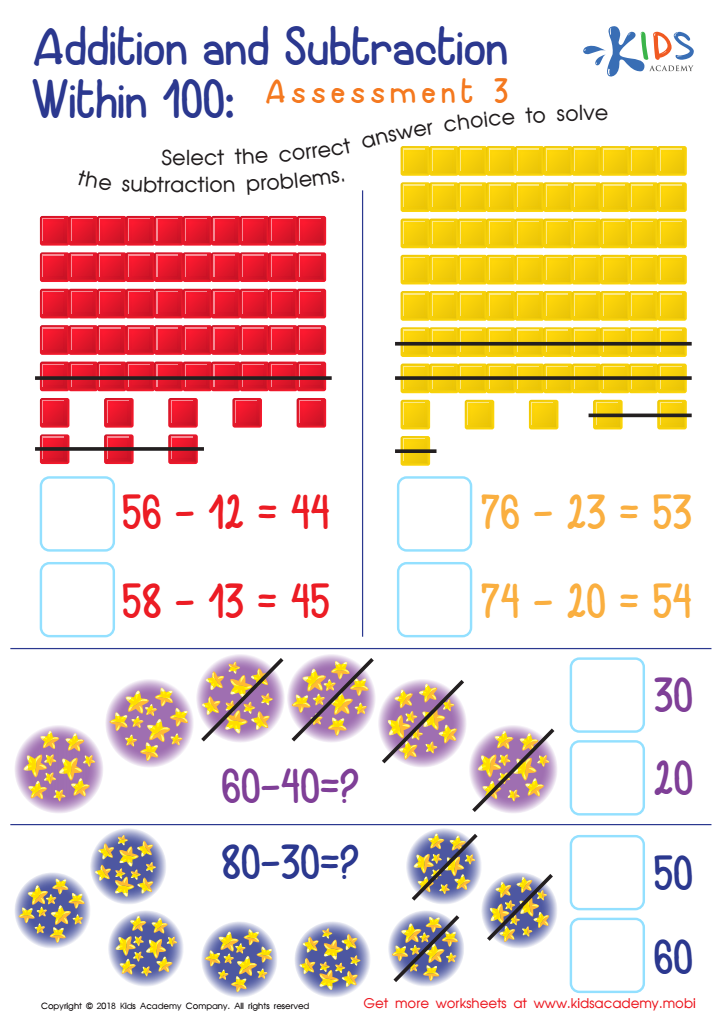
Addition and Subtraction Within 1: Assessment 3 Worksheet








Parents and teachers should prioritize teaching addition and subtraction skills to children aged 5-6 because these foundational concepts are crucial for early math development and overall academic success. Mastering easy addition and subtraction lays the groundwork for more complex mathematical concepts later on, such as multiplication, division, and problem-solving. These skills help children develop critical thinking and reasoning abilities, enabling them to approach challenges systematically.
Moreover, early proficiency in math contributes to a child's confidence and enjoyment of learning. When young learners grasp basic operations, they are more likely to actively engage in math-related activities, reducing anxiety around the subject. This positive attitude can carry through their educational journey, encouraging persistence even when faced with more challenging concepts.
Additionally, addition and subtraction skills are essential in everyday life situations, from basic shopping calculations to sharing items fairly. By fostering these abilities in early childhood, parents and teachers equip children with practical tools they'll use throughout their lives. Furthermore, early attention to math skills can close achievement gaps, providing all children, regardless of background, with the support needed to excel academically. In essence, nurturing early math skills is an investment in a child's future learning and cognitive development.








