Visual discrimination Easy Math Worksheets for Ages 5-6
3 filtered results
-
From - To
Enhance your child's visual discrimination skills with our engaging Easy Math Worksheets designed specifically for ages 5-6. These worksheets provide fun, interactive activities to help young learners distinguish and recognize shapes, patterns, and numbers. By focusing on visual discrimination, children improve their ability to compare and differentiate objects, boosting essential math and reading readiness. Our expertly crafted worksheets align with early learning standards, making it easy to incorporate into any curriculum. Develop keen observation and critical thinking skills while making learning enjoyable with Kids Academy’s visual discrimination math worksheets. Perfect for home or classroom use!
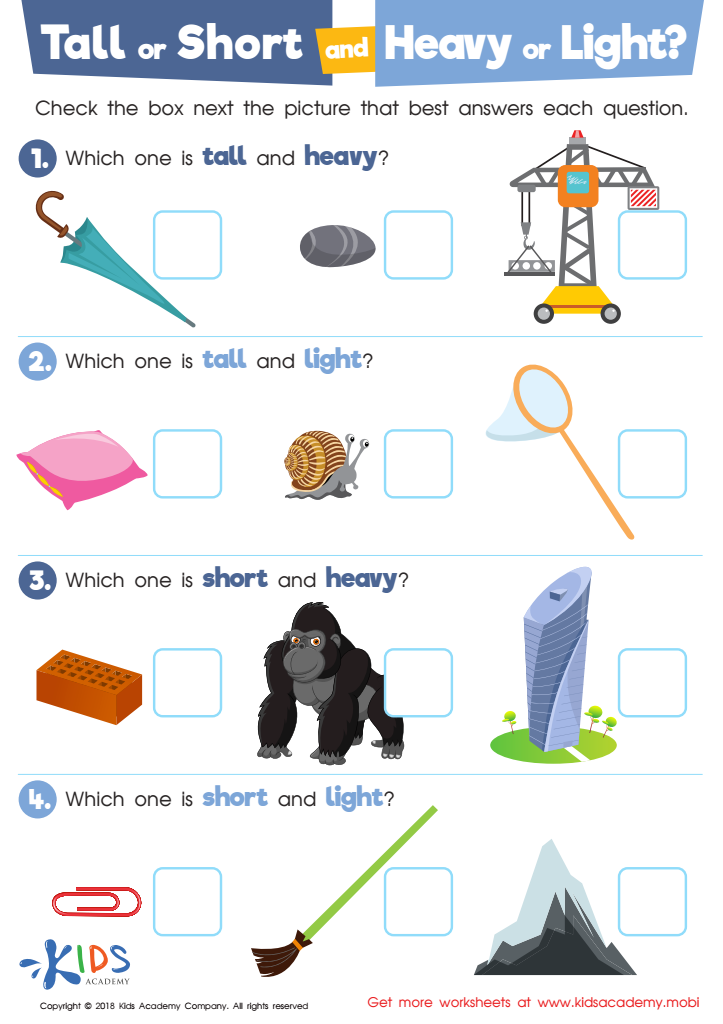
Tall or Short and Heavy or Light? Worksheet
 Assign to My Students
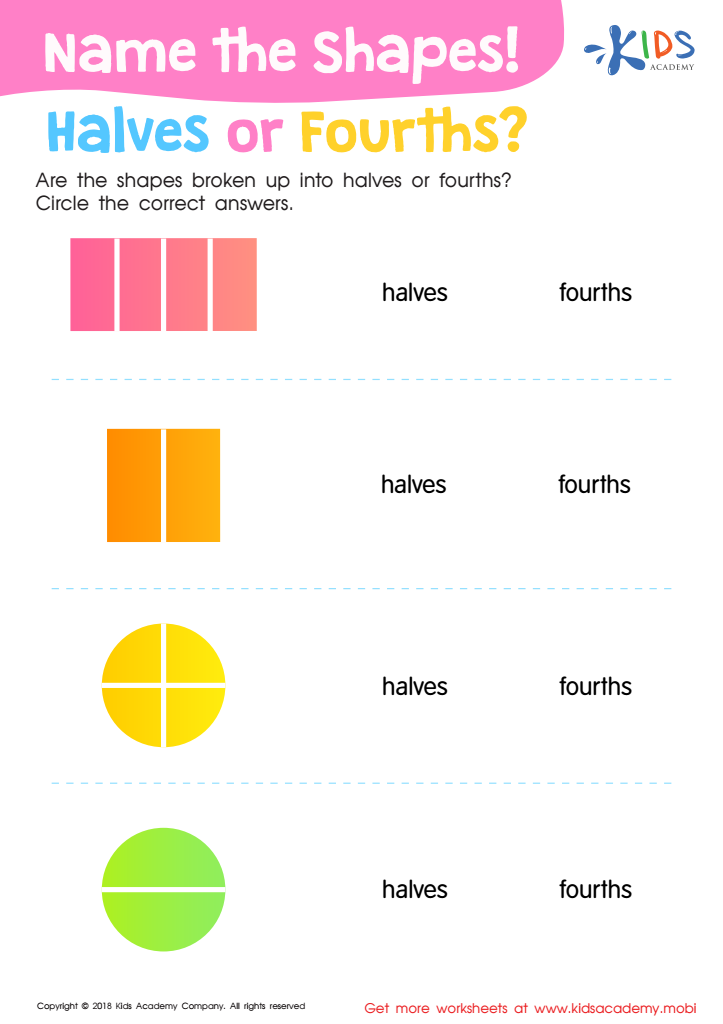
Name the Shapes Halves or Fourths? Worksheet
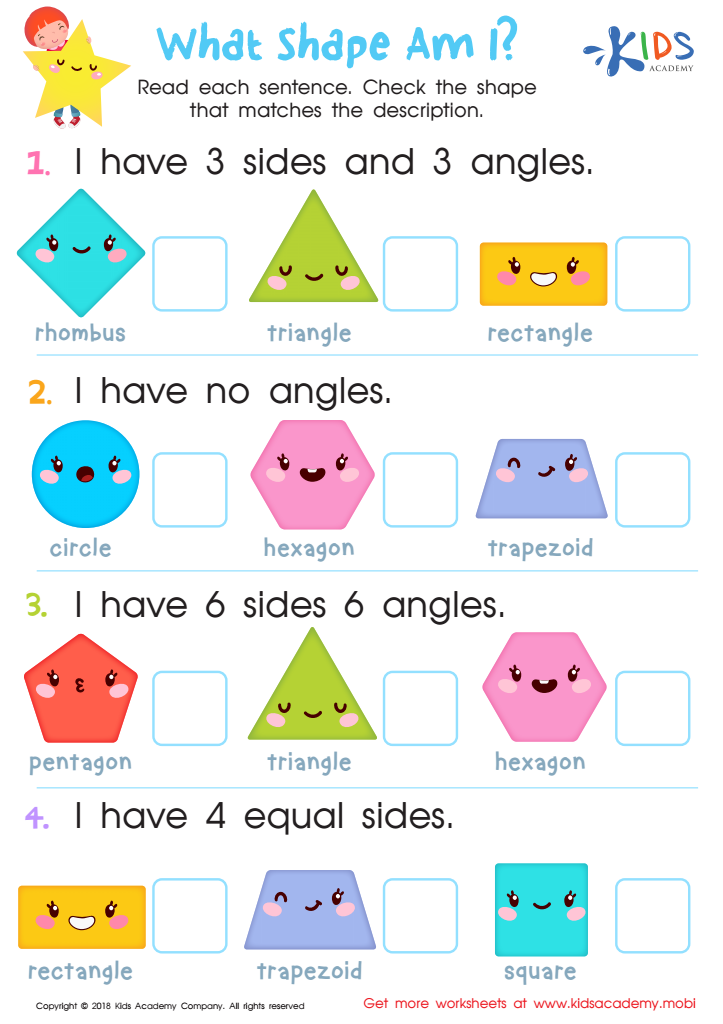
What Shape Am I? Worksheet








Visual discrimination is the ability to recognize differences in visual images. For children aged 5-6, developing this skill is critical to their early math education and overall cognitive development. Parents and teachers should prioritize visual discrimination in early math because it forms the foundation for more complex math skills.
When children can differentiate between shapes, numbers, and patterns, they begin to understand basic math concepts like size, quantity, and order. For instance, distinguishing between different numbers helps them accurately count objects, which is essential for addition and subtraction. Moreover, recognizing patterns enhances their ability to predict and identify sequences, which is a crucial aspect of algebraic thinking.
Incorporating visual discrimination activities, such as matching games, sorting activities, and simple puzzles, makes learning engaging and effective. These activities naturally integrate with play, making math fun and encouraging a positive attitude towards the subject from an early age.
Beyond math, strong visual discrimination skills also support reading and writing by helping children differentiate between letters and words. Overall, nurturing these skills ensures a well-rounded early education, setting a strong foundation for future learning. Thus, parents and teachers should actively engage in and promote visual discrimination activities as part of early math learning for children aged 5-6.








