Sorting skills Easy Numbers Worksheets for Ages 5-7
3 filtered results
-
From - To
Elevate your child’s math skills with our "Sorting Skills Easy Numbers Worksheets" designed specifically for ages 5 to 7! These engaging worksheets introduce young learners to essential sorting techniques while reinforcing number recognition and early math concepts. Kids will enjoy sorting numbers by size, quantity, and shape, ensuring a fun and interactive learning experience. Our resource is perfect for parents and teachers looking to enhance foundational math skills in a simple and enjoyable way. Encourage critical thinking and boost confidence in young learners with activities that promote cognitive development and a love for learning. Start exploring today!
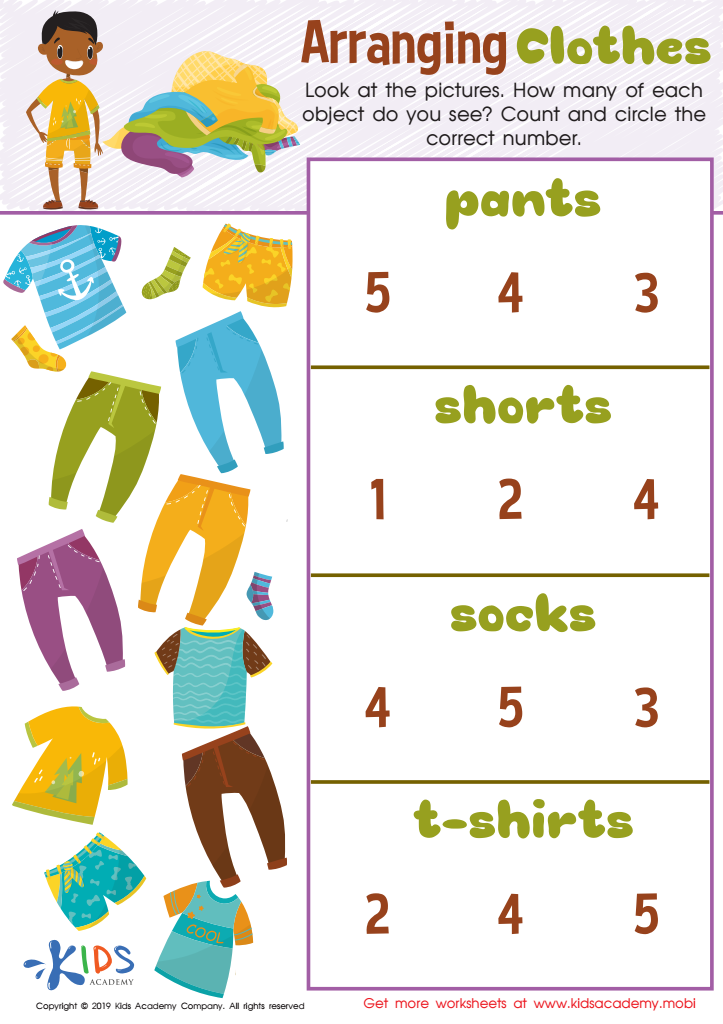
Arranging Clothes Worksheet
 Assign to My Students
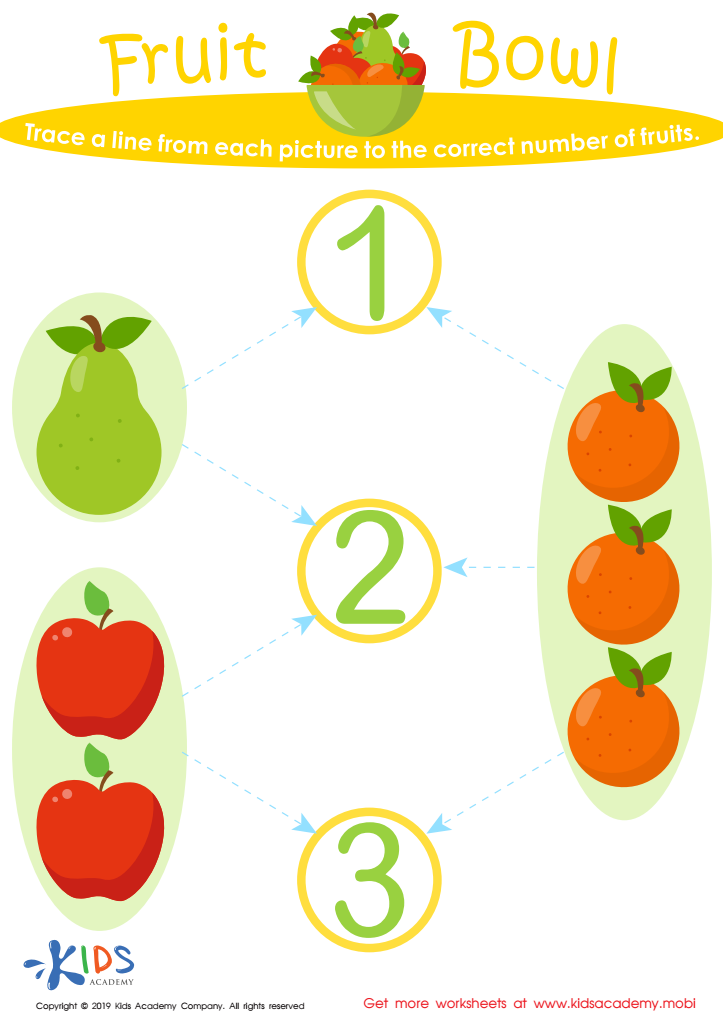
Fruit Bowl Worksheet
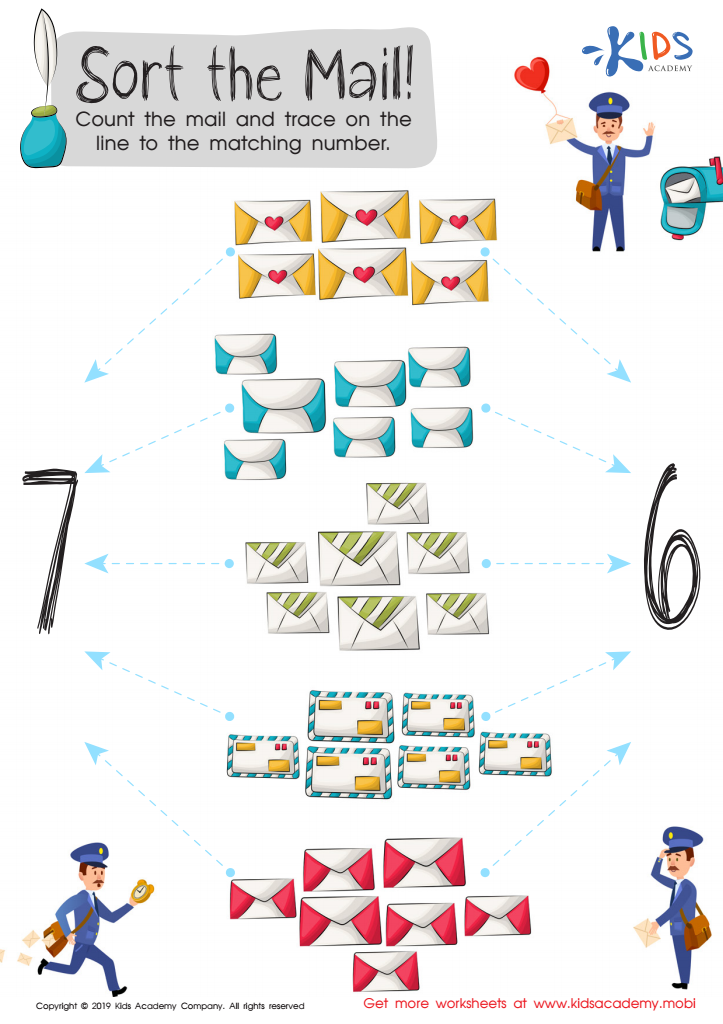
Sort the Mail Worksheet








Sorting skills, including sorting easy numbers, are fundamental for children aged 5-7 as they form the basis for numerous cognitive and mathematical abilities. At this developmental stage, children begin to recognize patterns and understand groupings, both of which are critical skills for logical thinking and problem-solving. Learning to sort numbers helps children develop classification skills, enabling them to distinguish between different quantities and recognize numerical relationships.
Furthermore, sorting reinforces counting and number recognition, aiding children in grasping concepts such as greater than and less than, which are essential for later mathematical operations. When children engage in sorting activities, they also enhance their fine motor skills and hand-eye coordination, as these tasks often involve organizing physical objects or using manipulatives.
Additionally, sorting activities can promote social skills when children work in groups, fostering collaboration and communication. By encouraging sorting with easy numbers, parents and teachers can create a positive learning environment that nurtures a child's curiosity and excitement about math.
Overall, prioritizing sorting skills equips young learners with a strong foundation in mathematics while also supporting their broader cognitive development, giving them the confidence to tackle more complex math challenges in the future.








