Color recognition Easy Math Worksheets for Ages 5-7
6 filtered results
-
From - To
Enhance your child's learning journey with our engaging Color Recognition Easy Math Worksheets, designed for kids ages 5-7. These worksheets not only teach color identification but also integrate essential math skills through fun and interactive activities. Children will explore colors while developing foundational math concepts such as counting, sorting, and pattern recognition. Each worksheet is visually appealing and age-appropriate, ensuring that learning remains enjoyable and effective. Perfect for parents and educators, our resources provide a seamless way to foster a love for learning in your little ones. Visit us today to unlock the colorful world of math education!
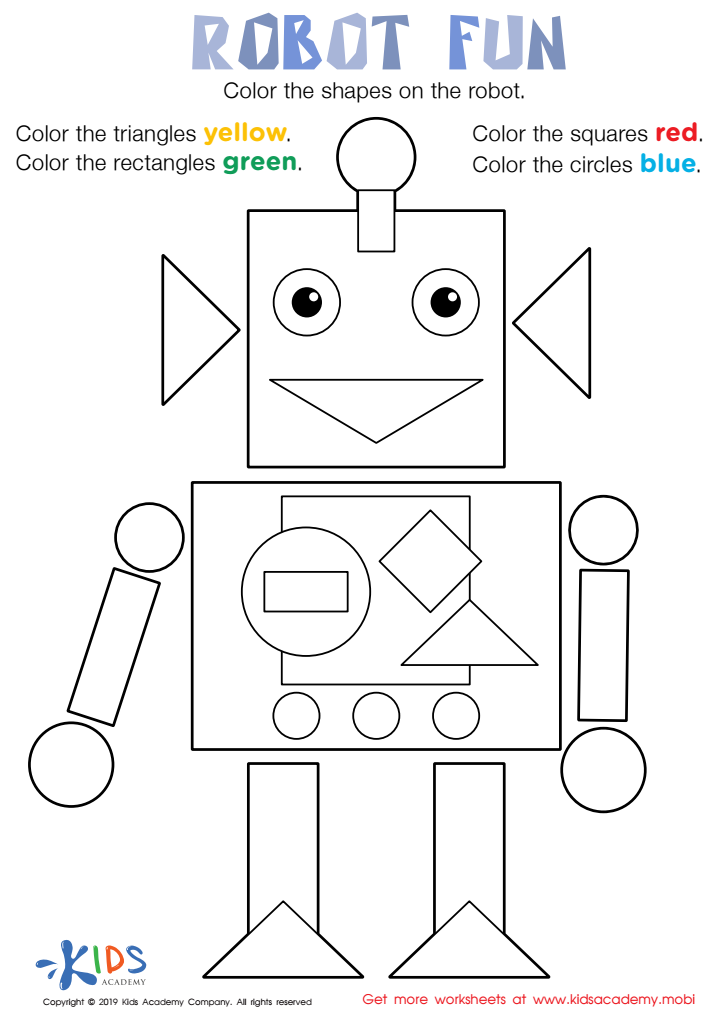
Robot Fun Worksheet
 Assign to My Students
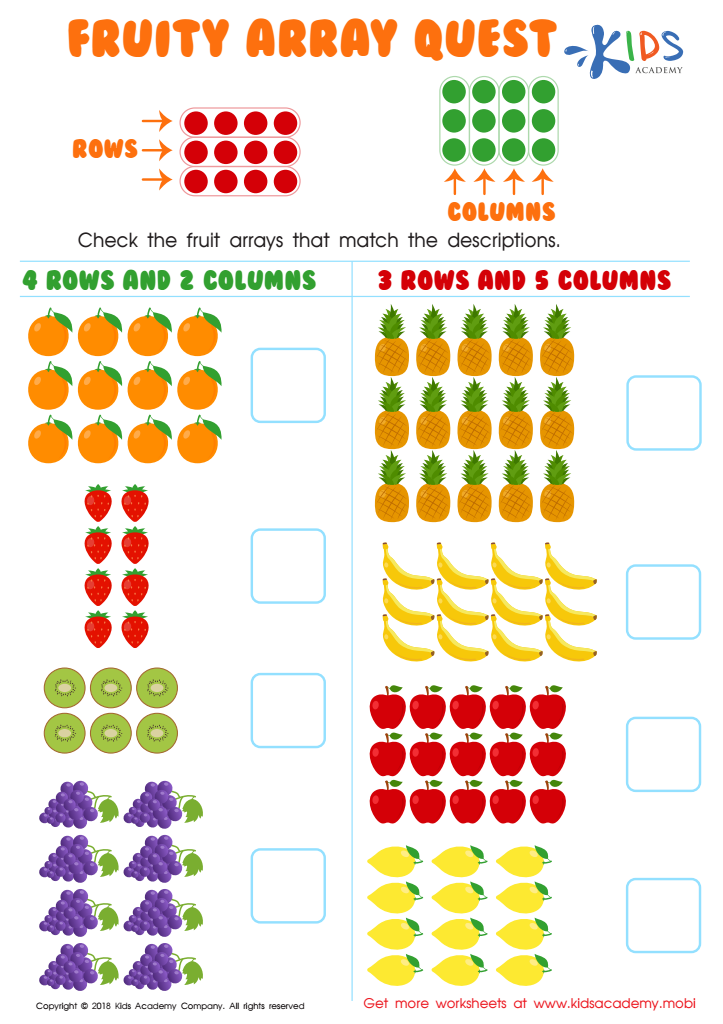
Fruity Array Quest Worksheet
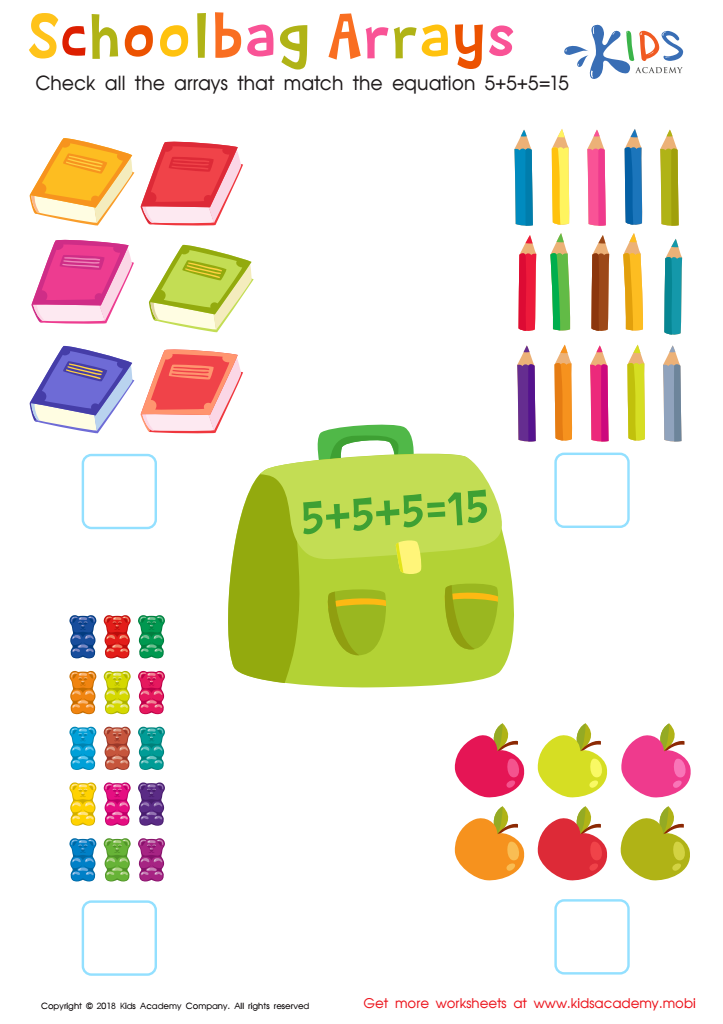
Schoolbag Arrays Worksheet
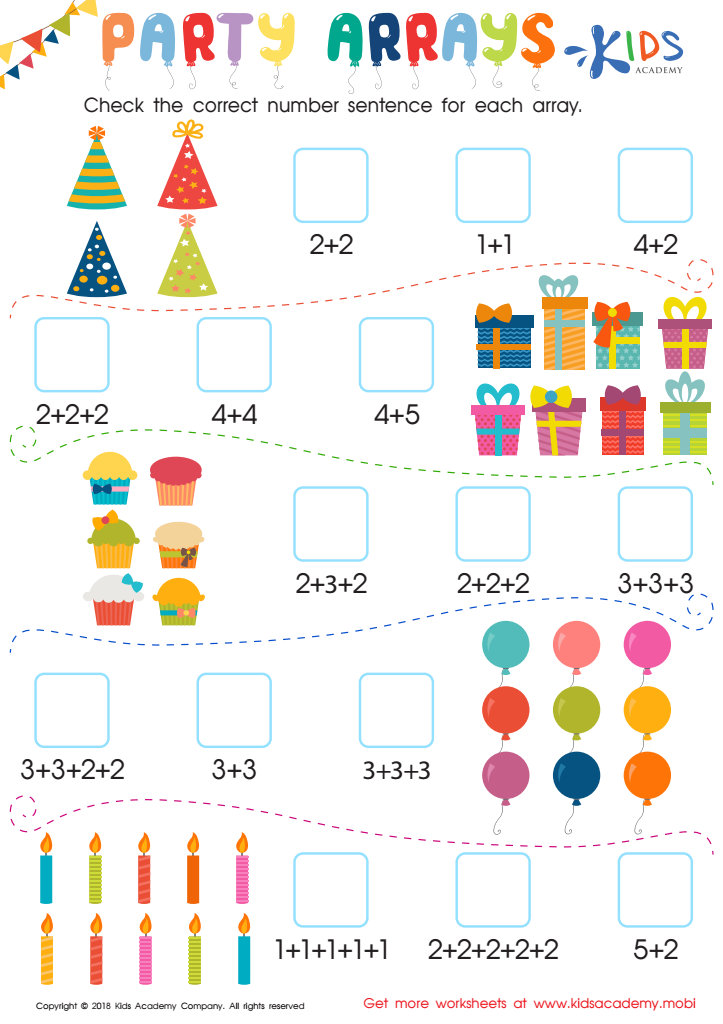
Party Arrays Worksheet
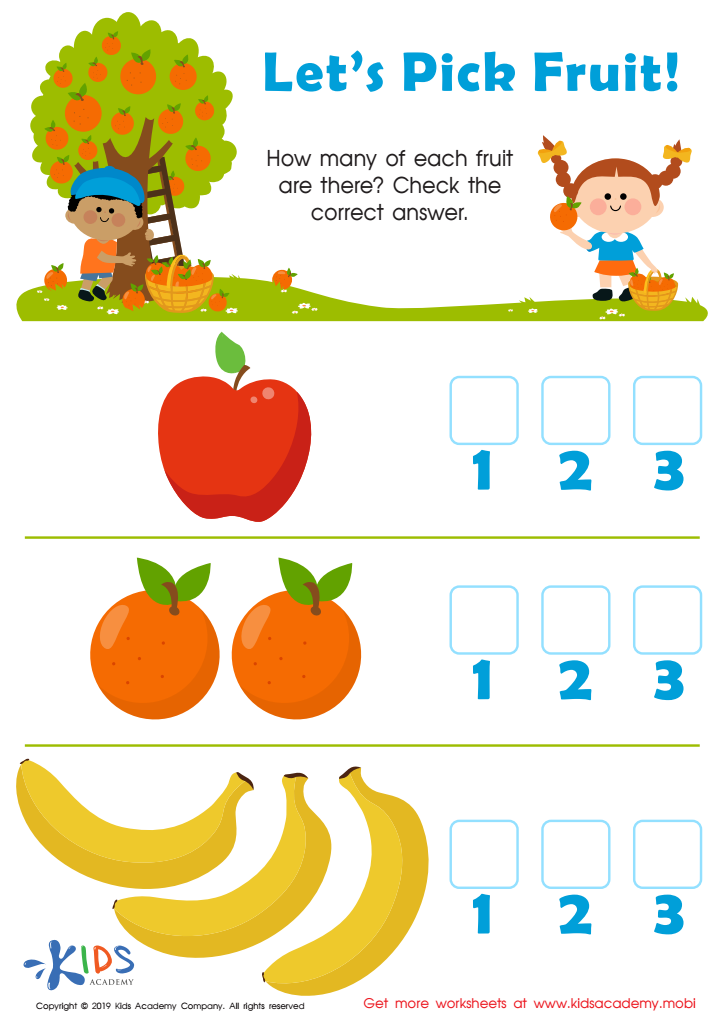
Let's Pick Fruit Worksheet
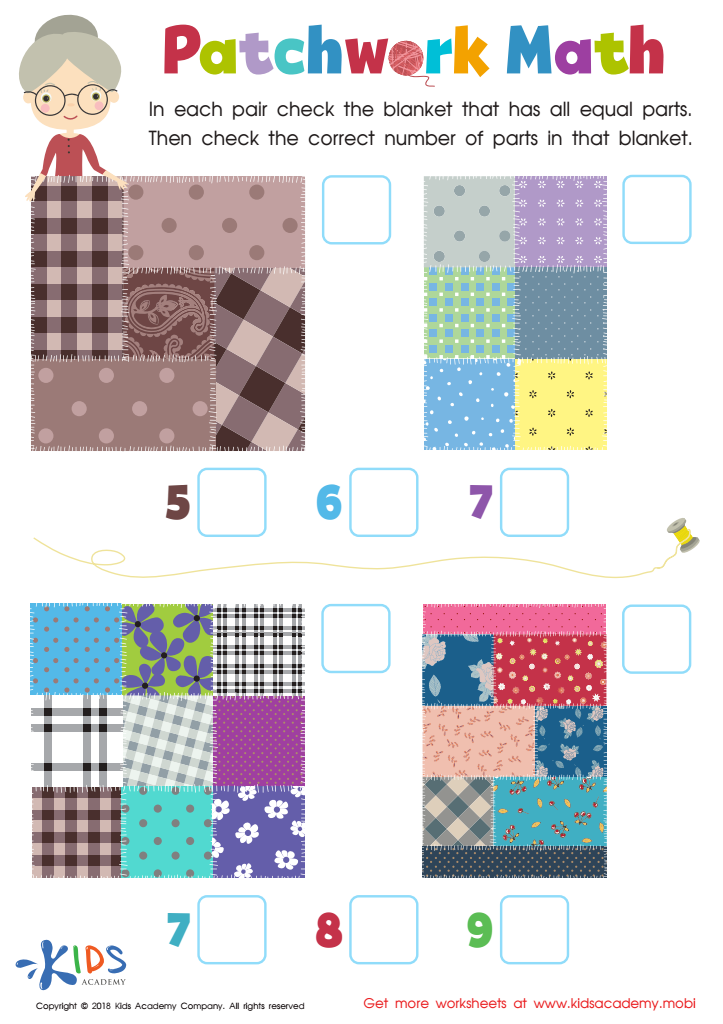
Patchwork Math Worksheet







Color recognition and easy math skills are fundamental building blocks of early education for children aged 5-7. Parents and teachers should prioritize these skills as they play a significant role in cognitive development and learning readiness.
Color recognition enhances a child’s ability to categorize and differentiate objects in their environment, fostering critical thinking and observational skills. It aids in the development of language, as children learn to identify and name colors, thereby expanding their vocabulary. Furthermore, recognizing colors can enhance creativity, as children often associate colors with emotions and concepts during art and play activities.
On the other hand, simple math skills lay the groundwork for a child's numerical understanding. Concepts like counting, sorting, and basic addition introduce children to problem-solving and logical reasoning. Early math exposure promotes confidence and encourages a positive attitude towards learning mathematics in the future.
Together, color recognition and foundational math create a holistic learning experience. Engaging children with interactive activities that blend both skills not only captures their interest but also provides a playful context for learning. Consequently, investing attention into these areas equips children with essential life skills, fostering independent thinking and preparing them for more complex academic challenges ahead.








