Comparing heights Easy Measurement Worksheets for Ages 5-7
3 filtered results
-
From - To
Unlock the fun of learning with our "Comparing Heights Easy Measurement Worksheets" designed specifically for children aged 5-7! These engaging worksheets introduce young learners to the concept of measurement through exciting activities focused on comparing heights. Using colorful visuals and relatable examples, kids will develop their mathematical skills while enhancing their understanding of size differences. Perfect for homeschool or classroom settings, these worksheets foster early numeracy and critical thinking skills, making learning a joy. Download today to explore the world of heights and measurements, turning every lesson into an adventure in math! Great for reinforcing foundational concepts in an interactive way!
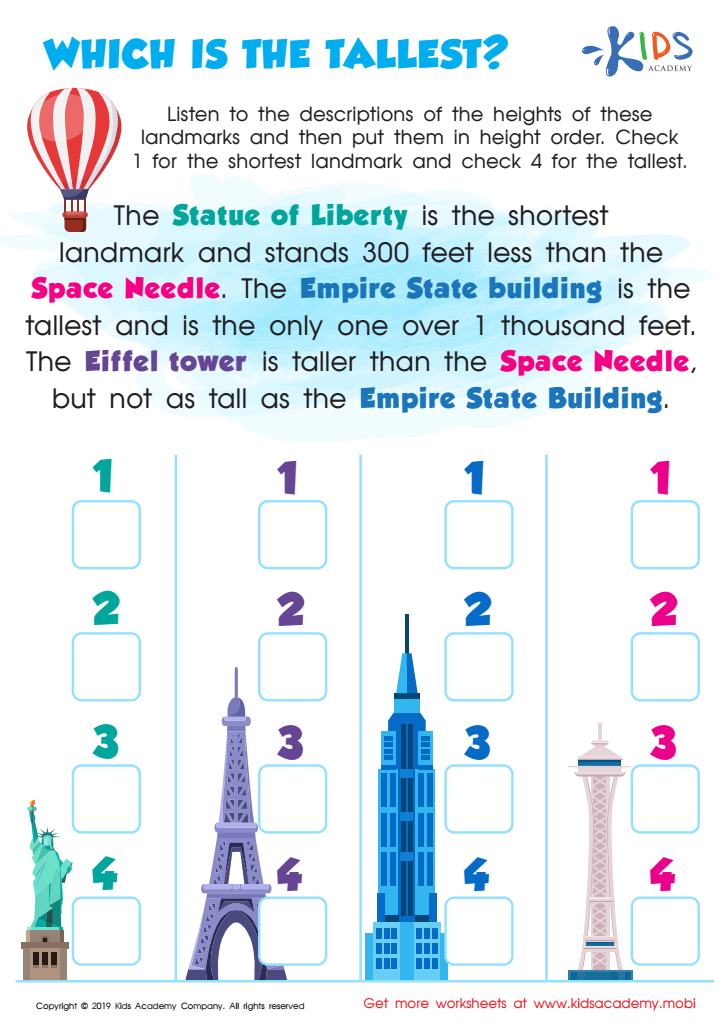
Which is the Tallest? Worksheet
 Assign to My Students
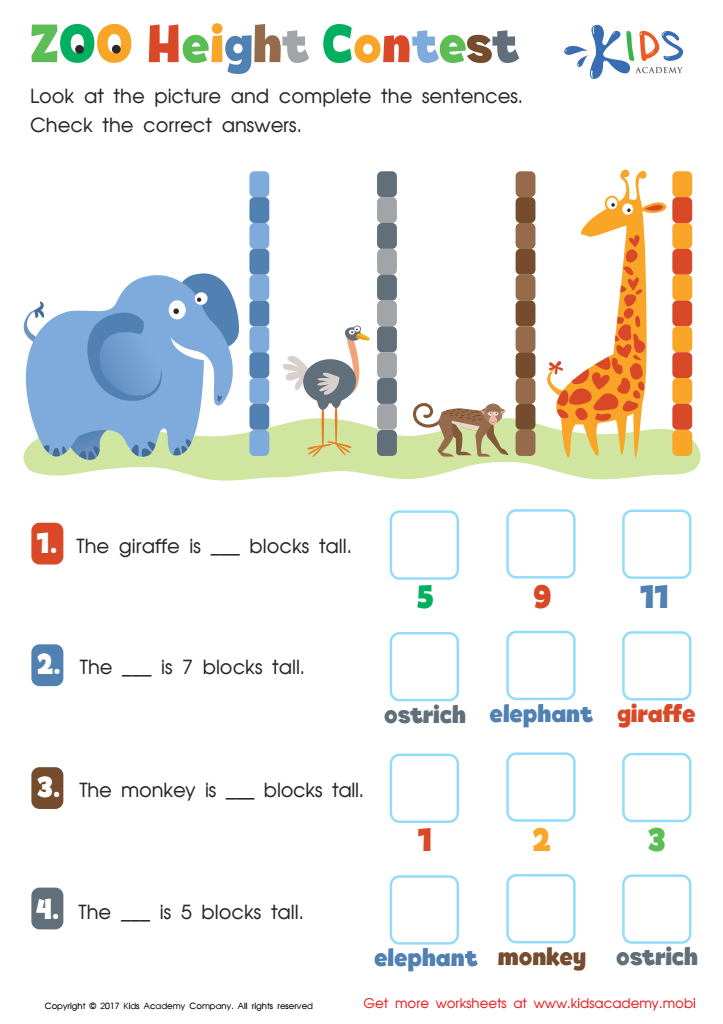
Zoo Height Contest Worksheet
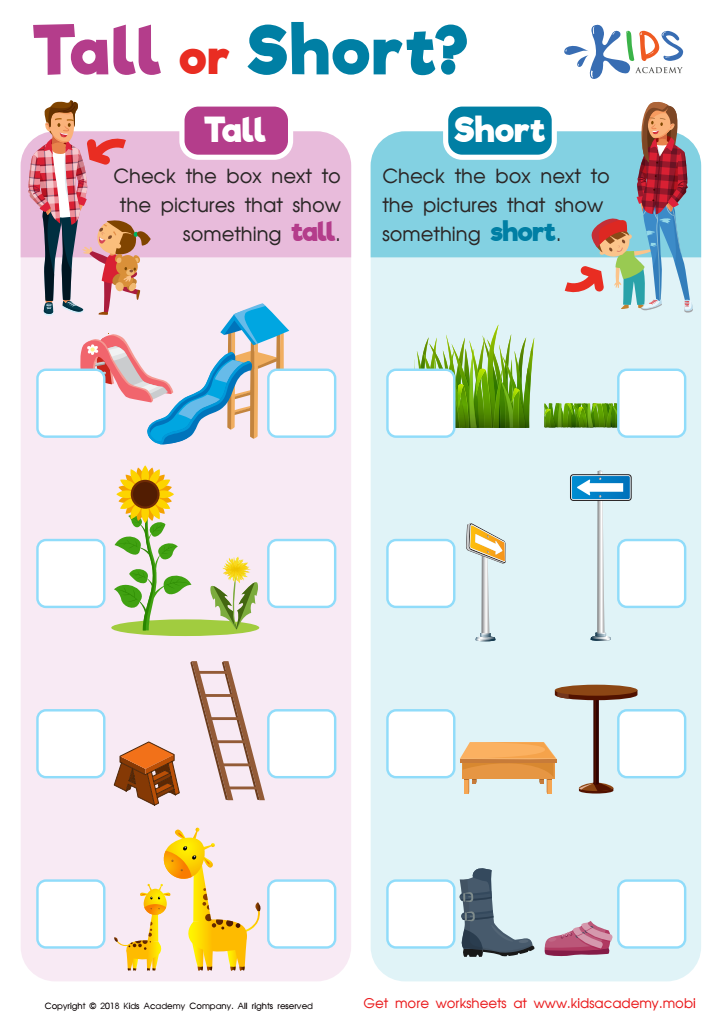
Tall or Short? Worksheet








Understanding measurement concepts, like comparing heights, is foundational for young children aged 5-7. This skill helps students grasp the idea of size differences through hands-on activities, fostering both cognitive and motor skills. For parents and teachers, measuring heights serves as an opportunity to teach mathematical principles in a tangible way, which can enhance a child's spatial awareness and logical thinking.
Engaging in this activity also stimulates curiosity and encourages interactive learning. When children compare heights, they ask questions, analyze results, and explore concepts such as “taller” or “shorter,” fostering critical thinking. This exploration can lead to discussions about growth, development, and even environmental factors that play a role in size differences.
Moreover, this early exposure to measurement supports the foundation for more complex mathematical concepts in later grades. It also offers a chance for parents and teachers to bond with children through play and discovery, transforming learning into a fun adventure. Ultimately, caring about comparing heights illustrates a commitment to a child's holistic education, nurturing their creativity and analytical skills, and laying the groundwork for future academic success. By valuing these simple yet vital activities, adults can significantly impact children's learning experiences and their enthusiasm for education.








