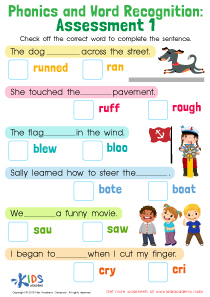
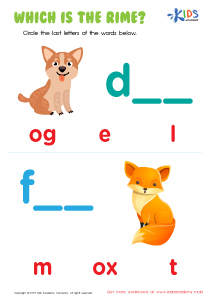
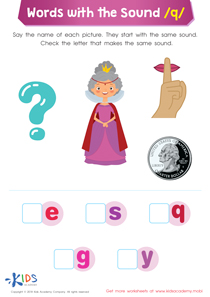
Letter-sound correlation Easy Letter Sounds Worksheets for Ages 5-8
3 filtered results
-
From - To
Unlock your child's reading potential with our "Easy Letter Sounds Worksheets" designed for ages 5-8! These engaging worksheets help young learners establish vital letter-sound correlations, a foundational skill for effective reading and writing. Your children will enjoy colorful activities that combine fun and education, making learning enjoyable and effective. Each worksheet is tailored to reinforce phonetic sounds while fostering a love for letters. Ideal for parents and educators, these resources align with early literacy standards, ensuring that your child develops confidence in their reading journey. Start their learning adventure today and watch them thrive in their literacy skills!
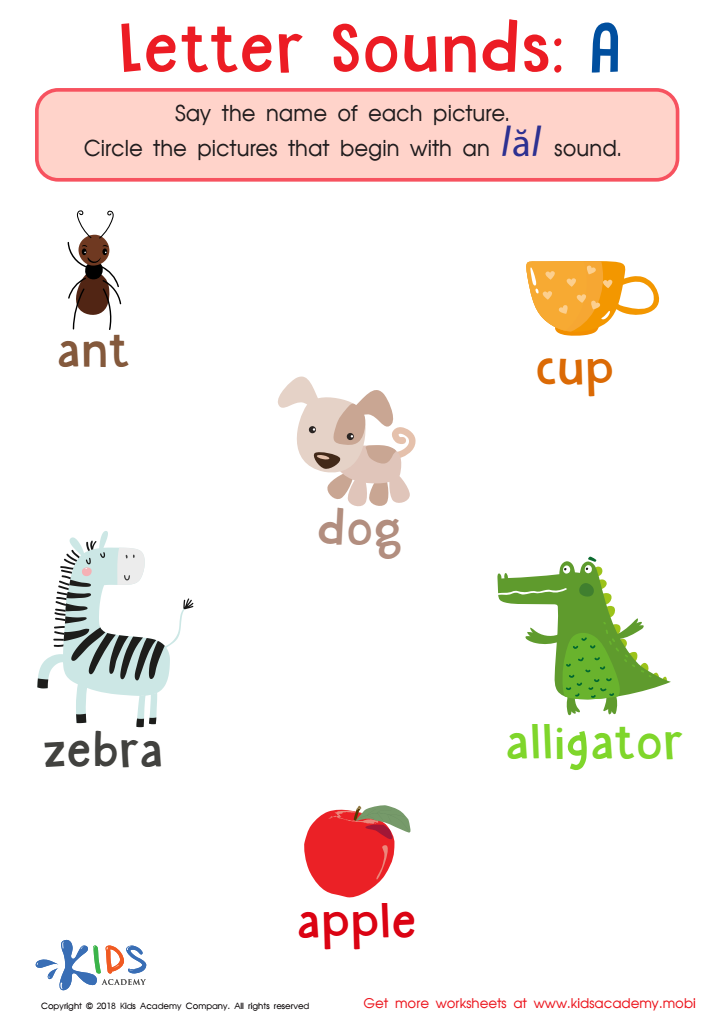
Letter A Sounds Worksheet
 Assign to My Students
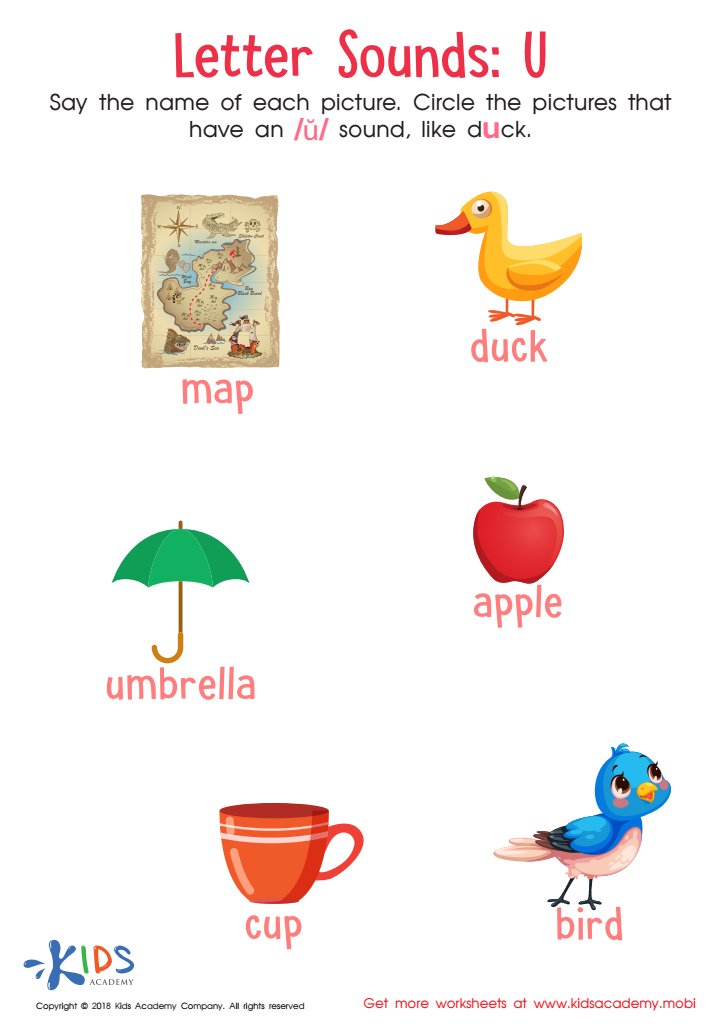
Letter U Sounds Worksheet
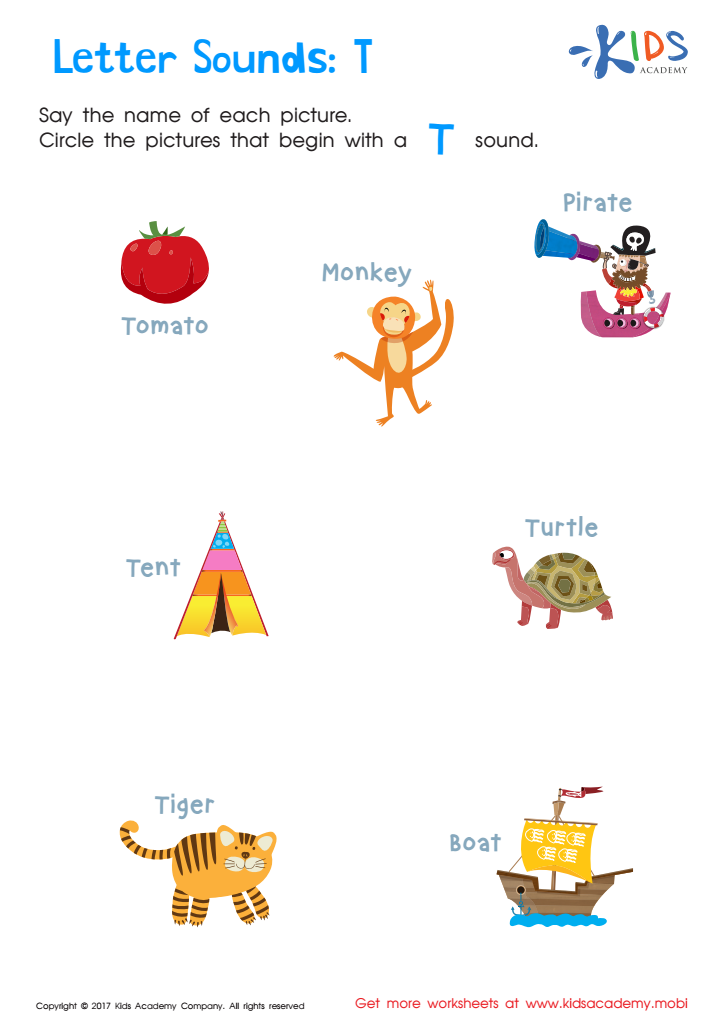
Letter T Sounds Worksheet








Understanding letter-sound correlation is fundamental for young learners, particularly for those aged 5 to 8. This skill lays the groundwork for reading and writing, enabling children to decode words and gain confidence in their literacy abilities. Teachers and parents should prioritize this aspect of language acquisition because it fosters phonemic awareness, helping children recognize and manipulate sounds in spoken language.
When children learn the connection between letters and their corresponding sounds, they can blend these sounds to form words, promoting effective reading strategies. Easy letter sounds also aid in spelling and vocabulary development, vital components of language mastery. By engaging with phonics through games, songs, and simple activities, parents and teachers can help children internalize these essential connections, making the learning process both enjoyable and effective.
Furthermore, early literacy skills can significantly impact a child's academic success and self-esteem. A solid understanding of letter-sound correlation equips children with the necessary tools to tackle more complex texts in the future, setting a strong foundation for lifelong learning. When parents and teachers collaboratively reinforce these concepts, they create an enriching environment that nurtures curiosity and a love for reading—crucial characteristics for future scholars.