Understanding quantity Easy Math Worksheets for Ages 5-8
3 filtered results
-
From - To
Welcome to our "Understanding Quantity Easy Math Worksheets" for children aged 5-8! These engaging worksheets are designed to help young learners grasp the concept of quantity through fun and interactive activities. Your child will explore numbers, measurements, and comparisons in a user-friendly format, building a solid foundation for future math skills. Our materials are tailored to enhance problem-solving abilities and boost confidence as children progress through diverse challenges. Whether in the classroom or at home, these worksheets offer an enjoyable way to cultivate a deeper understanding of quantity, setting the stage for a lifelong love of math!
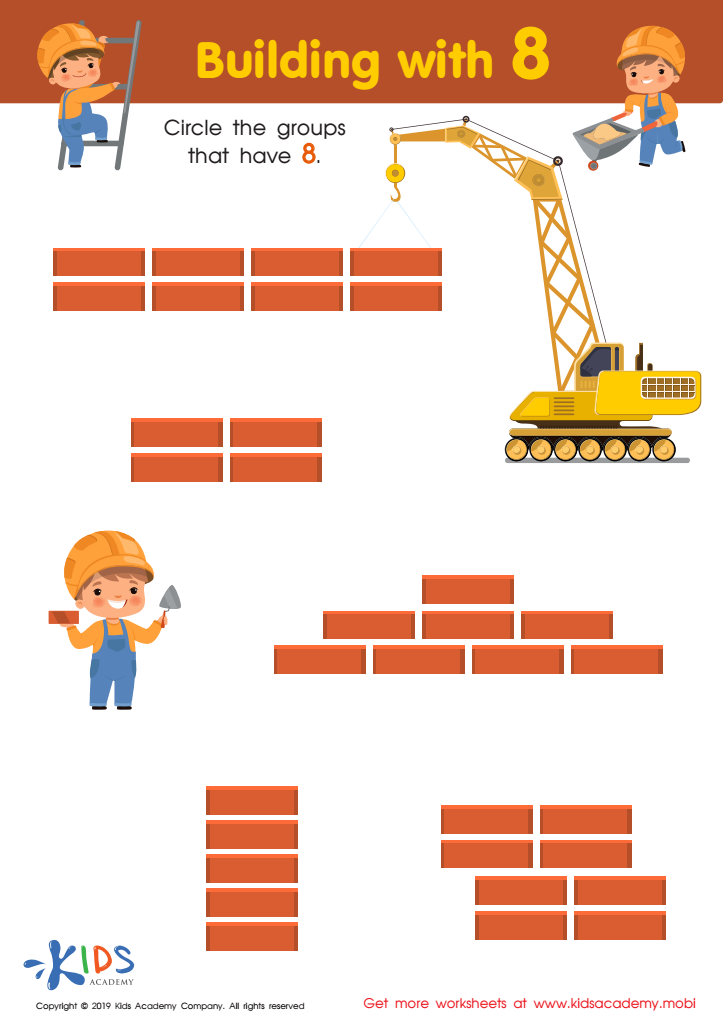
Building with 8 Worksheet
 Assign to My Students
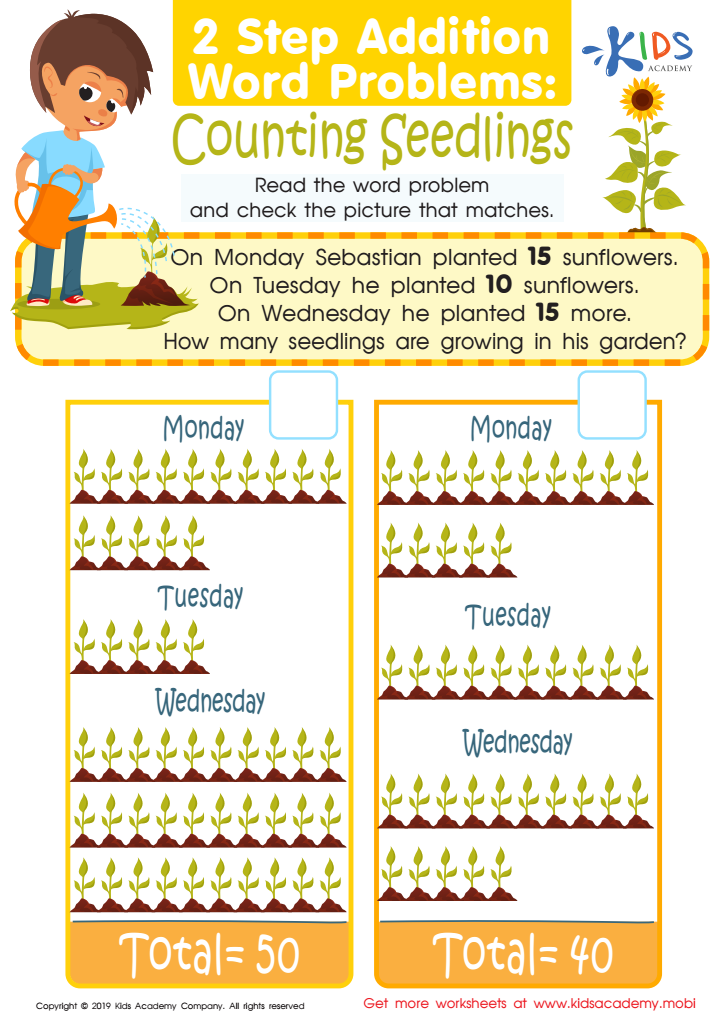
Counting Seedlings Worksheet
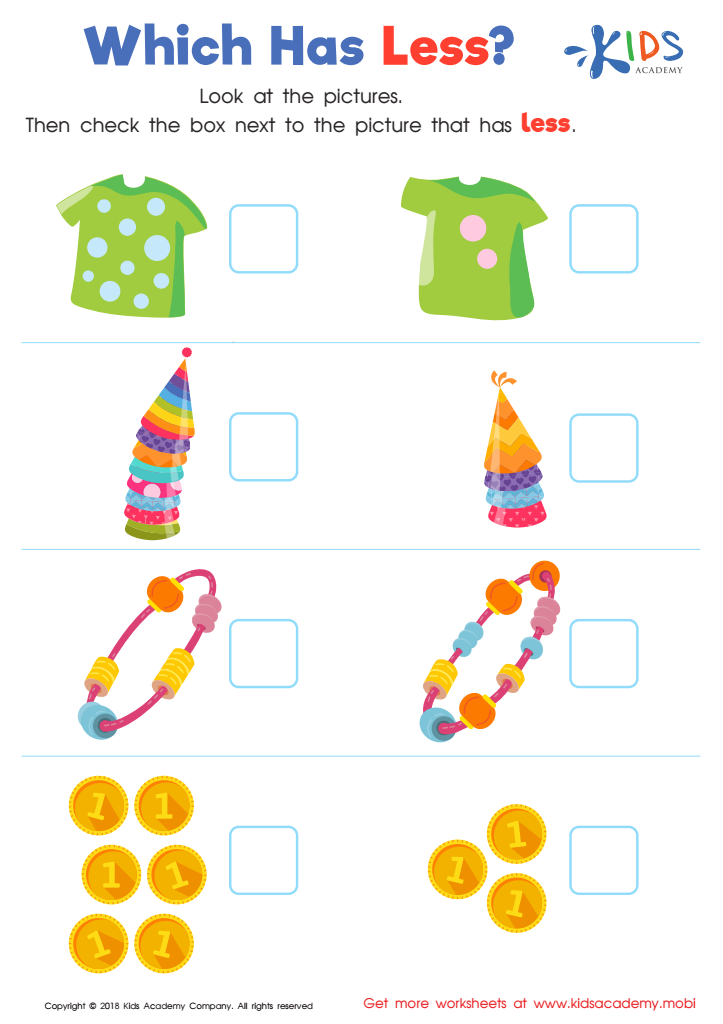
Which Has Less? Worksheet








Understanding quantity is a foundational concept in early mathematics, especially for children aged 5 to 8. During these formative years, children are developing critical thinking skills, and grasping the concept of quantity directly influences their ability to solve mathematical problems later on. Parents and teachers should care about this vital area of learning because it lays the groundwork for future mathematical proficiency and confidence.
Incorporating easy math activities that emphasize quantity helps children make real-world connections. For instance, counting objects during play or measuring ingredients in a recipe fosters a tangible understanding of numbers. This practice encourages not just rote memorization, but a genuine comprehension of how quantities work in daily life.
Moreover, the ability to understand and manipulate quantities is linked to broader cognitive skills, including problem-solving and logical reasoning. Early mastery of these concepts can lead to greater academic success and increased self-esteem in math, reducing anxiety as they progress in their education. By prioritizing understanding quantity, parents and teachers can build a robust mathematical foundation that empowers children not just in school, but throughout their lives. Investing in early math education is an investment in a child's future.








