Visual Learning Easy Word Problems Worksheets for Ages 5-8
3 filtered results
-
From - To
Discover our "Visual Learning Easy Word Problems Worksheets," designed for children aged 5-8! These engaging worksheets utilize fun visuals and relatable scenarios to help young learners grasp essential math concepts. By incorporating images into word problems, children can enhance their understanding of addition, subtraction, and critical thinking skills. Each worksheet is thoughtfully crafted to foster an interactive learning experience, making math enjoyable and accessible. Perfect for classroom use or at-home practice, our resources ensure that kids gain confidence in their problem-solving abilities. Start your child’s journey to mastering math through visual learning with our colorful and captivating worksheets today!
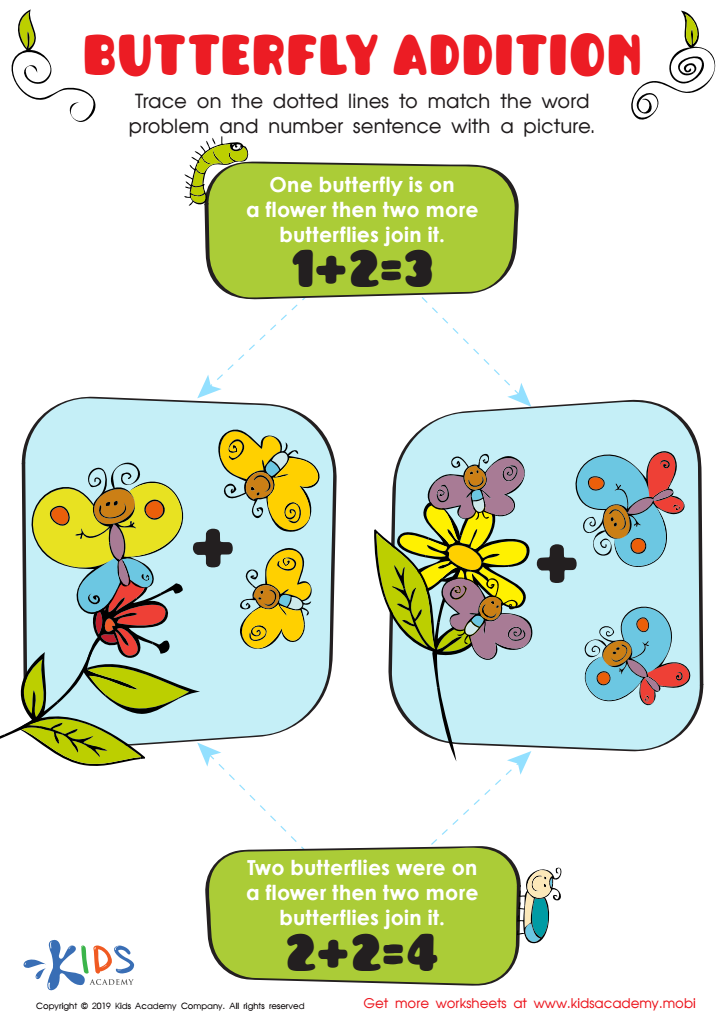
Butterfly Addition Worksheet
 Assign to My Students
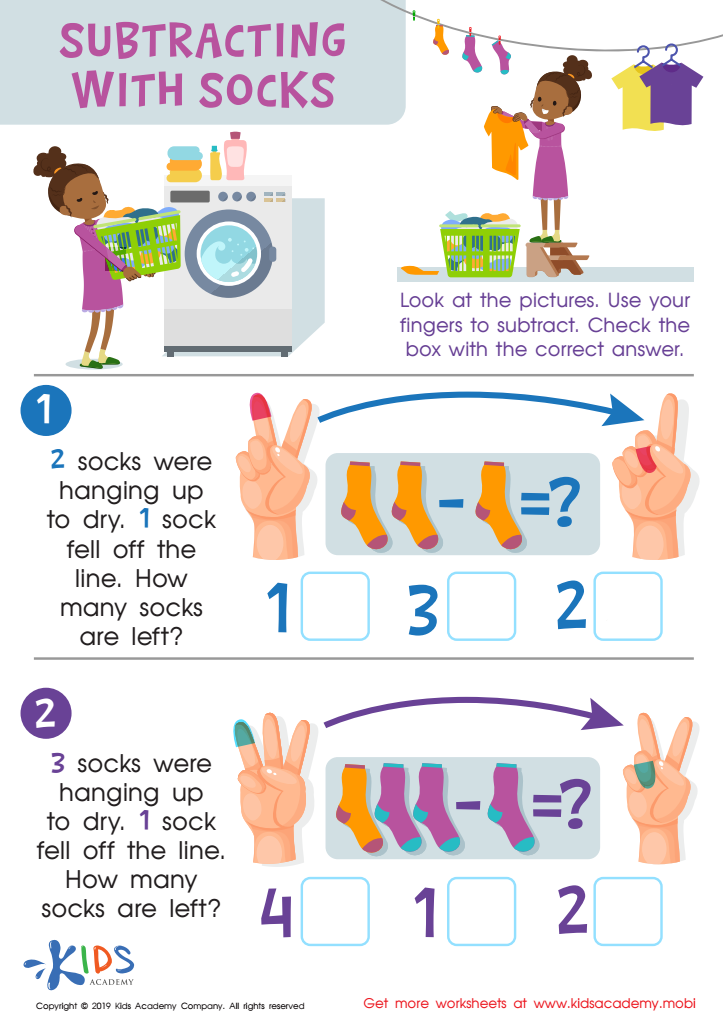
Subtracting Socks Worksheet
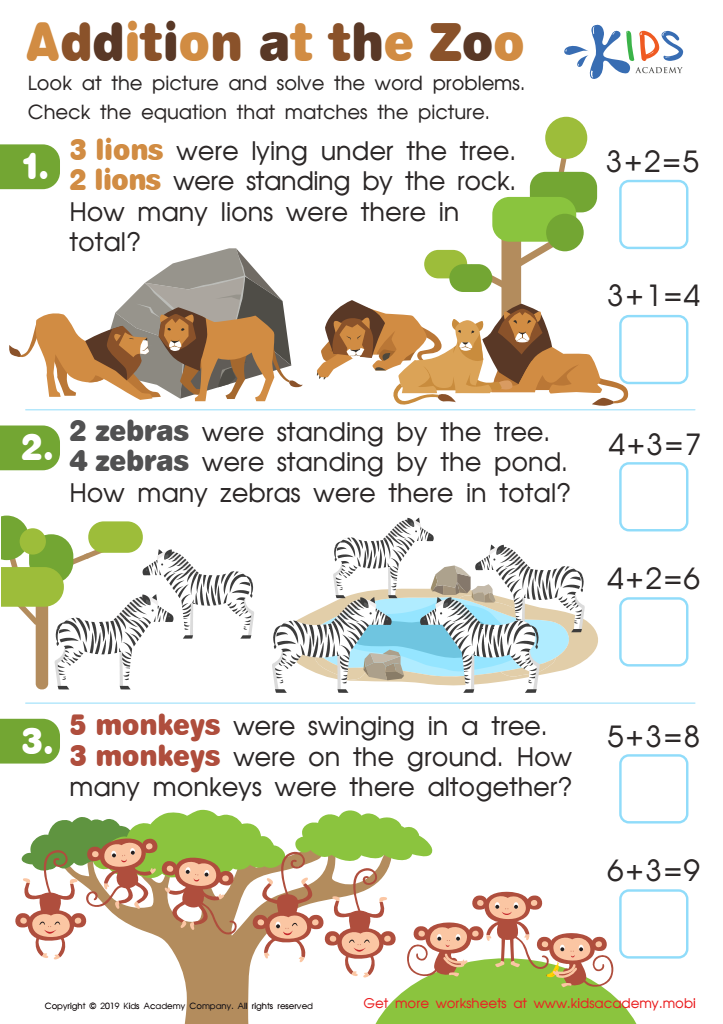
Addition at the Zoo Worksheet







.jpg)
Visual Learning Easy Word Problems are essential for children aged 5 to 8 because they cater to the innate ways young learners absorb information. At this developmental stage, children are more engaged when abstract concepts are represented visually, helping them make connections between the real world and mathematical ideas. Word problems framed visually, using drawings or visual aids, simplify the problem-solving process and reduce cognitive overload, allowing children to focus on understanding the math rather than getting lost in the text.
Moreover, these visual techniques bolster critical thinking and enhance comprehension skills, laying a strong foundation for future learning. This approach promotes active participation, ignites curiosity, and encourages children to explore different strategies for solving problems. Parents and teachers should prioritize these methods to foster both confidence and competence in young learners.
By nurturing spatial awareness and problem-solving skills through visual learning, caregivers are equipping children with tools that extend beyond mathematics. As children naturally develop their reasoning abilities in real-life situations, they become more self-directed learners, resilient problem solvers, and confident individuals prepared to tackle more complex challenges in the future. Prioritizing visual learning in early education is thus crucial for holistic development and lifelong learning success.








