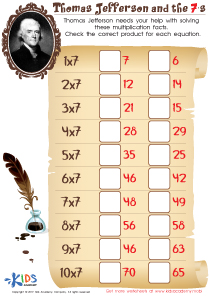
Multiplication practice Easy Social Studies Worksheets for Ages 5-8
3 filtered results
Difficulty Level
Grade
Age
-
From - To
Subject
Activity
Standards
Enhance your child’s learning journey with our engaging Multiplication Practice Easy Social Studies Worksheets, specially designed for ages 5-8. Developed by childhood education experts, these worksheets simplify complex concepts, merging essential multiplication exercises with captivating social studies content. They help young learners grasp foundational multiplication skills while exploring enjoyable themes in history, geography, and culture. Vivid illustrations and interactive activities keep them enthusiastic and confident. Perfect for classroom or home use, these resources provide a seamless blend of math practice and social studies knowledge. Start your child's educational adventure now with our easy-to-follow, fun, and educational worksheets!
Favorites
With answer key
Interactive
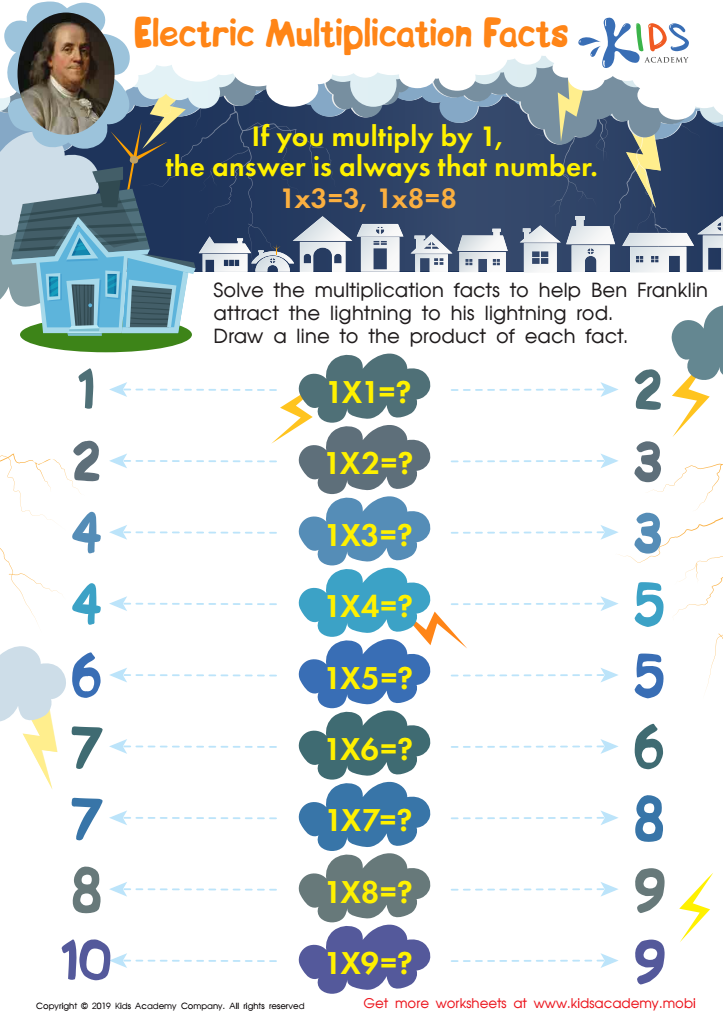
Electric Multiplication Facts Worksheet
Assisting your kids with math homework has no limits. After mastering addition and subtraction, the next step is multiplication. Initially, it can be intimidating. However, with the right tips and worksheets like this one, they'll see it's not so tricky. Show them how multiplying by 1 keeps the number the same. Use the tracing sheet to help them work through multiplication facts.
 Assign to My Students
Electric Multiplication Facts Worksheet
Worksheet
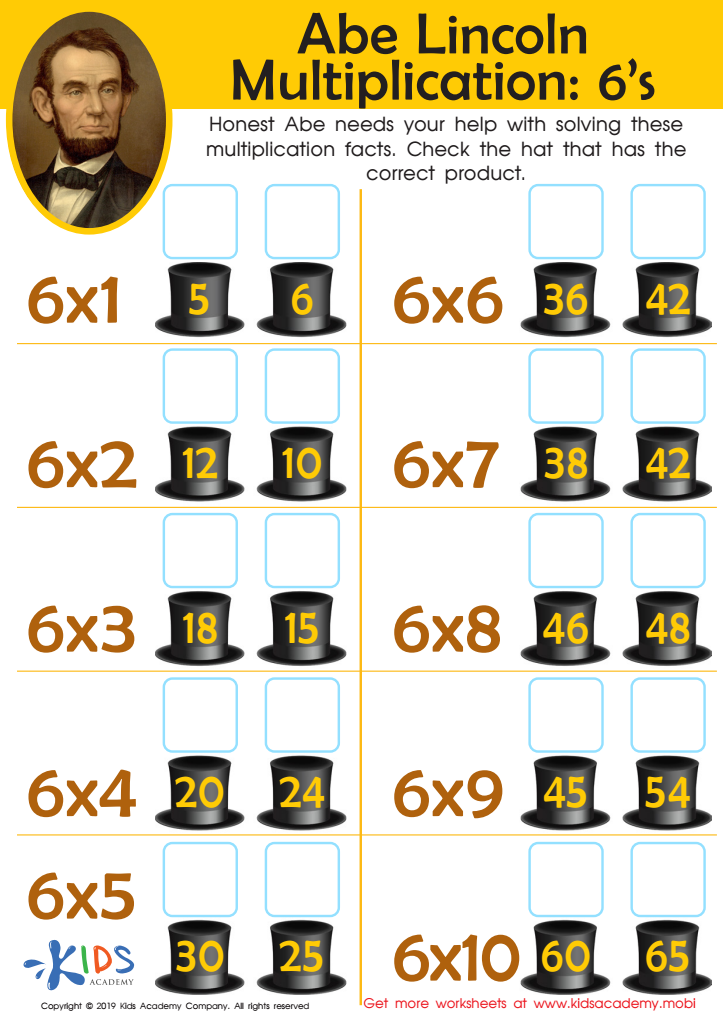
Abe Lincoln Multiplication: 6’s Worksheet
Abraham Lincoln is a key figure in US history. Remind your kids of his contributions and challenge them with this multiplication worksheet! Ask them to solve the facts in the picture and check the hat with the correct product.
Abe Lincoln Multiplication: 6’s Worksheet
Worksheet
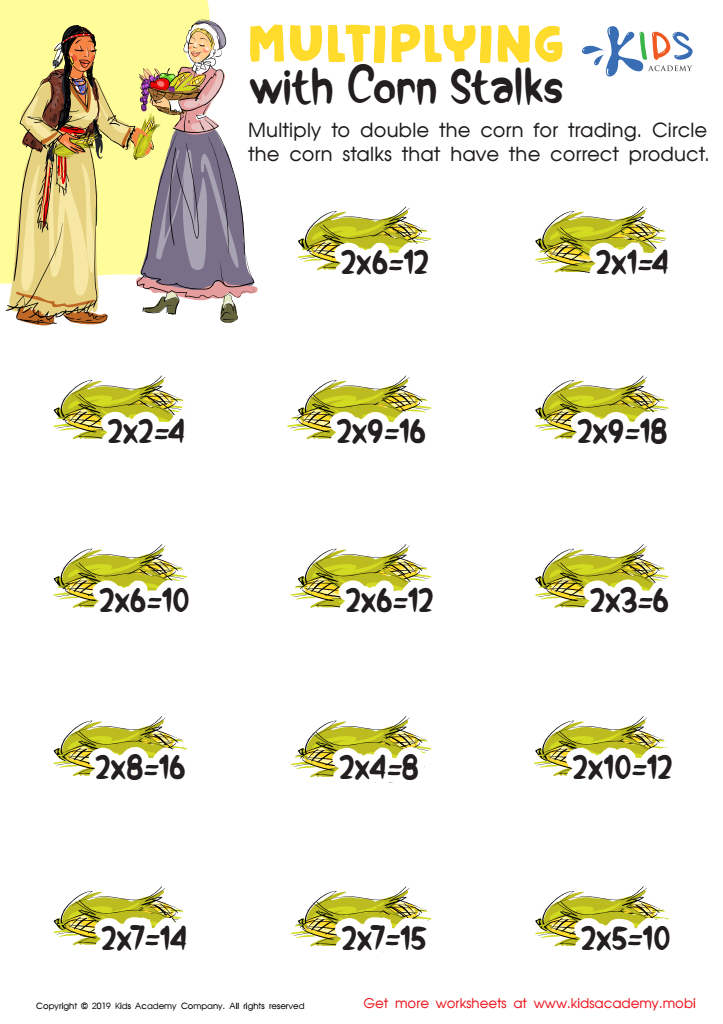
Multiplying With Corn Stalks Worksheet
Farming is profitable; corn is a versatile crop used for many things. Ask your kids what products come from corn! This worksheet is a fun way to teach multiplying with corn stalks. Farmers must multiply the stalks to double their number for trading and increase their profits. Challenge your kids to circle the correct products.
Multiplying With Corn Stalks Worksheet
Worksheet
Join Kids Academy for Free
Who is primarily going to use this learning content?







Ensuring that children engage in multiplication practice and easy social studies activities during ages 5-8 is crucial for their academic and personal development. Multiplication practice lays the groundwork for advanced mathematical concepts they will encounter in higher grades. Early fluency in multiplication can foster confidence and reduce math anxiety, helping children view math as a manageable and even enjoyable subject. By practicing multiplication, children also enhance their problem-solving skills and their ability to think logically.
Complementing this with easy social studies engages other facets of a child’s cognitive development. Learning basic concepts of history, geography, and community helps children understand the world they live in and their role within it. It promotes cultural awareness and empathy, teaching them about different people, places, and events. This dual focus cultivates a well-rounded intellect—encouraging analytical thinking from math and critical thinking from social studies.
For teachers and parents, integrating these subjects in a balanced manner encourages children to develop a love for learning across different disciplines. It provides a platform where foundational skills are built in a fun and engaging way, ensuring holistic development that includes both quantitative skills and social understanding. Above all, this integrative approach sets the stage for lifelong learning and curiosity.