Easy Beginning Sounds Worksheets for Ages 5-9
4 filtered results
-
From - To
Discover our collection of Easy Beginning Sounds Worksheets designed specifically for ages 5-9! These engaging and interactive worksheets help young learners develop essential phonemic awareness by focusing on the initial sounds of words. Perfect for early readers, our materials feature colorful visuals and fun activities that captivate children's attention while reinforcing their understanding of letter-sound relationships. Kids will practice identifying and matching beginning sounds with relevant pictures, making learning enjoyable and effective. Enhance your child's literacy skills today with our printable worksheets, ideal for home or classroom use. Unlock your kid's potential and watch them excel in their reading journey!
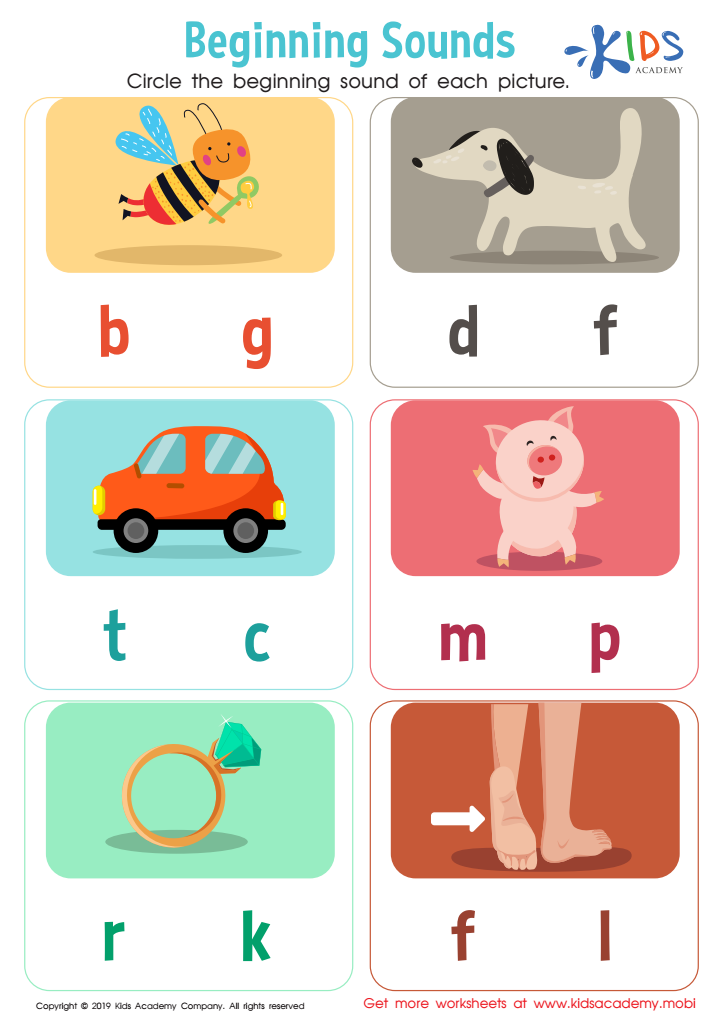
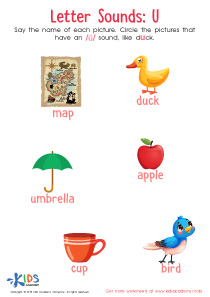
Beginning Sounds Worksheet
 Assign to My Students
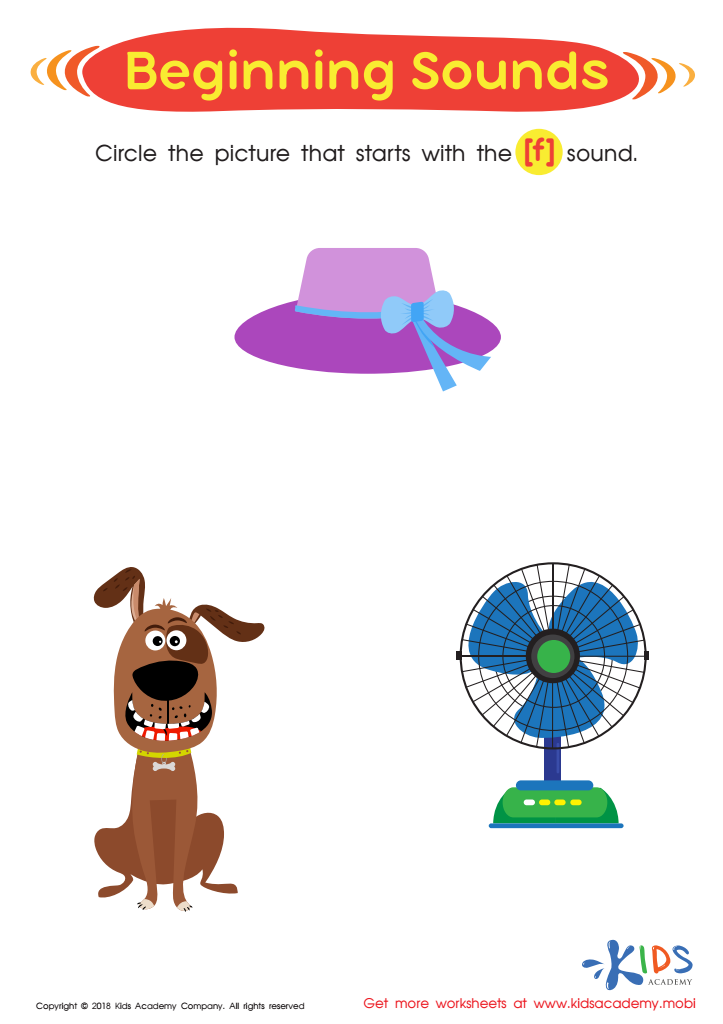
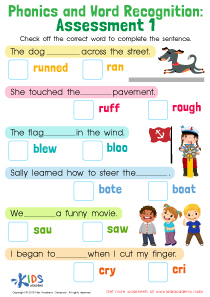
Beginning Sounds Assessment Printable
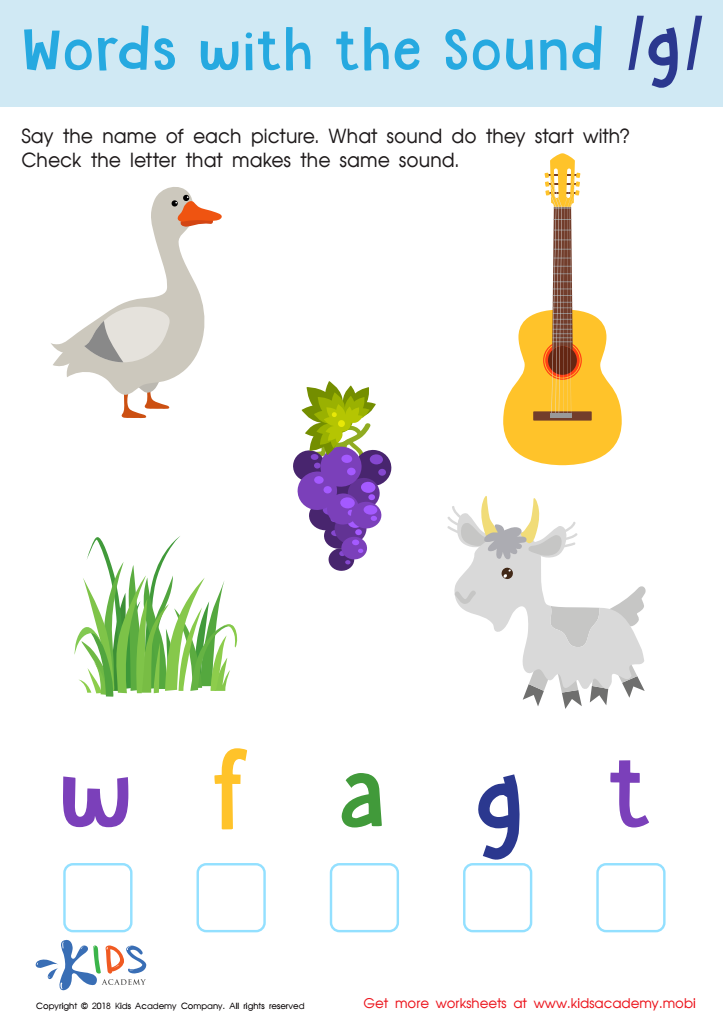
Words with sound g Reading Worksheet
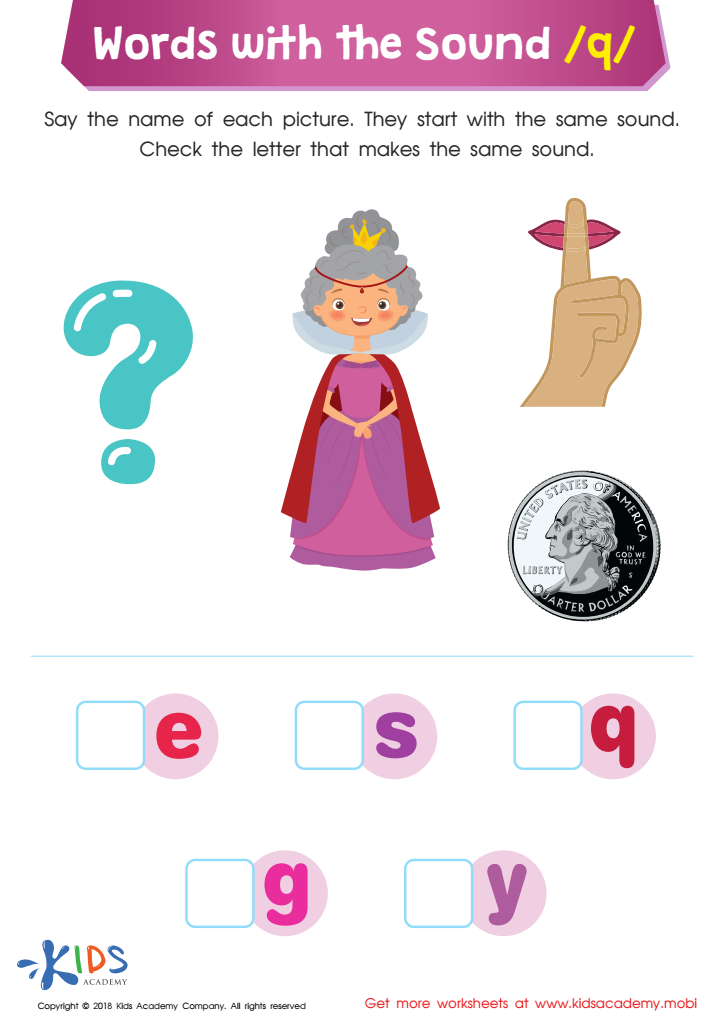
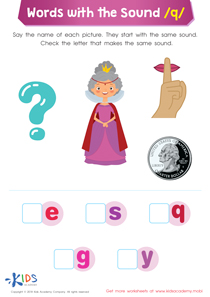
Words with Sound Q Reading Worksheet








Understanding Easy Beginning Sounds is crucial for children aged 5-9 as it lays the foundation for literacy and language development. For parents and teachers, this phonemic awareness is the first step in the journey of reading, enabling young learners to recognize and articulate the initial sounds of words. This skill is essential because it directly correlates to a child's ability to decode words and form combinations, ultimately influencing their reading fluency and comprehension.
Additionally, learning beginning sounds promotes vocabulary acquisition, as children become more familiar with sound-letter associations. This awareness enhances spelling skills and fosters confidence when reading aloud. Parents and teachers play a pivotal role in creating a supportive environment—by engaging children in fun activities like rhyming games, songs, and interactive stories, they can reinforce these foundational skills.
Investing time in mastering Easy Beginning Sounds helps children develop critical thinking and auditory discrimination, both of which are vital for academic success. Ultimately, by prioritizing this area of learning, educators and caregivers can ensure that children are not only prepared for more complex reading tasks but also develop a lifelong love for literacy. It's a critical step that shapes their communication and academic futures.