Capitalization rules Easy Alphabet Worksheets for Ages 5-9
4 filtered results
-
From - To
Discover our "Capitalization Rules Easy Alphabet Worksheets" designed specifically for children aged 5-9. These engaging worksheets introduce young learners to the fundamental rules of capitalization through fun activities and interactive exercises. Tailored to strengthen reading and writing skills, our resources cover vital topics such as capitalizing the first letter of sentences, names, and titles. Ideal for home or classroom use, these worksheets make learning enjoyable and effective. Encourage your child's literacy development with these vibrant, printable activities that foster both confidence and competence in using capitalization correctly. Start your journey towards mastering language arts today!
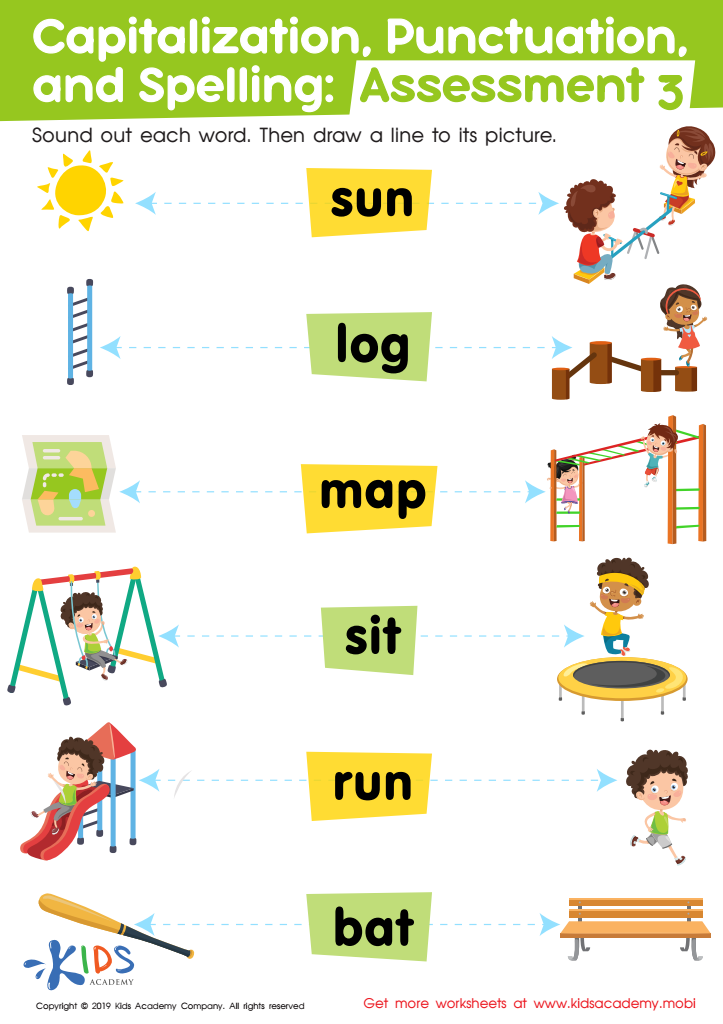
Capitalization. Punctuation. Spelling. Assessment 3 Worksheet
 Assign to My Students
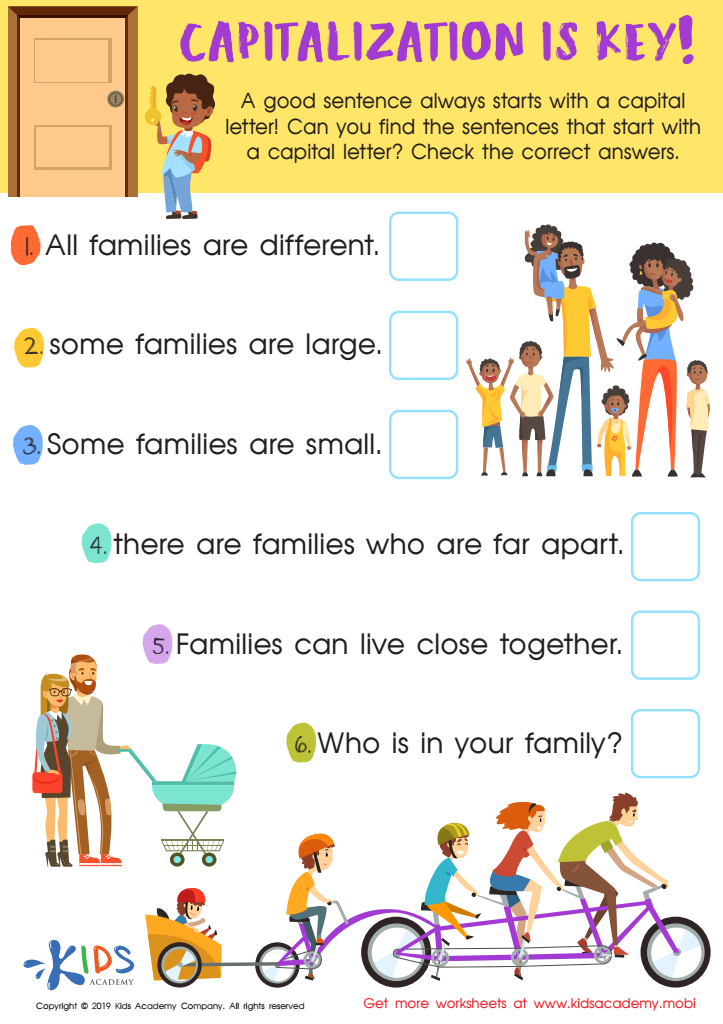
Capitalization Key Worksheet
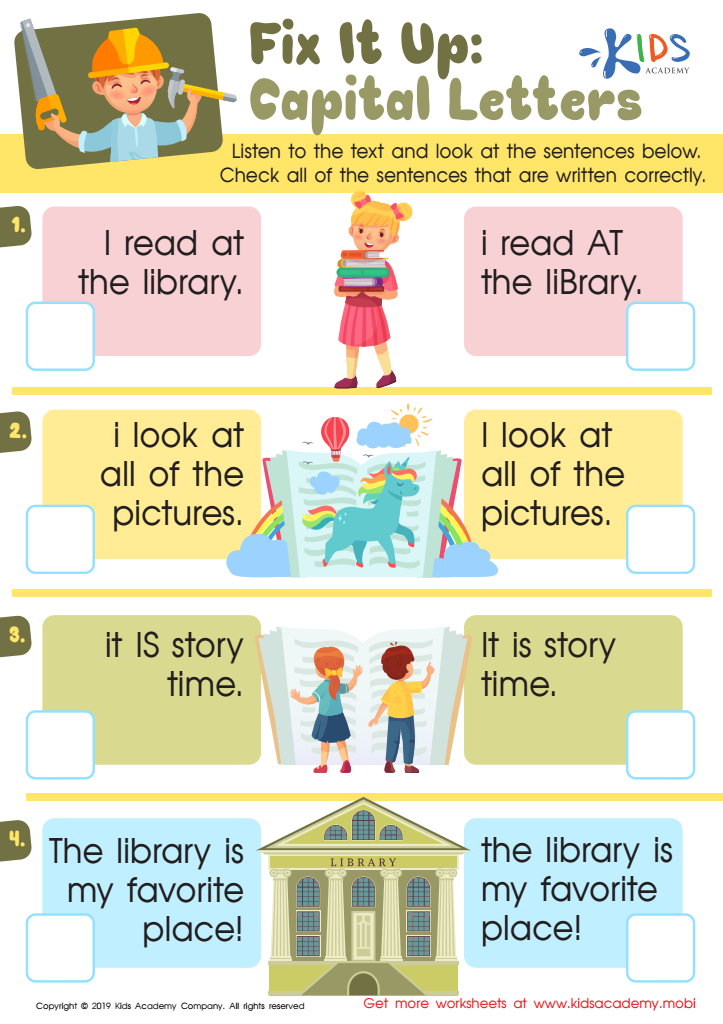
Fix Capital Letters Worksheet

How to Capitalize Worksheet








Capitalization rules are essential for young learners aged 5-9 as they form the foundation of clear and effective communication. Teaching children when to capitalize letters helps them understand the structure and meaning of written language. For instance, capitalizing the first letter of a sentence indicates a new thought, while proper nouns identify specific people, places, or organizations. This knowledge not only enhances their reading and writing skills but also fosters a sense of confidence in their ability to convey ideas.
Furthermore, consistent use of capitalization encourages attention to detail and reinforces the importance of grammar in effective communication. Parents and teachers should care about this because strong foundational literacy skills are crucial for academic success. As children progress in their education, they will encounter increasingly complex texts where mastery of capitalization becomes vital for comprehension and expression.
Engaging students in fun, age-appropriate activities related to capitalization can enhance their learning experience. By prioritizing these foundational rules, educators and parents help nurture a love for writing while ensuring that children's literacy skills are well-developed, ultimately preparing them for future learning experiences. Promoting capitalization from an early age sets the stage for successful communication, enabling children to express themselves clearly and confidently.