
Basic Math Skills Easy Numbers Worksheets for Ages 5-9
13 filtered results
Difficulty Level
Grade
Age
-
From - To
Subject
Activity
Standards
Discover our "Basic Math Skills Easy Numbers Worksheets" designed for children ages 5-9! These engaging worksheets focus on foundational math concepts, including number recognition, counting, addition, and subtraction. Our resources provide fun and interactive activities that help young learners build confidence and proficiency in basic math. Each worksheet is tailored to enhance cognitive development, ensuring children grasp essential skills while enjoying the learning experience. Perfect for home schooling or classroom use, our worksheets promote a strong math foundation, setting your child up for future academic success. Start nurturing your child’s math abilities today with our easy-to-use printables!
Favorites
With answer key
Interactive
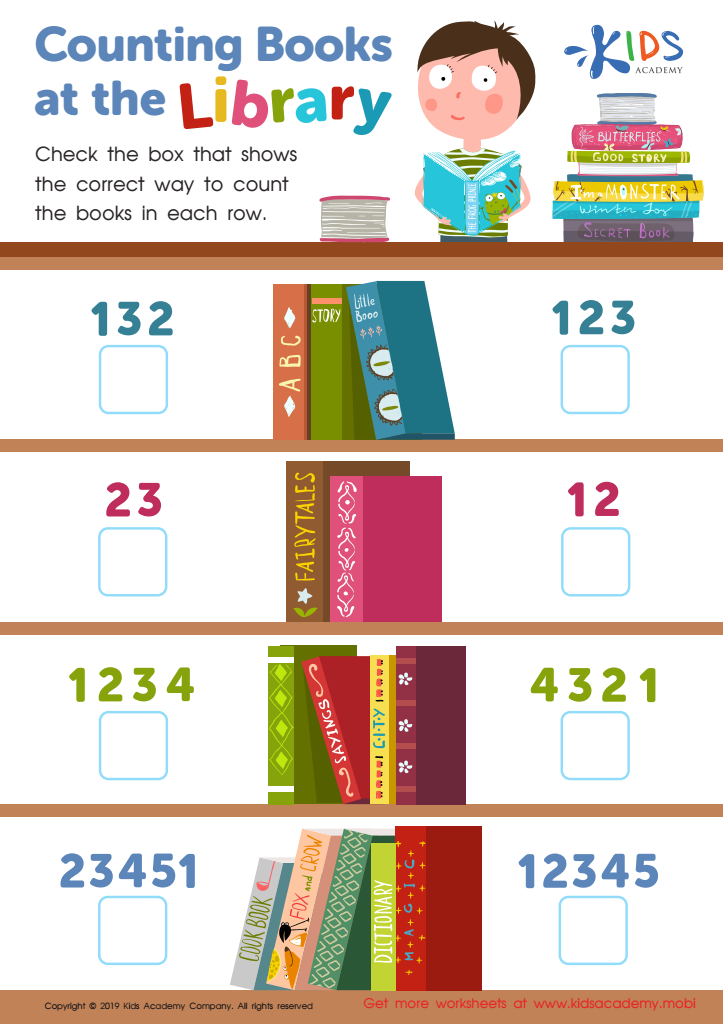
Counting Books at the Library Worksheet
At the library, you can find many books arranged in rows on shelves. Count the books in each row with your kids and check the box that shows the right way to count them. Besides books, libraries offer a place to read, study and research.
 Assign to My Students
Counting Books at the Library Worksheet
Worksheet
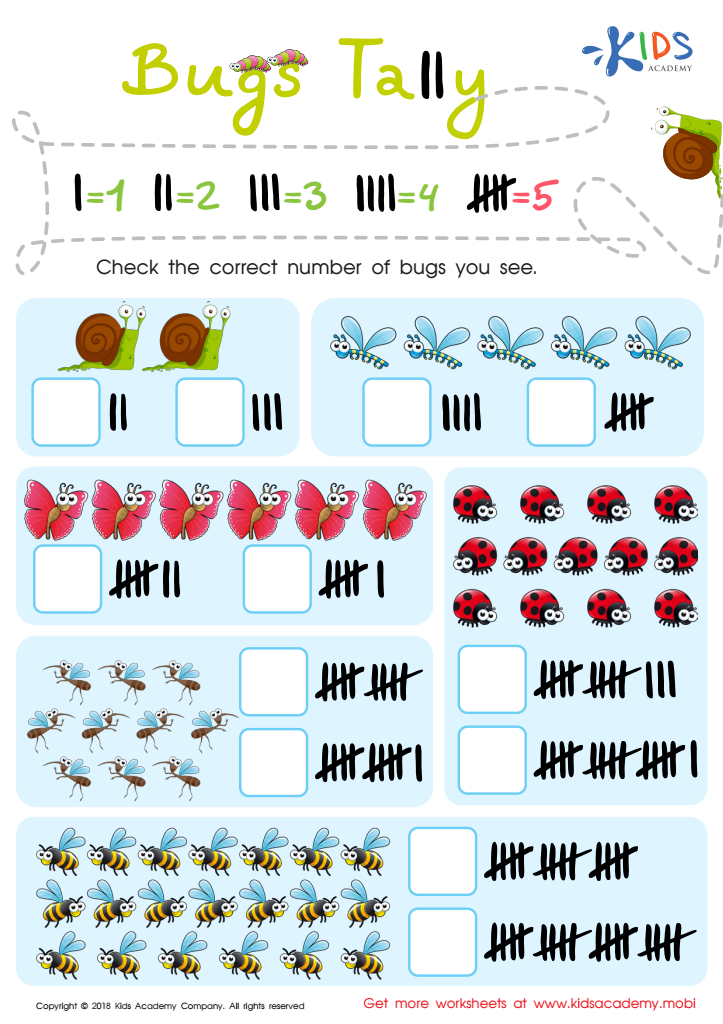
Bugs Tally Worksheet
This fun worksheet uses friendly bugs to help young mathematicians learn numbers and tally marks. They'll gain real-world skills to help with adding, subtracting and counting. Representations will solidify number reasoning, aiding with game playing and more.
Bugs Tally Worksheet
Worksheet
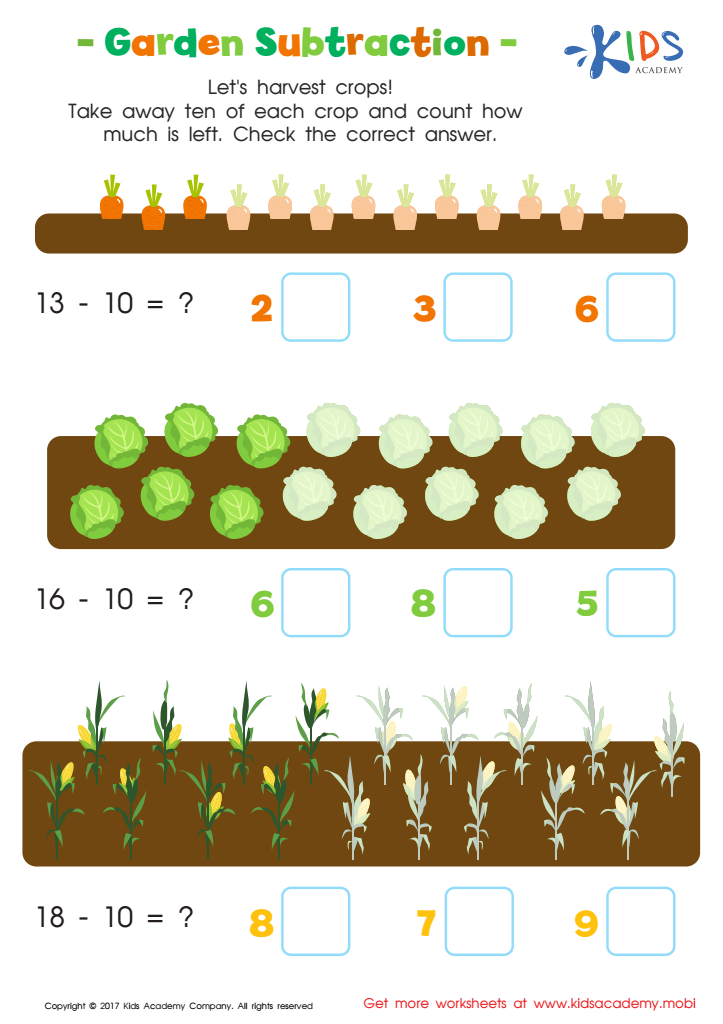
Garden Subtraction Worksheet
Help your kids understand math with this fun, garden-themed subtraction worksheet! Have them read the number sentences and count the veggies in each row. Then, subtract 10 from each row to find the answer. They'll love counting the colorful veggies and solving the problems!
Garden Subtraction Worksheet
Worksheet
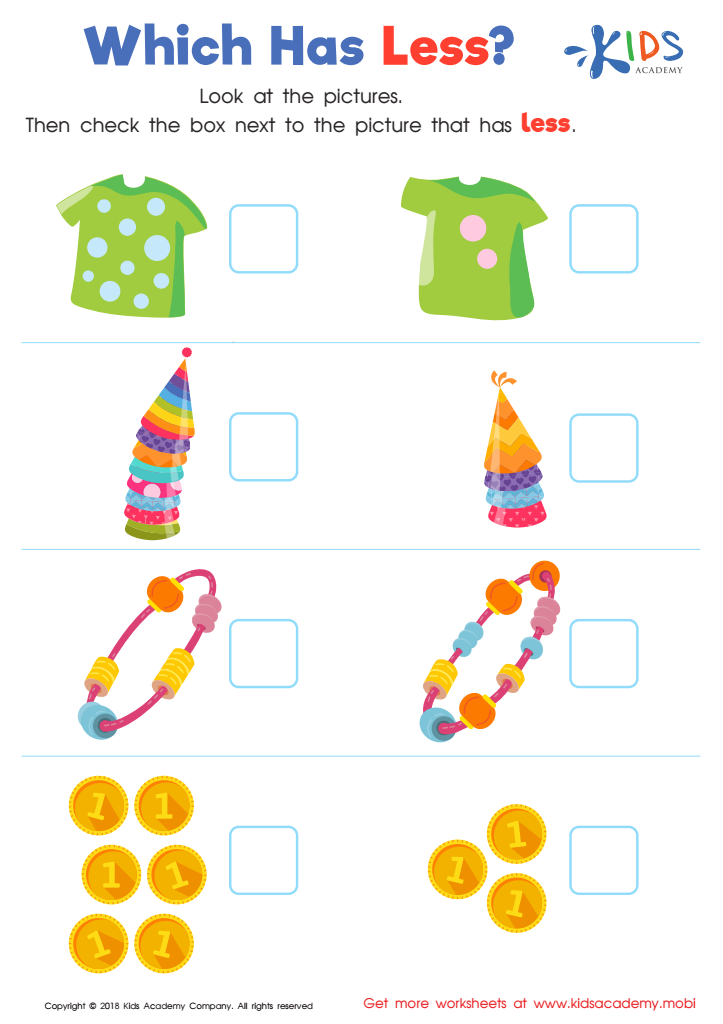
Which Has Less? Worksheet
Kids can develop their number sense by comparing and contrasting objects to identify which has less. This worksheet helps them practice: it's bright and colorful, featuring familiar objects and pictures to count, strengthening basic counting skills. It's the perfect warm-up for comparing and contrasting larger numbers.
Which Has Less? Worksheet
Worksheet
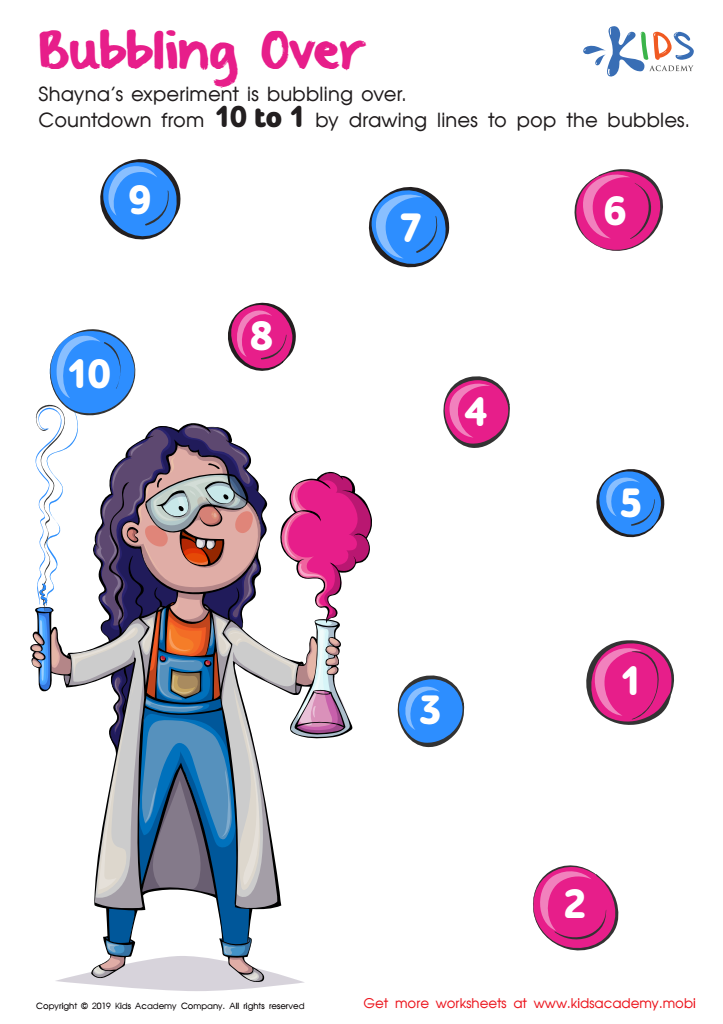
Bubbling Over Worksheet
Students love science experiments at the lab! They get to practice their counting skills while creating a masterpiece or an unexpected catastrophe! Ask them to count down from 10 to 1 by drawing lines to 'pop' the bubbles coming out of Shayna's experiment in the worksheet.
Bubbling Over Worksheet
Worksheet
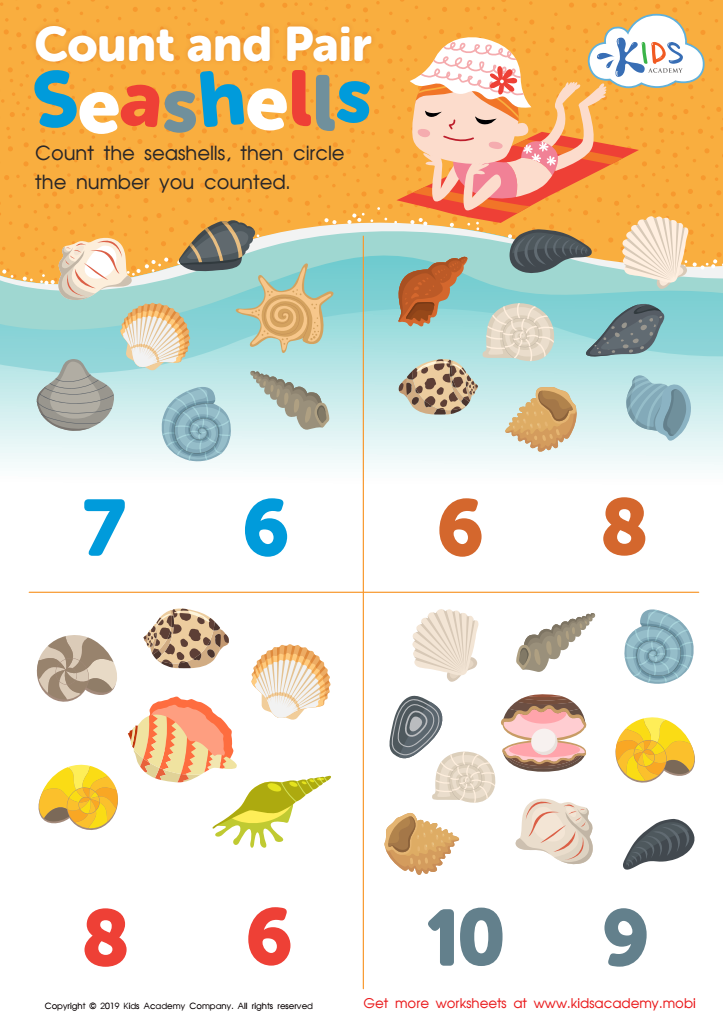
Count and Pair Seashells Worksheet
Kids love trips to the beach. Ask them to count the shells in the four sets of seashells in this printout - then circle the correct number beneath each set. Let them recall the happy memories of the beach and make this worksheet fun.
Count and Pair Seashells Worksheet
Worksheet
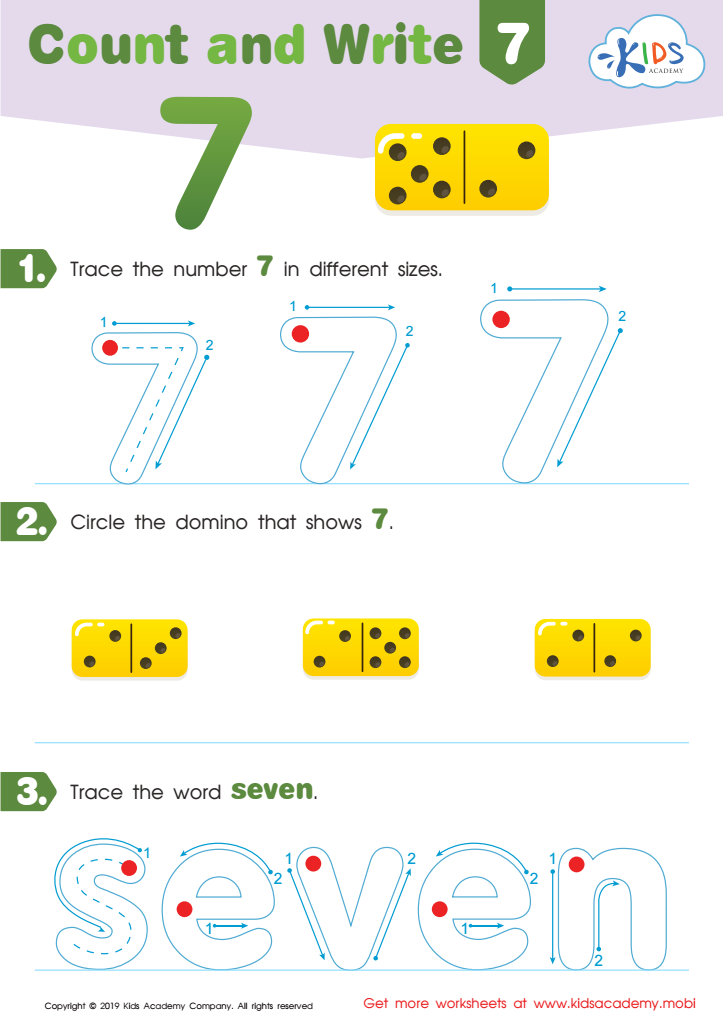
Count and Write 7 Worksheet
It's key to recognize and represent numbers in different formats. This free PDF shows children how '7' looks as a numeral, word, and with dice. Strengthening math skills is crucial, and the traceable lines and bright guide dots can help them practice writing '7' in two forms. Additionally, they'll hone their fine motor skills as they circle the dice that depicts '7'.
Count and Write 7 Worksheet
Worksheet
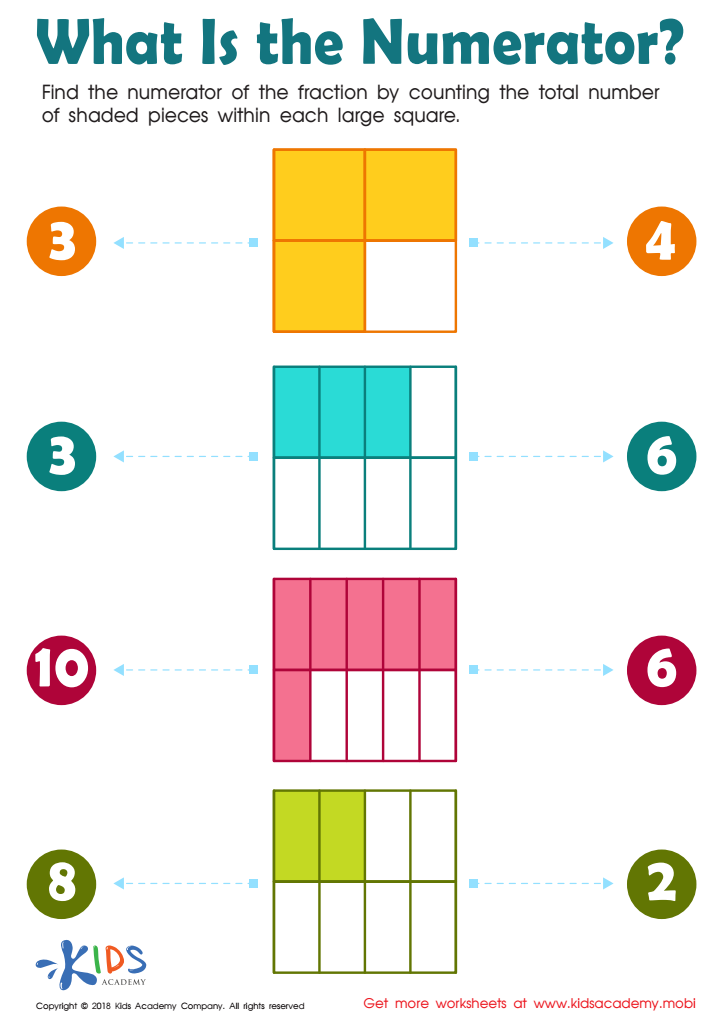
What Is the Numerator? Worksheet
Help your kids learn fractions with this simple worksheet. Explain that the numerator is the number atop another number, then have them count the shaded pieces in each large square to find the numerator of the fraction. This activity is perfect for young kindergartners starting out with fractions.
What Is the Numerator? Worksheet
Worksheet
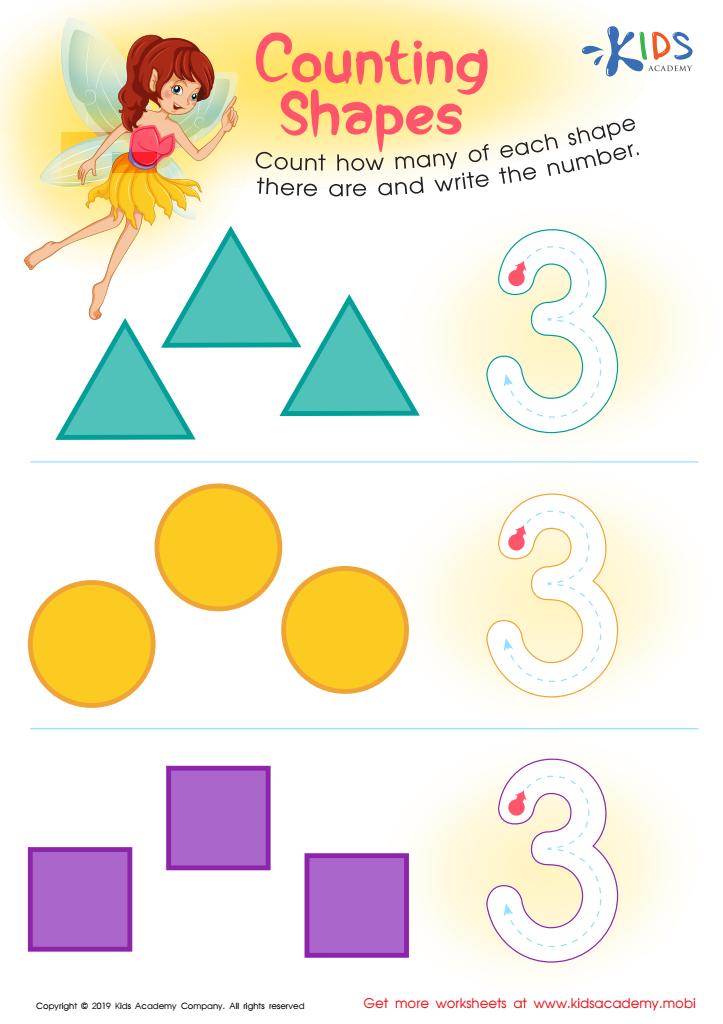
Counting Shapes Worksheet
Counting and number sense are essential skills. Picture representation helps kids understand and remember concepts. This free worksheet is perfect for introducing numbers and counting in groups of three. It also helps kids to practice writing numbers with traceable lines and guiding dots. It's an easy and fun way to give little mathematicians a successful start.
Counting Shapes Worksheet
Worksheet
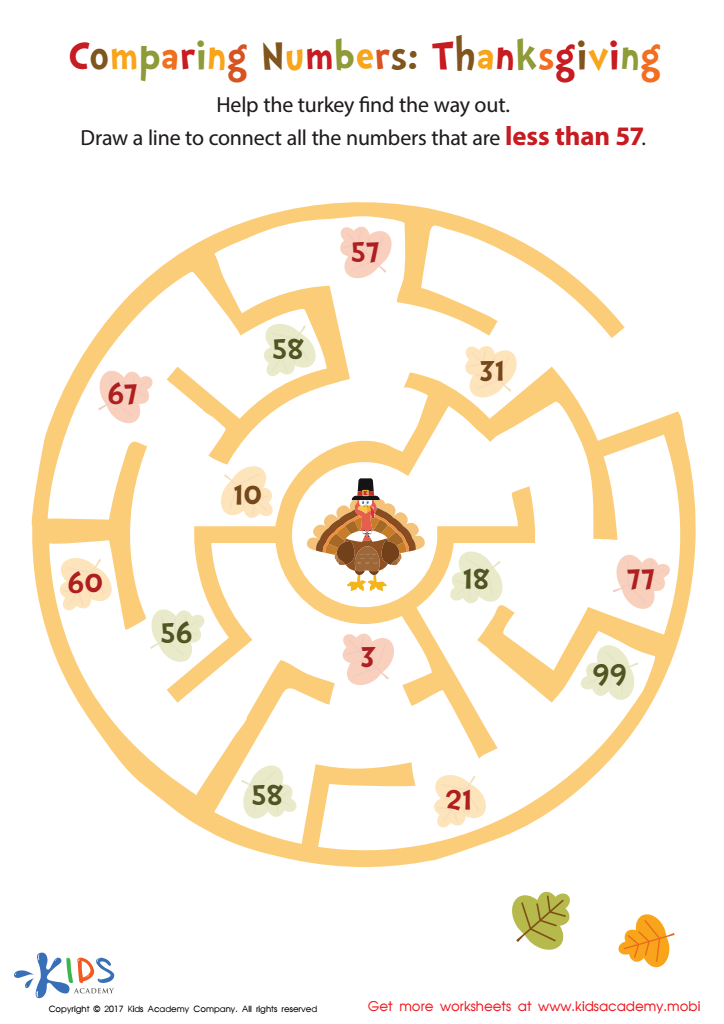
Comparing Numbers Printable
Test your child's number skills with this fun and tricky maze! This Thanksgiving worksheet lets them explore a maze, using numbers less than 57 to get to the tasty goal: A Thanksgiving turkey! Develop their number sense in a fun and engaging way!
Comparing Numbers Printable
Worksheet
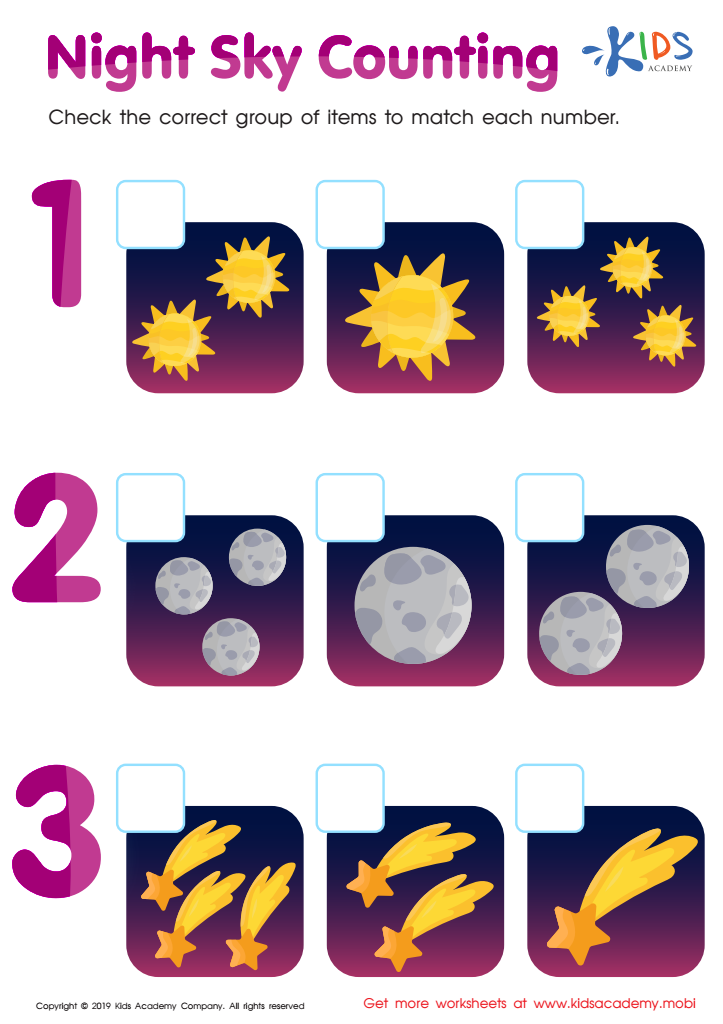
Night Sky Counting Worksheet
Twinkle, little star! Counting is fun with this Night Sky worksheet. Kids use colorful pictures and basic counting skills to match numerals with their corresponding group of items. It's a great way to let them practice number sense and one-to-one representation while having fun!
Night Sky Counting Worksheet
Worksheet
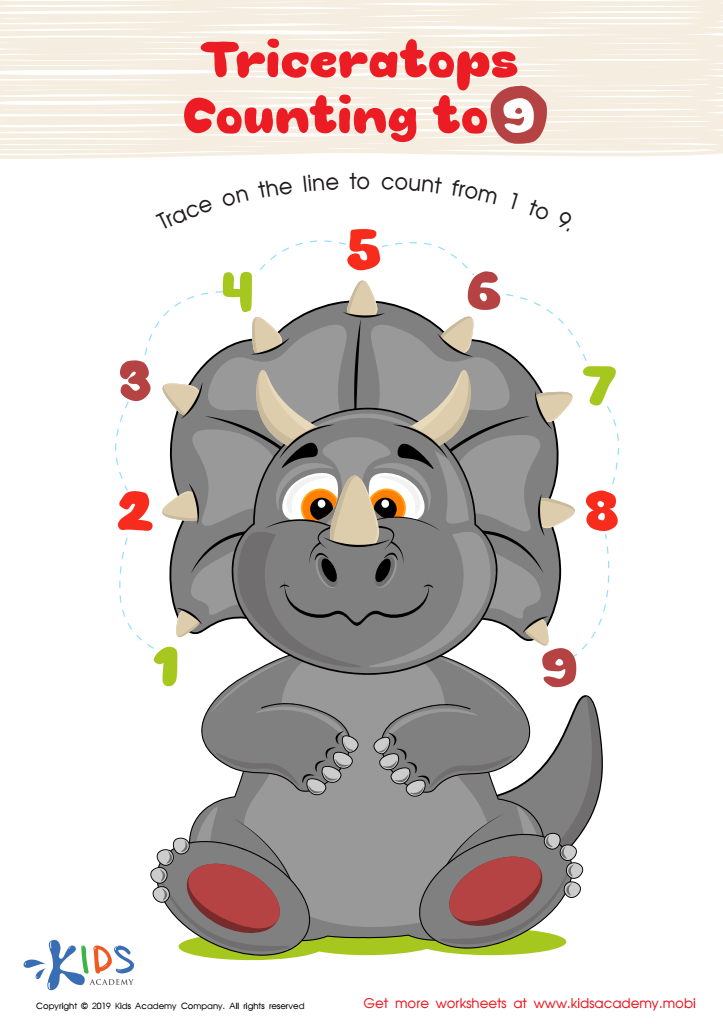
Triceratops Counting to 9 Worksheet
This little triceratops is here to help kids learn to count! Dinosaurs lived long before us and we've never seen one alive, but through research, we know a lot about them. Let the dinosaur help trace on the line from 1 to 9 for a fun counting practice.
Triceratops Counting to 9 Worksheet
Worksheet
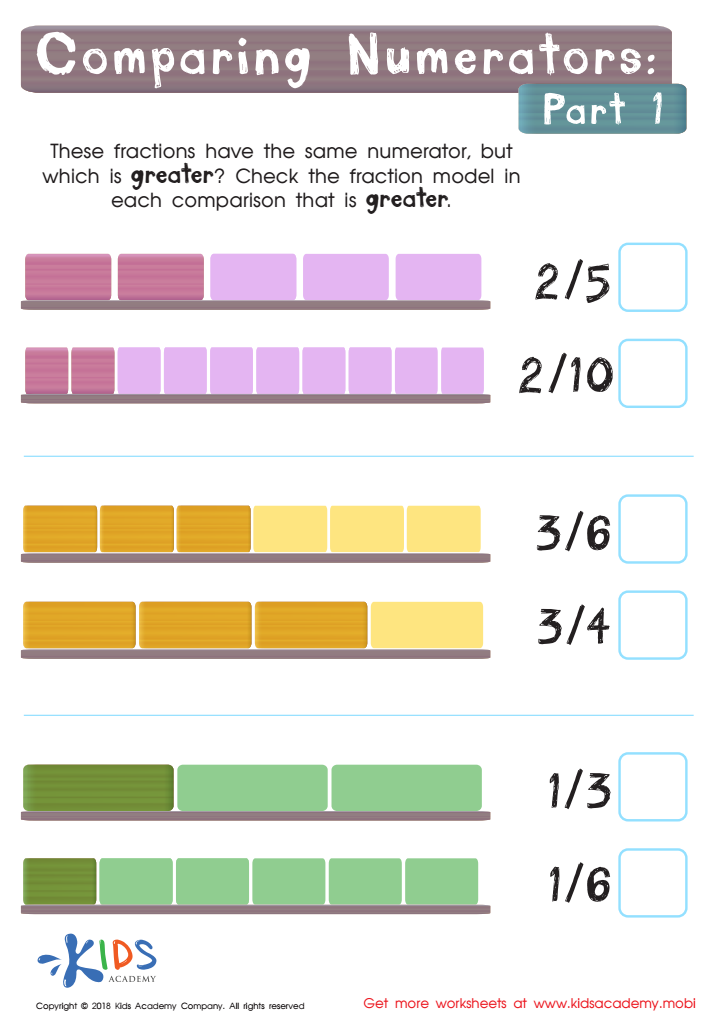
Comparing Numerators Part 1 Worksheet
This worksheet has 3 fractions groups with the same numerator. Your child must determine which fraction is greater in each comparison. Check the fraction model to see the greater one.
Comparing Numerators Part 1 Worksheet
Worksheet
Join Kids Academy for Free
Who is primarily going to use this learning content?



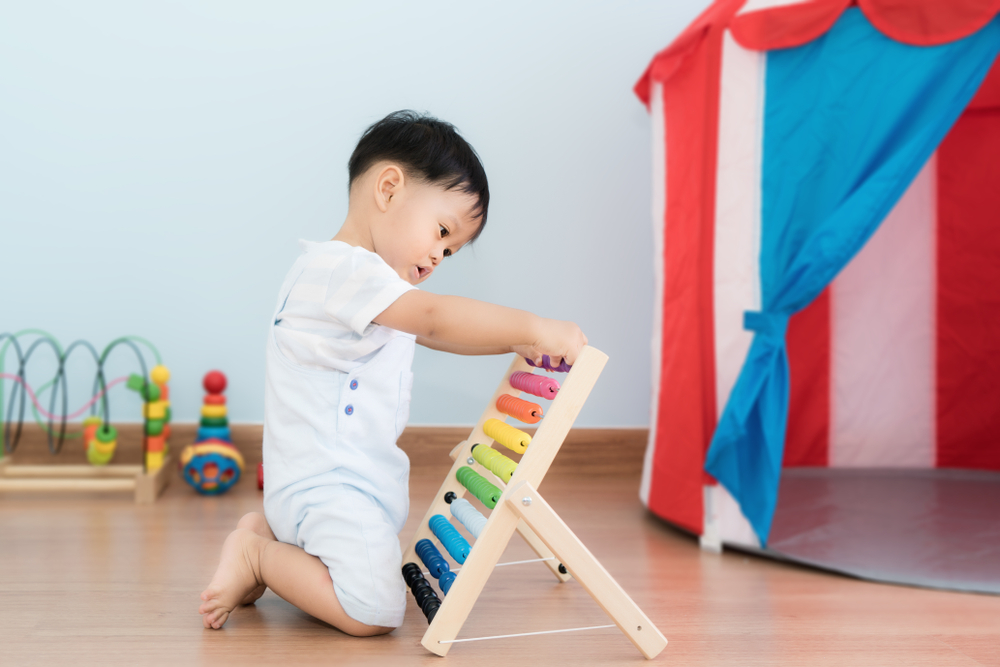



Basic math skills are crucial for children aged 5-9, laying the foundation for their future academic success and everyday problem-solving. At this age, children develop critical thinking and cognitive abilities that are essential not only for mathematics but for overall learning. Teachers and parents should care about nurturing these skills because early mathematical understanding fosters confidence and curiosity in young learners.
Easy numbers concepts, such as counting, addition, subtraction, and recognizing patterns, enhance a child’s capacity to comprehend more complex math topics later on. Engaging kids with simple mathematical games and activities makes learning enjoyable and interactive, preventing math anxiety and instilling a positive attitude towards the subject.
Furthermore, basic math skills extend beyond the classroom; they are vital in daily life – from budgeting allowance to problem-solving in real-world situations. By ensuring children master these foundational skills, adults equip them with tools for academic achievement, potentially preventing future struggles in math-heavy subjects.
Ultimately, fostering basic math skills in children not only promotes intellectual growth but also builds resilience, encouraging them to approach challenges with a logical mindset as they advance through their education. Thus, teachers and parents play a pivotal role in this important developmental stage.








