Sorting skills Easy Numbers Worksheets for Ages 5-9
3 filtered results
-
From - To
Boost your child's mathematical abilities with our "Sorting Skills Easy Numbers Worksheets for Ages 5-9"! Designed to foster critical thinking and pattern recognition, these engaging worksheets make learning fun and effective. Children will practice sorting numbers, objects, and shapes, enabling them to develop essential skills such as categorization, organization, and differentiation. Perfect for both classroom and home use, our expertly crafted worksheets are tailored to meet varying skill levels and keep young minds stimulated. Watch your child’s confidence grow as they master fundamental math concepts while having fun. Jumpstart your child’s educational journey today with our beginner-friendly sorting skills worksheets!
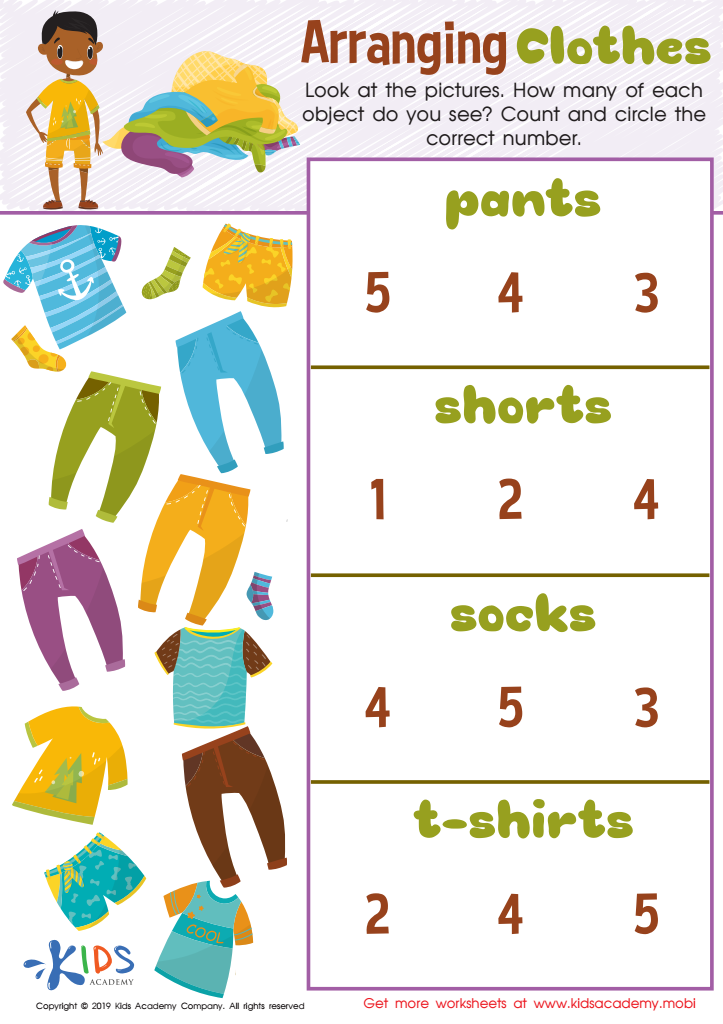
Arranging Clothes Worksheet
 Assign to My Students
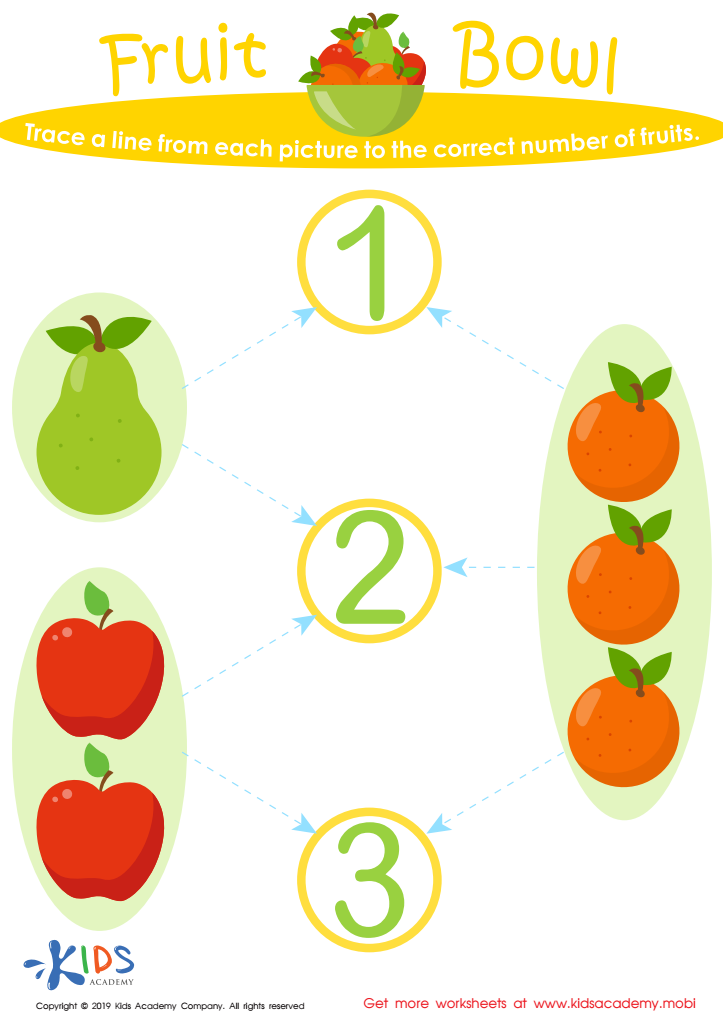
Fruit Bowl Worksheet
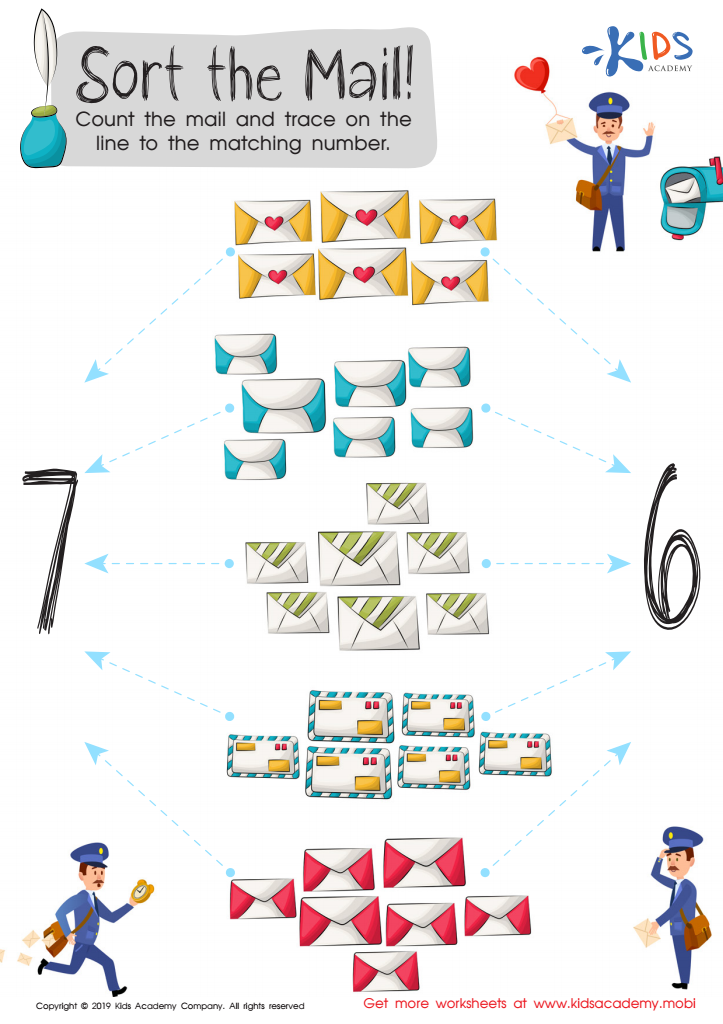
Sort the Mail Worksheet





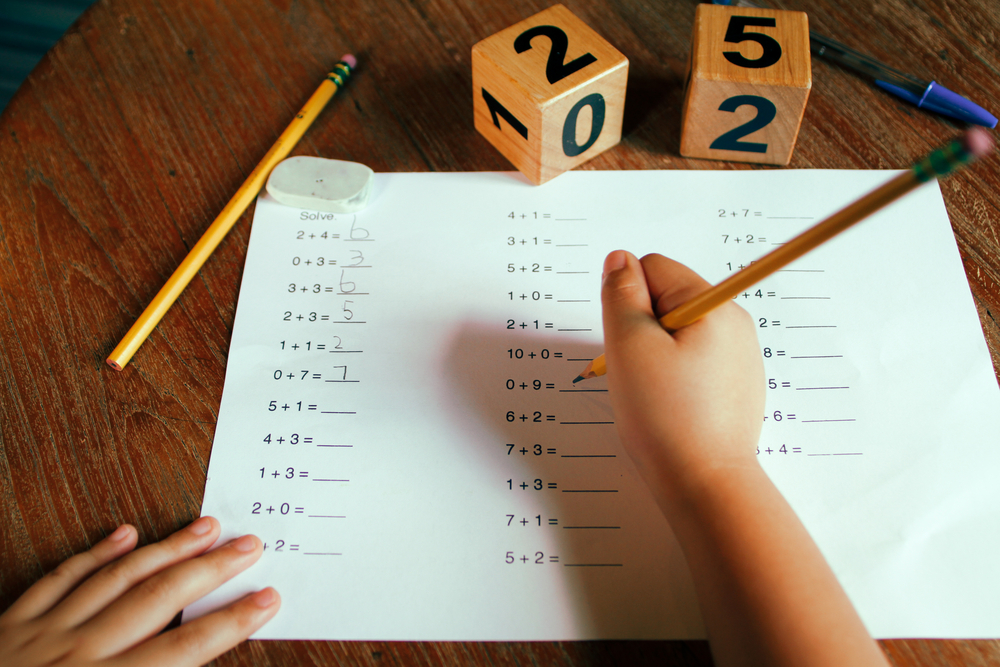


Sorting skills serve as a fundamental building block for developing critical thinking and organizational abilities in children aged 5-9. During these formative years, learning to categorize objects, numbers, or concepts helps children make sense of their world. When parents and teachers prioritize sorting activities featuring easy numbers, they improve mathematical readiness. This foundational understanding aids in grasping more complex math skills, such as addition, subtraction, and pattern recognition.
Moreover, sorting fosters cognitive development by encouraging children to observe similarities and differences, recognize relationships, and classify objects based on attributes such as size, shape, or color. These skills are not only essential for math concepts but are transferable to science, reading, and everyday problem-solving.
Engaging children in sorting also enhances their attention to detail, concentration, and organizational competencies. These are crucial abilities for academic achievement and beyond. By incorporating sorting tasks like grouping numbers or placing objects in numerical order into daily routines, parents and teachers provide practical, hands-on learning opportunities. This makes abstract concepts more concrete and enjoyable.
In conclusion, prioritizing sorting skills for children aged 5-9 doesn't just prepare them academically; it cultivates crucial cognitive and life skills, setting a strong foundation for their educational journey.








