Understanding patterns Easy Math Worksheets for Ages 5-9
6 filtered results
-
From - To
Explore the world of "Understanding Patterns" with our Easy Math Worksheets designed for children ages 5-9! These engaging resources help young learners develop critical thinking and problem-solving skills while making math fun. Our worksheets include a variety of activities focused on identifying, creating, and extending patterns using colorful visuals and relatable contexts. Perfect for classroom use or at-home learning, these worksheets cater to diverse learning styles and provide ample practice opportunities. Help your child discover the joy of patterns and pave the way for future math success. Dive into mathematics with creativity and confidence!
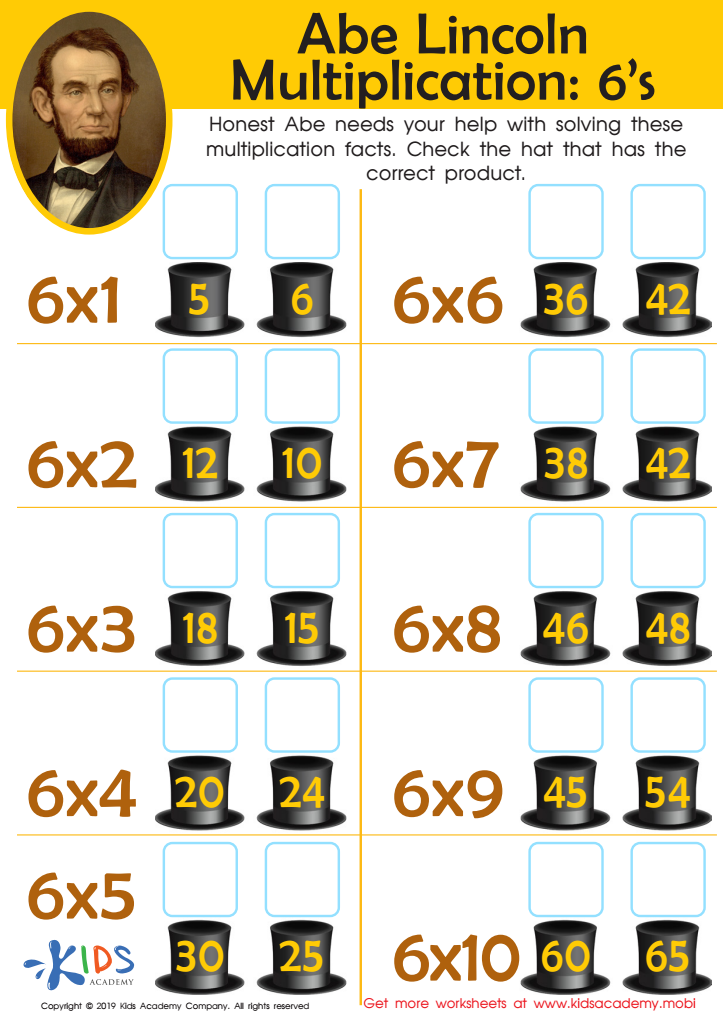
Abe Lincoln Multiplication: 6’s Worksheet
 Assign to My Students
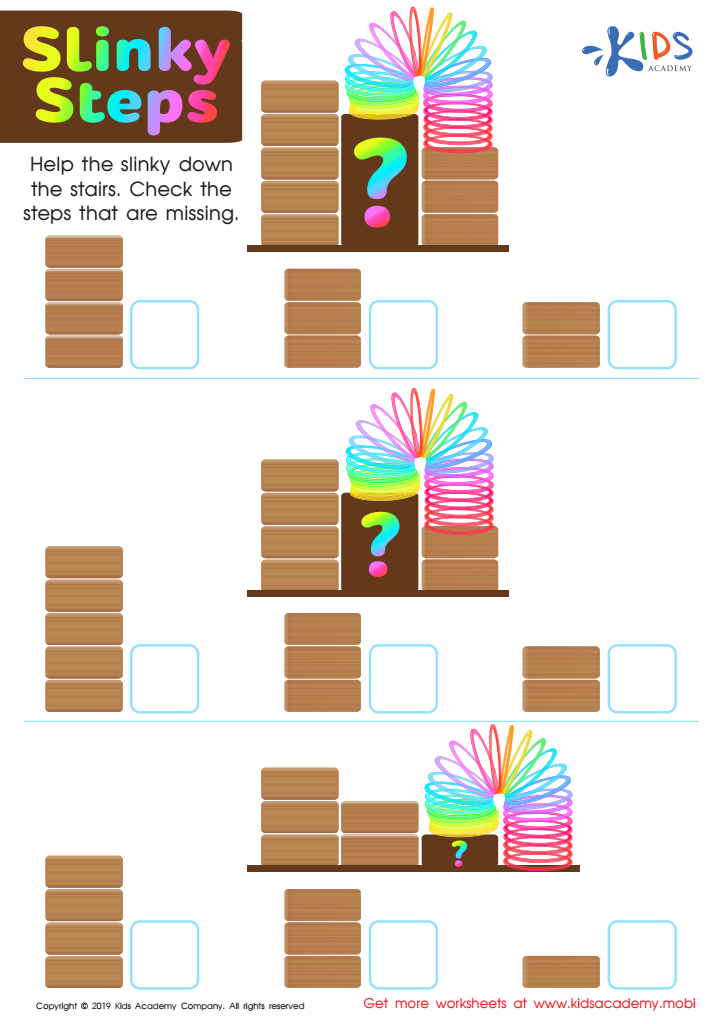
Slinky Steps Worksheet
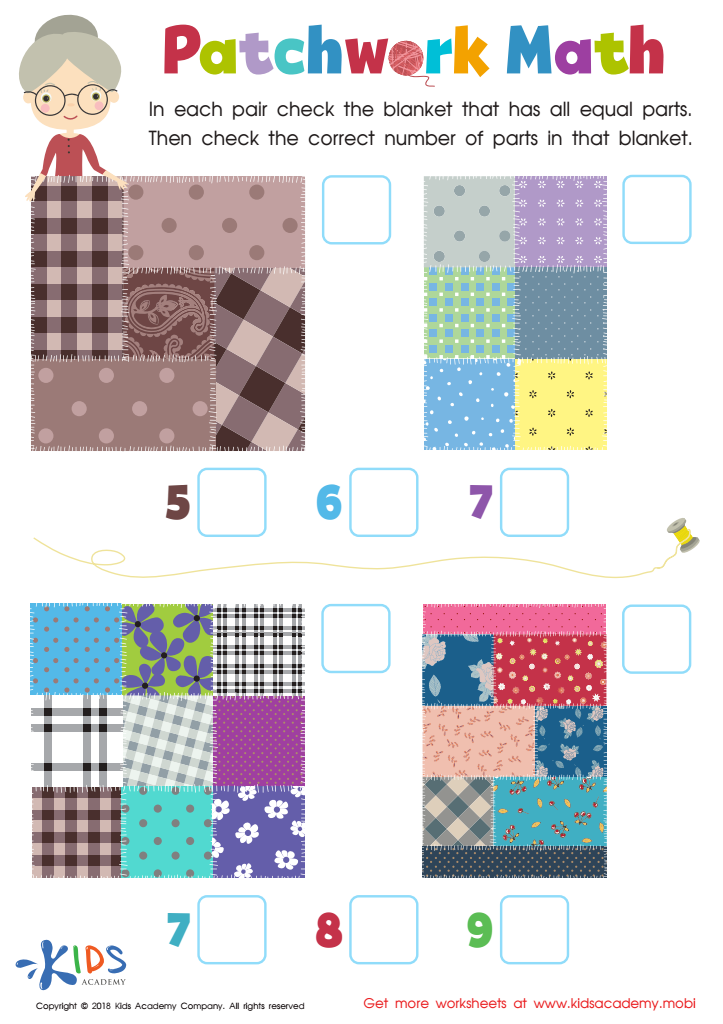
Patchwork Math Worksheet
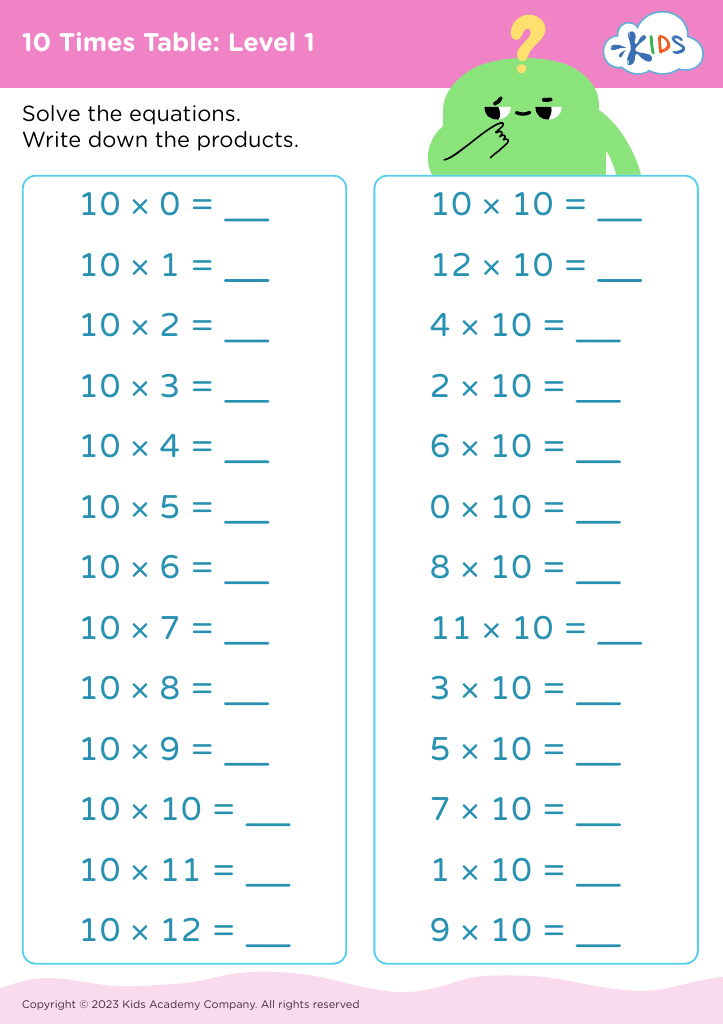
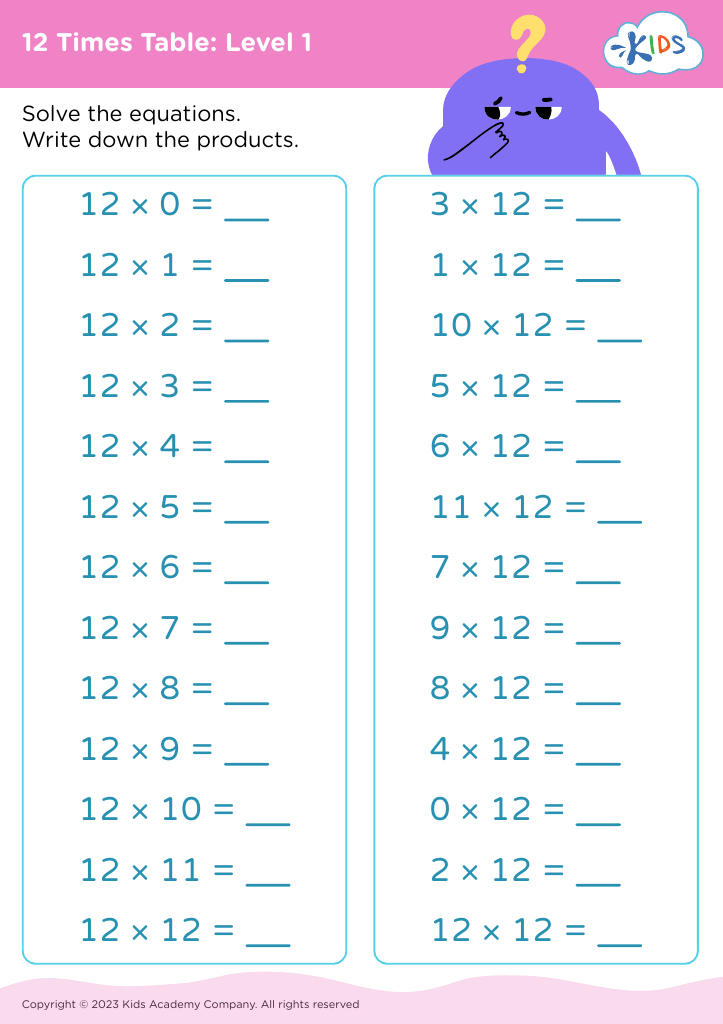
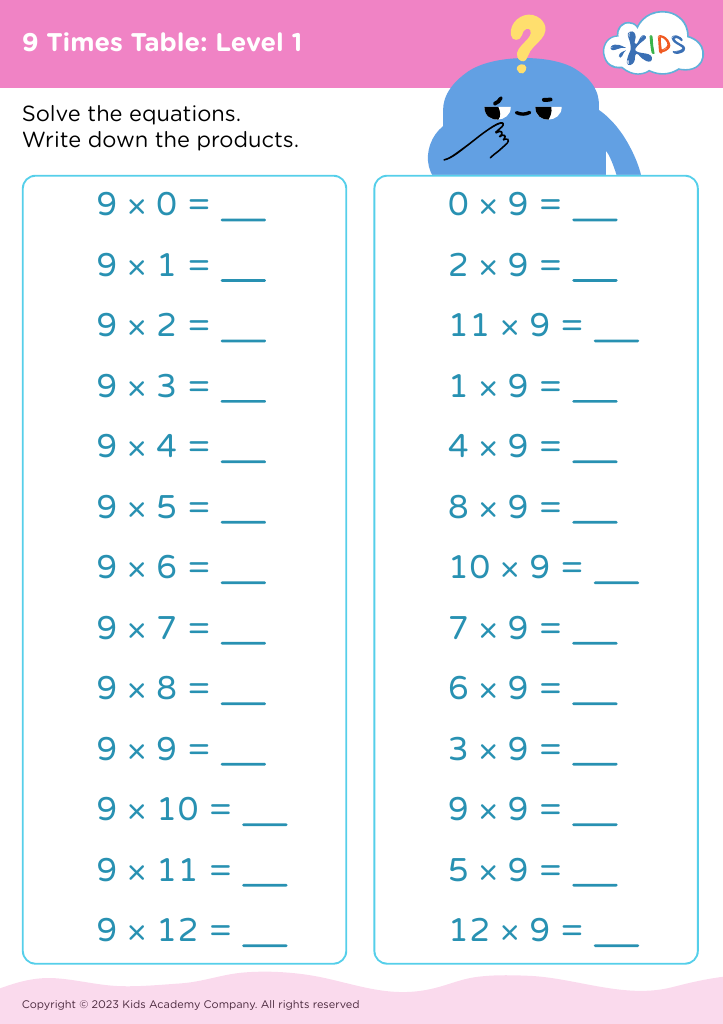








Understanding patterns is a foundational skill in mathematics that significantly benefits children aged 5-9. This concept not only enhances mathematical abilities but also supports cognitive development and critical thinking. Recognizing patterns helps children establish relationships between concepts, making it easier to grasp more advanced mathematical operations later on. For example, when children understand sequences like ABAB or 1, 2, 3, they develop the ability to predict outcomes and solve problems more effectively.
Educators and parents should emphasize patterns in early education because they encourage logical reasoning, which is essential for problem-solving in everyday life. Engaging children with activities that involve patterns helps improve their observation skills and attention to detail. Furthermore, learning through patterns can imbue students with confidence—by understanding repetitions and relations, they begin to see themselves as capable mathematicians.
Promoting pattern recognition in fun and interactive ways can spark a lifelong interest in mathematics. By caring about this aspect, teachers and parents create a supportive learning environment where children are better prepared for future challenges, both academically and personally. In summary, understanding patterns lays a crucial groundwork for children's success in mathematics and their overall cognitive development.








