
Visual Learning Easy Math Worksheets for Ages 5-9
6 filtered results
Difficulty Level
Grade
Age
-
From - To
Subject
Activity
Standards
Engage your child in the world of mathematics with our "Visual Learning Easy Math Worksheets for Ages 5-9." Designed to cater to young learners, these worksheets employ colorful and engaging visuals to simplify complex concepts such as addition, subtraction, patterns, and shapes. Through interactive activities and vibrant illustrations, children can grasp foundational math skills more effectively while having fun. Perfect for both classroom and home use, our worksheets support early learners in building confidence and a love for math. Enhance your child's learning journey with our visually appealing and educational resources, tailored for ages 5-9!
Favorites
With answer key
Interactive
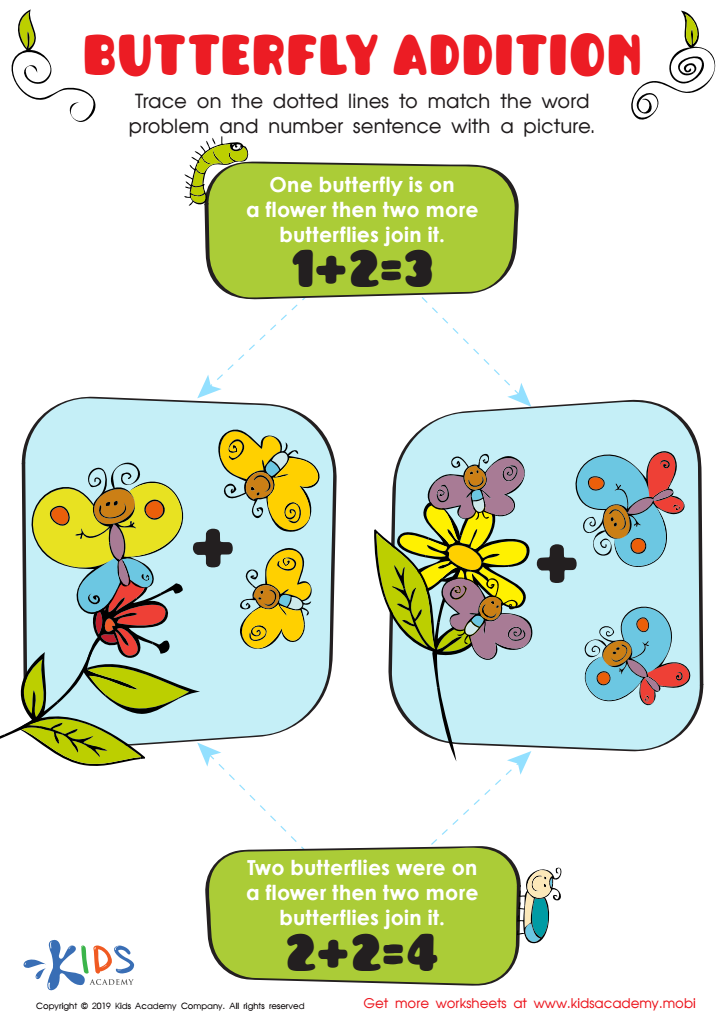
Butterfly Addition Worksheet
This tracing sheet is great for kids to work on math skills and have fun too. Read the word problems to them, then help them trace the dotted lines to match the problem and number sentence to a picture. Not only is it educational, it's beautiful too - your kids will love learning about butterflies!
 Assign to My Students
Butterfly Addition Worksheet
Worksheet
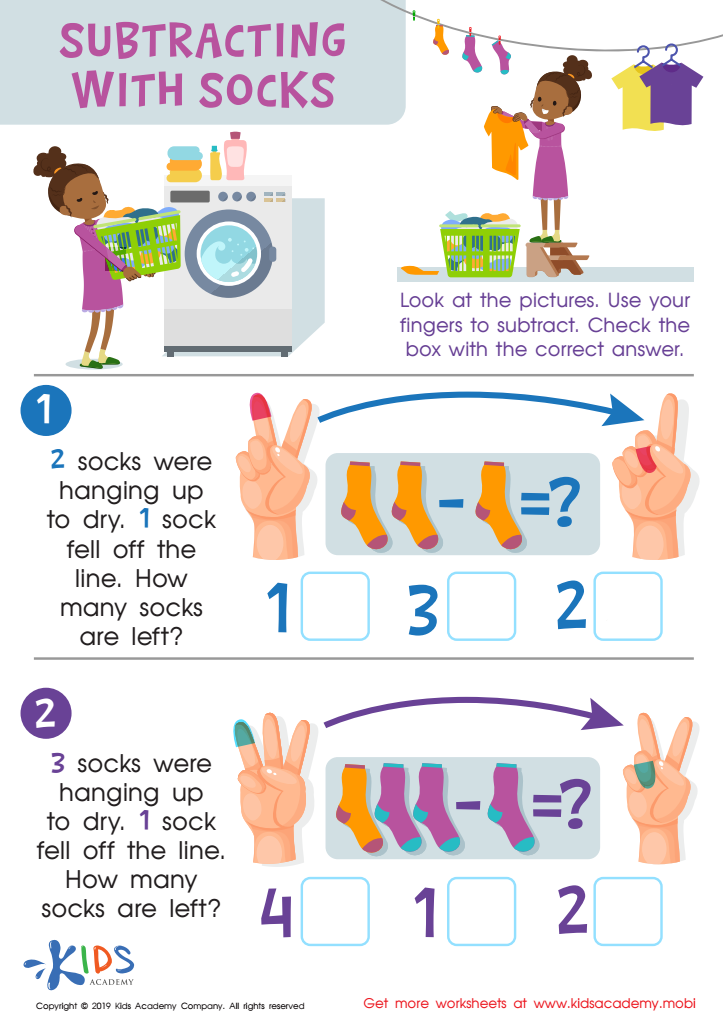
Subtracting Socks Worksheet
Before beginning this exercise with your children, warm them up with a counting game. If math is not their favorite subject, use this worksheet. Help them read the two word problems, then use their fingers to count and subtract. Ask them to select the correct answer and check the box.
Subtracting Socks Worksheet
Worksheet
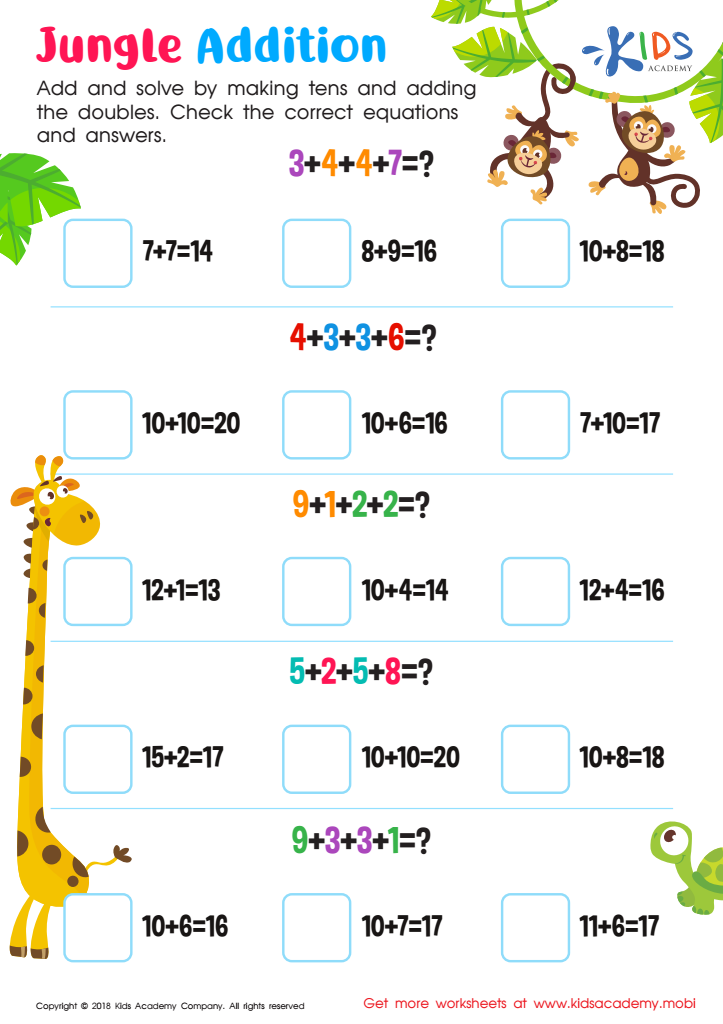
Jungle Addition Worksheet
With this worksheet, kids can use the strategies of making tens and adding doubles to add numbers with more than three addends. They'll practice choosing the right method and become more confident in their calculations, enabling quicker, more efficient computation.
Jungle Addition Worksheet
Worksheet
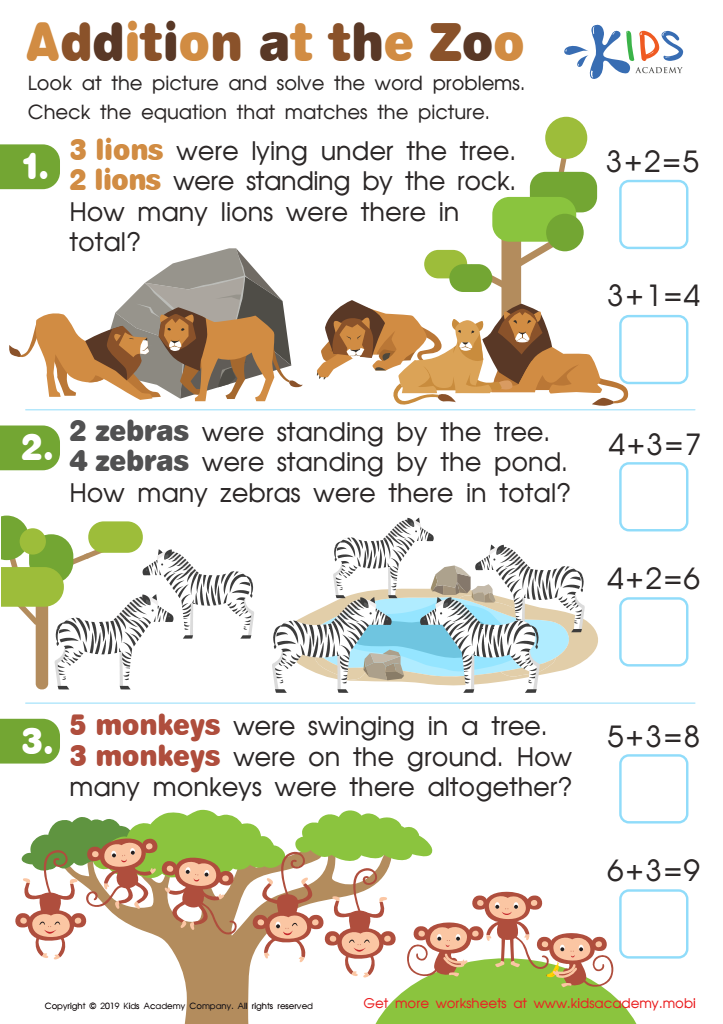
Addition at the Zoo Worksheet
Visit the zoo with your kids and point out all the different animals. Ask them to name their favorites and identify animals on a worksheet. Challenge them to solve word problems related to the pictures. Ask them for the equation that fits the picture and check the answer.
Addition at the Zoo Worksheet
Worksheet
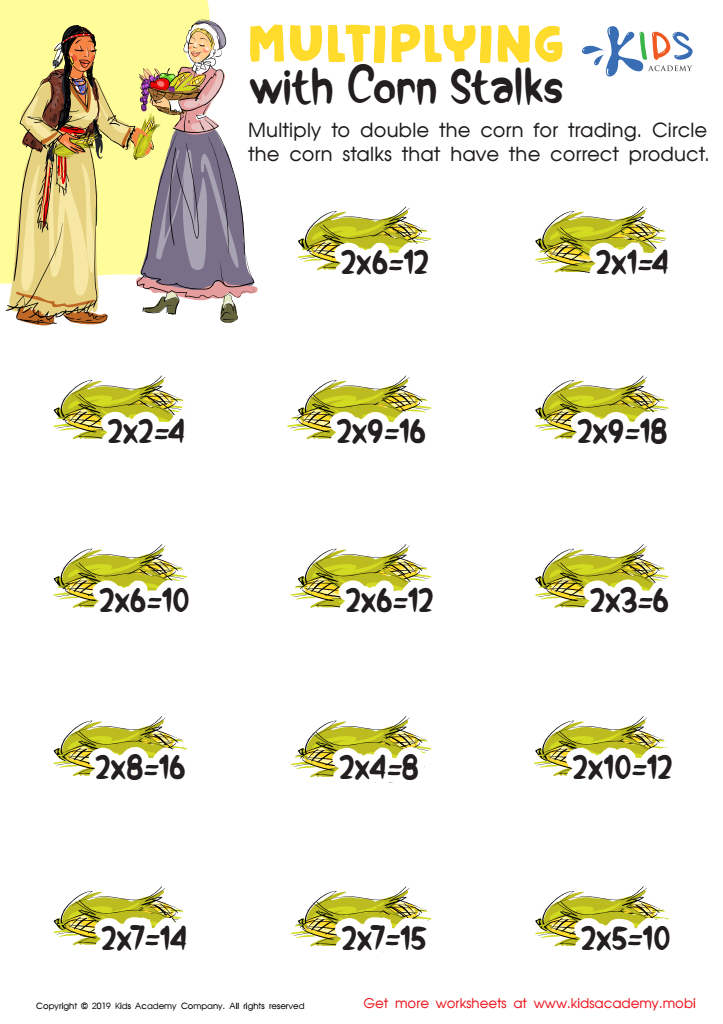
Multiplying With Corn Stalks Worksheet
Farming is profitable; corn is a versatile crop used for many things. Ask your kids what products come from corn! This worksheet is a fun way to teach multiplying with corn stalks. Farmers must multiply the stalks to double their number for trading and increase their profits. Challenge your kids to circle the correct products.
Multiplying With Corn Stalks Worksheet
Worksheet
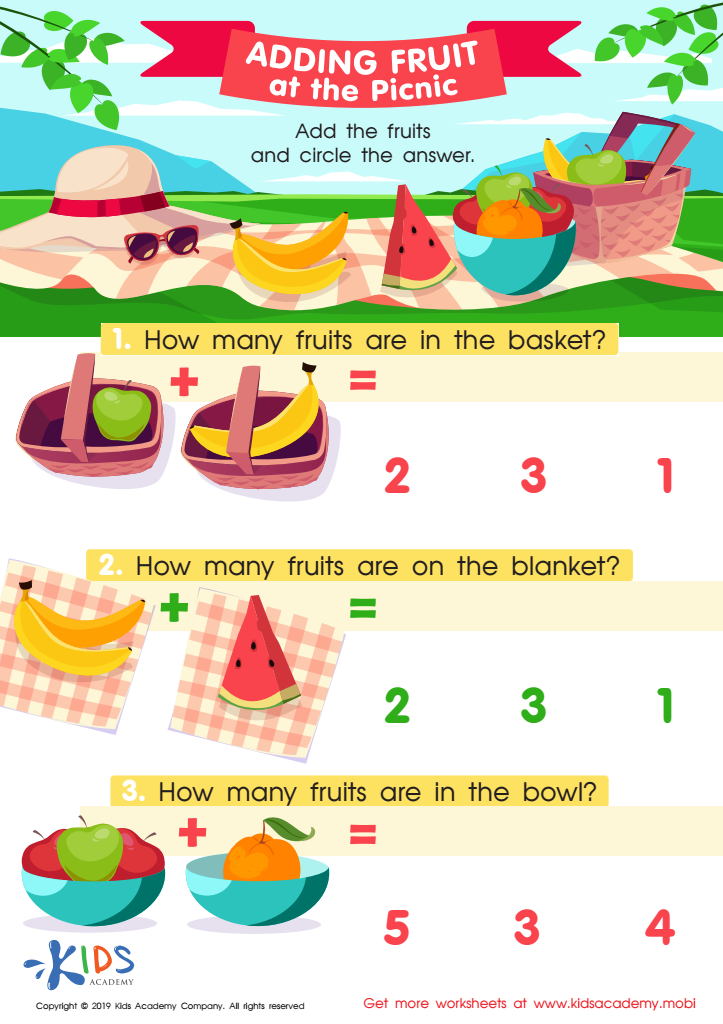
Adding Fruit at the Picnic Worksheet
Picnics are a great way for the family to enjoy a fun day in the sun! Get your kids involved by having them help load the picnic basket and do this worksheet to practice their math skills while they get ready. Identify the fruits in the picture, add them up, and circle the correct answer.
Adding Fruit at the Picnic Worksheet
Worksheet
Join Kids Academy for Free
Who is primarily going to use this learning content?





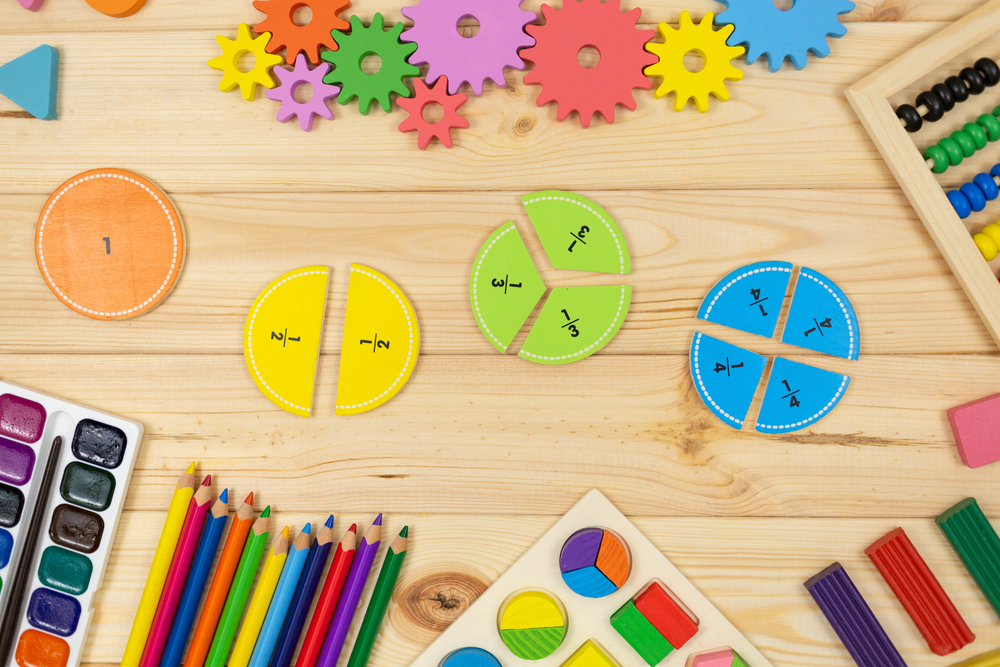


Visual Learning Easy Math is a compelling tool for young learners, and here's why parents and teachers should be invested in it. Designed for ages 5-9, this approach caters to the developmental stage where children naturally exhibit strong visual and tactile learning preferences. Research indicates that visual aids can enhance comprehension and retention by breaking down complex concepts into more digestible parts.
For young children, traditional numerical and abstract methods can often seem intimidating. By incorporating visual elements such as colorful charts, graphs, and interactive objects, Visual Learning Easy Math demystifies these concepts, making math more approachable and fun. This fosters a positive attitude toward the subject, which is critical during formative years.
Additionally, visual learning helps in developing critical thinking and problem-solving skills. For example, when children use blocks or visual stories to understand addition and subtraction, they gain intuitive understanding rather than rote memorization. This method prepares children for more advanced mathematical concepts in later grades.
Moreover, it's inclusive; visual learning benefits a diverse classroom, including English language learners and children with learning disabilities who might struggle with text-heavy instruction. By bridging these gaps, parents and teachers provide a strong, inclusive foundation for lifelong mathematical confidence and success.








