
Basic Math Skills Easy Measurement Worksheets for Ages 5-9
4 filtered results
Difficulty Level
Grade
Age
-
From - To
Subject
Activity
Standards
Our "Basic Math Skills Easy Measurement Worksheets for Ages 5-9" are designed to make learning fun and effective for young children. These engaging and colorful worksheets help kids grasp essential measurement concepts effortlessly through hands-on activities. Covering topics like length, weight, and volume, our expertly crafted exercises align with educational standards to reinforce classroom learning. Perfect for both parents and teachers, these printables offer age-appropriate challenges that improve problem-solving skills, enhance critical thinking, and build a strong mathematical foundation. Equip your child with the confidence and knowledge they need to excel in their early math journey!
Favorites
With answer key
Interactive
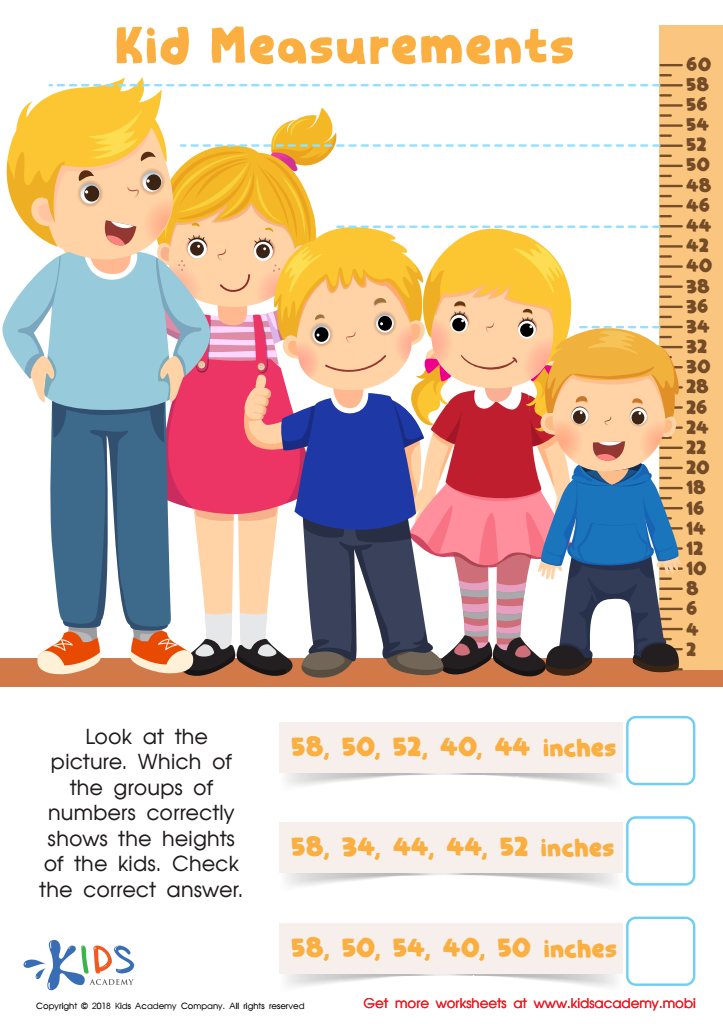
Kids Measurements Worksheet
Help your kids look at the groupings on the bottom right of the worksheet. Compare the heights of the kids shown in the picture to the numbers in each group. Have them check which of the groups of numbers correctly shows the heights.
 Assign to My Students
Kids Measurements Worksheet
Worksheet
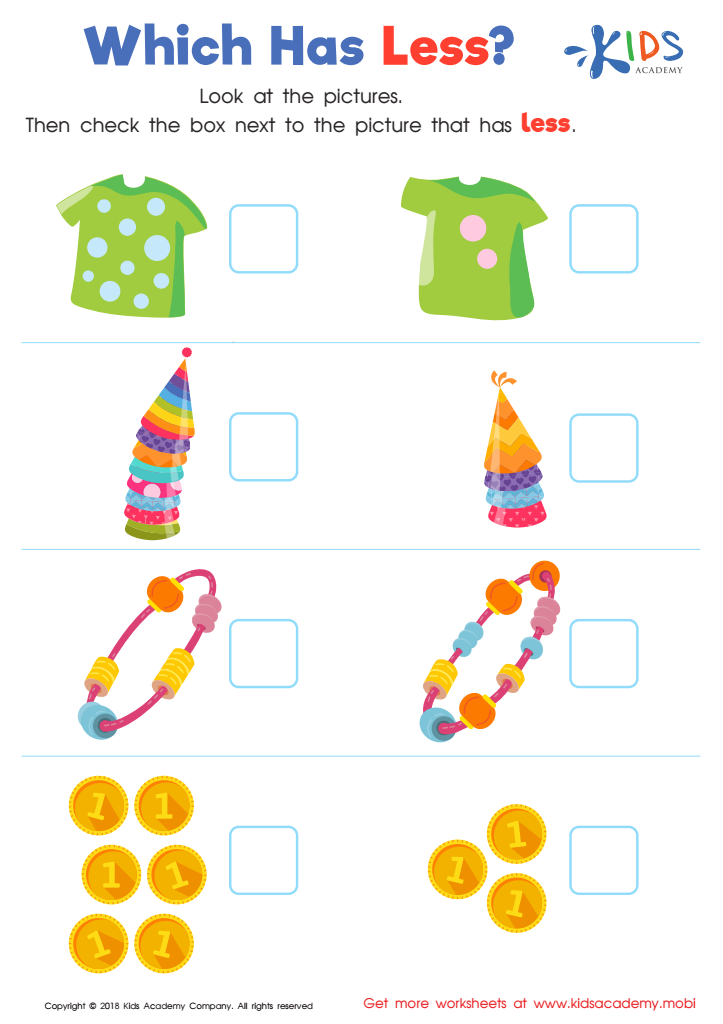
Which Has Less? Worksheet
Kids can develop their number sense by comparing and contrasting objects to identify which has less. This worksheet helps them practice: it's bright and colorful, featuring familiar objects and pictures to count, strengthening basic counting skills. It's the perfect warm-up for comparing and contrasting larger numbers.
Which Has Less? Worksheet
Worksheet
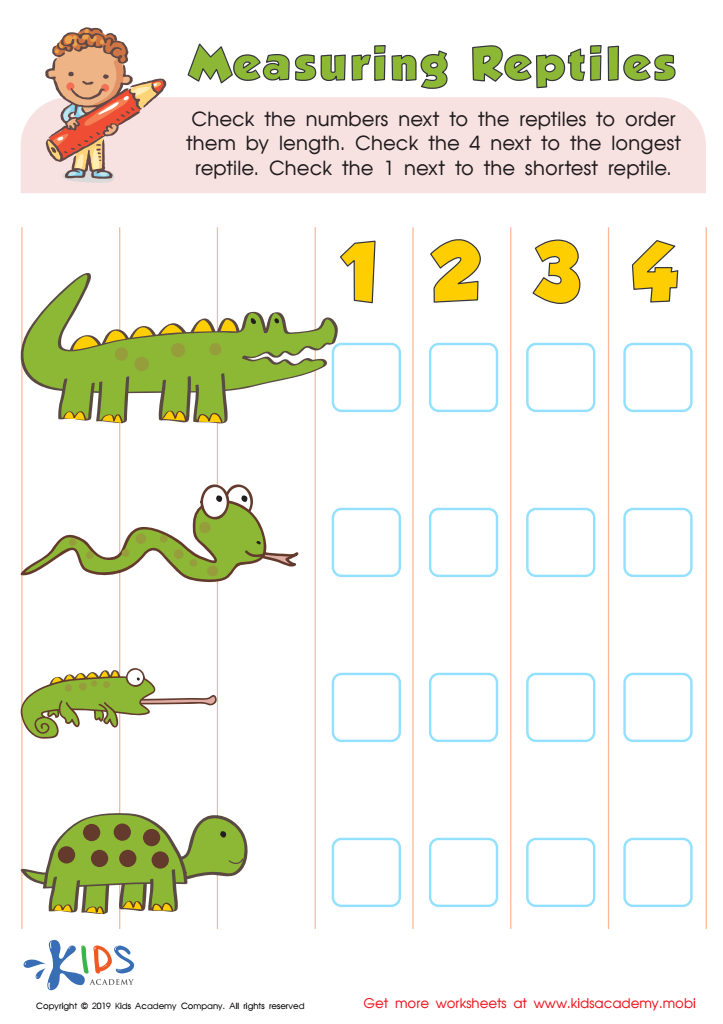
Measuring Reptiles Worksheet
Do your kids know what reptiles are? Ask them to name some and name features. In this activity, your kindergartners will measure with reptiles. Show them the picture and get them to order by length, starting with the one with 4 by the longest reptile, then the one with 1 by the shortest.
Measuring Reptiles Worksheet
Worksheet
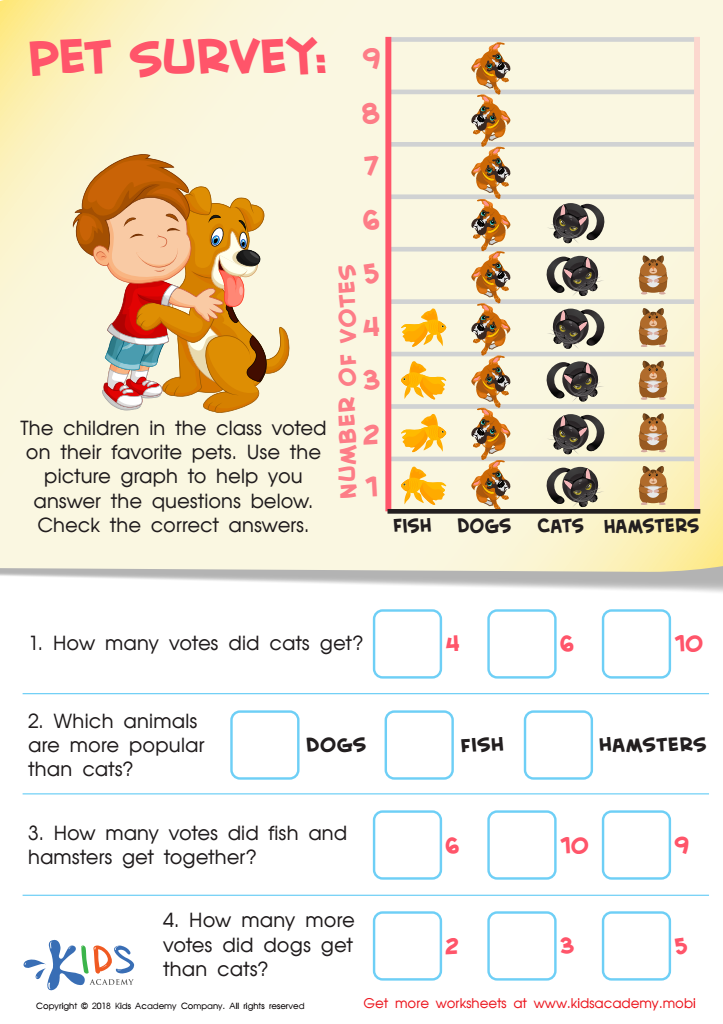
Pet Survey Worksheet
Do you have a furry family member? If the answer is yes and your kids love animals, they'll enjoy this worksheet. The picture graph shows the children's votes for their favorite pet - fish, dog, cat and hamster. Ask your child to use the graph to answer the questions. Guide them to check the right answer.
Pet Survey Worksheet
Worksheet
Join Kids Academy for Free
Who is primarily going to use this learning content?








Parents and teachers should pay close attention to the development of basic math skills and easy measurement for children ages 5-9, as these formative years are crucial for building a strong foundation in mathematics. Basic math skills, such as addition, subtraction, and understanding numbers, are fundamental for everyday activities and more advanced mathematical concepts. Ensuring that children grasp these skills early on helps prevent future struggles in more complex subjects.
Introducing measurement concepts during these years is equally important. Measurement activities, such as comparing lengths, weights, and volumes, help children make sense of the world around them. These exercises enhance their ability to estimate, reason, and solve problems, which are crucial cognitive skills. For instance, understanding that a book is heavier than a pencil or that a cup holds more water than a spoon contributes to their ability to visualize and comprehend abstract concepts as they grow.
Additionally, engaging children in enjoyable measurement activities, like using rulers, weighing objects, and using measuring cups in cooking, promotes hands-on learning. This encourages curiosity and fosters a positive attitude toward math, essential for their long-term academic success. By emphasizing these skills early, parents and teachers equip children with the cognitive tools and confidence needed for future educational endeavors.








