Fine Motor Skills Easy World Around Us Worksheets for Ages 5-9
3 filtered results
Difficulty Level
Grade
Age
-
From - To
Subject
Activity
Standards
Welcome to our "Fine Motor Skills Easy World Around Us Worksheets" designed specifically for children ages 5-9! These engaging and thoughtfully crafted worksheets help young learners develop essential fine motor skills through interactive activities that explore the world around them. Each printable worksheet is filled with fun, age-appropriate tasks that encourage activities like cutting, tracing, and drawing, all while enhancing hand-eye coordination and dexterity. Perfect for home or classroom use, our resources support early childhood development while making learning enjoyable. Explore the exciting possibilities and watch your child build confidence in their abilities as they enhance their fine motor skills!
Favorites
With answer key
Interactive

 Assign to My Students
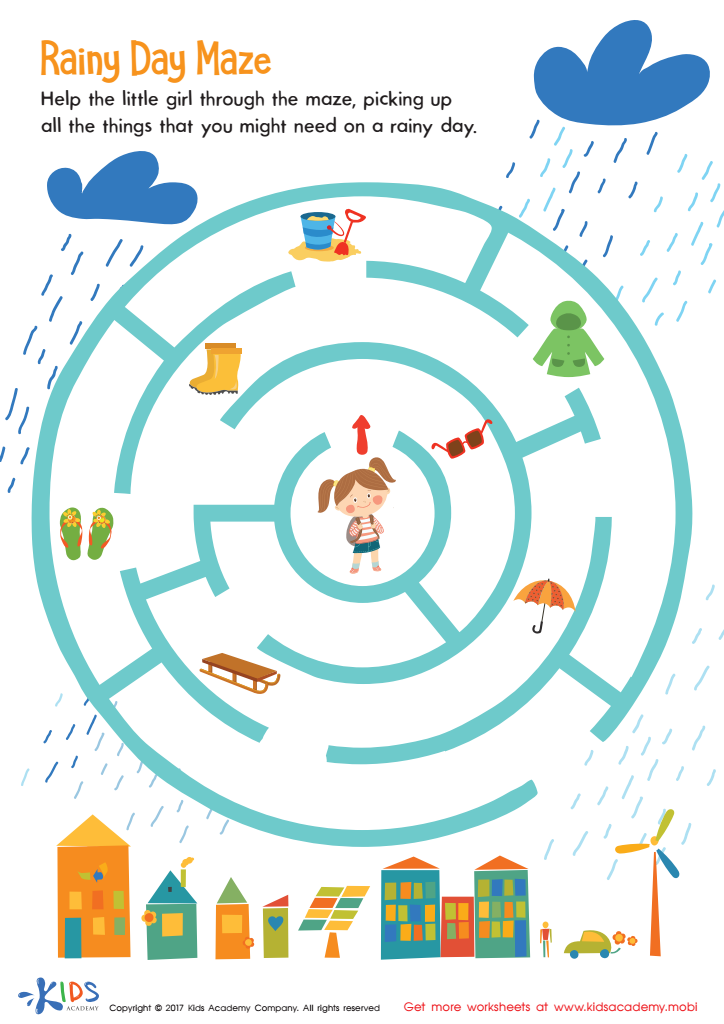
Rainy Day Maze Worksheet
Help your child use critical and problem solving skills to choose the right items! With this fun rainy day worksheet, they'll have a blast helping the character in the maze while learning about weather. Let’s get started!
Rainy Day Maze Worksheet
Worksheet
Join Kids Academy for Free
Who is primarily going to use this learning content?



.jpg)



Fine motor skills are essential for children aged 5-9, as they form the foundation for various everyday tasks, academic success, and overall development. These skills involve the coordination of small muscles in the hands and fingers, enabling children to perform activities such as writing, buttoning, cutting, and drawing. As children engage in these tasks, they not only enhance their dexterity but also foster cognitive skills such as problem-solving and spatial awareness.
Parents and teachers should prioritize fine motor skill development, as they significantly impact a child’s ability to participate successfully in school activities. Mastery of fine motor skills can boost a child's confidence and promote independence, as they become capable of self-care tasks and school-related assignments without constant assistance.
Moreover, developmentally appropriate fine motor activities, such as crafts, puzzles, or playdough, can be integrated into learning experiences to make them engaging and effective. Children who struggle with fine motor skills may face challenges in academic settings, leading to frustration and potential negative attitudes towards learning. Therefore, supporting fine motor skill development is crucial for fostering resilience, enthusiasm, and competence in children, helping them thrive both in school and everyday life. Ultimately, nurturing these skills empowers children, shaping their future successes.