
Shape identification Easy Worksheets for 5-Year-Olds
3 filtered results
Difficulty Level
Grade
Age
-
From - To
Subject
Activity
Standards
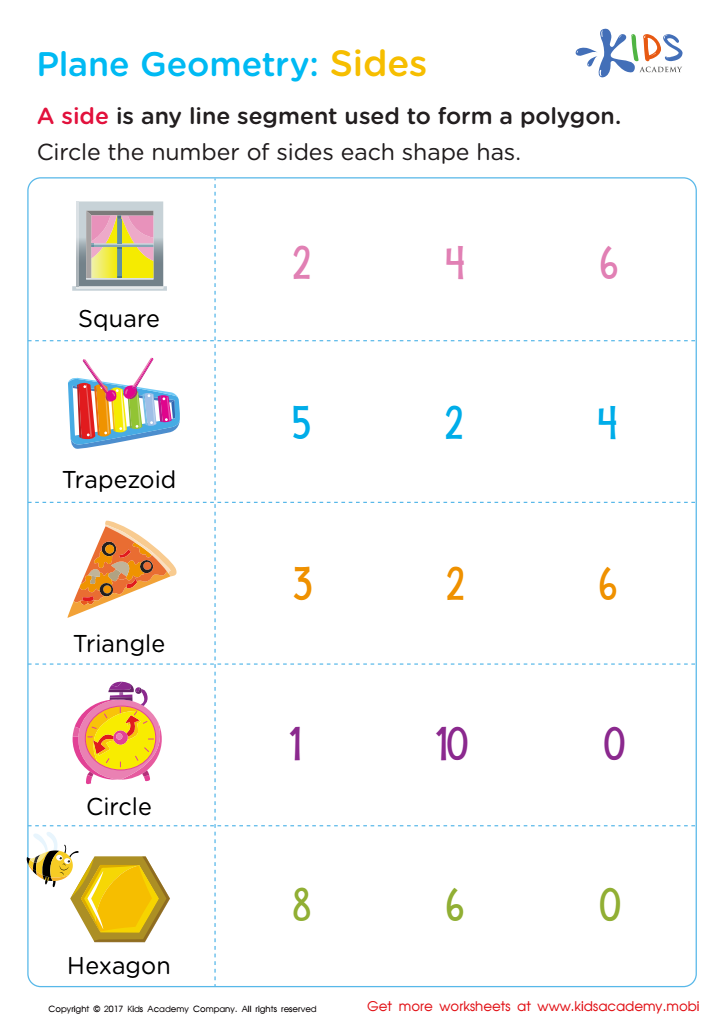
Explore our Shape Identification Easy Worksheets tailored for 5-year-olds at Kids Academy! Our engaging and vibrant printables are designed to foster a love for learning while enhancing your child's ability to recognize and name various shapes. Through interactive activities, children will develop essential geometry skills foundational for future math success. Perfect for kindergarten classrooms or at-home practice, these worksheets provide a fun, educational experience that supports early cognitive growth. Encourage your child's curiosity and confidence in learning with our easy-to-use resources. Visit us today and download free worksheets to support your little one's educational journey!
Favorites
With answer key
Interactive
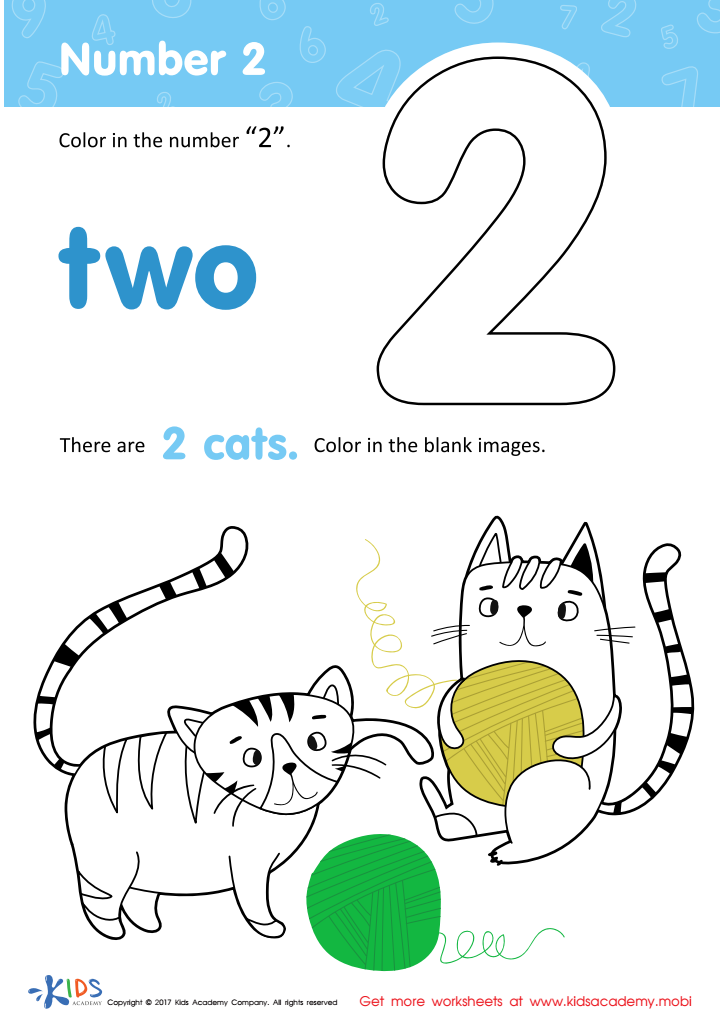
Number 2 Printable
Help your child learn to recognize the number two with these cats and their yarn balls. Print this coloring page – it's great for counting and coloring fun! Your child will develop basic numeracy skills as they visually see numbers in action.
Download (PDF)
 Assign to My Students
Assign to My Students
Number 2 Printable
Worksheet
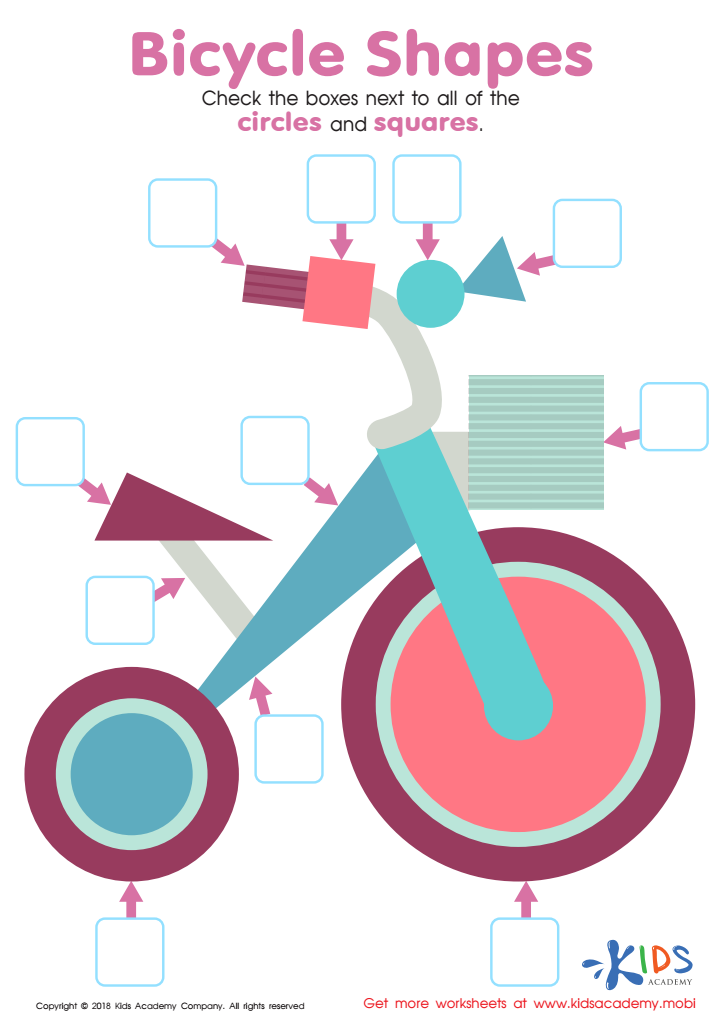
Bicycle Shapes Worksheet
This fun geometry worksheet for preschoolers asks the child to spot hidden shapes (circles, squares) in a colorful bicycle. Each shape varies in size and the child checks the box when it's found. It's a visual way to teach shapes.
Bicycle Shapes Worksheet
Worksheet
Join Kids Academy for Free
Who is primarily going to use this learning content?








Shape identification is crucial for 5-year-olds as it lays the foundational skills for various aspects of their cognitive development and daily functioning. Firstly, recognizing shapes helps young children understand and organize their environment. This knowledge aids in problem-solving and categorization, crucial skills in both academic and everyday contexts. For instance, differentiating between a circle and a square helps a child make sense of signs, books, and toys.
Moreover, shape identification is directly linked to the development of early mathematics skills. Understanding shapes enhances a child's spatial awareness, which is integral in geometry, pattern recognition, and eventually higher-level math concepts.
Shapes also play a vital role in literacy. Many letters and numbers share similarities with basic geometric shapes; recognizing these similarities can simplify the learning process for reading and writing. For example, understanding that the letter "O" shares the same form as a circle helps reinforce alphabet familiarity.
Social skills and activities like puzzles, drawing, and block-building are also enriched. These activities encourage not only fine motor skills but also cooperative play, language development, and creativity.
Therefore, parents and teachers should prioritize shape recognition to foster essential cognitive, mathematical, language, and social skills, all critical for holistic early childhood development.








