Sorting skills Easy Worksheets for 5-Year-Olds
5 filtered results
-
From - To
Boost your 5-year-old's sorting skills with our easy and engaging worksheets! These expertly crafted activities are designed to develop critical thinking and categorization abilities in young learners. Each worksheet presents fun and colorful sorting tasks that challenge kids to organize objects based on different attributes like shape, size, and color. Perfect for early learners, these worksheets make learning enjoyable and interactive. Ideal for use at home or in the classroom, they support foundational math and cognitive skills. Help your child master sorting with our delightful and educational worksheets tailored for curious young minds!
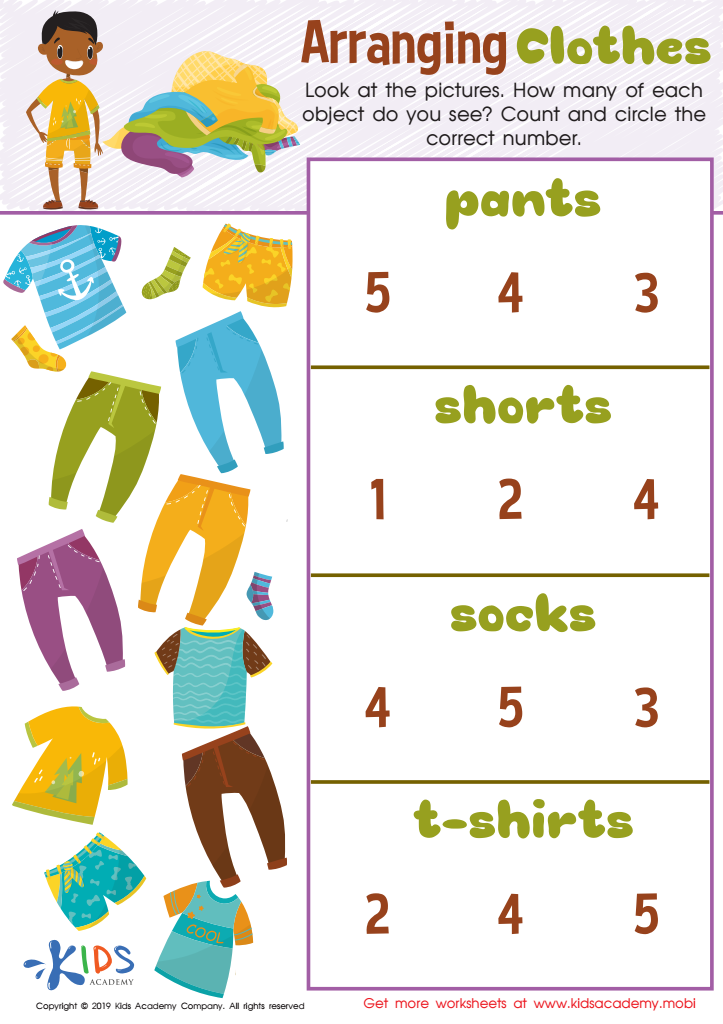
Arranging Clothes Worksheet
 Assign to My Students
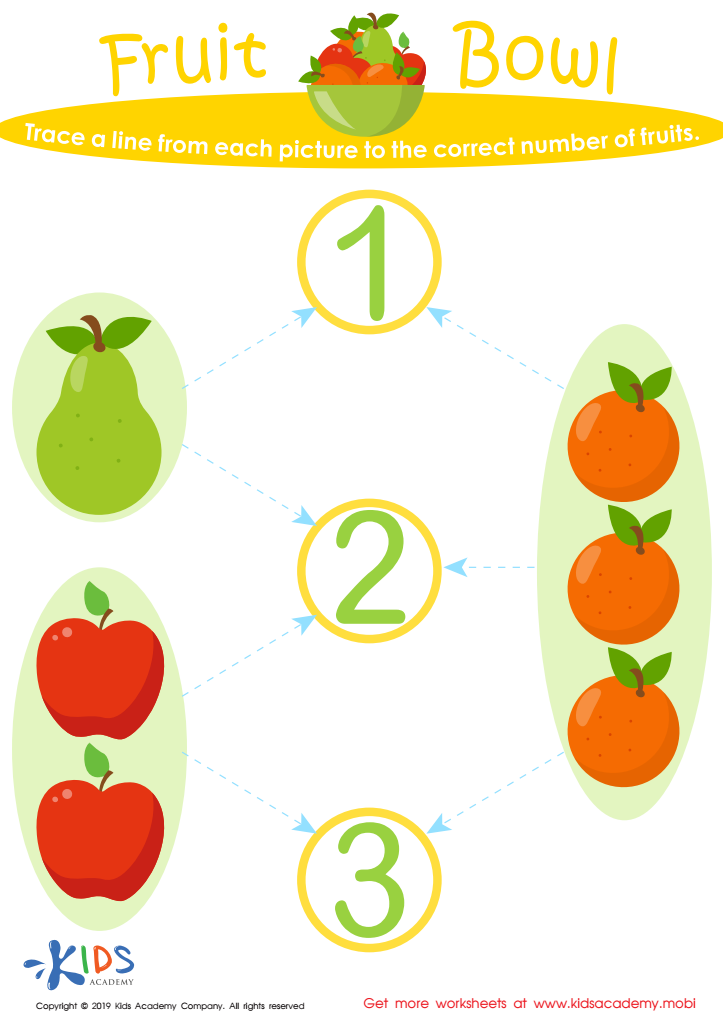
Fruit Bowl Worksheet
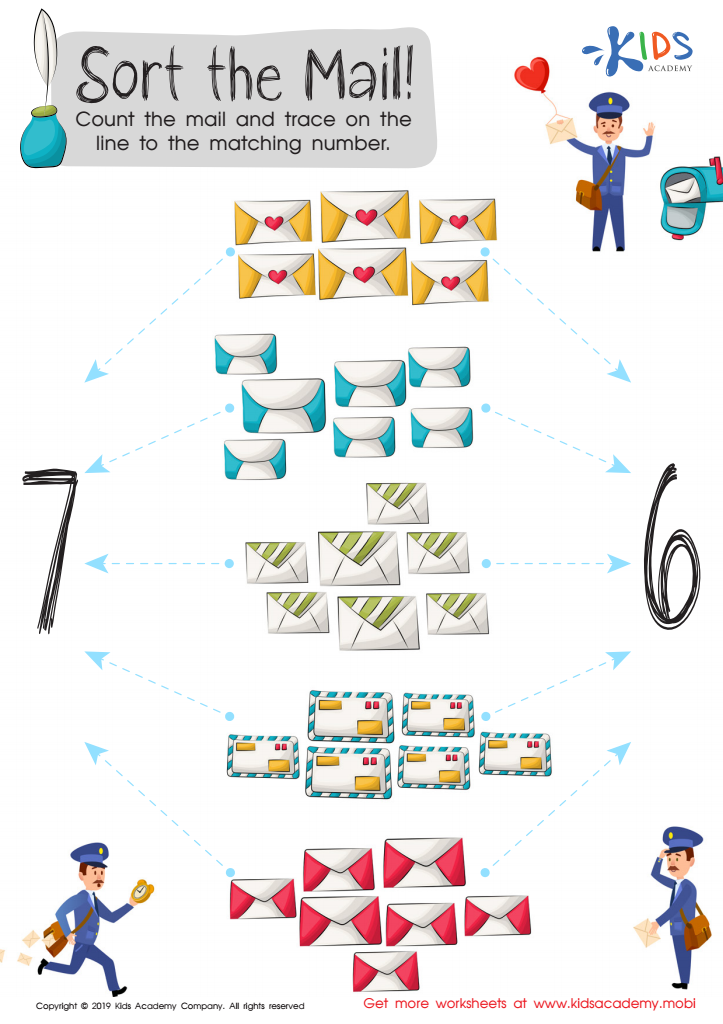
Sort the Mail Worksheet
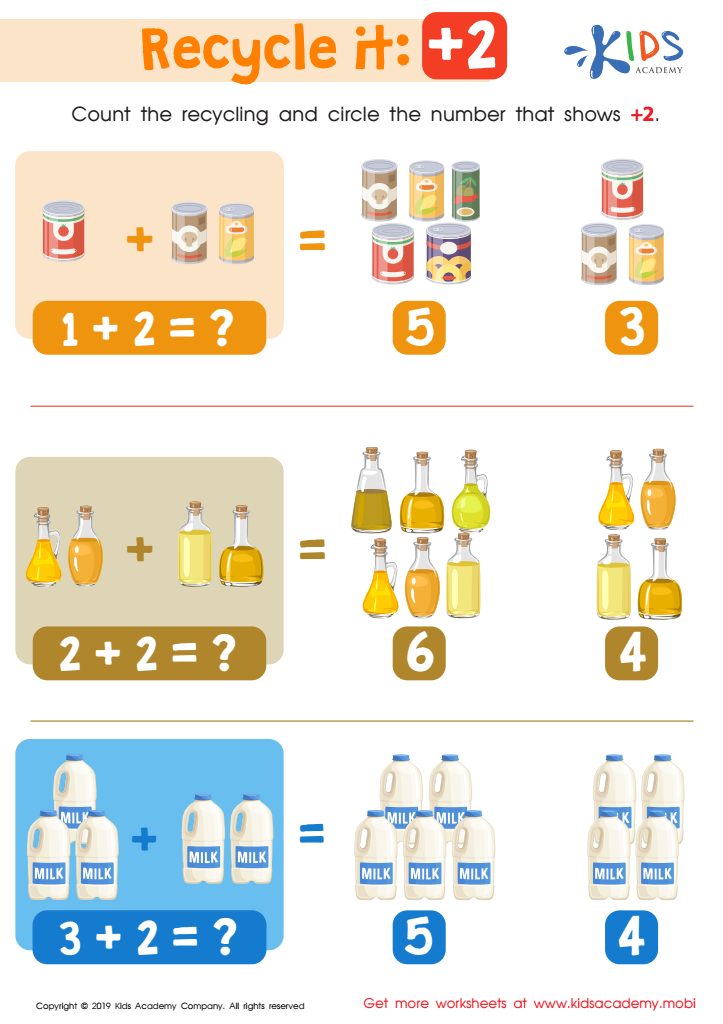
Recycle It: +2 Worksheet
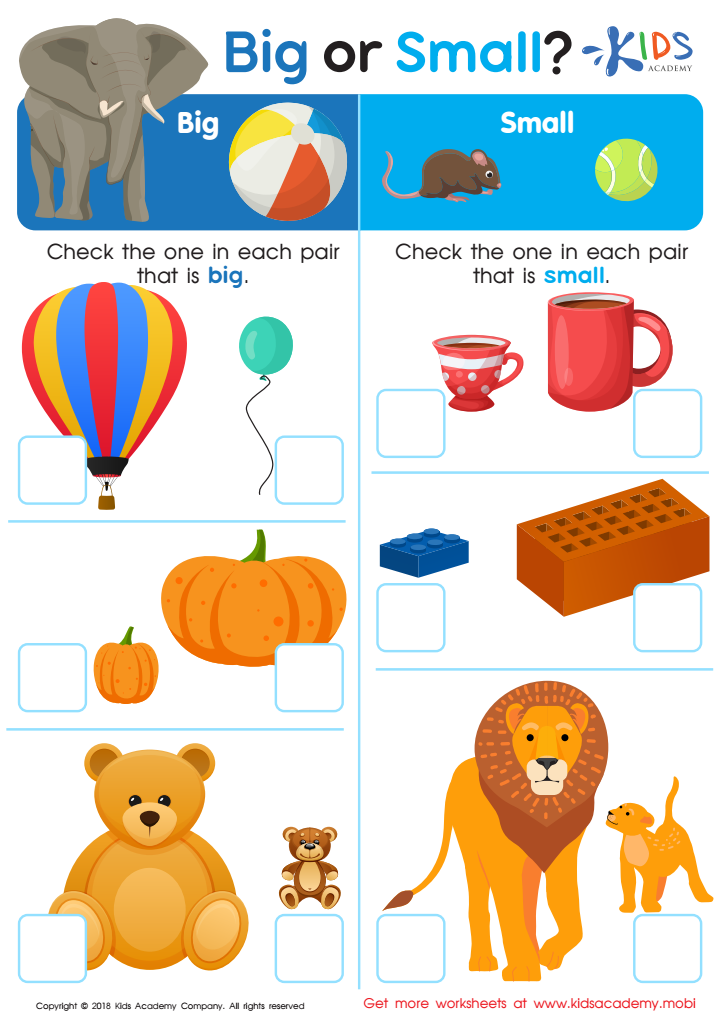
Big or Small? Worksheet







Sorting skills are foundational for children's cognitive and social development, making them essential for parents and teachers to nurture, especially in 5-year-olds. At this tender age, children are rapidly expanding their ability to understand and organize the world around them. Engaging in sorting activities helps sharpen these essential skills in several meaningful ways.
Firstly, sorting enhances cognitive development by improving a child's ability to categorize items based on various attributes such as color, shape, size, or function. This lays groundwork for critical thought processes involving classification and differentiation, which are vital in subjects like math, reading, and science.
Secondly, sorting fosters problem-solving and analytical skills. When children decide how to group items or identify similarities and differences, they engage in strategic thinking and early decision-making. These traits contribute to their capability to solve complex problems in the future.
Additionally, sorting boosts attention to detail and focus, skills that enhance overall academic achievement. It also helps build fine motor skills and coordination when involving physical tasks like placing items into different groups.
Lastly, sorting activities often require communication and cooperation, bolstering social skills by encouraging collaboration and discussions. Parents and teachers should, therefore, prioritize sorting to support a rounded, robust upbringing that prepares children with the practical and social tools needed for lifelong learning.








