Counting skills Easy Counting Worksheets for 5-Year-Olds
5 filtered results
-
From - To
Our "Easy Counting Worksheets for 5-Year-Olds" are carefully designed to develop essential counting skills in young children. Through engaging and diverse activities, kids can practice counting objects, recognizing numbers, and understanding basic mathematical concepts, all while having fun. These printable worksheets are perfect for enhancing their numeracy skills in a playful manner. Each worksheet offers a blend of counting exercises aimed at laying a strong foundation for future math success. Ideal for kindergartners, our resources are perfect for both classroom use by teachers and homeschooling parents. Empower your child’s math journey with our easy counting worksheets!
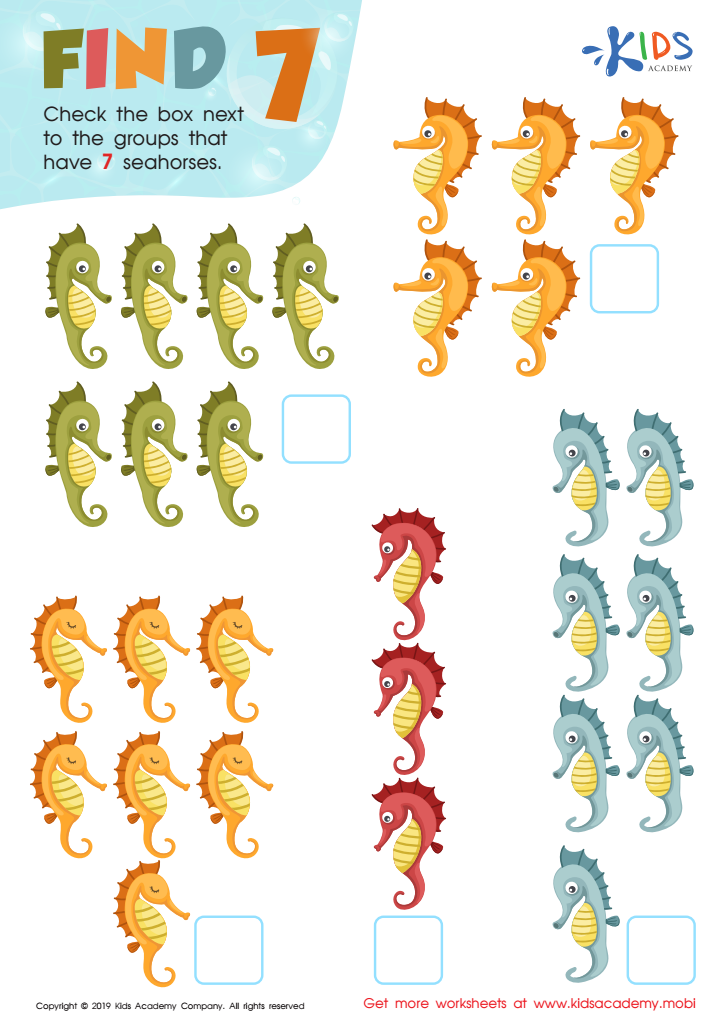
Find 7 Worksheet
 Assign to My Students


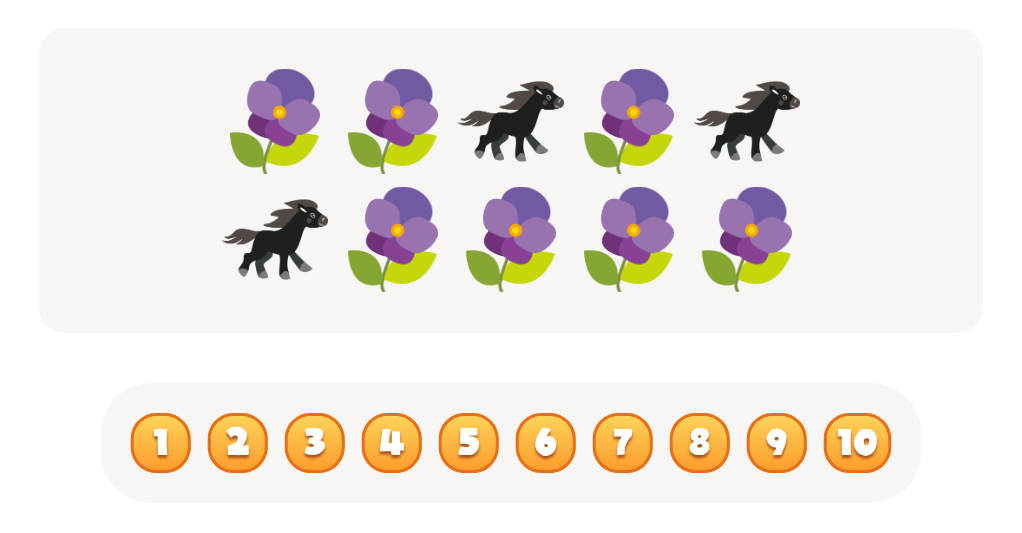

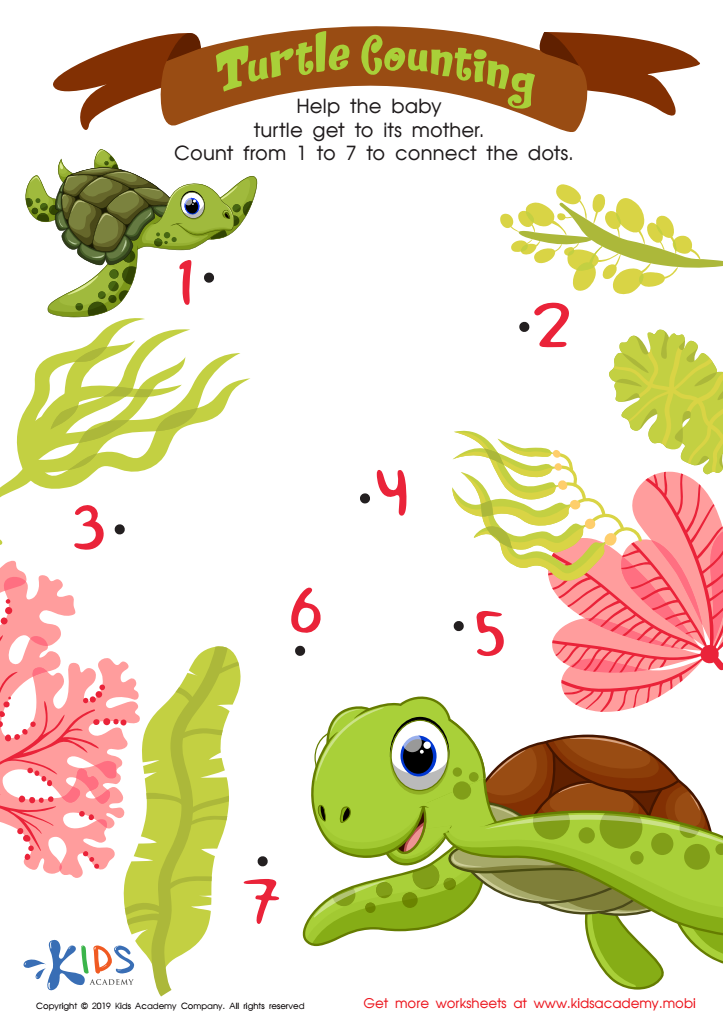
Turtle Counting Worksheet
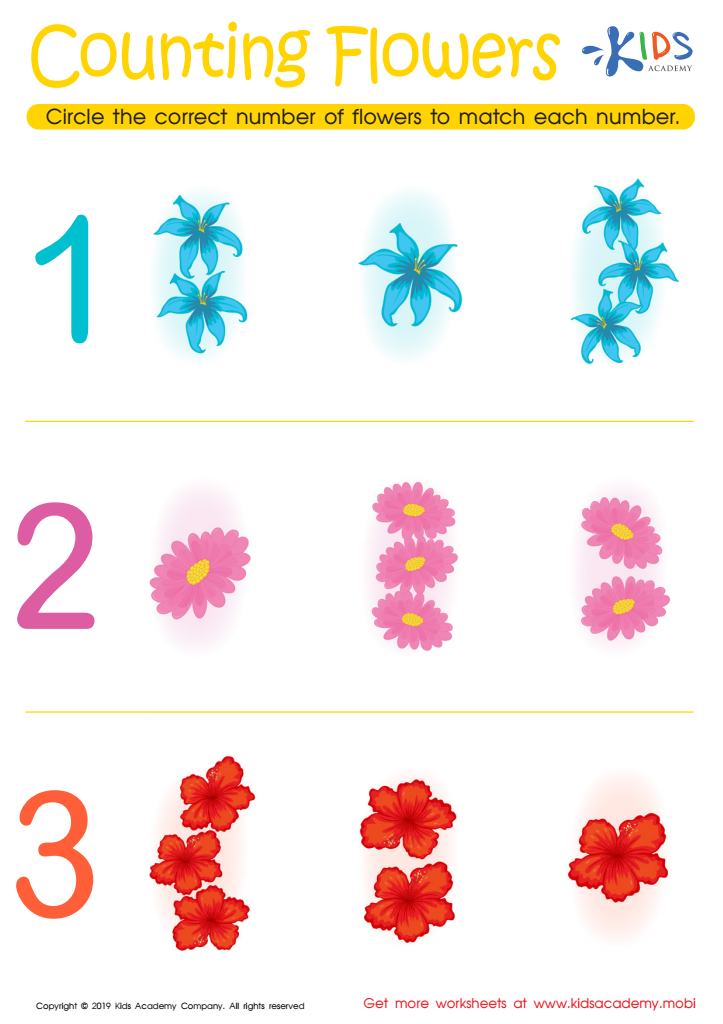
Counting Flowers Worksheet
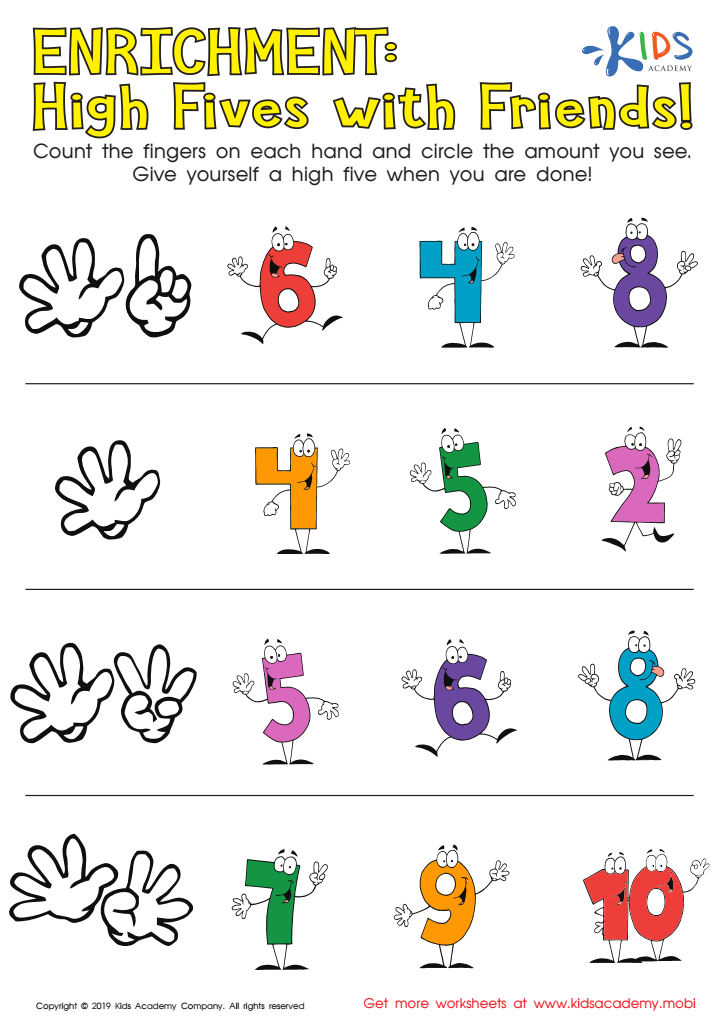
Enrichment: High Fives with Friends! Worksheet
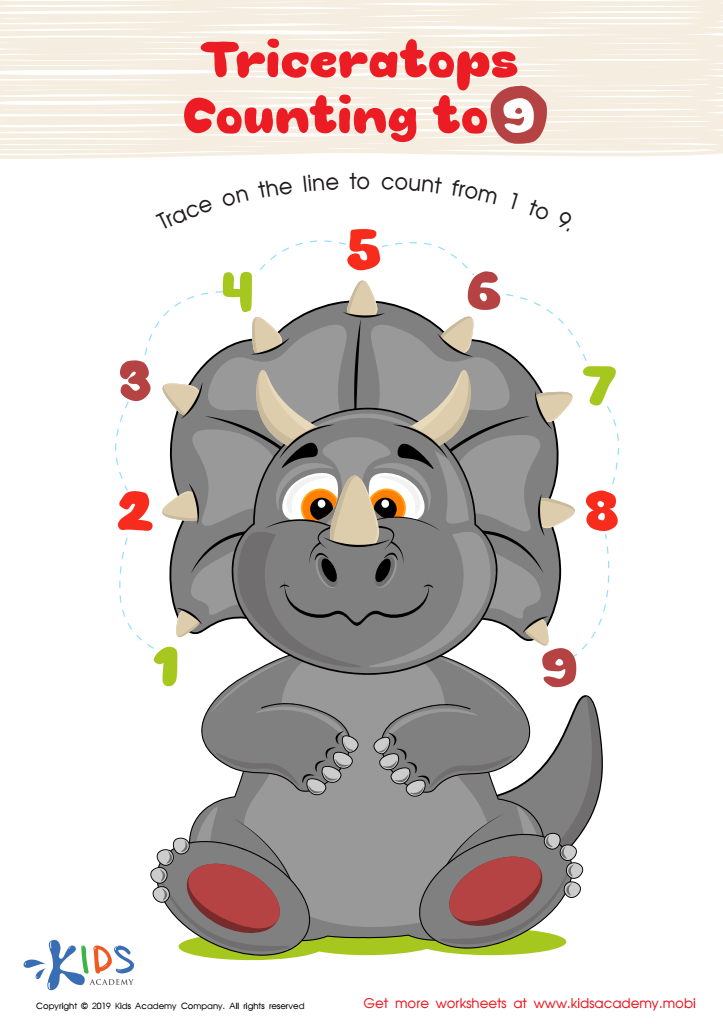
Triceratops Counting to 9 Worksheet







Parents and teachers should prioritize developing counting skills in 5-year-olds because these foundational skills are crucial for their overall mathematical understanding and cognitive development. Learning to count equips children with the ability to understand numbers, recognize patterns, and develop problem-solving skills, which are essential for their academic success in later years.
Early counting practice enhances a child's number sense, providing a solid foundation for more advanced arithmetic operations like addition and subtraction. It also promotes logical thinking and precision, as children learn to associate numbers with quantities and objects in their environment. This early exposure to mathematical concepts supports better engagement and confidence in tackling math-related tasks as they grow.
Moreover, counting activities are not only educational but can also be made fun and interactive, making learning enjoyable for young children. Parents and teachers can integrate counting into everyday tasks, such as counting toys, steps, or snacks, which helps in the natural reinforcement of these skills.
In conclusion, ensuring that children develop strong counting skills at an early age prepares them for academic achievements, stimulates their intellectual growth, and nurtures a lifelong positive attitude towards learning and mathematics.








