Sound Association Easy Alphabet Worksheets for Ages 6-7
4 filtered results
Difficulty Level
Grade
Age
-
From - To
Subject
Activity
Standards
Unlock the power of learning with our "Sound Association Easy Alphabet Worksheets" tailored for ages 6-7! These engaging worksheets help young learners solidify their understanding of the alphabet and sound relationships through fun activities, promoting better reading skills. Kids will match letters to corresponding sounds, enhancing phonemic awareness and vocabulary. Perfect for classroom or home use, our expertly designed worksheets align with educational standards and make learning enjoyable. Watch your children thrive as they connect sounds with letters, laying a strong foundation for future literacy success. Foster a love for reading with our easy-to-use, printable worksheets!
Favorites
With answer key
Interactive
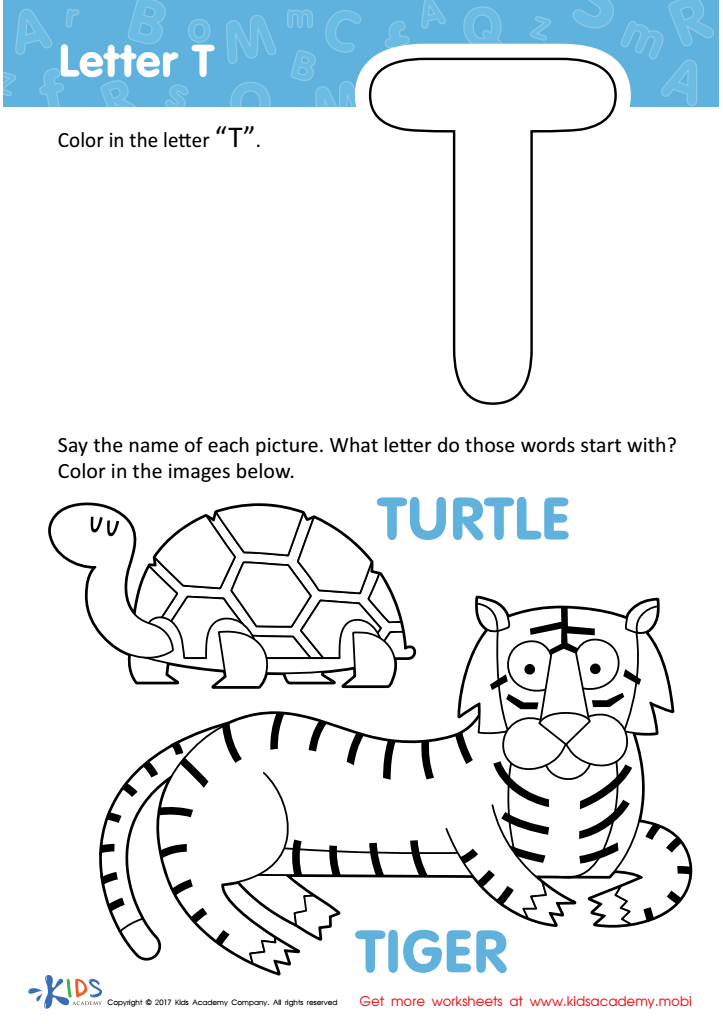
Letter T Coloring Sheet
Introduce your child to the letter "T" and its animals – turtles and tigers! With this coloring page, you can stimulate your child's imagination and creativity, while helping them recognize the letter "T". Have fun with your child and get coloring!
Download (PDF)
 Assign to My Students
Assign to My Students
Letter T Coloring Sheet
Worksheet
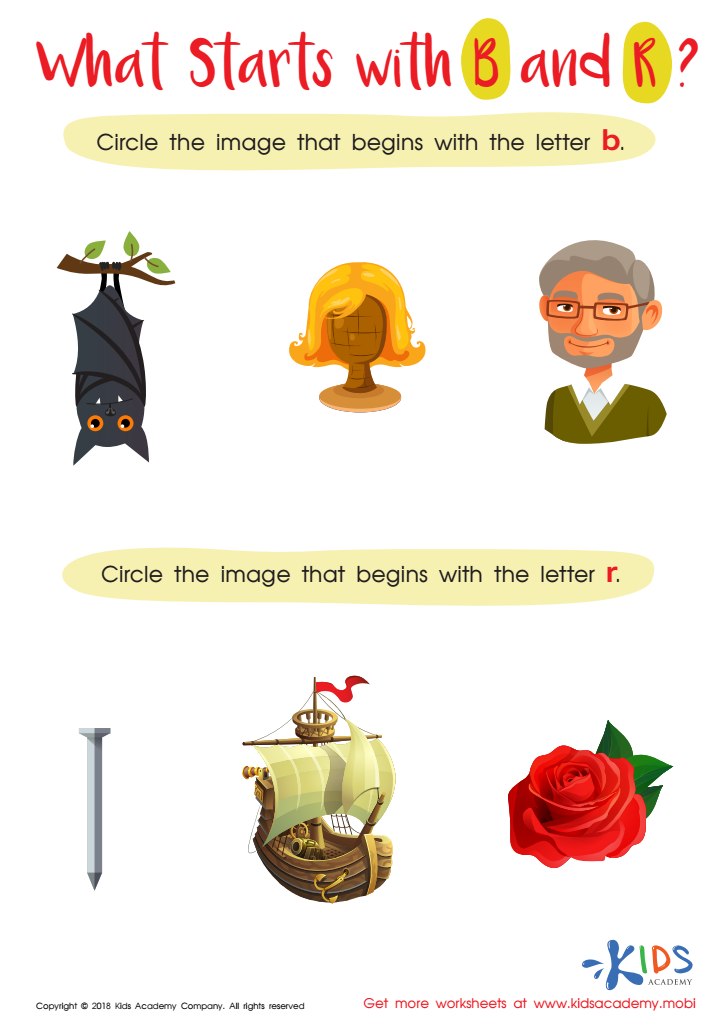
What Starts with B and R? Worksheet
Download this worksheet to help young readers practice visual and motor skills! They'll enjoy matching pictures with "B" and "R" letters while tracing the images. Bright and colorful, this engaging activity will help kids differentiate between words and have fun doing it.
What Starts with B and R? Worksheet
Worksheet
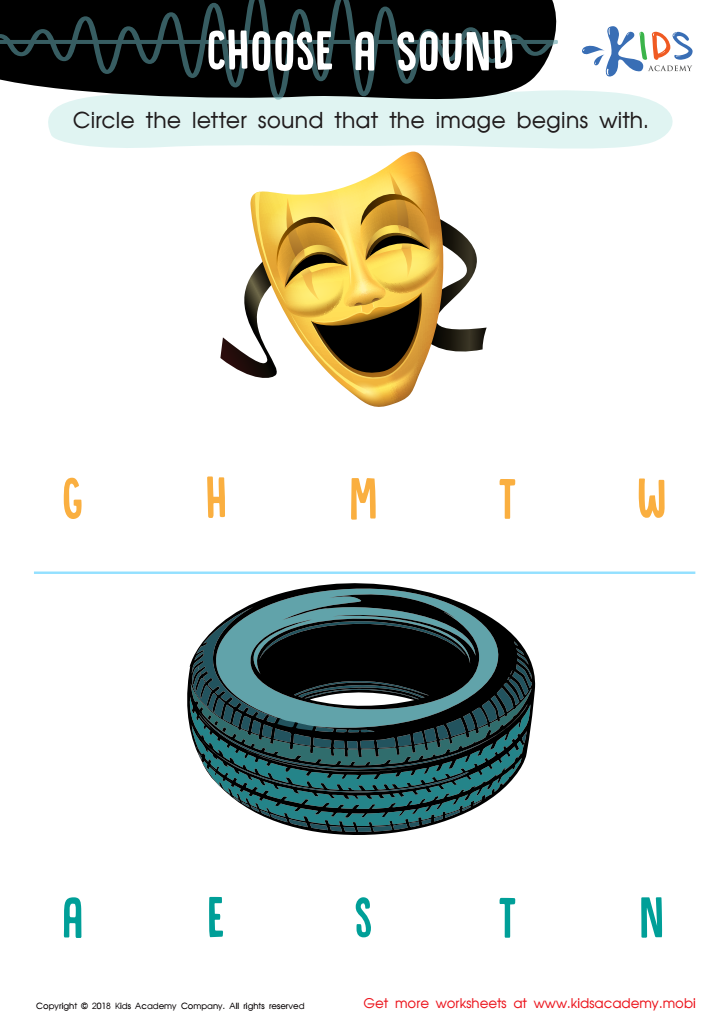
Choose a Sound Worksheet
Help your child hone pre-reading skills with this colorful worksheet! They'll practice tracing letter sounds, develop phoneme awareness, and gain confidence. Plus, it's a fun way to work on their fine motor skills.
Choose a Sound Worksheet
Worksheet
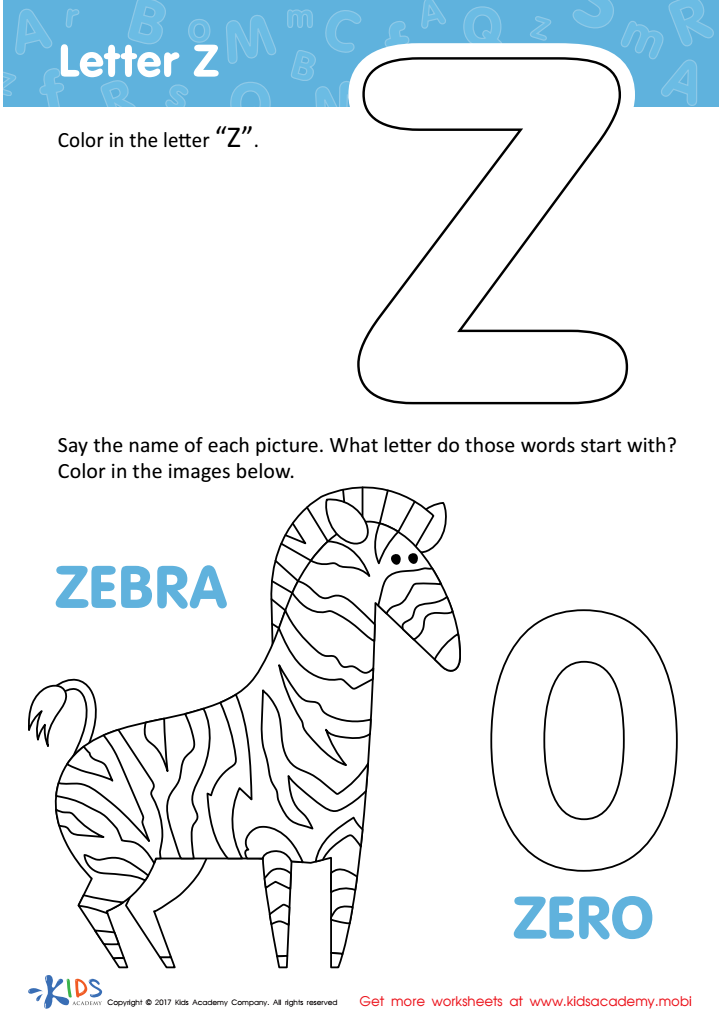
Letter Z Coloring Sheet
This coloring page featuring the letter "Z" is perfect for your child to practice letter recognition! Help them learn the unique sound it makes as they color. It'll be a fun and easy activity they won't have trouble with!
Download (PDF)
Assign to My Students
Assign to My Students
Letter Z Coloring Sheet
Worksheet
Join Kids Academy for Free
Who is primarily going to use this learning content?







Sound Association Easy Alphabet is a valuable learning tool for children aged 6-7, particularly in the crucial stage of early literacy development. At this age, children are not just learning to read and write; they are connecting sounds to letters, which is fundamental for reading fluency and comprehension. Sound association activities anchor these connections solidly in a child’s mind, acting as building blocks for more advanced reading and language skills.
For parents and teachers, emphasizing Sound Association Easy Alphabet aids in fostering phonemic awareness, a crucial predictor of reading success. By engaging with letters and their corresponding sounds, children can decode new words more easily, promoting confidence and reducing frustration. This ease helps to cultivate a love for reading, a key component of lifelong learning.
Additionally, early mastery of sound association can significantly impact spelling. When children understand that sounds correlate with letters, they are better equipped to spell words accurately. In a classroom setting, this leads to improved academic performance and reinforces other curriculum areas which rely heavily on literacy, such as social studies and science.
Teachers and parents who invest time in such resources provide children with a robust foundation in the mechanics of reading. Ultimately, this investment pays off in improved literacy skills, academic success, and a lifelong enthusiasm for learning.